Short answer
A buyer should ask what condition led to encapsulation, exactly what work was performed, how bulk water and humidity are controlled, where every drain discharges, what equipment remains, what maintenance is required, and which records transfer. A clean white liner is useful to inspect, but it does not answer those questions. Review permits where applicable, invoices, scopes, photos, manuals, service history, pest-inspection access, and moisture trends, then have the crawl space inspected within the transaction process and deadlines that apply to the purchase.
Treat the system as part of the property
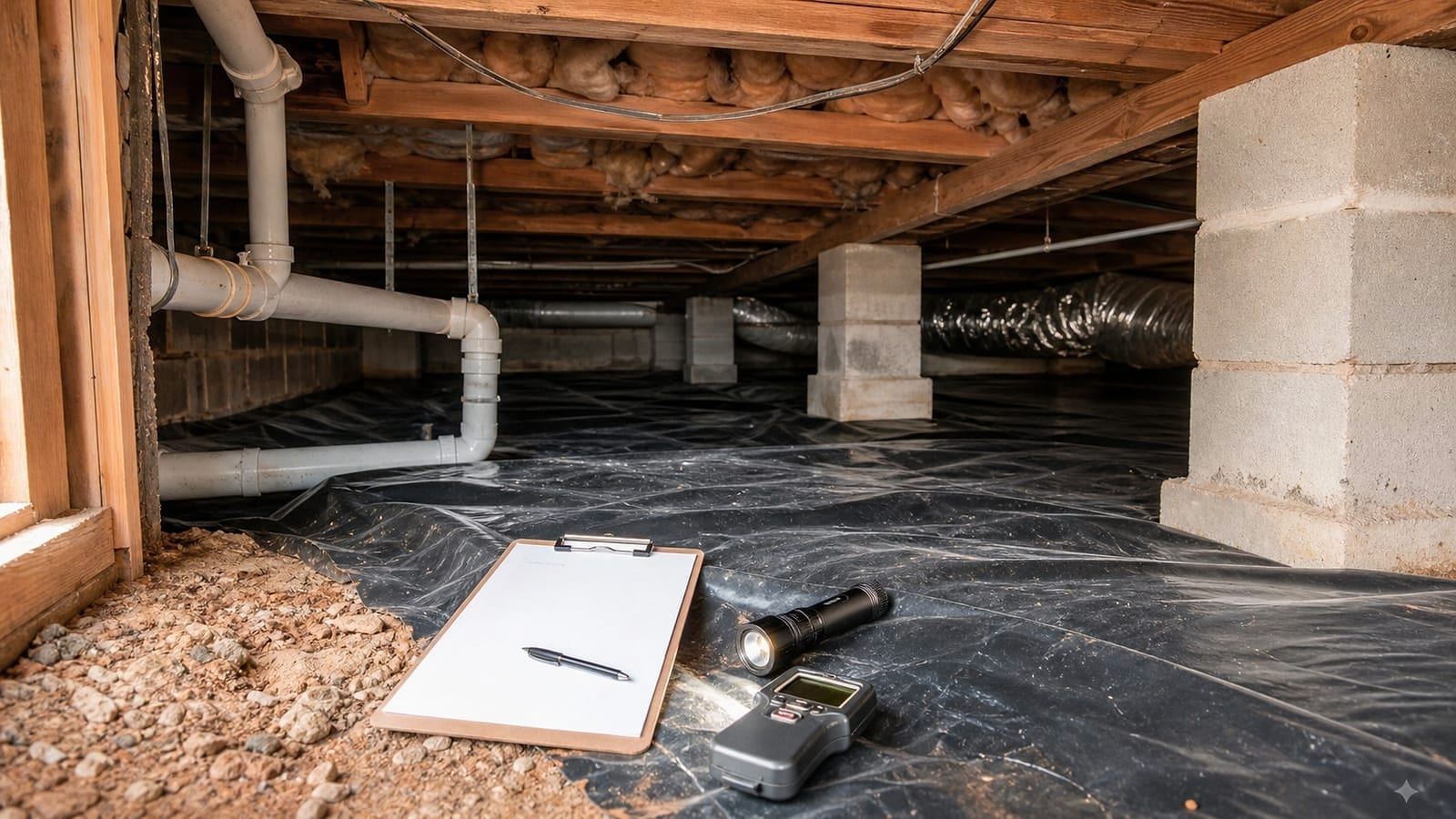
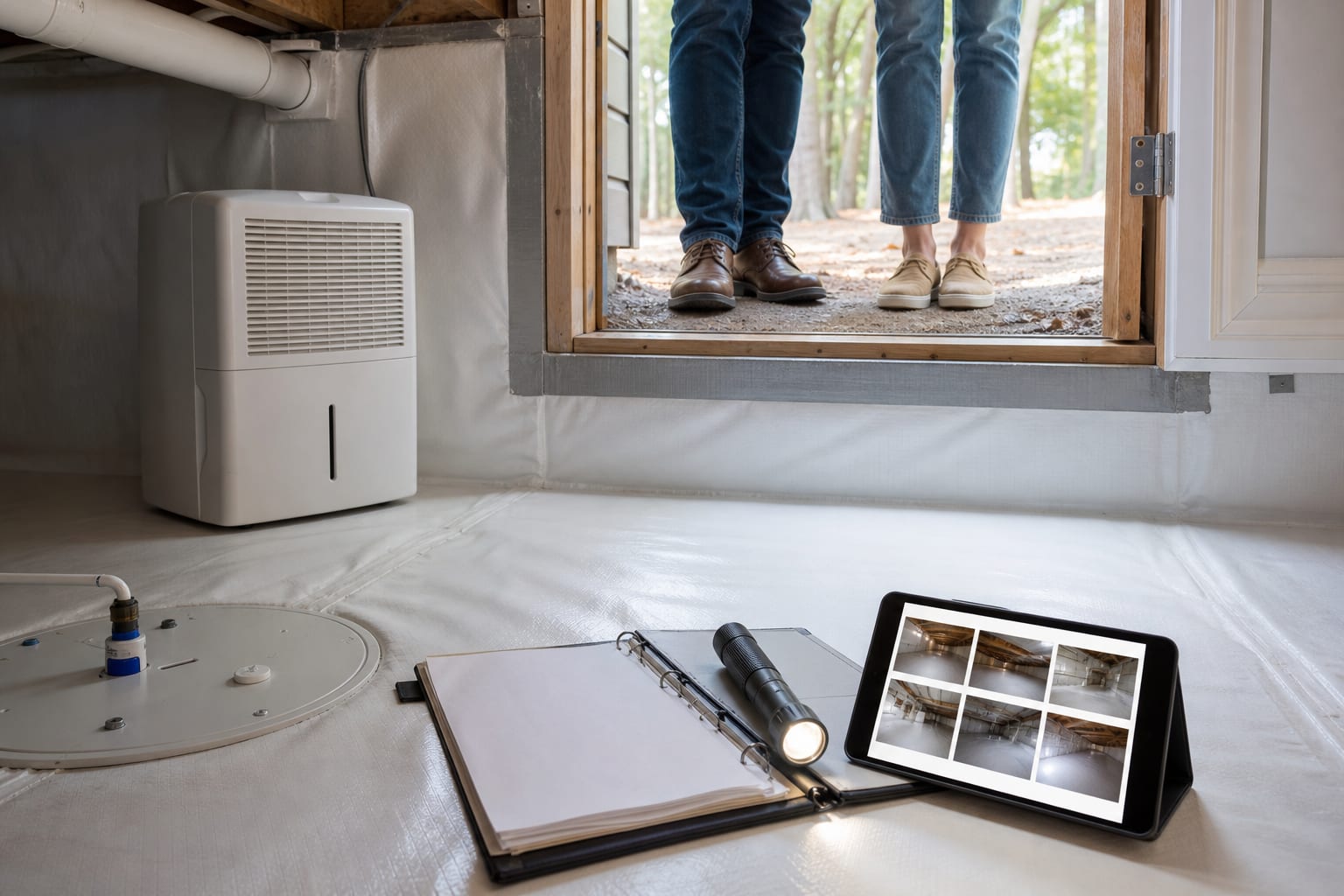
An encapsulated crawl space is not only a surface finish. It may include a ground liner, sealed seams, wall attachment, pier detailing, closed vents, an access door, drainage, a sump pump, a dehumidifier, insulation, air sealing, electrical work, plumbing changes, and monitoring.
Each component has a different job. The liner controls ground vapor and separates the crawl space from soil. Drainage and pumping manage bulk water. A dehumidifier controls moisture in the air. Sealed openings reduce uncontrolled air exchange. Exterior gutters and grade manage water before it reaches the foundation.
A buyer does not need to become the system designer. The goal is to understand what is installed, what problem it was intended to address, and what ongoing responsibilities will transfer. The crawl space inspection checklist is the primary internal resource for organizing the physical review.
Ask why the crawl space was encapsulated
The seller may have records showing one or more earlier conditions:
- High humidity
- Musty odor
- Ground vapor
- Standing water after rain
- Plumbing or HVAC condensation
- Fallen insulation
- Visible fungal growth or staining
- Pest-related access or barrier damage
- Energy or comfort work
- Preparation for a repair or sale
The answer does not make the condition good or bad by itself. It tells the inspector what history to verify. If the system followed standing water, ask how water entry was corrected and where collected water goes. If it followed humidity, ask for readings and dehumidifier history. If damaged materials were removed, ask what was repaired or replaced.
Do not accept “the crawl space needed it” as the whole record when detailed documents are available.
Ask for the exact scope of work
Encapsulation is used broadly in conversation. The written scope should define:
- Liner material and areas covered
- Seams and penetrations that were sealed
- Wall and pier attachment method
- Treatment at supports and access openings
- Vent and air-sealing work
- Insulation removed, retained, or installed
- Drainage channels, inlets, and outlets
- Sump basin, primary pump, backup, and alarm
- Dehumidifier and condensate route
- Electrical work
- Plumbing or HVAC work associated with the project
- Cleaning or material-removal scope
- Structural repairs
- Exterior gutter, downspout, or grading changes
Compare the written scope with what is visible. A proposal may describe optional work that was not selected. An invoice may summarize rather than document the final field condition. Completion photos can bridge that gap.
The encapsulation service page explains the system role without establishing what was installed at a particular property.
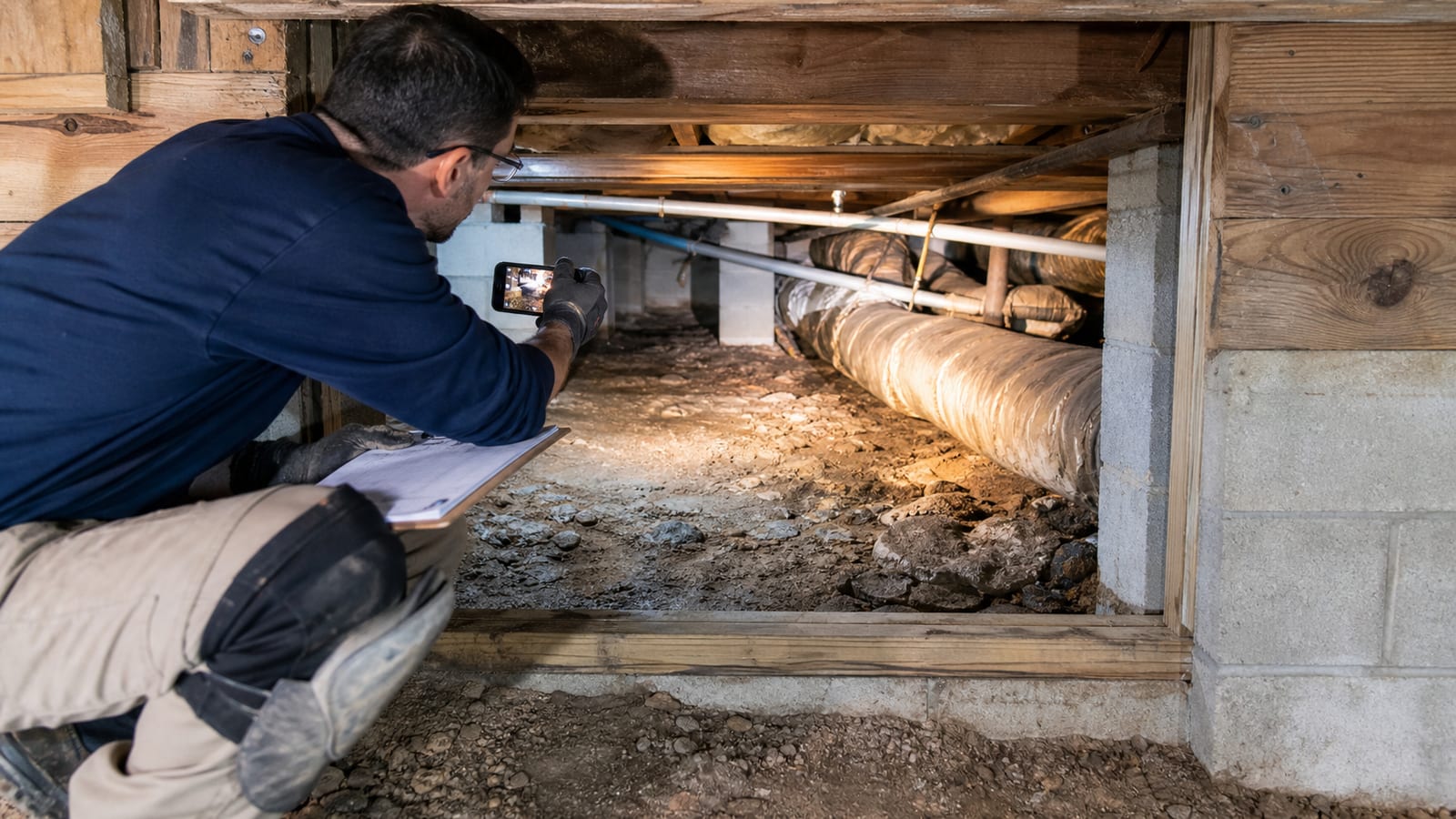
Ask for before, during, and after photos
Photos should show enough context to locate the area:
- Wide views of each crawl space section
- Foundation walls and piers
- The condition of soil and materials before covering
- Drainage paths before liner installation
- Seams, penetrations, wall edges, and access details
- Sump and dehumidifier placement
- Repaired framing or insulation
- Exterior discharge points
Closeups without location can be hard to interpret. Date information and a simple crawl space sketch make the set more useful.
Photos are evidence of visible conditions at a moment. They do not prove current operation, concealed conditions, or the absence of later trade damage.
Ask about permits and inspections without assuming one rule
North Carolina Office of State Fire Marshal interpretations indicate that conversion to a closed crawl space can require a permit in certain situations. The answer depends on scope and jurisdiction, so a buyer should ask:
- Was a permit required for this scope?
- If so, what is the permit number and final status?
- Were electrical, mechanical, plumbing, or structural permits involved?
- Are inspection records available?
- Does the visible work match the permitted scope?
Do not conclude that missing paperwork proves unpermitted work, or that one final inspection proves every moisture condition is resolved. The local authority having jurisdiction and the professionals advising the transaction should address property-specific questions.
Ask how bulk water is controlled
A liner should not be used to hide active water. Ask whether the crawl space had standing water and how the project addressed it.
Trace:
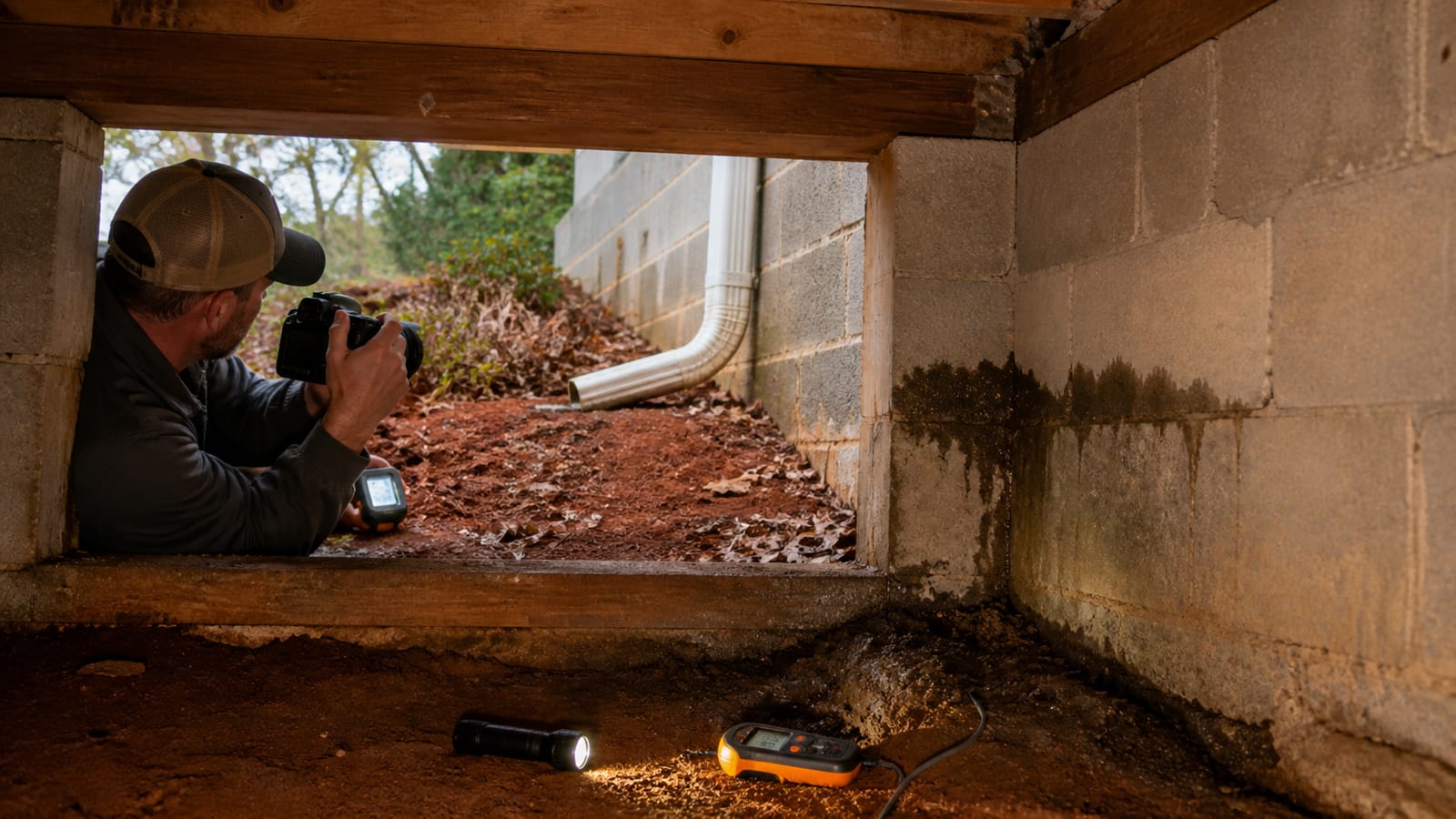
- Roof runoff through gutters and downspouts
- Grade and surface drainage around the foundation
- Wall or soil entry points
- Interior drainage channels
- The sump basin or gravity outlet
- The discharge route
- The final exterior release point
Look for water on or beneath the liner, silt, mineral deposits, a high-water mark, basin alarms, or a discharge returning toward the foundation. The standing water page explains why the source and collection path should be reviewed together.
Ask how the system behaves during heavy rain and power outages. A sump alarm, battery, backup pump, and generator connection are not interchangeable. Documentation should identify what is actually installed.
Ask how humidity is controlled and measured
If a dehumidifier is present, request:
- Equipment manual
- Installation and service dates
- Filter specifications
- Drain route
- Condensate-pump information if used
- Setpoint and sensor location
- Service or alarm history
- Any recorded humidity trend
One current reading does not show seasonal performance. Compare several dates and locations when records exist. A meter placed in direct discharge air or against a cold surface may not represent the whole space.
Inspect for water near the cabinet, blocked airflow, a dirty filter, damaged tubing, and an outlet that cannot be traced. The dehumidifier maintenance page provides the primary maintenance context.
Ask who services each component
The property file may include installers, plumbers, electricians, HVAC professionals, pest professionals, structural professionals, and inspectors. Record what each one did rather than treating one company as responsible for every part.
Ask:
- Who should service the dehumidifier?
- Who should inspect or test the sump and alarm?
- Who can identify the drainage outlet?
- Who handled structural repairs?
- Who has performed pest inspections since encapsulation?
- Has any trade entered since the original work?
- Were liner cuts or repairs documented?
The buyer can choose future providers. The immediate value is understanding system history and avoiding gaps in responsibility.
Ask how pest inspection access is preserved
Encapsulation should not prevent appropriate inspection of wood, foundation details, and areas where wood-destroying insects may be detected. Ask for the most recent wood-destroying-insect documentation if it is part of the transaction and confirm what areas were inaccessible.
North Carolina’s official WDIR guidance describes the defined scope and limitations of a wood-destroying-insect report. A WDIR is not a full moisture, structural, plumbing, HVAC, or encapsulation inspection.
Look for:
- Liner placement at foundation walls
- Visibility of sill and wood-to-masonry areas
- Access around piers and supports
- Foam or sealant that obscures inspection areas
- Recorded pest-treatment drill holes or stations
- Damage from later inspections or treatments
NC State Extension termite guidance also emphasizes moisture and inspection considerations in existing homes. Property-specific pest questions belong with a North Carolina pest professional.
Ask about structural and material work
If records mention joist, beam, subfloor, pier, or support work, obtain the scope, photos, permit information where applicable, and any professional evaluation. Do not accept “reinforced” as a complete description.
Ask:
- What symptom or damage prompted repair?
- Which members and locations were involved?
- Was active moisture corrected before repair?
- Were materials removed because of decay, growth, pests, or access?
- What work remains visible for inspection?
- Were follow-up observations recommended?
The crawl space structural repair page describes the service category. A general crawl space inspection does not replace engineering or another specialized evaluation when the findings call for it.
Inspect access and trade pathways
The access door should close securely and support the sealed design. Check whether weather, pests, or surface runoff can enter. Make sure equipment and important inspection areas can be reached without crawling across exposed wires, fragile tubing, or unsupported liner.
Later trade work is a common source of changed conditions. Look for:
- Cuts or punctures in the liner
- Open seams around new pipes or cables
- Disconnected drains
- Crushed tubing
- Insulation left on the liner
- Debris or removed access panels
- Equipment blocked by stored material
Ask for repair records after plumbing, HVAC, pest, or electrical visits.
Build a transaction-specific question list
Documents
- Original scope, contract, and final invoice
- Before, during, and after photos
- Permits and final inspection records where applicable
- Equipment manuals and model information
- Service and maintenance history
- Moisture readings with dates and locations
- Water, pest, structural, plumbing, and HVAC reports
- Transferable documents, with terms reviewed rather than assumed
Current condition
- Visible water or soft areas beneath liner
- Humidity and odor
- Wall deposits or stains
- Liner seams and penetrations
- Drainage inlets and sump basin
- Dehumidifier operation and drain
- Insulation and framing condition
- Access-door seal
- Exterior gutters, downspouts, grade, and discharge
Ongoing ownership
- Filter and equipment maintenance
- Alarm testing
- Pump and battery checks
- Post-storm observations
- Pest inspection access
- Trade-entry protection
- Recordkeeping for future resale
Limitations and when to request specialty review
A general home inspection may identify visible conditions and recommend further review. It may not include opening sealed areas, testing every drain, evaluating engineering work, diagnosing HVAC condensation, performing a WDIR, or servicing equipment. Ask what the inspection includes and what access was limited.
Schedule a crawl space specialist when the system scope is unclear, water is visible, humidity remains elevated, equipment alarms, the drain outlet is unknown, or the liner hides suspicious soft areas. Use a pest professional for WDIR and termite questions, a plumber for suspected leaks, an HVAC professional for equipment or duct concerns, an electrician for wiring, and a structural professional when movement or framing questions require it.
Transaction contracts and deadlines vary. Follow the advice of the buyer’s real-estate and legal professionals. For the crawl space itself, request a free inspection early enough to allow records and follow-up to be reviewed.
Frequently asked questions
Is an encapsulated crawl space a good sign when buying a house?
It shows that work was performed, but condition and value depend on why it was done, the scope, current moisture, drainage, equipment, maintenance, and documentation. Inspect the system rather than judging the liner alone.
Should a buyer ask for permits for crawl space encapsulation?
Yes. Ask whether the specific scope required permits and request available records. Requirements can depend on the work and jurisdiction, so verify property-specific questions with the local authority.
Does a clean liner prove there is no water problem?
No. Water may be beneath the liner, may have been removed recently, or may occur only during certain storms. Review drainage, photos, sump history, wall evidence, and current conditions.
Does a WDIR inspect the whole encapsulation system?
No. A North Carolina WDIR has a defined wood-destroying-insect scope and limitations. Moisture control, structural condition, plumbing, HVAC, drainage, and equipment may need separate reviews.
What records should transfer with the house?
Request the final scope, invoices, photos, permits where applicable, equipment manuals, maintenance history, moisture records, drain and discharge map, pest reports, repair documents, and any transferable terms.
Sources and further reading
- North Carolina Office of State Fire Marshal: Permit Required for Conversion to a Closed Crawl Space
- North Carolina Department of Agriculture and Consumer Services: Structural Homebuyers Guide to the WDIR
- North Carolina State Extension: Preventing Termite Problems in Existing Homes
- U.S. Department of Energy: Unvented Conditioned Crawlspaces
- U.S. Environmental Protection Agency: A Brief Guide to Mold, Moisture and Your Home
How this applies in Fuquay-Varina, NC
For a home transaction in Fuquay-Varina, NC, keep crawl space reports, scope documents, equipment details, and maintenance records together. The city identifies the property context, while inspection, legal, pest, engineering, and code questions still belong to the professionals responsible for those scopes. Compare the crawl space inspection checklist with the How to Choose a Crawl Space Company Near Fuquay-Varina, NC before choosing a property-specific next step.