
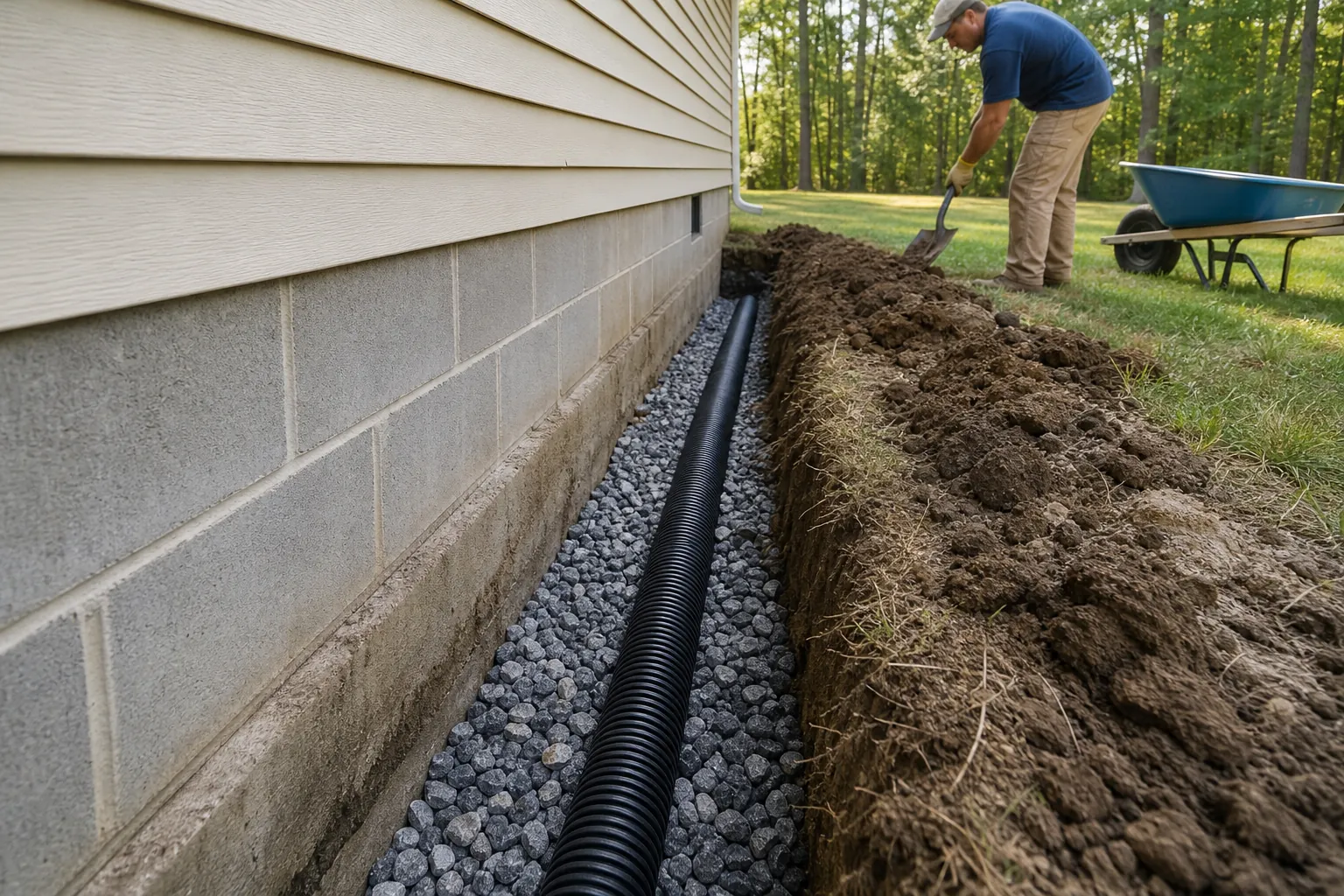
A french drain crawl space exterior setup may help move groundwater away from a home, but it is only one part of moisture control. In Garner, start by checking where water collects, how the ground slopes, and where downspouts send roof runoff. Then compare drainage needs with crawl space moisture sources and seek qualified advice.
How Can a French Drain Help With Exterior Crawl Space Moisture?
Exterior drainage can affect how much water reaches the soil beside a crawl space. A French drain may collect and redirect groundwater when a site and drainage plan suit that approach. It cannot address every moisture source, so review the whole system with the [crawl space encapsulation system guide]( crawl space encapsulation system guide ) and [crawl space moisture control options]( crawl space moisture control options ).
Water can reach crawl space areas in more than one way. Rain may collect beside the foundation, run toward a low spot, or soak into soil near the home. Plumbing leaks, damp air, and water vapor are other possible sources. Finding the source matters because each one calls for a different response.
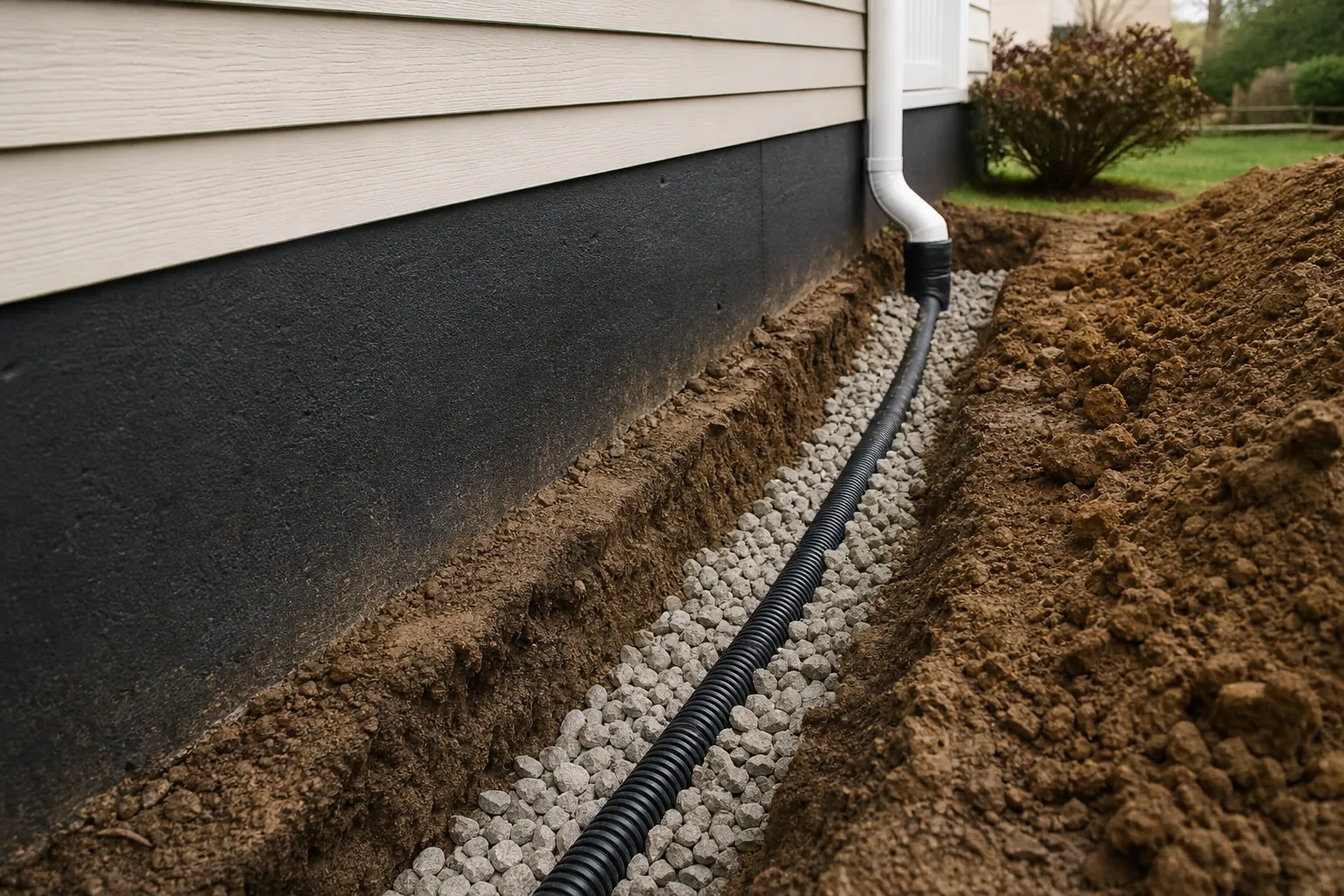
A French drain is a buried drainage feature. In general, it uses a path that collects water and carries it toward a suitable outlet. The exact design depends on the site, soil, slope, existing drains, and local rules. A name alone does not show whether a proposed system fits a home.
Exterior drainage and crawl space measures serve related but distinct roles. Drainage may help manage water around the foundation. A vapor barrier or other interior measure addresses conditions within the crawl space. Review those choices in the [moisture control options overview]( moisture control options overview ) and [crawl space system guide]( crawl space system guide ).
Think of drainage as one part of a moisture plan, not a stand-alone fix. If water remains after rain, first record where it appears and how long it lasts. Note any odor, wet soil, or visible growth without trying to diagnose the cause. Share those observations with an appropriate professional.
- Surface runoff can flow toward the foundation when the ground directs it there.
- Groundwater can collect in low areas or move through soil around a home.
- Roof runoff can add water near the foundation if discharge points are poorly placed.
- Indoor moisture sources may need a different response from yard drainage.
What Should You Check Before Considering a French Drain?
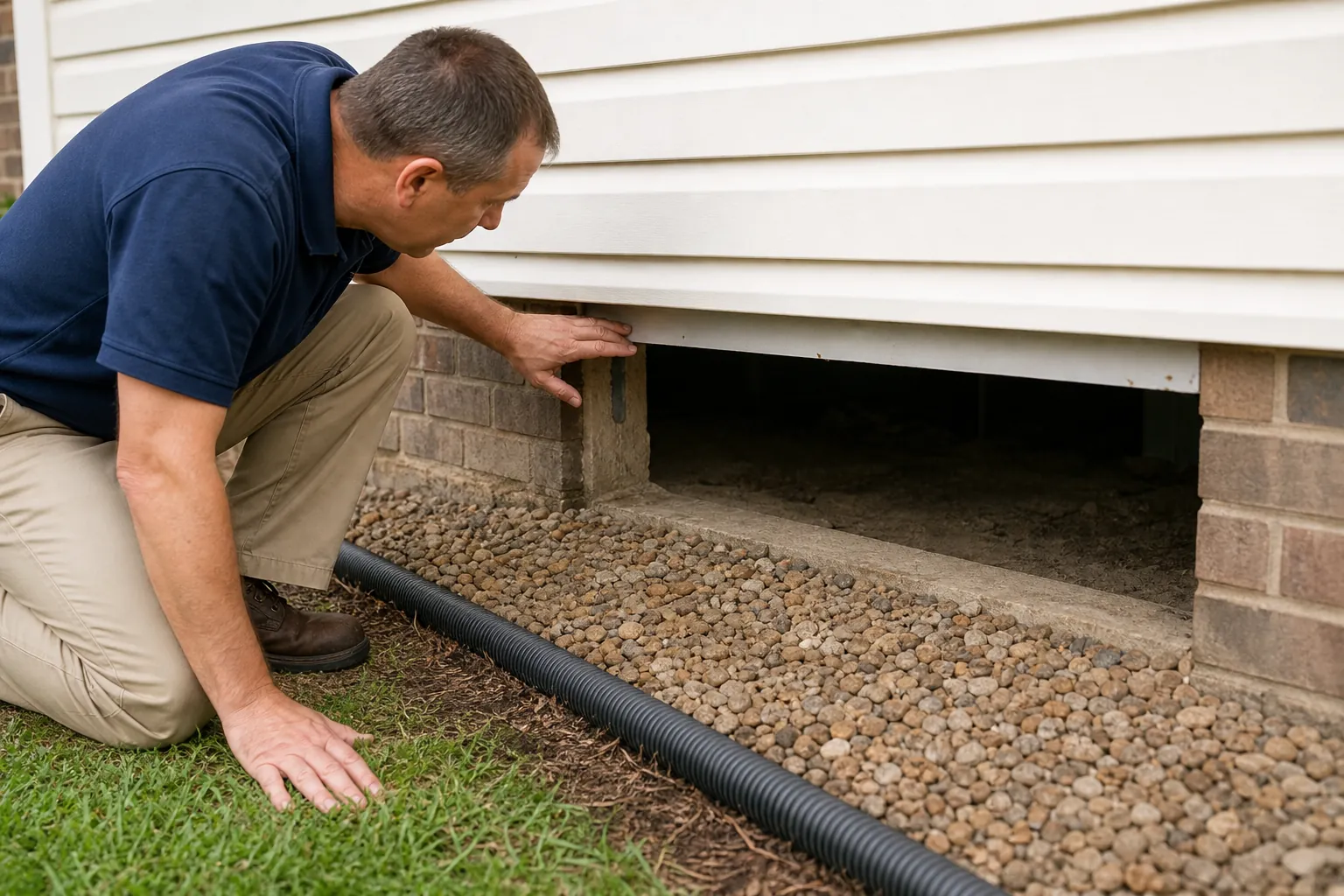
Before considering a French drain, look for repeat patterns rather than guessing from one wet day. Check the yard, roof runoff, crawl space access, and any known plumbing concerns. These observations can help a qualified drainage professional assess the site alongside the [crawl space moisture inspection guide]( crawl space moisture inspection guide ) and [system overview]( crawl space system overview ).
Start outdoors after rain, when water movement is easier to see. Notice whether puddles form beside the foundation, in a low part of the yard, or near a downspout outlet. Record the location and weather conditions. Do not enter an unsafe or flooded crawl space to gather more details.
Check whether roof runoff has a clear path away from the home. Look for disconnected or blocked downspouts, soil washout, or water marks. These signs do not prove that a drain is needed. They can help narrow down the questions to ask.
Inside the crawl space, note visible dampness, standing water, or a musty smell only if the area is safe to access. Avoid touching suspected mold or disturbed materials. A general moisture check is not the same as a diagnosis of a home. NC State Extension offers a [general mold and moisture checklist]( crawl space system overview ) for broad inspection context.
Keep a simple log over several rain events. Include dates, rainfall conditions as you observed them, and where water appeared. This helps separate a one-time event from a recurring pattern. It also gives a professional clearer information than a broad description such as “the crawl space is wet.”
Some questions need a qualified trade or local authority. A drainage professional can assess site conditions and possible discharge paths. A plumber may be needed if a leak is suspected. For structural or safety concerns, contact the right qualified professional rather than relying on a general drainage opinion.
- Walk the yard after rain and mark spots where water stands or flows.
- Check downspouts and note where roof runoff reaches the ground.
- Record crawl space dampness only when access is safe.
- Ask a qualified professional to assess the source before choosing a system.
How Do Garner’s Local Conditions Shape Drainage Questions?
Garner is in the Triangle, where hot, humid summers and red clay soils can affect water movement and crawl space conditions. Those broad regional traits do not predict how one lot will behave. Compare your observations with the [crawl space system guide]( crawl space system guide ) and [moisture inspection reading guide]( moisture inspection reading guide ) before settling on a plan.
Red clay can hold water, but soil varies from one property to another. Fill, grading, landscaping, buried lines, and past work can change how water moves. A general description of local soil cannot replace a site review. Ask the person assessing the property to explain what they observed.
Summer humidity is another factor. Warm, humid outdoor air may affect a crawl space, especially when outside air enters through vents. A wet crawl space may have more than one cause, so look at both liquid water and damp air. The [U.S. EPA's home moisture guide]( crawl space system guide ) offers general moisture context, not a diagnosis of a specific home.
Vented crawl spaces are common in the region, but a vent alone does not tell you whether drainage is adequate. The key questions are where water enters, what keeps the space damp, and whether the current setup fits the home. The U.S. Department of Energy discusses general design context for conditioned crawl spaces; it does not establish what a particular property needs.
When speaking with a contractor, ask how local site conditions shape the proposed approach. Ask what evidence points to the water source and how the plan handles the collected water. If the answer focuses on a single product without addressing the site, seek more explanation before deciding.
A local review should account for the home's layout and the surrounding land. Homes on nearby streets can have different slopes, soil disturbance, and drainage paths. Use regional hints to guide questions, not to assume that every Garner home needs the same work.
Is a French Drain the Same as Crawl Space Encapsulation?
No. A French drain and crawl space encapsulation serve different roles. A drain may manage water in the soil around a property, while encapsulation concerns conditions within the crawl space. Compare both ideas in the [encapsulation system guide]( encapsulation system guide ) and [vapor barrier thickness choices]( vapor barrier thickness choices ) before weighing options.
Encapsulation is a broad term for measures intended to separate the crawl space from some sources of moisture. The specific parts of a system vary. The supplied sources do not establish which services or products Carolina Encapsulation Company offers, so confirm any company-specific scope directly rather than assuming.
A vapor barrier is one possible part of a crawl space moisture approach. Its role differs from a buried drain that manages water around the yard or foundation. Thickness choices alone do not explain whether a barrier is suited to a particular home. Ask what conditions the proposed material addresses and how it fits the wider plan.
A dehumidifier may be considered for moisture in the air, while drainage addresses water movement. Neither choice should be treated as a substitute for finding the source. The [dehumidifier benefits guide]( crawl space dehumidifier benefits ) can help frame questions about that option. A qualified professional should explain how any proposed measures work together.
If a crawl space has standing water, ask about the water source and the safe path for removal. If the concern is humid air without visible water, ask how that condition was assessed. Different findings can lead to different next steps. Do not assume that adding more equipment will resolve an unconfirmed cause.
The goal of comparing options is to understand scope. Ask which area each measure serves, what problem it is meant to address, and what limits apply. The answer should distinguish yard drainage, water control, vapor barriers, and air moisture rather than grouping them as one fix.
What Questions Help You Compare Drainage Plans?
Compare drainage plans by asking what water source each plan addresses, where collected water will go, and what site facts support the design. Ask about limits and follow-up needs, too. Use the [moisture control options guide]( moisture control options guide ) and [crawl space system overview]( crawl space system overview ) to keep the discussion focused.
A useful proposal should explain the problem in plain terms. Ask the professional to show where water moves and why the recommended path fits the property. If the source is uncertain, ask what further inspection is needed. A clear explanation helps you compare plans without relying on product names.
Ask where water will discharge and whether that point is suitable for the site. Do not assume that collected water can be sent anywhere. Local requirements and site conditions may affect the answer. A qualified professional or local authority can clarify questions that depend on rules or property details.
Ask what the plan does not address. A French drain may not resolve a plumbing leak, humid air, or every source of water. A crawl space measure may not correct a yard grading issue. Knowing the limits helps prevent a mismatch between the work and the concern.
Request a clear description of the proposed work, the areas involved, and any access or upkeep needs. Ask how the professional will check the work after installation. These details help you compare scope. They do not establish a specific result, and no one should promise a fixed outcome without support.
Take time to compare explanations. If two plans differ, ask each professional to explain the site evidence behind their approach. You can also ask what would change the recommendation. A sound discussion should make room for uncertainty when the cause is not yet clear.
- Ask what source of water the plan is meant to address.
- Ask what site observations support the proposed drainage path.
- Ask where collected water will go and who can confirm that choice.
- Ask what the plan leaves unresolved and what follow-up may be needed.
What Are Practical Next Steps for a Damp Crawl Space?
Start with safe observations, then match the next step to the likely source. Do not enter standing water or disturb suspected mold. Gather details for a qualified professional and review the [inspection reading guide]( crawl space inspection reading guide ) alongside the [crawl space system guide]( crawl space system guide ) as you plan questions.
If water is present, keep people away from unsafe areas. Do not touch electrical equipment near water or enter a space with an unknown hazard. For immediate danger, use the appropriate emergency or utility service. A general online article cannot assess the safety of a specific crawl space.
For a recurring moisture concern, make a record of what you see outdoors and indoors. Take photos from a safe place if useful. Note the date, recent rain, and the location of damp areas. Share the record with the professional who assesses the home.
If you suspect a plumbing leak, contact a qualified plumber. If the concern is yard runoff or groundwater, seek a drainage assessment. If humidity or crawl space materials are the main concern, ask a qualified crawl space professional how they assess those conditions. The right contact depends on what the evidence shows.
Keep the questions focused on cause, scope, and next steps. Ask the professional to explain findings in plain language and distinguish observed facts from assumptions. If the proposed work involves local rules, permits, or structural changes, confirm requirements with the appropriate authority or qualified expert.
For Garner homeowners, local climate and soil can guide what to observe, but they cannot settle the diagnosis. A site-specific review matters. Compare the proposed approach with other moisture measures only after you understand the source and the limits of each option.
Questions about next steps? Call Carolina Encapsulation Company at 704-207-9348 or review encapsulation.
Frequently Asked Questions
Can a French drain stop every crawl space water problem?
No. A French drain is one way to manage some water around a property. It may not address a plumbing leak, water entering from another location, damp air, or moisture from other sources. The first step is to identify the likely source. A qualified professional can assess the site and explain what a proposed drain can and cannot address.
Does red clay mean a Garner home needs a French drain?
No. Red clay is a regional soil detail, not a diagnosis of one lot. Grading, fill, landscaping, buried lines, and the home's layout can change how water moves. Look for repeated puddles or wet areas and ask a qualified professional to assess them. A site review is more useful than assuming every home has the same drainage need.
Should I choose a drain or a dehumidifier first?
That depends on the source of moisture. A drain may relate to water movement in soil, while a dehumidifier relates to moisture in air. Visible standing water and high humidity call for different questions. Ask a qualified professional to assess the conditions before choosing equipment or drainage work, and request an explanation of how each measure fits the plan.
Can I inspect a crawl space myself?
Only observe areas that are safe to access. Do not enter standing water, touch electrical items near water, or disturb suspected mold or damaged materials. If the space has an unknown hazard, stay out and contact an appropriate qualified professional. A log of outdoor puddles and visible signs from a safe location can still help.
What should a drainage professional explain before work begins?
Ask what water source the plan addresses, what site observations support it, and where collected water will go. Ask what the work does not address, whether local rules need review, and what upkeep or follow-up may be needed. These questions help clarify scope and limits. Confirm site-specific requirements with the appropriate qualified authority.
Sources
- Mold and Moisture Checklist, NC State Extension
- A Brief Guide to Mold, Moisture and Your Home, U.S. EPA
- Unvented Conditioned Crawlspaces, U.S. Department of Energy
Call 704-207-9348 to talk through next steps.