
Short answer
A crawl space finding should be repaired promptly when it points to active water, an electrical or access hazard, continuing material damage, unstable framing, or a failed component that protects the space. Monitoring can be reasonable when the condition is limited, stable, and measurable. “Monitor” should never mean ignore. It needs a dated baseline, a defined check interval, and a clear trigger for another inspection or repair.
A home inspection report is a starting point, not a complete scope of work. Inspectors often identify visible symptoms and recommend further evaluation because insulation, stored materials, low clearance, liners, ducts, and plumbing can limit what they can see. Before deciding, connect each written observation to its exact location, current condition, likely consequence, and the professional best suited to evaluate it.
Start by translating the report into observable conditions
The most useful first step is to turn broad report language into a location-based list. “Moisture in crawl space” is too general for a repair decision. “Damp soil below the rear downspout after rain” or “elevated reading on the subfloor beside a plumbing penetration” gives a specialist something specific to verify.
For every crawl space item, record:
- The room or exterior side above the finding.
- Whether the condition was wet, damp, stained, loose, cracked, displaced, or simply inaccessible.
- The date, recent weather, and whether heating or cooling equipment was operating.
- Any meter reading, the meter type, and the material that was tested.
- Whether the report describes a current condition or evidence of an older one.
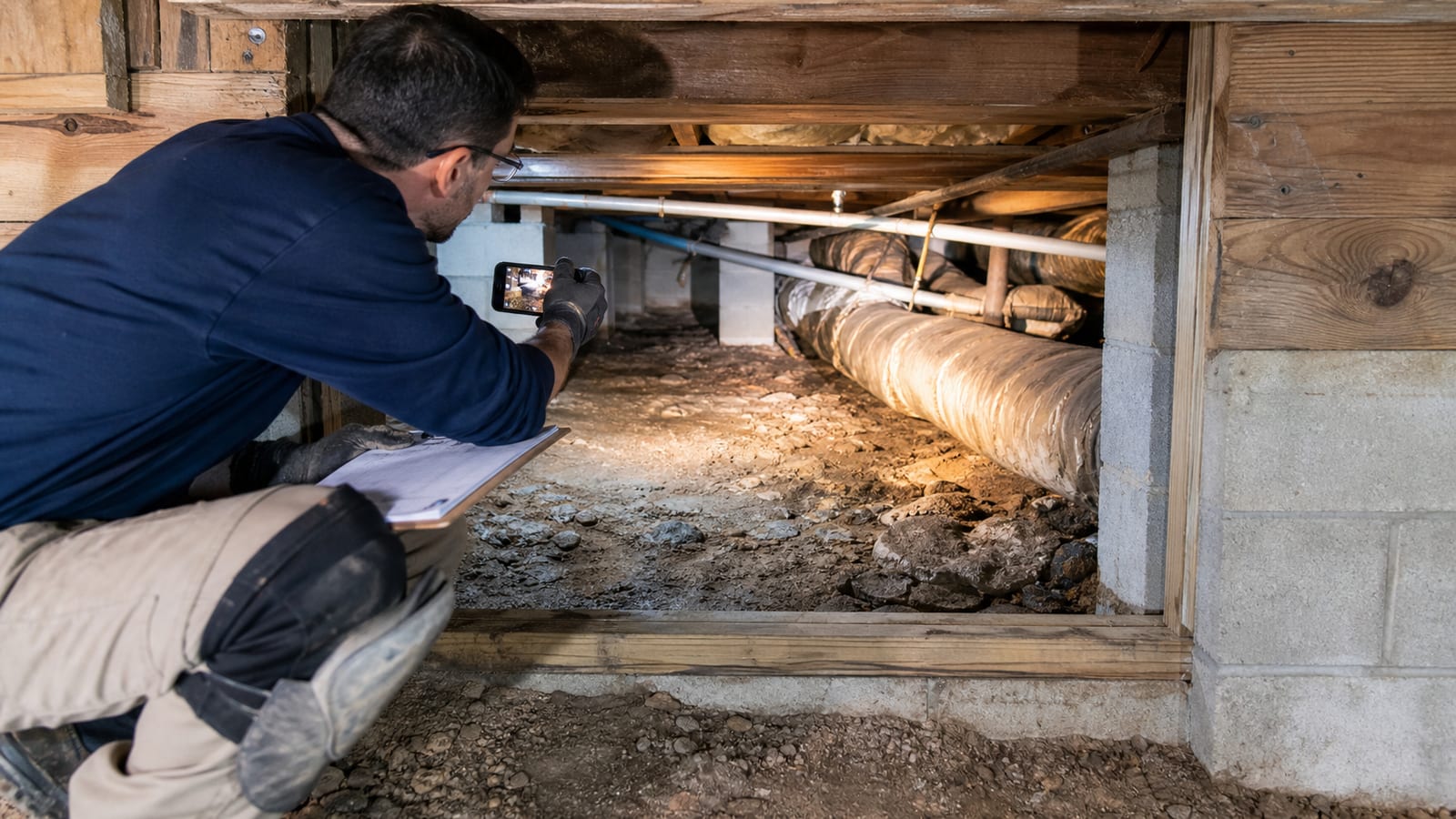
- Which photographs belong to that observation.
- What area could not be inspected and why.
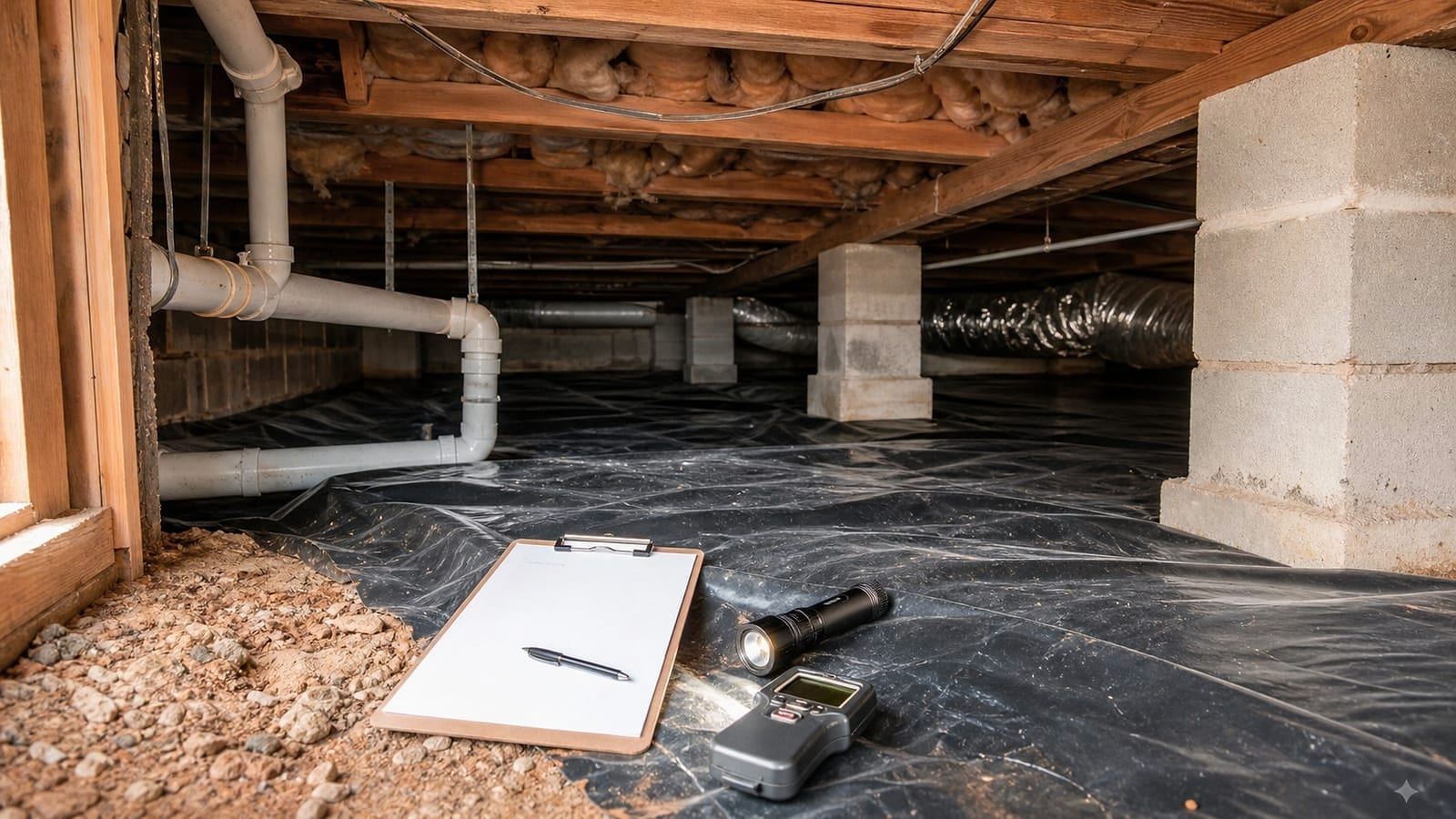
Read the full narrative, not only the summary page. A summary may group a wet pier, fallen insulation, and a blocked access route under one heading even though each needs a different response. The site’s crawl space inspection checklist can help organize a second look without treating a checklist as a substitute for professional judgment.
Separate symptoms from causes
A stain does not establish whether water came from a plumbing leak, condensation, ground moisture, or an earlier event. Fallen insulation does not prove the wood behind it is damaged. A floor that feels soft or springy does not reveal, by itself, which framing member is involved. The decision becomes more reliable when the visible symptom and the suspected source are documented separately.
This distinction also prevents a cosmetic repair from hiding an active problem. Replacing insulation before tracing the moisture source, for example, can leave the new material exposed to the same conditions. The common crawl space problems hub shows how water, humidity, materials, and floor symptoms overlap while still requiring separate diagnosis.
Findings that usually deserve prompt evaluation
Prompt evaluation is appropriate when delay could allow water, material deterioration, equipment failure, or unsafe access to continue. That does not mean every item requires the same contractor or that the repair named in a report is automatically the final scope.
Active water and wet electrical areas
Standing water, a flowing leak, repeated wetting after rain, or water near wiring and powered equipment should not be placed on an open-ended watch list. Avoid entering water where electrical contact may be possible. Document the condition from a safe location, note whether it followed rainfall or plumbing use, and contact the appropriate qualified professional.
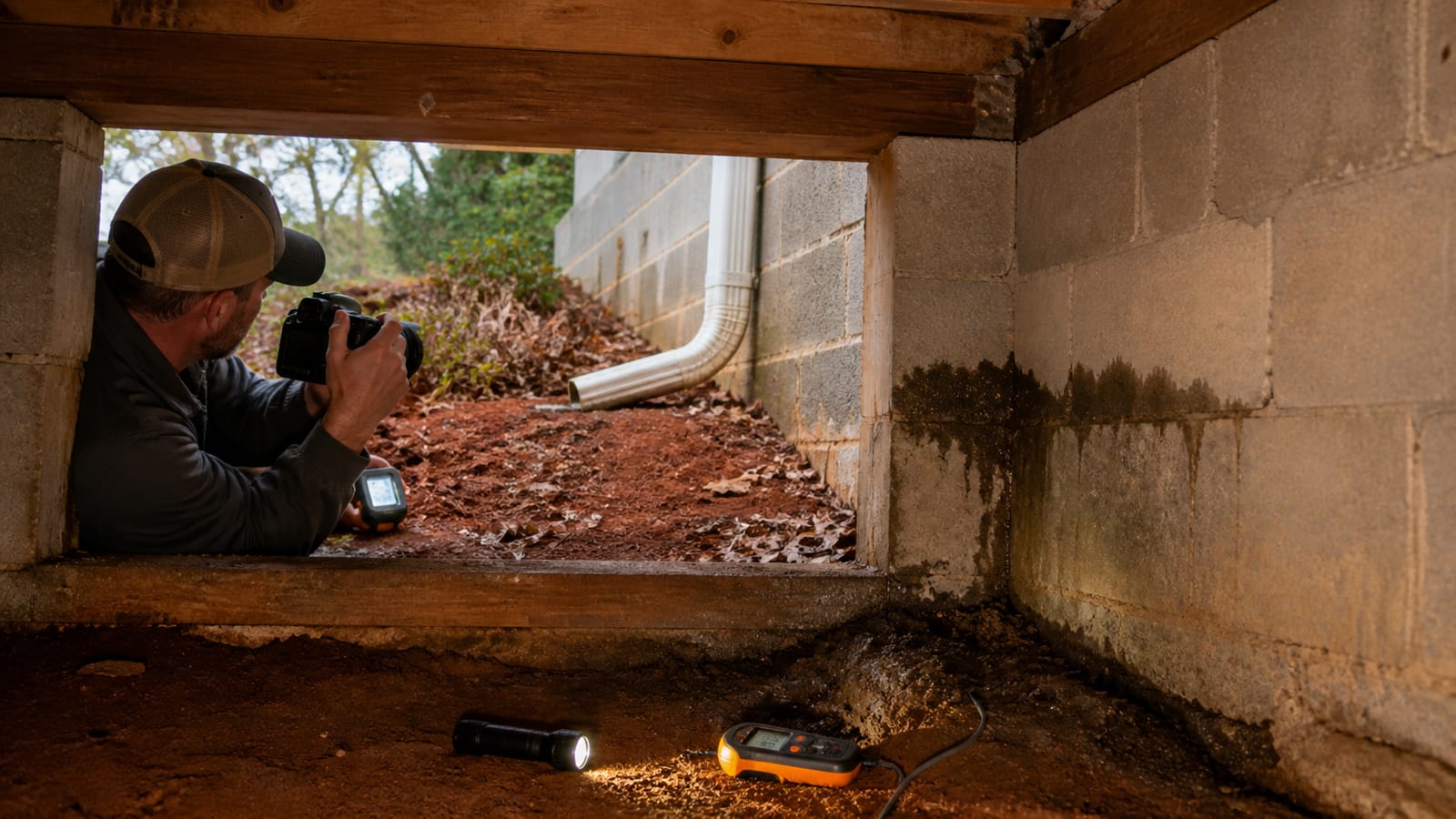
If water collects after storms, the evaluation should consider roof runoff, downspouts, grade, wall entry, low points, and the discharge route rather than focusing only on the puddle. The standing water problem page and foundation drainage improvements page explain the difference between observing water and designing a source-specific correction.
Framing movement or visibly deteriorated wood
A split member, displaced support, visibly deteriorated wood, pronounced sag, or change in floor movement calls for closer review. The important questions are where the movement occurs, what carries the load below it, whether the wood is wet, and whether the condition is changing.
Do not assume that adding a post or sistering a joist is appropriate from a photograph alone. A qualified structural professional may need to evaluate spans, connections, supports, loads, and material condition. The sagging or bouncy floors page connects the upstairs symptom to the inspection below, while joist, beam, and subfloor repair describes the repair category without prescribing a solution remotely.
Continuing moisture and damaged materials
Wet insulation, recurring condensation, damp subflooring, visible fungal growth, and persistent musty odor indicate that moisture may still be affecting materials. The U.S. Environmental Protection Agency emphasizes moisture control as the central step in addressing mold conditions. Cleaning or replacing material without controlling moisture can leave the cause in place.
The inspection should identify whether the source is bulk water, ground vapor, humid air contacting a cool surface, or a plumbing or mechanical issue. A crawl space moisture control assessment can look at those pathways together.
Failed drainage or humidity-control components
A sump alarm, disconnected drain, non-operating dehumidifier, torn liner at a drain, or access door that no longer closes may affect the larger system. Confirm power only from a safe, accessible location, review manuals and service records, and avoid bypassing safety controls. A component problem may be maintenance, repair, or evidence that the source load has changed.
Findings that may support a defined monitoring plan
Monitoring can be useful when the observation is limited, no active source is found, materials are stable, and the consequence of waiting is understood. The plan should be written before the transaction decision, not improvised months later.
Possible examples include an isolated old stain that is dry during repeat checks, a small liner scuff that has not opened into a tear, a stable crack a qualified professional has already evaluated, or a humidity reading that returns to its normal range after a documented temporary event. These examples are not automatic approvals to wait. Each depends on access, history, and surrounding evidence.
A monitoring plan needs five parts
- A baseline: Take dated photographs from repeatable angles and record exact locations.
- A measurement: Use the same suitable instrument and method when a reading matters.
- A schedule: Tie rechecks to meaningful events such as heavy rain, a seasonal change, or equipment service.
- An action trigger: Define what rise, spread, recurrence, odor, water appearance, or floor change will prompt evaluation.
- An owner: Name who will check it and where the record will be stored.
“Watch the crawl space” is not a plan because a future owner cannot tell what changed. “Photograph the rear-left pier and record the adjacent subfloor reading after the next heavy rain, then request an inspection if moisture returns” is specific enough to follow.
How uncertainty changes the repair decision
Limited access should increase caution, not produce a false all-clear. A report may note that insulation concealed the subfloor, a liner covered the soil and lower wall, ductwork blocked a bay, or clearance prevented entry. The unobserved area is not automatically damaged, but its condition is unknown.
Ask whether the obstruction can be moved safely and restored without damaging the system. If destructive access would be required, the buyer, seller, inspectors, and relevant trades should agree on scope before work begins. For encapsulated spaces, protect the liner and document its condition before and after anyone enters.
Recent repairs also require context. Fresh paint, new insulation, new piers, or a clean liner may be appropriate work, but appearance alone does not explain the original finding or confirm that the source was corrected. Request dates, scope documents, photographs taken before covering surfaces, equipment information, permits when applicable, and maintenance records.
Build a repair sequence instead of a repair pile
Related findings should be ordered so one trade does not undo another’s work. A practical sequence begins with safety and source control, then moves to material and finish work.
- Address unsafe electrical, access, or active leak conditions through the appropriate professional.
- Trace exterior and interior water sources.
- Establish whether framing needs structural evaluation.
- Correct drainage, plumbing, air, or humidity sources as supported by the inspection.
- Remove or repair material that cannot remain.
- Restore insulation, liner continuity, access, and equipment connections.
- Record baseline conditions for future checks.
This order is not a universal construction specification. A site inspection may change it. It does prevent a common mistake: paying to replace a visible damaged item before anyone determines why it became damaged.
Questions to ask before agreeing to repair or monitor
A concise question list keeps transaction discussions tied to evidence:
- Is the condition active today?
- What evidence identifies the source, and what remains uncertain?
- Which areas were inaccessible?
- Could delay allow water, movement, or material deterioration to continue?
- Does the recommendation address the cause, the damaged material, or both?
- What adjacent systems need coordination?
- What documentation will show the completed scope?
- If monitoring is proposed, what exact trigger changes the decision?
For a broad condition review, crawl space repair is the parent service category. When the question is specifically structural, use a professional qualified for that scope rather than asking a moisture contractor to make conclusions outside the inspection.
Limitations and when to schedule another inspection
Photographs, seller statements, and a general home inspection cannot establish the condition of concealed areas or determine every cause. Meter readings also vary with material, meter type, location, temperature, and technique. A dry-day observation may miss a rain-driven path, while a wet-day observation may not show whether the condition persists.
Schedule a focused inspection when:
- Water is active, recurring, or near electrical components.
- Floor movement, cracking, or support displacement is visible or changing.
- A musty odor, wet insulation, or damp wood returns.
- An alarm or moisture-control component is not operating normally.
- Important areas were inaccessible.
- Repair proposals disagree about the source.
- The monitoring trigger you documented has been reached.
Carolina Encapsulation Company offers a free crawl space inspection within its confirmed service area. The contact page provides the next step for a crawl space condition review. Structural, pest, electrical, plumbing, HVAC, and transaction questions may still require separate qualified professionals.
Frequently asked questions
Does every crawl space item in a home inspection need immediate repair?
No. The decision depends on whether the condition is active, its likely consequence, what is accessible, and whether it can be measured reliably. Active water, unsafe access, changing floor movement, or continuing material damage deserves prompt evaluation. A limited stable observation may support monitoring only when the plan includes a baseline, check timing, and action trigger.
What does “monitor” mean in a useful inspection response?
Useful monitoring records the exact location, date, photograph, measurement method, recent weather, and a future action trigger. It also identifies who will perform the check. A vague note to watch an area gives the next owner no reliable way to distinguish an old mark from a new or worsening condition.
Can a moisture reading prove that structural repair is needed?
No. A moisture reading is one piece of evidence. It needs the tested material, meter type, location, comparison readings, visible condition, and source investigation. Structural decisions also depend on member size, span, connections, supports, loads, and material condition. Those questions may require a qualified structural professional.
Should a seller complete repairs before a buyer gets another inspection?
The parties should follow their contract and professional transaction advice. From a condition-documentation standpoint, a focused evaluation before work can clarify the source and create a useful baseline. Completed work should be documented with scope, dates, photographs, permits when applicable, and any equipment or maintenance information.
Who should inspect a crawl space when several systems are involved?
Start with the professional whose scope matches the main evidence. Active plumbing, electrical concerns, pest evidence, HVAC condensation, and structural movement can require different specialists. A crawl space moisture inspection can help organize water, humidity, liner, drainage, and material observations, but it does not replace every trade-specific evaluation.
Sources and further reading
- EPA: A Brief Guide to Mold, Moisture and Your Home
- NC State Extension: Mold and Moisture Checklist
- North Carolina Department of Agriculture: Homebuyer’s Guide to the Wood-Destroying Insect Report
How this applies in Lillington, NC
For a home transaction in Lillington, NC, keep crawl space reports, scope documents, equipment details, and maintenance records together. The city identifies the property context, while inspection, legal, pest, engineering, and code questions still belong to the professionals responsible for those scopes. Compare the crawl space inspection checklist with the How to Choose a Crawl Space Company Near Fuquay-Varina, NC before choosing a property-specific next step.