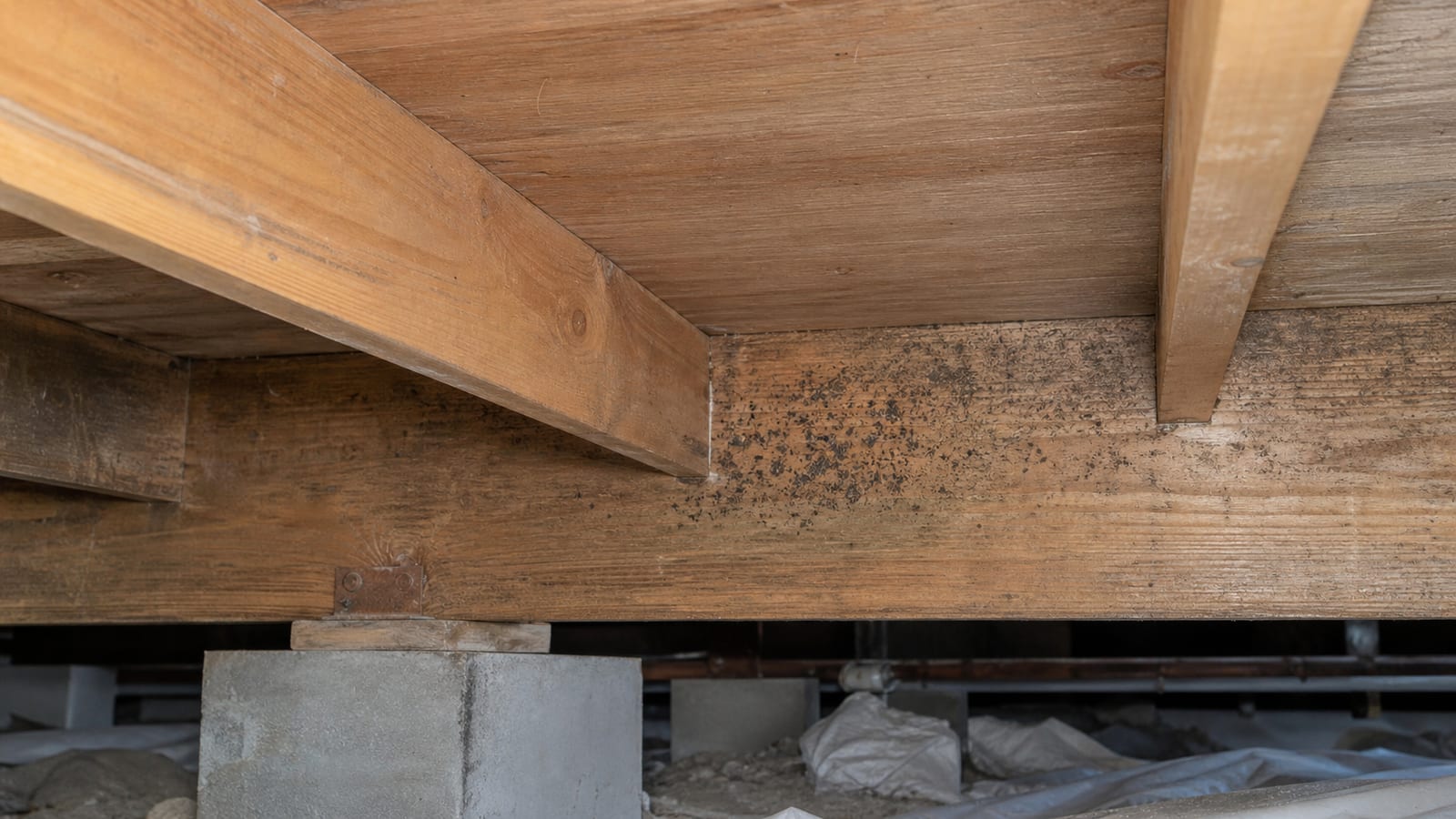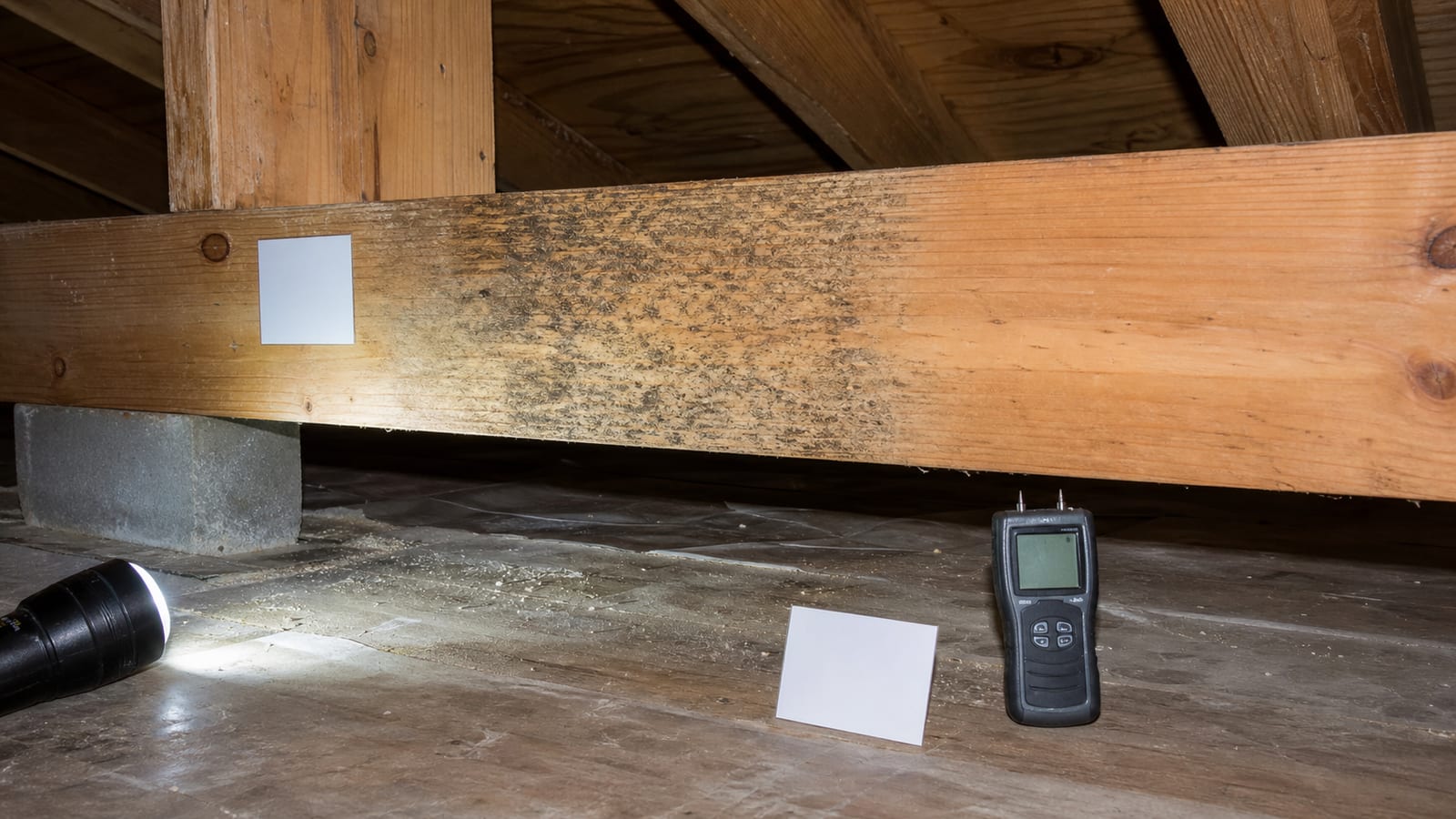
Different molds and other growths can occur in crawl spaces, but color, texture, and photographs cannot reliably identify a species. White, black, green, yellow, or fuzzy material should be documented as visible growth or an unknown deposit until evidence supports more. Moisture source, substrate, extent, and material condition usually matter more to the repair scope than a visual name.
North Carolina crawl spaces can contain fungi, bacteria, mineral deposits, soil, soot, insect debris, wood staining, adhesives, and corrosion products. Low light and camera processing make field color even less reliable. The responsible starting point is to describe what is present, find why the surface became damp, and decide whether identification would actually change the work.
What types of growth can be found in crawl spaces?
Crawl spaces may contain many fungal genera, wood-decay fungi, surface molds, and non-mold materials that look biological. A field inspection cannot sort them accurately by color alone. The useful categories are visible surface growth, suspected wood decay, unknown deposits, and damaged porous materials, each documented with moisture and substrate evidence.
Surface mold-like growth can appear as spots, films, patches, or fuzzy material on wood, paper facing, or debris. Wood-decay fungi involve a different material concern because they can be associated with deterioration of wood, but structural condition cannot be decided by naming a fungus from appearance.
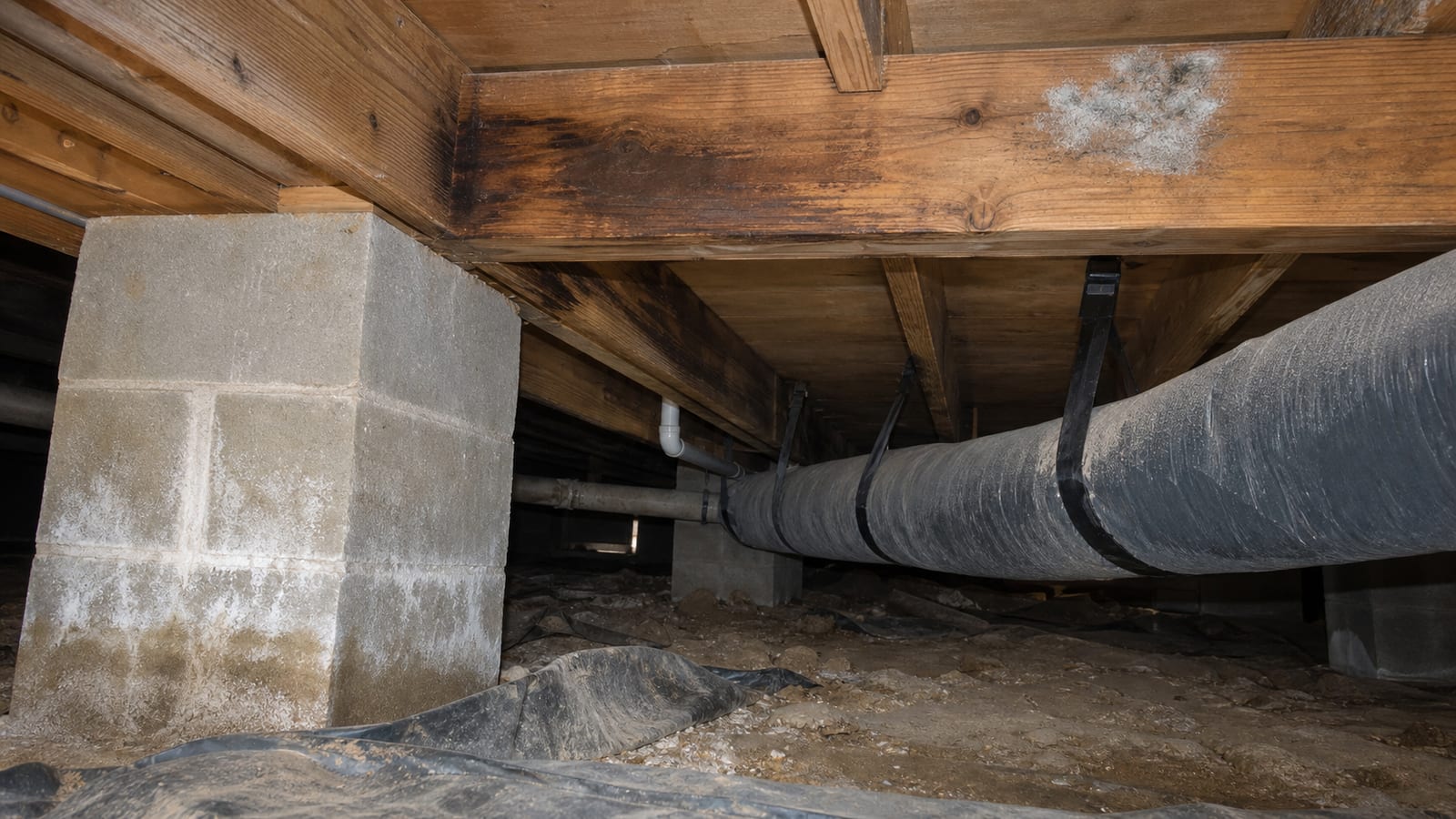
Mineral efflorescence often appears as a white powder on masonry where moisture moved through and left salts behind. It is not mold, though its presence can point to a wall-moisture pathway.
Soil splash, dust, and insect residue can form dark patterns on liners and framing. Adhesives and wood extractives can discolor surfaces. The inspection should avoid forcing these materials into a mold category without evidence.
Why can’t mold be identified by color?
Color cannot identify mold because many species share colors, one species can vary with substrate and conditions, and unrelated materials can look the same. Lighting, moisture, age, camera white balance, and surface texture also change appearance. Naming “black mold” or “white mold” from sight overstates what is known and can misdirect the scope.
The U.S. Environmental Protection Agency’s mold and moisture guide focuses on controlling moisture and cleaning appropriate materials rather than using color as a risk category.
Black material can be soil, soot, staining, insect debris, adhesive, or one of many growths. White material can be efflorescence, dust, fibers, residue, or biological growth. Green, orange, and yellow colors are equally non-specific.
Even a laboratory identification does not establish the moisture source, full extent, exposure, or health outcome. It answers a narrower question about the sample collected.
What should be documented instead of a species name?
Document location, dimensions, pattern, substrate, texture, nearby water evidence, material dampness, recent weather, plumbing routes, ventilation, liner condition, and access limits. These observations help trace the source and define cleaning or removal. A species label without that context adds little practical information.
Use a location code such as “north wall, bay N3, beneath laundry.” Include wide and close photographs. Measure extent by square area, wall length, or joist bays.
Record whether the material is on wood, masonry, paper facing, fiberglass, plastic, metal, or soil. Note softness, decay, sagging, delamination, corrosion, or staining separately from the surface growth.
The crawl space mold inspection evidence guide explains how to build a repeatable record without turning observation into unsupported identification.
What are the top 6 look-alikes in crawl spaces?
Six common look-alikes demonstrate why appearance needs context:
-
Efflorescence
White, powdery mineral salts can form on masonry as water moves through and evaporates. The deposit is not mold, but it can identify a moisture pathway that deserves drainage or wall investigation.
-
Wood staining
Natural extractives, metals, previous wetting, and construction exposure can darken wood. Stain alone does not establish active growth or structural damage. Inspect texture, moisture, and change over time.
-
Soil and dust
Air movement, construction, and flooding can deposit fine material on wood, ducts, liner, and insulation. Wipe testing should be used cautiously and only where disturbance is safe.
-
Insect material
Webs, casings, frass, nests, and debris can create spots or films. Do not disturb suspected pest material blindly. Preserve evidence when a pest professional may need to identify the pathway.
-
Adhesives and coatings
Old construction adhesives, overspray, paint, and sealants can age into irregular colors. Note edges, application patterns, and adjacent work before interpreting them as growth.
-
Corrosion and condensate residue
Metal ducts, fasteners, and equipment can develop corrosion or residue where condensation occurred. The deposit may identify a cold-surface or drainage condition even when it is not biological.
When does laboratory testing add value?
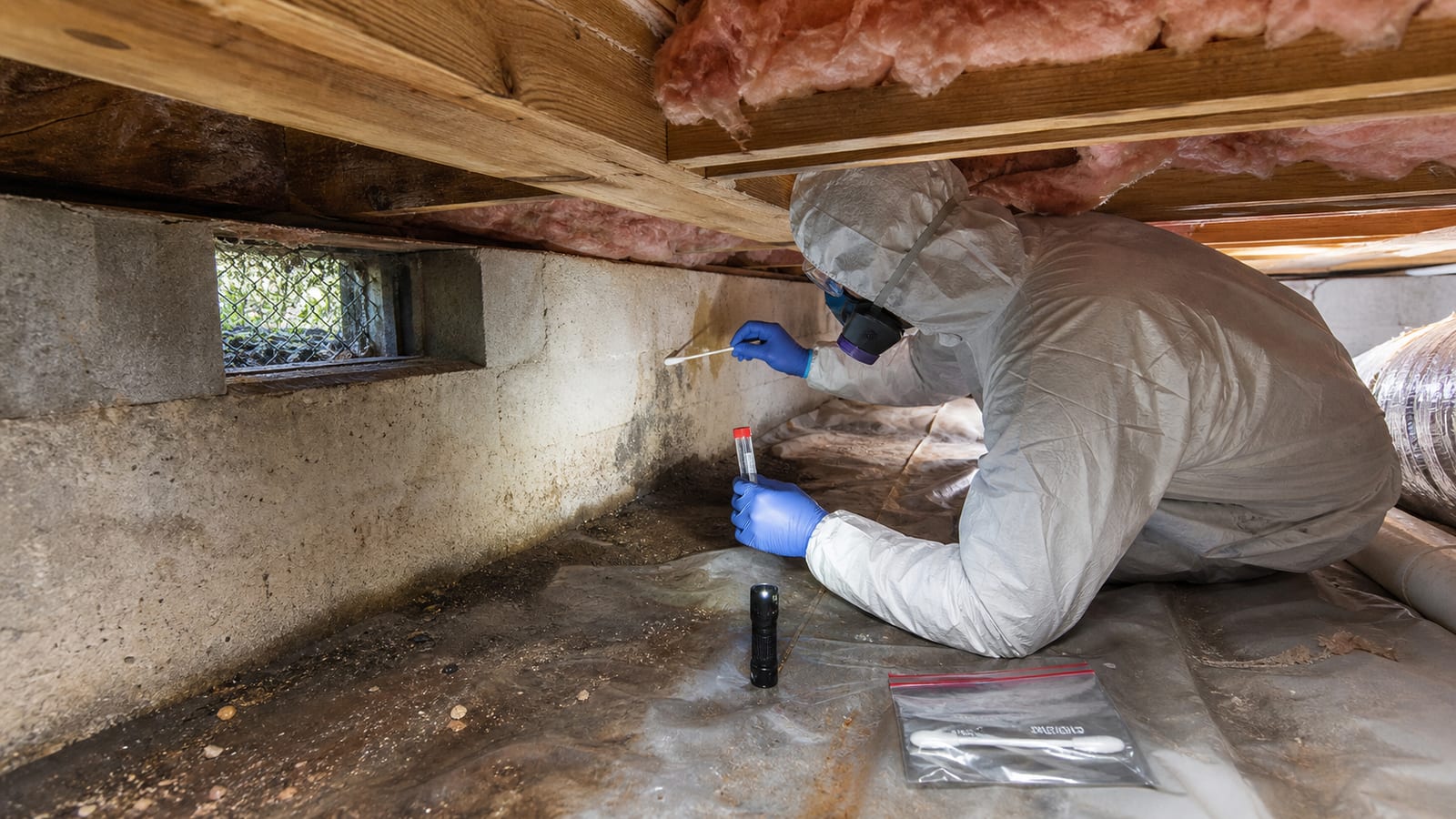
Laboratory testing adds value when identification answers a defined question that changes the next decision. It may help distinguish an unknown material, support a specialized investigation, or document a specific condition. Testing is less useful when visible growth and an active leak already establish the need for moisture correction and appropriate cleanup.
Write the decision question first. If every possible result leads to the same water repair and material removal, species testing may not improve the scope.
Record sample location, substrate, method, collector, date, conditions, chain of custody, laboratory, and limitations. A result applies to that sample, not automatically to the entire crawl space.
Air samples vary with weather, disturbance, ventilation, and timing. Surface samples show what was collected at one point. Negative findings do not prove concealed areas are clear.
Does the type of growth change cleaning methods?
Material and extent often influence cleaning more directly than a visual species label. Hard, nonporous surfaces, wood, masonry, paper, fiberglass, and contaminated debris require different decisions. Porous material that is wet or heavily affected may be more appropriate to remove than to clean in place.
The cleaning method should remove material without saturating or damaging the substrate. It should follow product instructions and protect adjacent components. Changing the color is not verification.
Moisture correction remains necessary regardless of the growth name. Plumbing leaks, wall water, ground vapor, humid air, condensation, and drainage should be traced and assigned.
The crawl space cleaning pillar outlines safe sequencing from documentation through source correction and verification.
Can visible growth prove that wood is structurally damaged?
No. Surface growth does not by itself establish structural capacity, and clean-looking wood can still be damaged. Structural assessment should consider softness, section loss, cracking, deflection, connections, bearing, and the extent of decay. Growth identification and structural evaluation are separate questions.
Do not probe or load questionable framing from an unsafe position. Sagging floors, displaced supports, severe section loss, or active movement can require qualified structural review.
The wood rot problem page explains why moisture damage, surface condition, and capacity should not be collapsed into one visual diagnosis.
How should health questions be handled?
Health questions should be handled by qualified healthcare professionals, not answered from crawl space color or a laboratory name alone. Building reports can document visible growth, damp materials, access, and moisture sources. They should not diagnose symptoms, assign exposure, or promise that cleanup will produce a specific medical result.
Restrict access when sewage, chemicals, significant contamination, electrical hazards, or unstable structure are present. Those conditions create their own safety needs.
Avoid claims that one color is always more dangerous or that another is harmless. The practical building response is to correct moisture and address affected materials appropriately.
How Carolina Encapsulation Company describes visible conditions
Carolina Encapsulation Company documents location, extent, substrate, visible pattern, material condition, liner and insulation status, water paths, and access limits. The company does not name mold species by appearance or describe a crawl space as medically safe.
Homes in Fuquay-Varina and surrounding Triangle communities can be inspected to define crawl space cleaning and moisture scope. Laboratory, medical, structural, electrical, pest, sewage, or hazardous-material questions may require another qualified professional. Stating that limitation is more useful than assigning an unsupported label.
The crawl space mold and fungal growth problem page provides a source-first route from visible condition to moisture investigation.
What should happen after visible growth is found?
First, document the area and restrict disturbance when hazards or extensive contamination are possible. Next, trace water and humidity sources, assess material condition, define removal or cleaning, correct moisture, dry the area, and verify the specified work. Restore insulation or liner only after the underlying surfaces can be inspected.
If conditions change with rain, preserve a dry-weather and wet-weather comparison. If a plumbing leak is suspected, stop the leak before cleaning. If wall water is active, address drainage rather than repeatedly treating the surface.
Follow-up should compare labeled photographs and moisture conditions. A recurrence at the same location suggests that the source, cleaning scope, or drying path needs review.
Request a crawl space condition inspection
If you see white, black, green, or fuzzy material, avoid assigning a species from appearance. Carolina Encapsulation Company offers a free crawl space inspection in Fuquay-Varina and surrounding Triangle communities. Call 704-207-9348 or request an inspection to document the material and moisture context.
Frequently asked questions
Is all black growth in a crawl space black mold?
No. Black material can be mold-like growth, soil, soot, staining, insect debris, adhesive, or another deposit. Color cannot establish species or health significance. Document the substrate, pattern, extent, moisture, and source, then test only if identification would change a decision.
Is white powder on a foundation wall mold?
It may be efflorescence, which is mineral salt left as moisture moves through masonry and evaporates. Appearance alone still needs context. Document the wall, water pattern, texture, and change over time. The moisture pathway may require attention even if the deposit is not mold.
Can a mold photo identify the species?
No. A photo is useful for documenting location, color, texture, and extent, but many species and non-mold materials overlap visually. Laboratory analysis can identify sampled material more specifically, yet it still does not define every surface, exposure, or repair need.
Does the mold species determine whether moisture should be fixed?
No. Unwanted visible growth and damp crawl space materials warrant source investigation regardless of species. Repair plumbing, drainage, ground vapor, condensation, or humid-air pathways as evidence supports. Identification may refine a narrow question, but it does not replace moisture control or drying.
Can cleaning make a mold stain disappear completely?
Not always. Staining can remain after material is removed and the surface is dry. A lighter color also does not prove complete cleaning or source correction. Verification should consider physical condition, moisture evidence, scope completion, and whether the area changes over time.
Are wood-decay fungi the same as surface mold?
They are not interchangeable terms. Wood decay concerns changes in material condition and possible loss of capacity, while surface growth may be limited to the exterior. Appearance alone cannot establish the category. Inspect moisture, texture, section loss, and structure separately.
When should I seek professional identification?
Consider qualified identification when an unknown material affects safe handling, a legal or occupational question requires it, a specialist needs the result, or different findings would change the work. Define the question first and preserve sample location, method, conditions, and interpretation limits.
How this applies in Fuquay-Varina, NC
For homeowners in Fuquay-Varina, NC, use this topic as a way to organize observations before selecting work. Carolina Encapsulation Company serves Fuquay-Varina, NC and surrounding Triangle communities, but the appropriate scope still depends on the water, moisture, materials, access, and equipment found at the property. Compare the crawl space mold fungal cleaning with the Crawl Space Cleaning: Moisture, Mold, Debris, and Safe Scope in Apex, NC before choosing a property-specific next step.