A crawl space mold inspection should document visible conditions, affected materials, moisture sources, extent, access limits, measurements, and the difference between observation and identification. It should not name a mold species from color or a photograph. The strongest report connects material condition to water, vapor, air movement, drainage, and a practical correction sequence.
A labeled record matters because crawl space conditions change with rain, temperature, equipment cycles, plumbing events, and disturbance. One visit may capture only part of the pattern. Clear photographs, locations, weather context, and limitations let homeowners compare later conditions without relying on memory or broad statements such as “mold everywhere.”
The report should also preserve ordinary-looking areas beside the concern. A dry comparison bay, intact liner section, or unaffected wall helps show the boundary and gives later inspections a baseline. Evidence is stronger when it shows both the observed condition and the nearby material used for comparison.
What should a crawl space mold inspection include?
The inspection should include a safe-access review, mapped crawl zones, wide and close photographs, material and moisture observations, water-source evidence, insulation and liner condition, drainage, vents or enclosure details, equipment status, inaccessible areas, and recommended next questions. It should describe growth neutrally unless qualified testing supports a specific identification.
Begin outside when runoff may be involved. Note grading, downspouts, low areas, access exposure, and visible foundation drainage clues. These observations do not prove an interior source, but they help interpret perimeter moisture after rain.
Inside, follow a consistent route. Record the access, each wall, low points, plumbing routes, ducts, liner transitions, piers, insulation, joists, beams, subfloor, drains, and equipment. Consistency reduces the chance that an easy central area receives all the attention while a wet corner is missed.
The crawl space inspection checklist provides a homeowner-facing framework for organizing these observations without disturbing unsafe material.
Why is appearance not enough to identify mold?
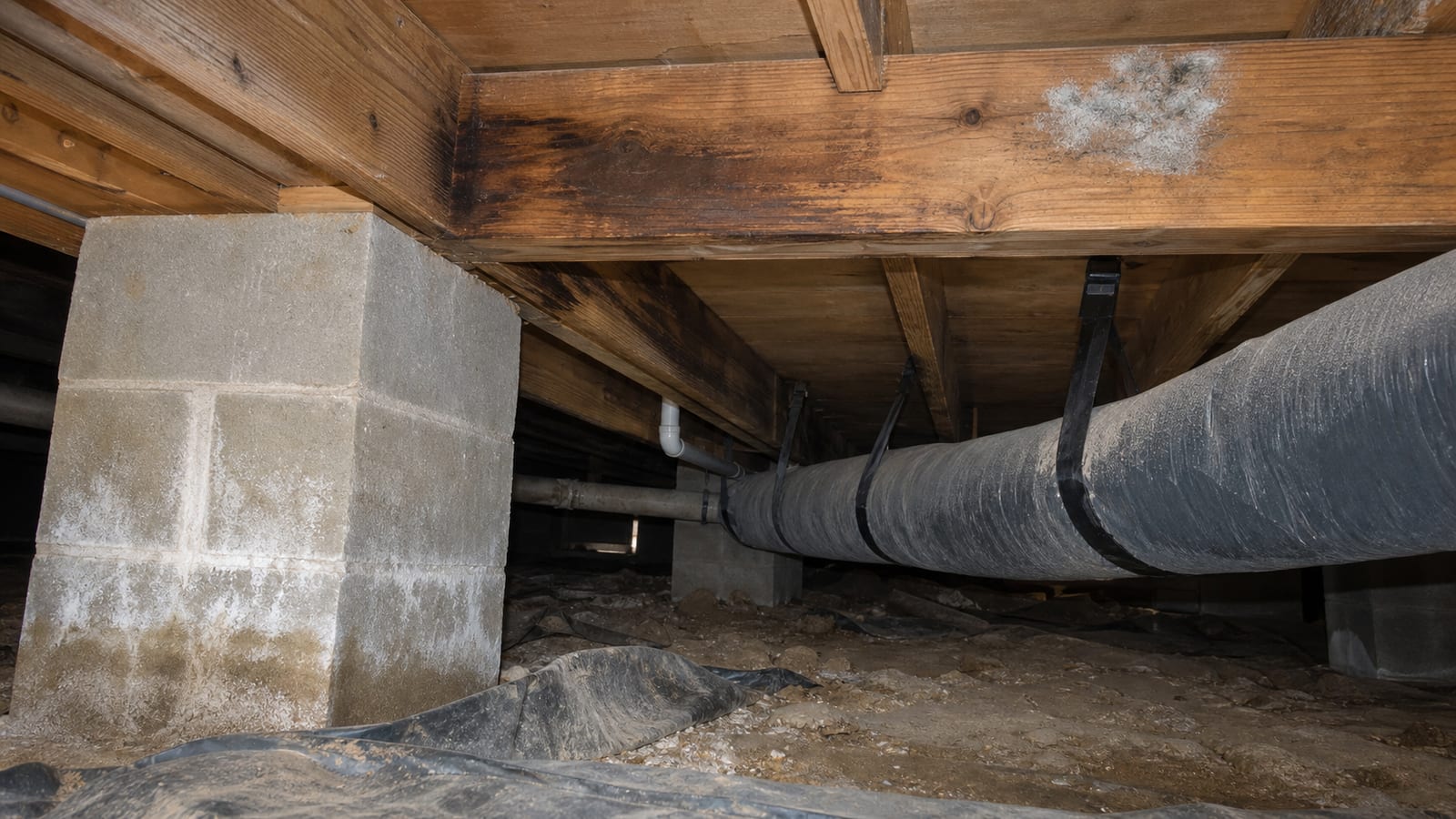
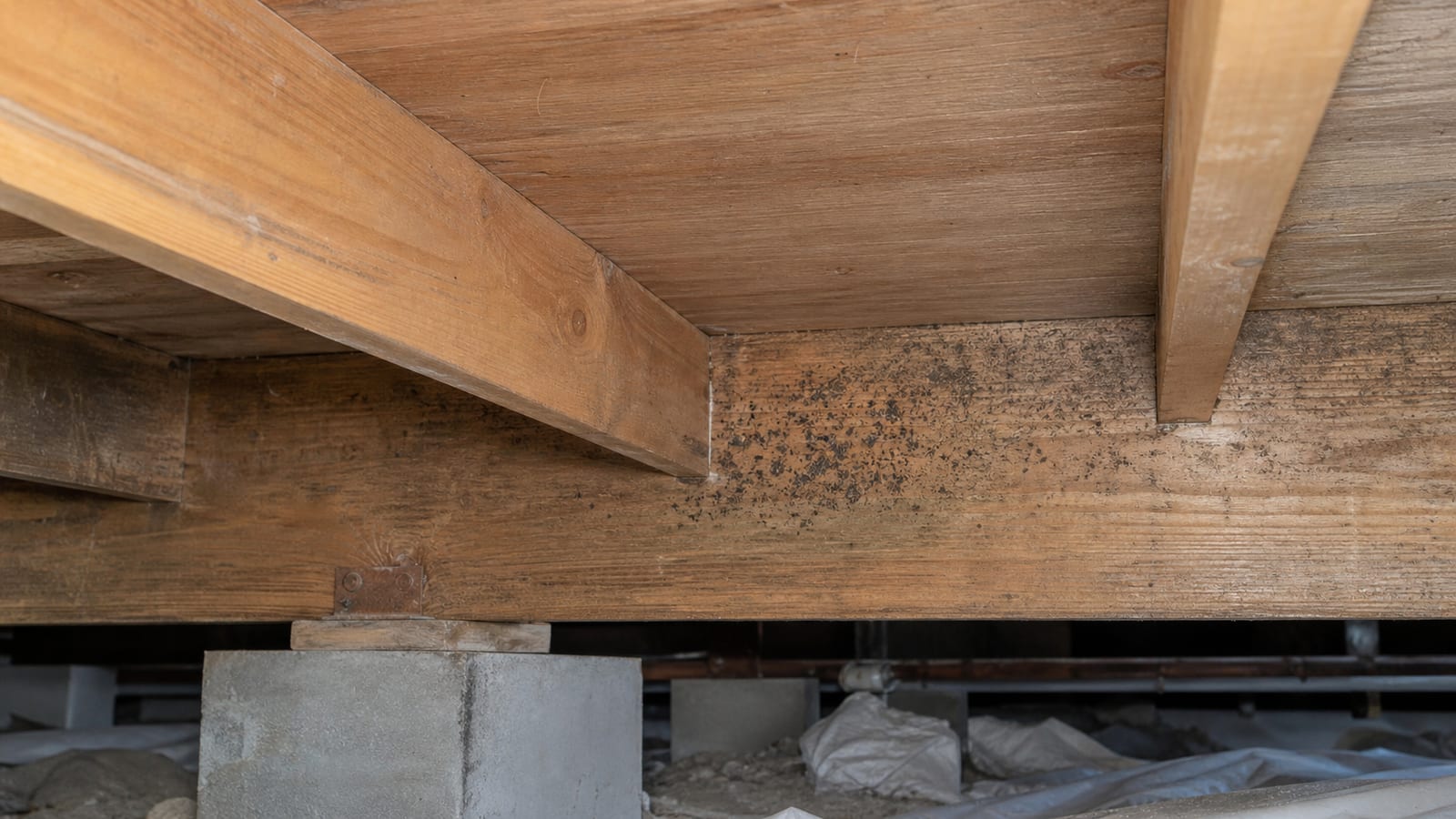
Appearance is not enough because many molds overlap in color and texture, while dirt, soot, mineral deposits, wood extractives, adhesives, insect material, and other growths can resemble mold. Lighting and camera processing also change color. A photograph can document location and extent, but it cannot reliably establish species, exposure, or health risk.
Describe what is visible:
- color or range of colors;
- powdery, fuzzy, spotty, film-like, or stain-like texture;
- isolated, repeated, or widespread pattern;
- substrate and nearby materials;
- dimensions or number of joist bays;
- wetness, condensation, or water marks nearby;
- whether the condition wipes, flakes, or remains unchanged, if safe testing is appropriate.
Do not label black material as “black mold” or white material as harmless. Those phrases overstate what can be known in the field.
The EPA’s brief guide to mold, moisture, and your home centers the response on moisture control rather than color-based species claims.
How should moisture evidence be recorded?
Record moisture evidence with location, date, time, recent weather, temperature, relative humidity, instrument, sensor placement, material tested, and visible context. A number without those details is difficult to interpret. Measurements should support the visual investigation, not replace inspection of leaks, standing water, wet insulation, liner conditions, and drainage.
Relative humidity varies with temperature and sensor location. A reading near a cold duct, open access, dehumidifier outlet, wet wall, or exposed soil may represent that local zone rather than the whole crawl space.
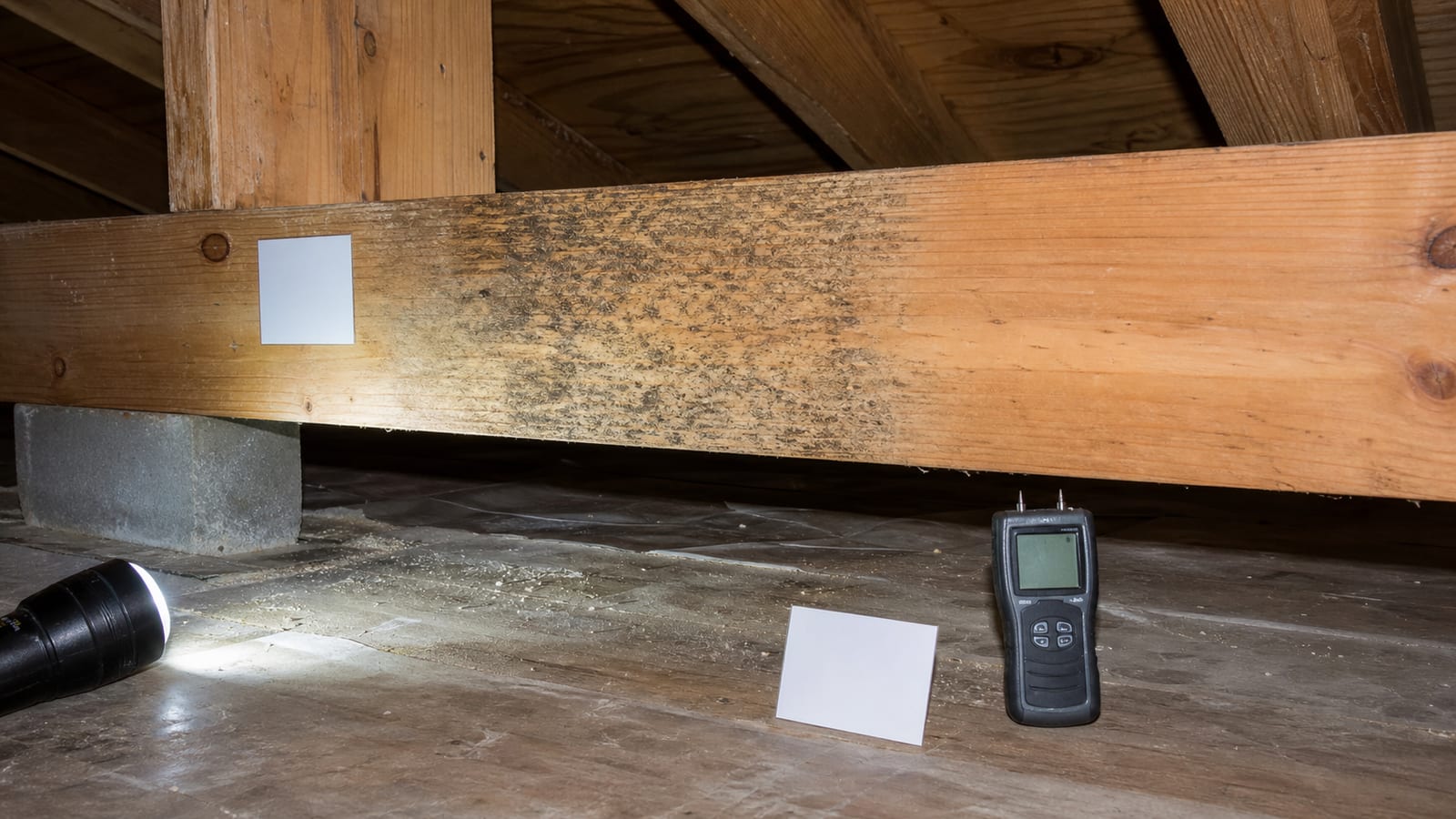
Material moisture measurements require the right instrument and material settings. Surface readings and pin measurements answer different questions. An inspector should not report a precise number without identifying how and where it was obtained.
Photograph the instrument in place when useful. Mark measurement locations on a sketch. Repeating readings at the same labeled points after rain or repairs can show trends more clearly than adding many unrelated numbers.
What are the top 7 pieces of evidence in a useful report?
Seven evidence types make a report actionable:
-
A location map
Divide the crawl space into labeled zones using walls, rooms above, piers, or cardinal directions. Every photograph and measurement should connect to a location.
-
Wide and close photographs
Wide images show context and extent. Close images show texture, edges, staining, and substrate. A close photograph without location can exaggerate a small condition or make it impossible to find again.
-
Water-path observations
Record wall staining, soil marks, puddles, plumbing, condensate, liner water, low points, and recent rain. Separate active water from historical marks where evidence supports that distinction.
-
Material condition
Identify wood, masonry, paper facing, fiberglass, plastic, metal, or another surface. Note dampness, softness, delamination, sagging, corrosion, or other physical change without assigning an unsupported cause.
-
Environmental measurements
Include temperature, relative humidity, sensor location, and material readings where appropriate. State instrument limitations and avoid using one number as a clearance decision.
-
Access and safety limitations
Mark blocked, low, flooded, electrically unsafe, structurally unstable, or contaminated areas. A complete report can honestly state what was not inspected.
-
A correction sequence
Separate immediate safety, active leak repair, drainage, drying, removal, cleaning, restoration, and monitoring. The order should reflect evidence rather than a standard product package.
When is sampling useful?
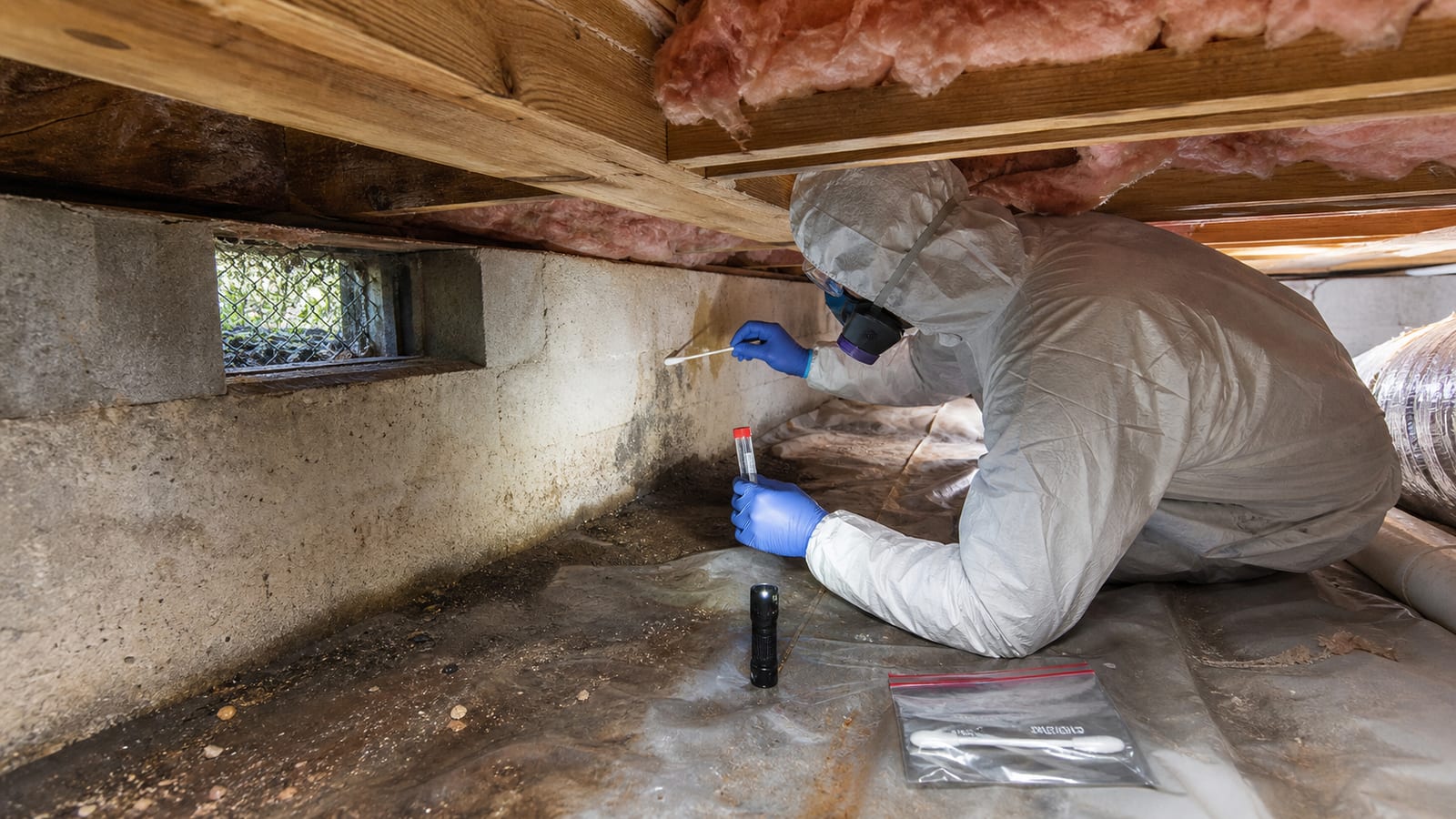
Sampling can be useful when it answers a defined question that will change the decision, such as distinguishing an uncertain material or supporting a specialized assessment. It is not a substitute for documenting visible growth and moisture. A sample represents the material or air captured under specific conditions, not every surface or future condition.
Before sampling, write the question. Decide what result would change the scope. Record who collects the sample, location, method, date, environmental conditions, chain of custody, laboratory, and interpretation limits.
Air sampling can vary with disturbance, weather, ventilation, and time. Surface sampling can identify what was collected at one point but does not establish the full extent. Negative results do not prove that every concealed area is clear.
Health interpretation belongs to qualified medical professionals. A laboratory name or count should not be converted into a promise about symptoms or safety.
How should an inspector document extent?
Extent should be described with measurable boundaries such as wall length, square area, number of joist bays, material type, or mapped zones. Avoid “small,” “large,” and “throughout” unless the report defines them. Note whether insulation or other coverings prevent full observation.
For repeated spotting, identify the start and end locations and whether the pattern follows cold surfaces, plumbing, airflow, or water marks. For an isolated patch, show nearby dry material for scale.
Extent can change after removal exposes concealed surfaces. The report should state that the initial scope may be revised based on documented conditions uncovered during controlled work.
The crawl space cleaning pillar explains how evidence guides removal and cleaning without hard-linking every visible condition to one treatment.
What should a report say about health?
A report can state that moisture and visible mold-like growth should be addressed, but it should not diagnose illness, promise symptom relief, or assign exposure from appearance. People with health concerns should consult a qualified healthcare professional. The crawl space report should stay focused on building conditions, access, materials, and moisture correction.
Avoid “toxic,” “safe,” “allergy-free,” and “healthy air” unless those terms are used in a narrowly sourced and qualified context. Even identified mold does not establish a person’s dose or medical outcome.
If sewage, chemical contamination, or another specific hazard is present, document the observed condition and restrict access. Do not fold every hazard into a generic mold label.
How Carolina Encapsulation Company documents inspection findings
Carolina Encapsulation Company reviews visible growth, water paths, ground coverage, vents or seals, access, insulation, framing, plumbing, ducts, drainage, and equipment. Findings are described by location and condition rather than species claims based on appearance.
The company serves Fuquay-Varina and surrounding Triangle communities. A free inspection can help define crawl space work, but it does not replace laboratory, medical, structural, electrical, pest, or hazardous-material expertise where those questions control the next step. Inaccessible or unsafe areas should remain documented limitations rather than assumed clear.
How should findings become a work scope?
Convert each finding into a source, material, action, dependency, and verification item. For example, “damp paper-faced insulation below bathroom” should lead to plumbing evaluation, controlled removal if appropriate, subfloor inspection, drying, and later restoration. “Dark spotting” alone is not a complete scope.
The crawl space mold and fungal cleaning service can be considered after the moisture and material conditions are defined.
Include exclusions. If electrical work, structural repair, sewage cleanup, or laboratory identification is outside the scope, say so plainly. List what evidence would allow work to resume.
Verification should compare labeled locations, moisture conditions, removed materials, cleaned surfaces, and corrected sources. Do not use fragrance, color change, or one humidity reading as the only completion measure.
Request a documented crawl space inspection
If visible growth, damp insulation, odor, or water has raised questions, request documentation before material is disturbed. Carolina Encapsulation Company offers a free crawl space inspection in Fuquay-Varina and surrounding Triangle communities. Call 704-207-9348 or request an inspection.
Frequently asked questions
Can an inspector identify mold from a photograph?
A photograph can document color, texture, location, substrate, and extent, but it cannot reliably establish species or health significance. Similar-looking crawl space materials can have different causes. If identification would change the decision, use a defined sampling question and qualified interpretation.
Should every crawl space mold inspection include air testing?
No. Visible growth and moisture can often be documented directly. Air testing may be useful for a defined question, but results vary with conditions and do not replace source inspection. Decide beforehand how each possible result would change the scope.
What photographs should a report include?
Include the crawl space access, wide views of each zone, close views of conditions, water paths, liner, insulation, framing, plumbing, ducts, drains, equipment, and inaccessible areas. Labels or a sketch should connect each image to a repeatable location and direction.
Is one humidity reading enough to prove a moisture problem?
No. Relative humidity varies with temperature, placement, weather, and equipment operation. Record the crawl space sensor location and context, then compare trends and physical materials. Standing water, wet insulation, condensation, and material readings may reveal conditions that one air sensor misses.
What does a negative mold sample prove?
It proves only what the specific method detected in the collected sample under those conditions and laboratory limits. It does not prove every surface, cavity, or future condition is clear. Interpret the result beside visual findings, moisture evidence, locations, and sampling limitations.
Should an inspection report name the moisture source?
It should identify supported sources and distinguish them from possibilities. Timing, location, plumbing, weather, drainage, and material patterns can strengthen the conclusion. When evidence is incomplete, state the next test or observation needed instead of presenting a guess as fact.
How long should inspection records be kept?
Keep the report, photographs, measurements, laboratory results if any, repair documents, product information, and follow-up crawl space monitoring with property records. They provide a baseline after storms, plumbing work, resale inspections, or future changes and help prevent repeated diagnosis from memory.
How this applies in Holly Springs, NC
For homeowners in Holly Springs, NC, use this topic as a way to organize observations before selecting work. Carolina Encapsulation Company serves Holly Springs, NC and surrounding Triangle communities, but the appropriate scope still depends on the water, moisture, materials, access, and equipment found at the property. Compare the crawl space mold fungal cleaning with the Crawl Space Cleaning: Moisture, Mold, Debris, and Safe Scope in Apex, NC before choosing a property-specific next step.