Crawl space cleaning should remove debris and affected materials only after the work area, moisture sources, hazards, and disposal scope are understood. A clean appearance does not prove a dry or repaired crawl space. The lasting result comes from correcting water entry, ground vapor, humid-air exposure, leaks, drainage, and damaged materials before rebuilding or covering surfaces.
North Carolina crawl spaces can contain fallen insulation, torn liner, construction debris, animal waste, standing water, damp wood, damaged ducts, exposed wiring, and visible growth at the same time. Each condition changes what can be handled safely and what belongs to another trade. Cleaning should therefore begin as an evidence-gathering process, not a rush to spray or remove everything.
What does crawl space cleaning include?
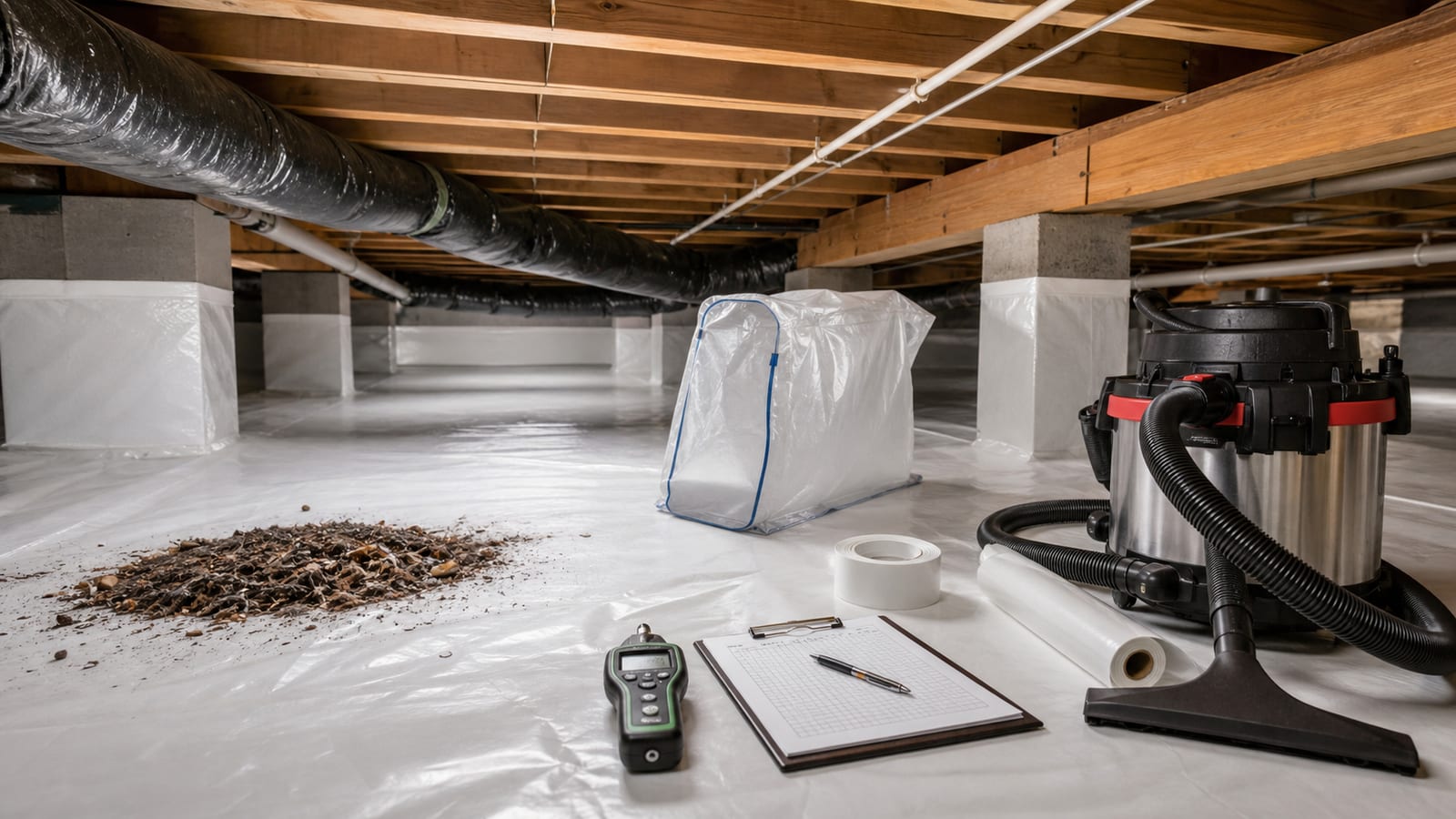
Crawl space cleaning can include documenting conditions, removing ordinary debris, taking out damaged insulation or liner, exposing surfaces for inspection, cleaning eligible materials, and preparing the space for moisture-control work. The scope should exclude hazards that require specialized handling and should never conceal active water, structural damage, unsafe electricity, sewage, or unknown materials.
A useful scope separates contents into categories:
- ordinary loose debris that can be safely removed;
- building materials that need evaluation before disturbance;
- wet or contaminated porous material that may require controlled removal;
- components that must remain for repair or documentation;
- suspected biological, chemical, electrical, or structural hazards;
- evidence that identifies a water or pest pathway.
Photograph conditions before moving material. Wide views establish location, while close images capture staining, damage, and transitions. Label low points, walls, plumbing routes, ducts, and access limitations. If cleanup begins before documentation, the source evidence may disappear.
The crawl space mold and fungal cleaning service uses inspection findings to define what can be cleaned, what should be removed, and what moisture work needs to happen first.
Why must moisture be corrected before cleaning is complete?
Moisture must be corrected because visible growth and material damage can return when surfaces remain damp. Cleaning changes surface condition, not the water source. Bulk water, soil vapor, plumbing leaks, humid-air entry, condensation, and poor drainage require separate responses. A dry-looking result immediately after work does not verify that those pathways are controlled.
The U.S. Environmental Protection Agency’s mold and moisture guide states the central principle clearly: moisture control is the key to mold control. That makes source correction part of the cleaning scope, not optional follow-up.
Trace water by timing and location. Perimeter staining after rain suggests a different path from a wet area beneath a bathroom. Condensation on ducts differs from water beneath a liner. Widespread humidity can affect multiple surfaces without leaving one obvious puddle.
Ground vapor matters even when soil looks dry. A torn or incomplete liner can permit ongoing vapor release. Open vents and access gaps may introduce humid outdoor air that contacts cooler materials. Dehumidification can be useful within a completed system but should not be used to compensate for active water or large enclosure gaps.
How should visible mold-like growth be described?
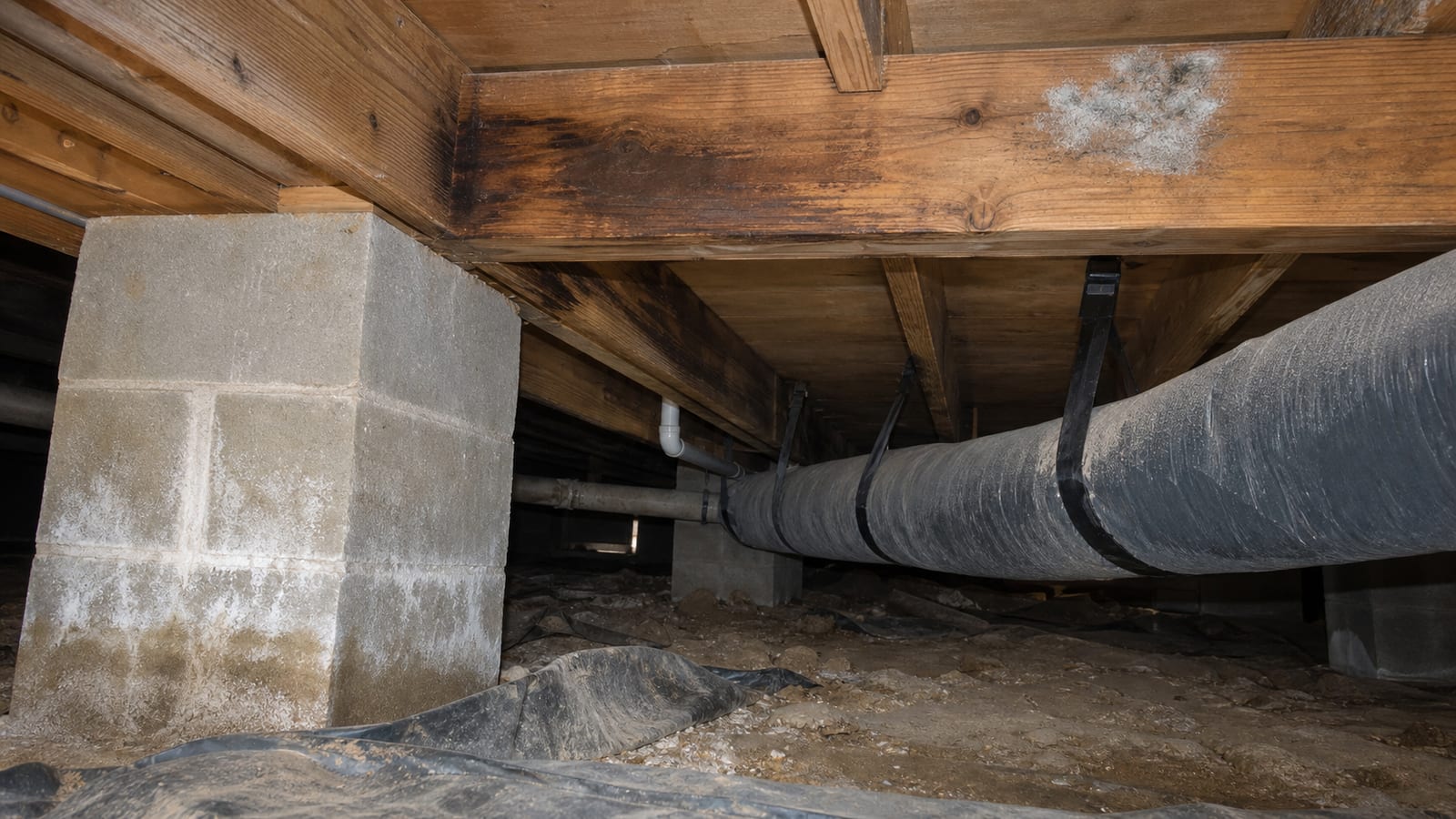
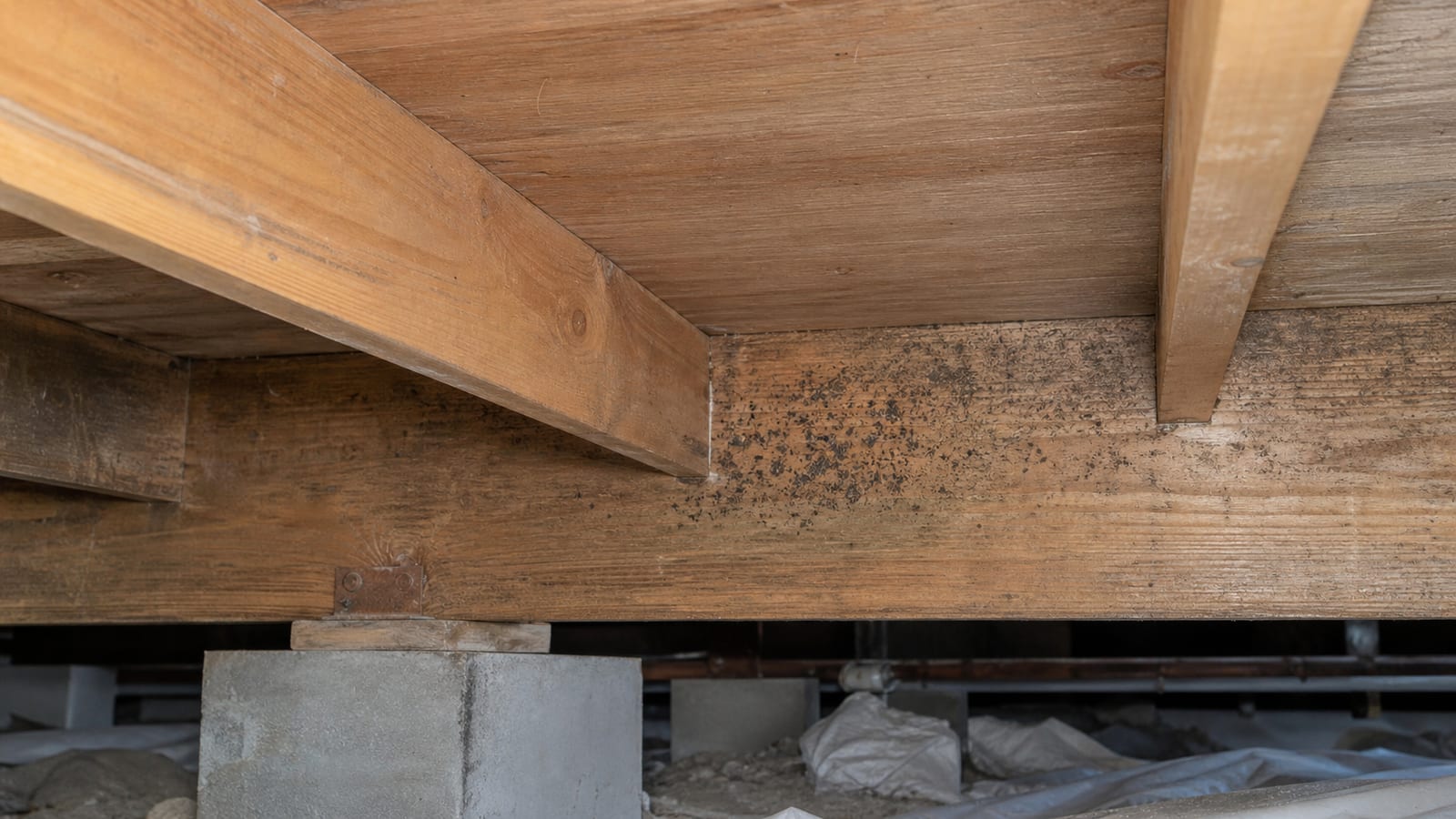
Describe visible growth by location, color, texture, pattern, extent, substrate, dampness, and nearby moisture evidence without naming a species from appearance. White, black, green, or fuzzy material is not a reliable field identification. Dirt, mineral deposits, insect material, wood staining, and several biological growths can look similar in crawl space lighting.
Use neutral observations such as:
- “dark spotting across two joist bays beneath the kitchen”;
- “white powdery material on the foundation wall”;
- “fuzzy growth on the paper facing of damp insulation”;
- “staining and surface growth near a plumbing penetration.”
Avoid labels such as “toxic mold” unless a qualified laboratory result and appropriate interpretation support the statement. Even a laboratory name does not by itself define exposure, health outcome, source, or repair scope.
The crawl space mold and fungal growth problem page explains why moisture evidence and material condition are more useful for planning than color-based identification.
What are the top 7 steps in a crawl space cleaning plan?
Seven ordered steps keep cleaning tied to evidence and source correction:
-
Set access and safety limits
Check clearance, standing water, electricity, structure, animals, sewage, sharp objects, and unknown materials. Stop where conditions cannot be entered or disturbed safely. Protective equipment does not make every hazard a homeowner task.
-
Document before moving anything
Photograph debris, insulation, liner, water marks, visible growth, framing, utilities, and low points. Mark image locations. Record recent rain, plumbing events, odors, and equipment status.
-
Trace moisture sources
Separate roof and grading runoff, wall entry, groundwater, plumbing leaks, condensate, soil vapor, outdoor air, and condensation. More than one source may be active.
-
Classify materials
Decide what is ordinary debris, what is cleanable, what is porous and damaged, what requires another trade, and what must remain visible for repair or inspection.
-
Remove in a controlled sequence
Keep debris from spreading through access paths. Avoid unnecessary disturbance of suspect material. Preserve evidence at leak and structural locations until those conditions are documented.
-
Clean eligible surfaces
Use a method appropriate to the substrate, contamination, and product instructions. Cleaning should remove material rather than merely change its color. Protect adjacent systems and avoid soaking wood.
-
Verify and maintain
Inspect dried surfaces, correct moisture pathways, document remaining limitations, restore liner or insulation only when appropriate, and create a plan for checks after rain and plumbing work.
When should insulation or liner be removed?
Insulation or liner may need removal when it is wet, contaminated, torn beyond useful repair, blocking inspection, trapping debris, or preventing access to a leak or damaged wood. Removal should be targeted to the evidence. Not every old material requires automatic disposal, and not every visibly clean section is suitable to keep.
Fallen fiberglass can hide subfloor staining and create a nesting area. Damp paper facing can support surface growth. If only one bay is affected by a repaired plumbing leak, the scope may differ from widespread humidity damage.
A liner may be salvageable when punctures are limited and surrounding material can accept compatible repairs. Widespread brittleness, open seams, poor coverage, water trapping, or contamination may support replacement.
Photograph the substrate as each section is exposed. Do not immediately cover it with new material. Drying and inspection need time, and structural or plumbing repairs may become visible only after removal.
Can every crawl space surface be cleaned the same way?
No. Wood, masonry, metal, plastic, fiberglass, paper facing, ducts, and electrical components respond differently to moisture and cleaning. Porous materials can hold contamination within their structure, while hard surfaces may tolerate physical cleaning more predictably. Product labels and substrate limits must guide methods without replacing source correction.
Wood should not be saturated in an attempt to clean it. Surface condition, decay, section loss, and fasteners need inspection. A stain that remains after cleaning does not necessarily mean active growth remains, while a lightened surface does not prove the source was corrected.
Masonry can carry mineral deposits that resemble growth. Efflorescence indicates moisture movement through masonry but is not mold. Cleaning the deposit without addressing water movement can lead to recurrence.
Insulation is often difficult to clean reliably because of its porosity and shape. Removal may be more appropriate when it is wet or contaminated. Duct interiors, electrical equipment, sewage, and extensive contamination can require specialized assessment.
What should a crawl space mold inspection document?
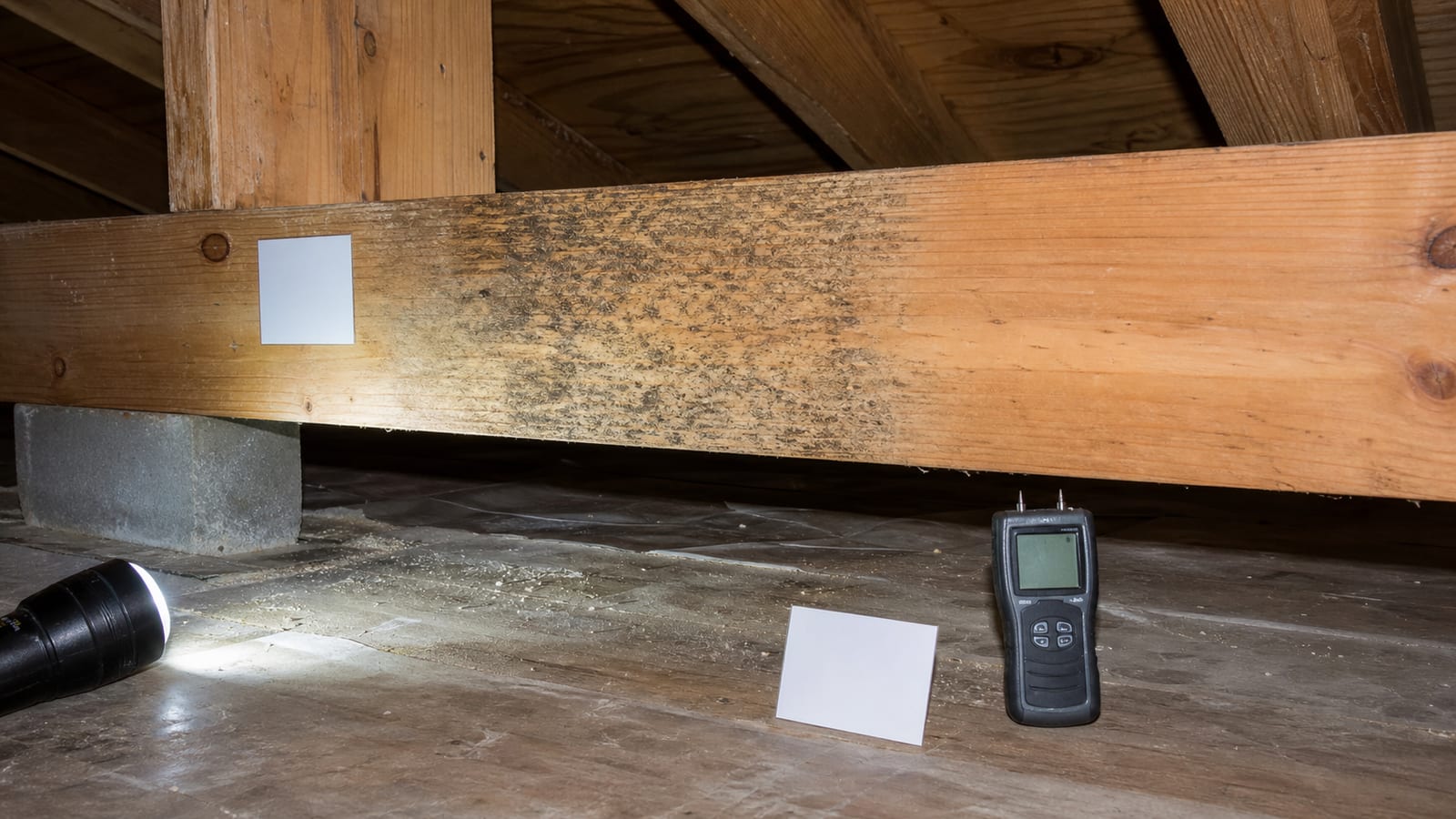
An inspection should document the extent and location of visible conditions, moisture sources, material dampness, water history, ventilation or enclosure status, liner coverage, insulation condition, drainage, access, hazards, and limitations. It should distinguish observations from interpretations and should not identify mold species solely from photographs or color.
Useful records include:
- a crawl space sketch or labeled zones;
- wide and close photographs;
- recent weather and leak history;
- humidity and temperature with sensor location;
- material moisture readings where appropriate;
- visible water above and beneath liners;
- plumbing, duct, and condensate routes;
- inaccessible or unsafe areas;
- the proposed order of source correction and cleaning.
Testing can answer a defined question, but routine sampling is not a substitute for seeing moisture and damaged material. Results need context and qualified interpretation.
How Carolina Encapsulation Company defines safe scope
Carolina Encapsulation Company begins with visible conditions and moisture pathways, then separates debris removal, insulation or liner work, cleaning, drainage, humidity control, and repair needs. This avoids treating every dark spot as the same material or every crawl space odor as proof of one source.
The company serves Fuquay-Varina and surrounding Triangle communities. It does not promise a health outcome or identify species by appearance. Sewage, active electrical exposure, unstable framing, hazardous materials, or conditions outside the company’s verified scope may require another qualified professional before crawl space cleaning continues.
How is a completed cleaning job verified?
Verification should confirm that specified debris and affected material were removed, eligible surfaces were cleaned, the area dried, moisture sources were corrected or clearly assigned, and no planned repair was concealed. Compare labeled before-and-after photographs from the same positions. Record limitations and areas that were inaccessible.
Check drains, sump components, dehumidifier drainage, liner seams, vents or seals, access, insulation supports, plumbing, and visible framing. A single humidity reading cannot verify a system, so monitor trends with recent weather and equipment status.
Odor alone is not a reliable clearance test. Fragrance or chemical odor can mask conditions, while some damp materials have little odor. Visual condition, moisture evidence, source correction, and documented scope provide a stronger record.
Schedule a crawl space cleaning inspection
If debris, fallen insulation, damp wood, torn liner, or visible growth is limiting inspection, start with a source-focused assessment. Carolina Encapsulation Company offers a free crawl space inspection in Fuquay-Varina and surrounding Triangle communities. Call 704-207-9348 or request an inspection.
Frequently asked questions
Can I identify crawl space mold by its color?
No. Color and texture do not reliably identify a mold species or distinguish every biological growth from dirt, staining, or mineral deposits. Document the location, substrate, pattern, dampness, and moisture source. Laboratory analysis may identify sampled material, but results still require context.
Does cleaning remove the need for moisture control?
No. Cleaning changes surface condition, while moisture control addresses why materials became damp. Water entry, soil vapor, leaks, humid air, and condensation can cause recurrence. A completed scope should pair appropriate cleaning with source correction and a plan for monitoring.
Should all crawl space insulation be removed during cleaning?
Not automatically. Remove material that is wet, contaminated, fallen, damaged, or blocking needed inspection. Serviceable insulation outside the affected area may remain when the enclosure design supports it. The written scope should document why each section is retained or removed from the crawl space.
Can bleach prove that a surface is clean?
No. A color change does not prove that material was removed, the surface is dry, or the moisture source was corrected. Cleaning methods must match the substrate and product directions. Verification should focus on physical condition, moisture evidence, scope completion, and source control.
Is crawl space mold always a health emergency?
Visible growth warrants moisture correction and appropriate cleanup, but appearance alone cannot establish exposure or a health outcome. People with health concerns should consult a qualified healthcare professional. Electrical hazards, sewage, flooding, or structural instability create separate urgent safety concerns.
Can a dehumidifier replace crawl space cleaning?
No. A dehumidifier can remove moisture from air in an appropriate system, but it does not remove debris, damaged insulation, contamination, or existing material from surfaces. It also cannot repair leaks or drainage. Cleaning and humidity control have different roles.
What should I save after crawl space cleaning?
Keep before-and-after photographs, the work scope, removed-material notes, product information, moisture-source repairs, liner and insulation details, equipment records, and limitations. These crawl space records help future inspectors distinguish completed work from new damage and locate concealed drains, plumbing, equipment, or repairs.
How this applies in Apex, NC
For homeowners in Apex, NC, use this topic as a way to organize observations before selecting work. Carolina Encapsulation Company serves Apex, NC and surrounding Triangle communities, but the appropriate scope still depends on the water, moisture, materials, access, and equipment found at the property. Compare the crawl space mold fungal cleaning with the Apex, NC crawl space service area before choosing a property-specific next step.