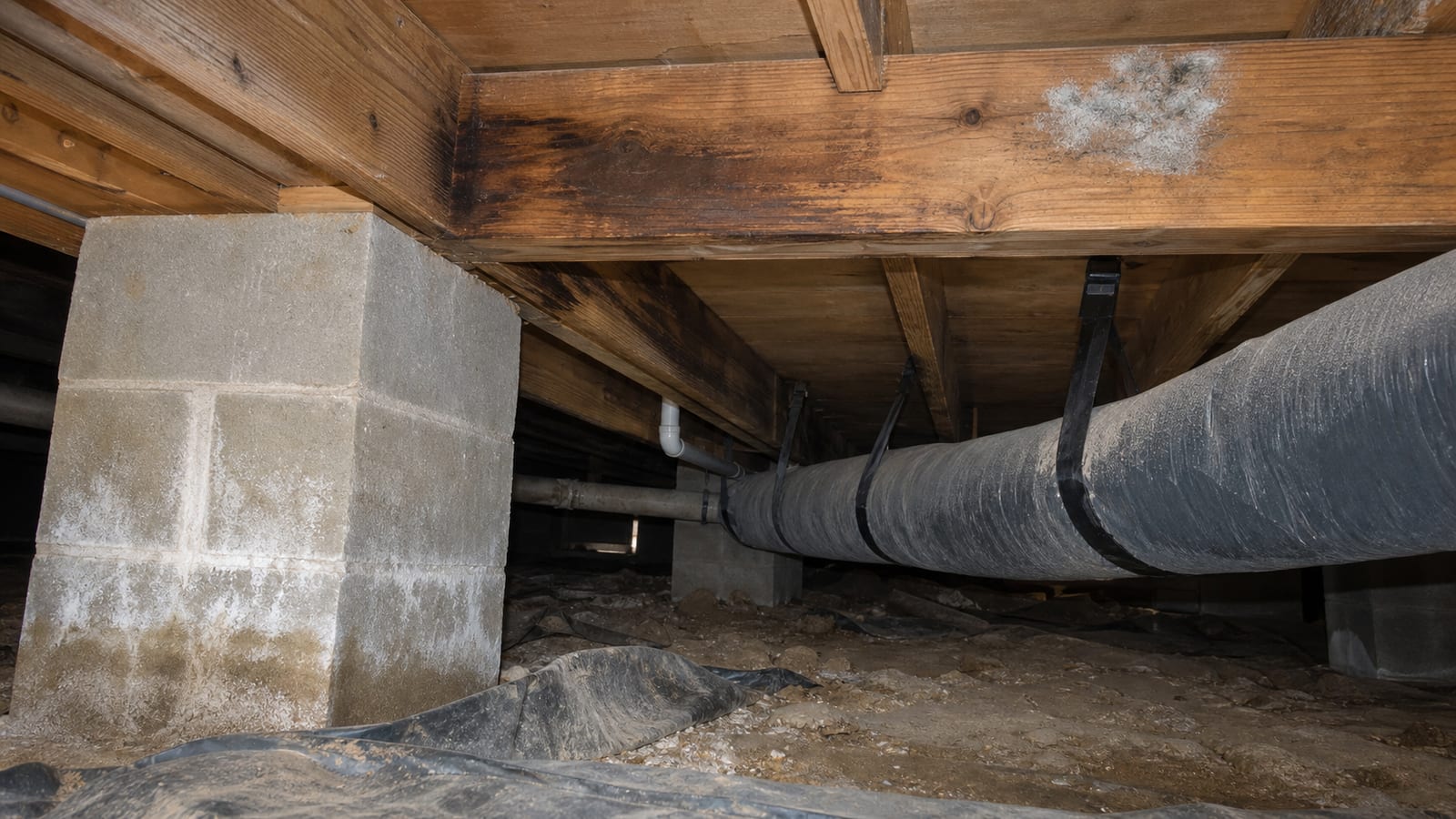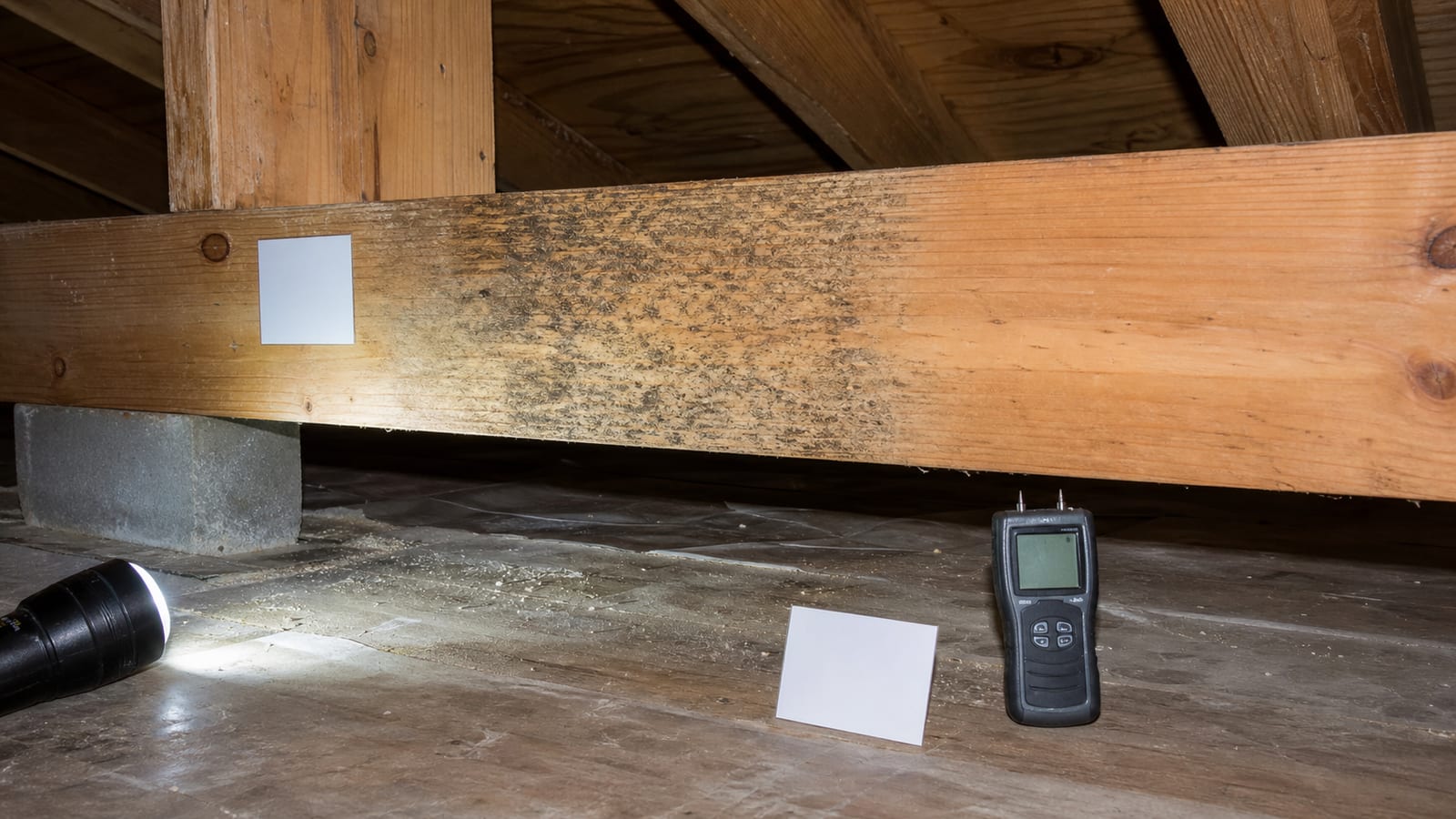
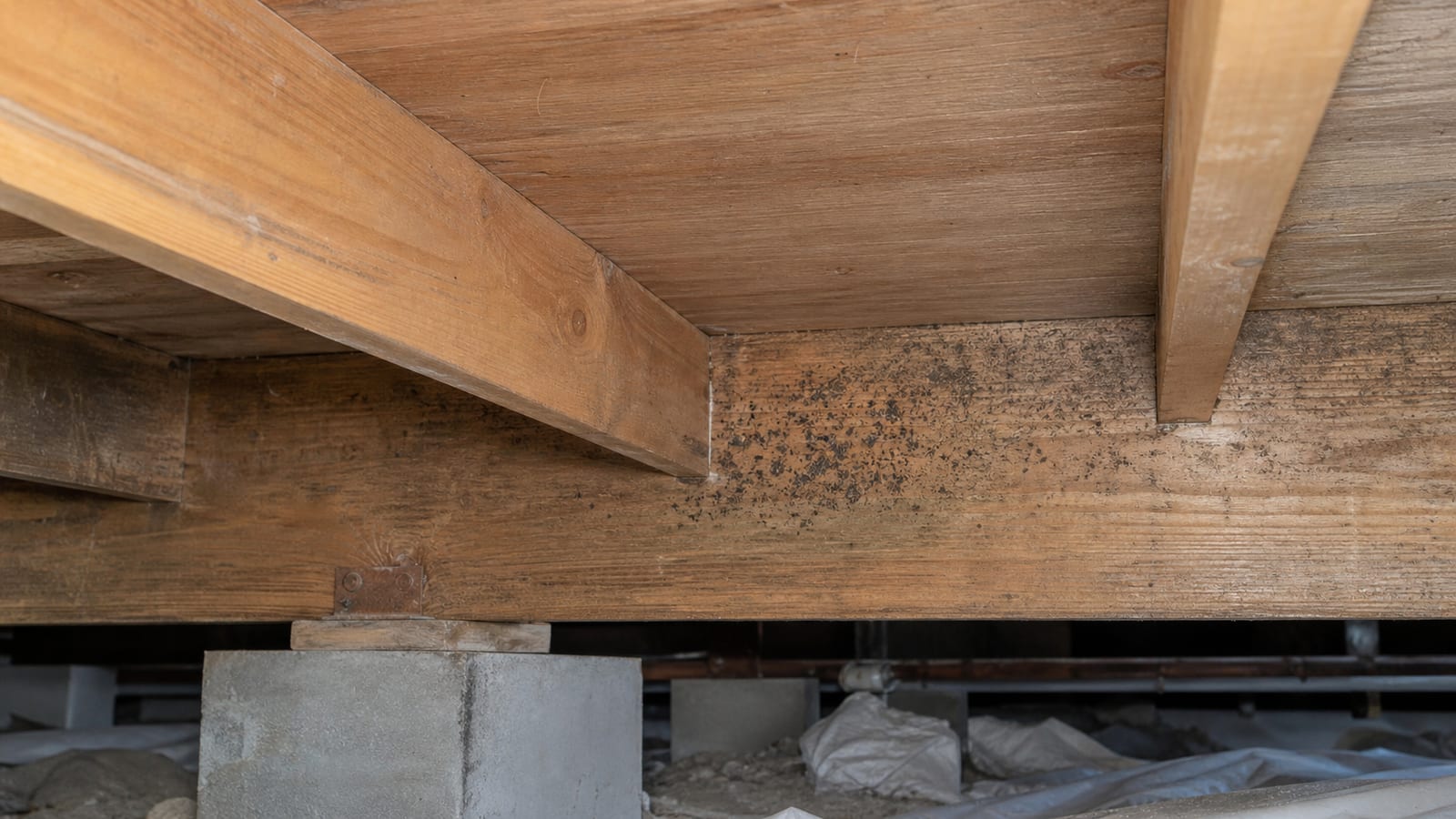
Mold-like growth can develop on crawl space wood when the surface stays damp and nutrients are available, but appearance alone cannot identify the organism or prove structural damage. The useful response is to document location and extent, find the moisture source, evaluate the wood separately for decay or loss, clean or remove affected material appropriately, and keep it dry.
Joists, beams, subfloor, sill areas, blocking, and wood debris do not all experience the same conditions. A plumbing leak can affect one bay while humid air affects a broad area. Water entering at a wall can create a perimeter pattern. The location and moisture history often explain more than the color of the surface.
The crawl space cleaning pillar explains how documentation, removal, cleaning, and moisture correction fit together before repaired surfaces are covered.
Does mold grow on crawl space wood?
Yes, mold-like growth can occur on wood when moisture, temperature, time, and surface conditions support it. Wood and accumulated dust can provide nutrients. Growth does not mean every piece is rotten, and a clean-looking surface does not prove the wood is sound. Moisture and structural condition must be evaluated independently.
The U.S. Environmental Protection Agency’s mold and moisture guide explains that moisture control is central to mold control. That principle applies beneath the home: cleaning without correcting the damp condition leaves the cause active.
Wood may become damp from plumbing, wall entry, soil vapor, humid outdoor air, condensation, wet insulation, or trapped water. More than one source can overlap.
Growth may appear on the surface while the wood remains firm, or decay may affect material without dramatic surface growth. That is why visual mold labeling and structural assessment should remain separate steps.
How can you tell surface growth from wood rot?
Surface growth often changes the appearance or texture of the exterior, while wood rot or decay can involve softness, fiber breakdown, cracking, section loss, and reduced capacity. A visual inspection can identify concerns but cannot verify structural capacity from color. Questionable framing should remain exposed for appropriate assessment rather than covered after cleaning.
Do not use a screwdriver or other tool aggressively on framing when access is unsafe or the member is carrying load. Probing methods need consistent interpretation and can damage sound material.
Look for:
- softness or crumbling fibers;
- checking, delamination, or section loss;
- crushing at bearings or supports;
- fastener corrosion and connection movement;
- sagging, bounce, or displacement;
- repeated wetting or active leaks;
- previous patches that hide the original member.
The wood rot problem page separates moisture source, material deterioration, and structural repair questions.
What moisture patterns point to different sources?
Localized wetting beneath a kitchen, bathroom, laundry, or mechanical line can suggest plumbing or condensate. Perimeter staining after rain can suggest wall or drainage entry. Broad surface moisture on cool materials during humid weather can indicate condensation or air exposure. Ground-wide humidity may relate to exposed soil, liner gaps, vents, access, and drying.
Timing improves the diagnosis. Record recent rain, HVAC operation, plumbing use, and dehumidifier status. Photograph the same areas in dry and wet periods.
Condensation often follows surface temperatures. Ducts, pipes, and nearby wood may show a pattern that changes with equipment cycles. A plumbing leak may remain active regardless of weather.
Water beneath or above a liner should be mapped to low points and walls. The final puddle location is not always the source.
What are the top 6 wood conditions to document?
Six observations help separate cleaning from repair:
-
Surface pattern
Record spots, films, fuzzy areas, staining, and boundaries. Measure by joist bay, length, or square area. Avoid assigning species from color.
-
Material moisture
Note the method, location, material, temperature, and recent conditions. One reading cannot represent the whole crawl space. Compare affected and nearby areas where appropriate.
-
Fiber condition
Look for softness, separation, crumbling, cracks, and section loss. These observations may support structural review even when the surface has little visible growth.
-
Connections and bearings
Inspect visible fasteners, hangers, posts, beams, sill areas, and bearing points. Corrosion, crushing, movement, or altered supports can be more important than surface color.
-
Adjacent materials
Wet insulation, paper facing, ducts, masonry, and liner can reveal the moisture route. A wood-only view may miss the source.
-
Access limitations
Mark areas hidden by insulation, ducts, low clearance, standing water, wiring, or unsafe structure. Do not describe unobserved wood as clear.
Should mold-like growth on wood be tested?
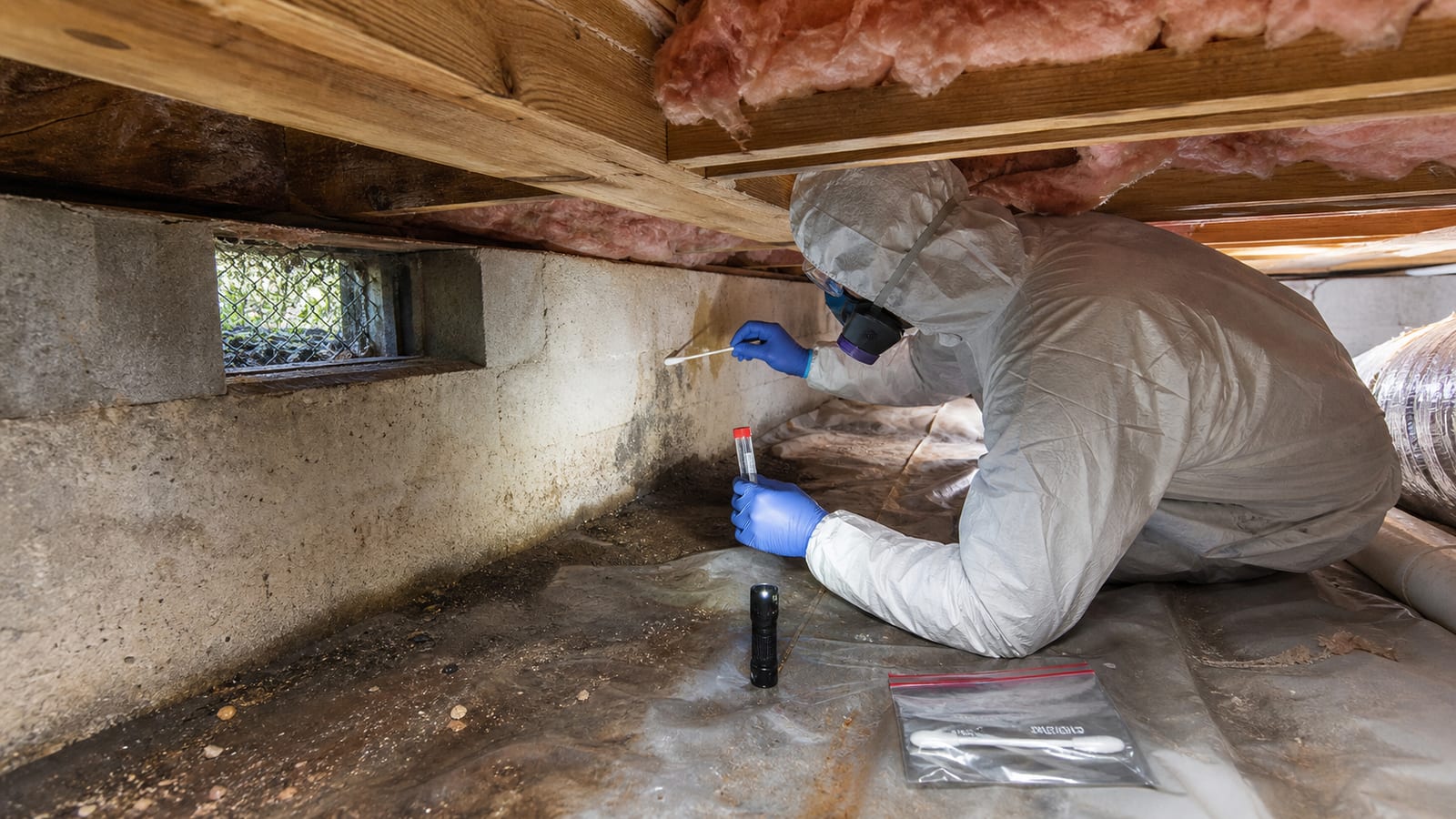
Testing may be useful when identification answers a defined question that changes the scope. It is not necessary to prove that visible unwanted growth and damp wood deserve moisture correction. A surface sample identifies what was collected at one location; it does not establish the condition of every joist or a health outcome.
Write down why the test is being considered. If every result leads to repairing the leak, removing wet insulation, cleaning eligible wood, and drying the area, identification may not add practical value.
If sampling occurs, document location, method, substrate, collector, laboratory, date, conditions, and limitations. Preserve photographs before and after collection.
The crawl space mold inspection evidence guide explains how to place results within a broader record.
Can crawl space wood be cleaned in place?
Some sound wood with surface growth can be cleaned in place using an appropriate method after moisture correction and safe preparation. The method should remove material without saturating or damaging the wood. Wood that is rotten, structurally compromised, inaccessible, or contaminated by sewage or other hazards needs a different scope.
Cleaning should follow the grain and geometry of the surface where applicable, reach edges and connections without damaging them, and control debris. Aggressive methods can alter the wood surface and make later inspection harder.
Color change is not the completion standard. Stains may remain after cleaning, while a bleached-looking surface may still be wet. Verification should consider physical removal, dryness, source correction, and documented extent.
Do not coat or encapsulate wood immediately merely to hide discoloration. Coverings can reduce visibility of recurring water or damage. If a coating is part of a specified system, its purpose and substrate requirements should be clear.
When does wood need repair instead of cleaning?
Wood needs repair evaluation when decay, section loss, deflection, damaged connections, crushing, splitting, or instability affects its intended function. Cleaning is a surface process and cannot restore verified capacity. The repair scope may involve joists, beams, posts, subfloor, bearings, or connections, each requiring appropriate assessment.
The decision should consider the full member, not only the worst-looking patch. A joist can appear sound at midspan but be damaged at a bearing or plumbing cut. Insulation can hide the subfloor face and fasteners.
Keep damaged areas exposed until the repair is documented. Do not use foam, coating, or new insulation as a substitute for structural visibility.
If the floor is actively sagging or supports are unstable, limit access and obtain qualified help. A crawl space cleaning crew should not work beneath uncertain framing merely because surface growth is present.
How Carolina Encapsulation Company evaluates wood conditions
Carolina Encapsulation Company documents visible wood condition, growth patterns, moisture paths, insulation, liner, plumbing, ducts, drainage, and access. The company separates cleaning scope from structural questions and does not identify species by color or promise that surface treatment restores wood capacity.
The company serves Fuquay-Varina and surrounding Triangle communities. A free crawl space inspection can define visible conditions and next steps, but structural, laboratory, electrical, medical, pest, sewage, or hazardous-material questions may require another qualified professional. Those boundaries should be recorded before work begins.
The crawl space mold and fungal cleaning service describes the source-first approach to eligible surface cleaning.
How should cleaned wood be verified?
Verification should compare labeled photographs, confirm that specified material was physically removed, check that wood is suitably dry, and document the corrected moisture source. Inspect edges, fasteners, bearings, adjacent insulation, liner, plumbing, and ducts. Record stains that remain so they are not mistaken for new growth later.
Follow-up after rain or a full equipment cycle can reveal recurring moisture. Keep measurement locations consistent. A single dry afternoon does not establish long-term control.
If insulation will be restored, photograph the exposed subfloor and joists first. New material should not conceal an unresolved leak, soft wood, damaged connection, or incomplete cleaning area.
Maintenance should include checks after plumbing work, storms, pest activity, and changes in crawl space humidity or floor condition.
Keep the cleaned area visible long enough to compare it under normal crawl space conditions. A repair completed during dry weather may need another check after rain. Record whether drains, liner, vents or seals, and humidity equipment operated normally. If the same surface becomes damp again, revisit the pathway before repeating treatment.
Request an inspection for growth on crawl space wood
If joists, beams, or subfloor show spotting, fuzzy material, staining, or dampness, document the condition before covering or spraying it. Carolina Encapsulation Company offers a free crawl space inspection in Fuquay-Varina and surrounding Triangle communities. Call 704-207-9348 or request an inspection.
Frequently asked questions
Does mold-like growth mean crawl space wood is rotten?
No. Surface growth and wood decay are related to moisture but are not the same crawl space condition. Inspect fiber strength, softness, section loss, bearings, connections, and movement separately. Questionable framing may require structural assessment even after the surface is cleaned.
Can black spots identify the mold on a joist?
No. Black spots can be growth, soil, staining, metal reaction, insect debris, or another deposit. Color cannot reliably identify species or health significance. Record the pattern, substrate, dampness, location, and moisture source, then test only if the result changes a decision.
Can wood be cleaned without removing insulation?
Only if the affected crawl space surface is fully accessible and the insulation is dry, serviceable, and outside the work area. Insulation often blocks the subfloor and joist sides, so controlled removal may be needed for inspection, cleaning, drying, and verification.
Should stained wood be painted after cleaning?
Not automatically. Stain can remain after material is removed, and coating may hide recurrence or damage. Confirm crawl space source correction, suitable dryness, surface condition, product compatibility, future inspection needs, and the coating’s specific documented purpose before covering any wood.
Can a dehumidifier dry damaged wood?
A dehumidifier can support drying within an appropriate crawl space enclosure, but it cannot stop active leaks, drain standing water, remove wet insulation, or restore decayed fibers. Drying conditions should be monitored over time, and structural damage requires a separate repair decision.
How quickly can growth return after cleaning?
There is no reliable universal timeline. Recurrence depends on remaining material, crawl space surface moisture, humidity, temperature, water events, and the completeness of cleaning. The practical prevention is prompt source correction, suitable drying, documented verification, and repeated checks after rain or plumbing leaks.
When should crawl space access be restricted?
Restrict access for standing water near electricity, unstable framing, sewage, chemical contamination, animals, sharp hazards, or unknown materials that cannot be handled safely. Surface growth alone does not define every hazard, so the complete access condition should be assessed before entry.
How this applies in Apex, NC
For homeowners in Apex, NC, use this topic as a way to organize observations before selecting work. Carolina Encapsulation Company serves Apex, NC and surrounding Triangle communities, but the appropriate scope still depends on the water, moisture, materials, access, and equipment found at the property. Compare the crawl space mold fungal cleaning with the Crawl Space Cleaning: Moisture, Mold, Debris, and Safe Scope in Apex, NC before choosing a property-specific next step.