
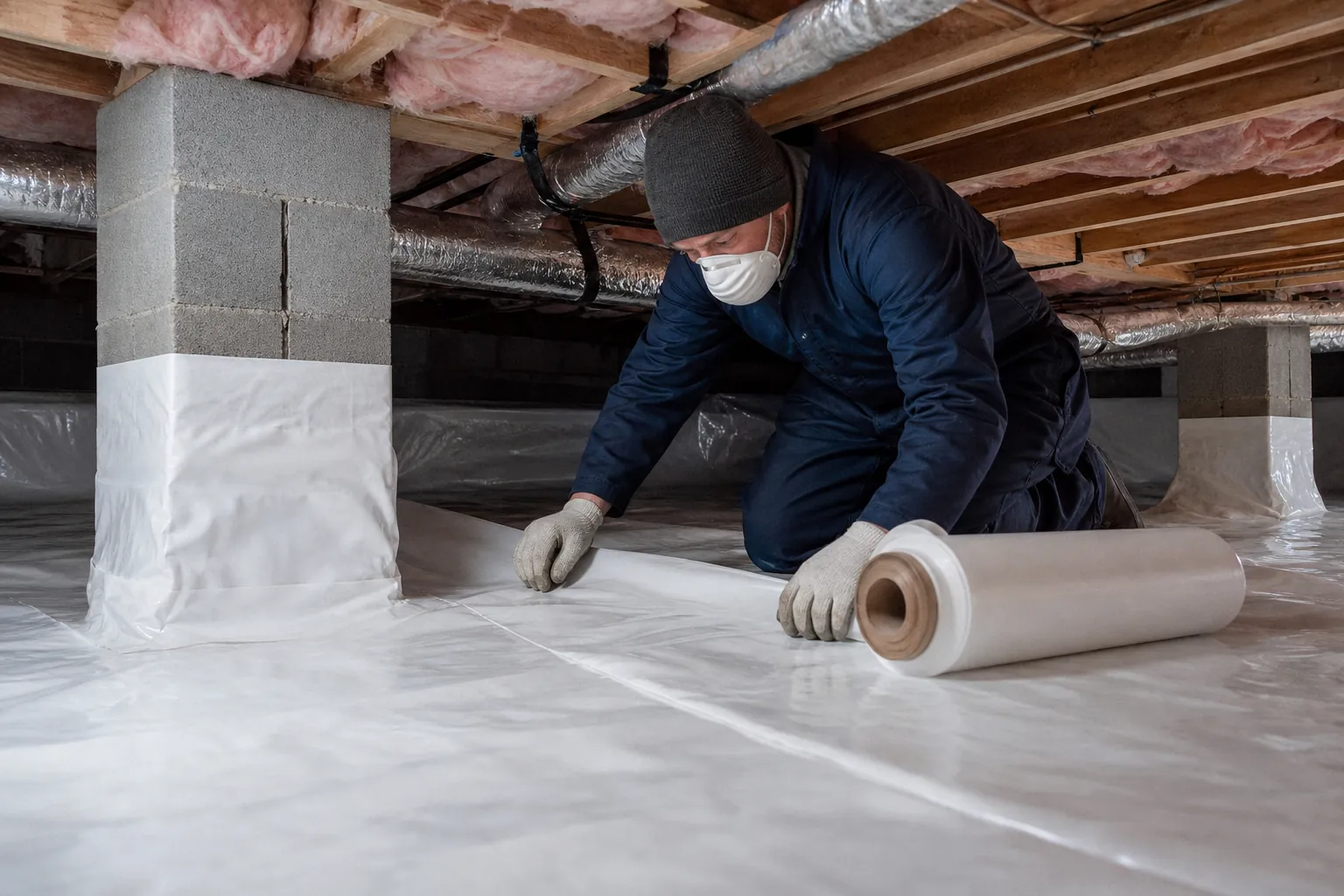
Winter does not automatically put crawl space improvements on hold. In many North Carolina homes, encapsulation can be completed during colder months when the crawl space is accessible, water problems are addressed, and installation conditions meet the requirements of the materials being used.
The important question is not simply whether it is cold outside. It is whether the space is ready for a durable moisture-control system. Standing water, damp framing, unsafe wiring, and poorly planned drainage matter more than the season alone.
If you are researching crawl space encapsulation in winter NC, this guide explains what changes in cold weather, what should happen before installation, and how to evaluate a proposal for your home. Carolina Encapsulation Company can help you discuss the condition of your crawl space and the next steps.
Why winter can be a practical time for encapsulation
North Carolina winters vary considerably. Mountain communities can experience prolonged freezing conditions, while the Piedmont and coastal areas often have stretches of milder weather between cold fronts. A workable installation schedule depends on local conditions rather than a statewide cutoff date.
Winter can also make certain crawl space concerns easier to notice. Cold floors, drafts near plumbing penetrations, and uneven temperatures may prompt homeowners to investigate below the house. These symptoms are useful clues, although they do not prove that encapsulation is the only solution.
Rain remains a concern during winter. Saturated soil, runoff from sloped lots, and overflowing gutters can introduce water beneath a home even when outdoor humidity feels lower. A crawl space should be evaluated for liquid water as well as water vapor.
A winter project can establish a moisture-control system before warmer, more humid weather arrives. That is a practical advantage, not a guarantee of immediate energy savings or permanent dryness without maintenance.
The season may affect scheduling and access, but there is no reason to wait for spring solely because the calendar says January. An inspection should determine whether work can proceed safely and correctly.
What encapsulation does, and what it does not do
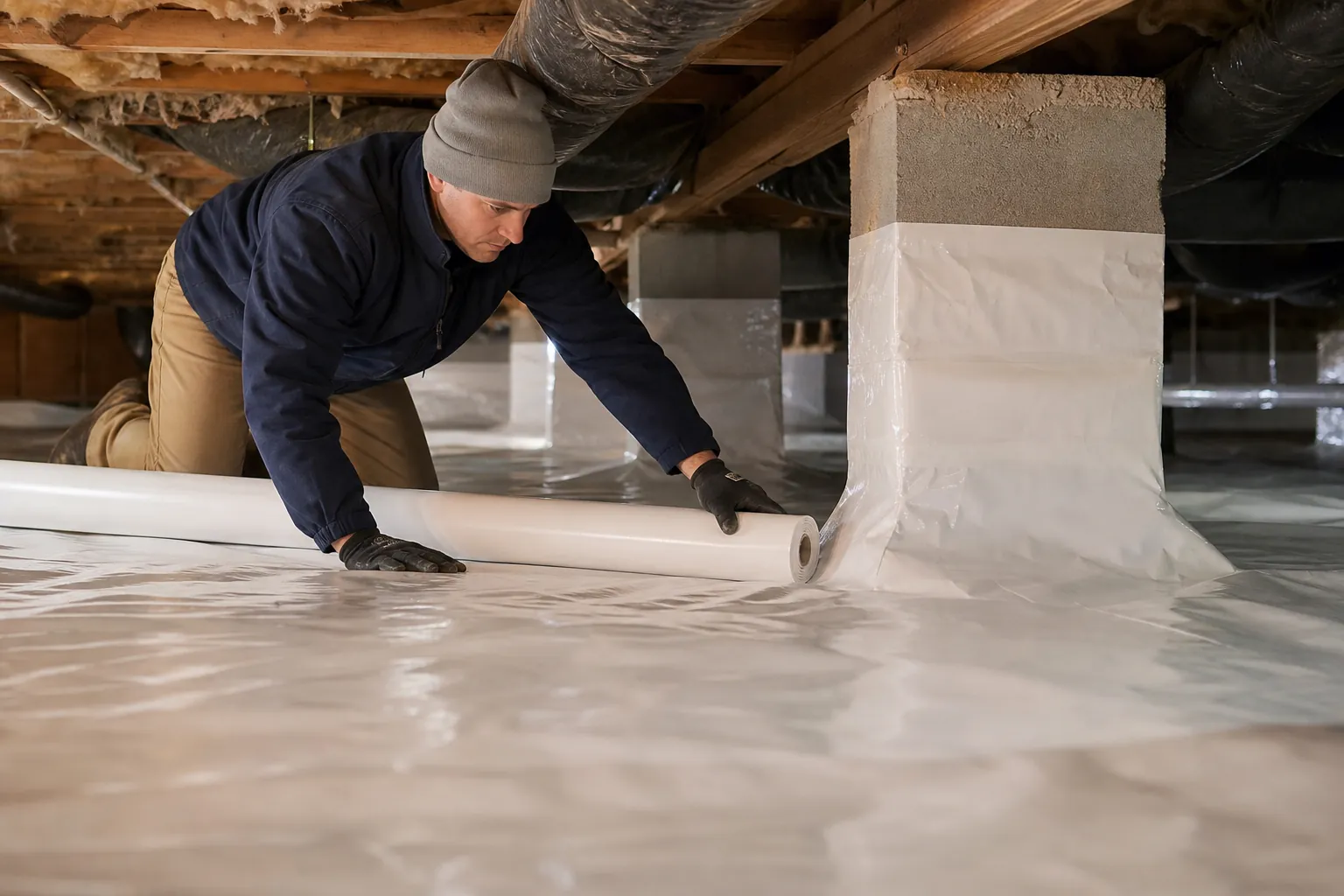
Encapsulation generally involves installing a durable ground vapor barrier, sealing seams and penetrations, addressing foundation vents and access openings, and providing a planned method of moisture control. Depending on the home, insulation and drainage improvements may also be part of the project.
The ground barrier reduces moisture movement from exposed soil into the crawl space. Sealed details help limit uncontrolled air exchange. A properly selected dehumidifier or another code-compliant conditioning approach manages moisture that remains or enters through other pathways.
Encapsulation is different from placing loose plastic over the soil. A complete system relies on connections, sealed edges, access details, and equipment that work together. Gaps around piers or an unsealed entrance can compromise otherwise careful work.
It is also not a substitute for fixing a leaking supply line, correcting roof runoff, or repairing damaged structural members. Covering a wet or deteriorated area can conceal a problem rather than resolve it.
Winter makes this distinction especially important. A crawl space may appear relatively dry during a cold week but still have a history of summer condensation or storm-related flooding. The design should account for year-round conditions, not just what the inspector sees that day.
What should be inspected before winter installation
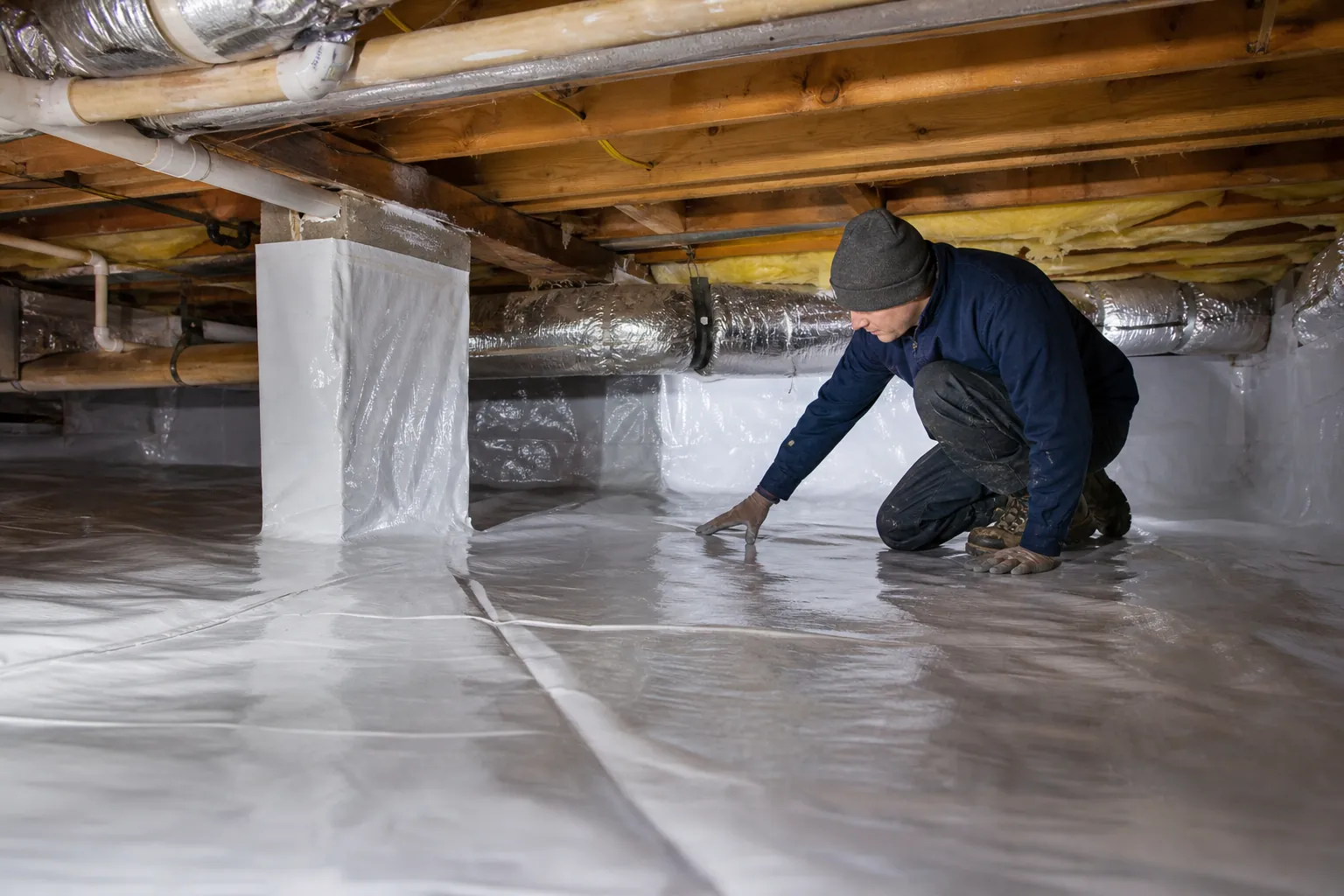
A useful inspection looks beyond the soil surface. It should identify moisture sources, assess visible building components, and determine whether the space can support the proposed system. Measurements and observations should be explained in plain language.
These are practical items to discuss before approving work:
- The inspector should look for standing water, staining, sediment, and other evidence of past water entry.
- Wood moisture readings should help assess framing conditions, with any limitations explained rather than hidden behind a single number.
- Plumbing leaks and HVAC condensate discharge should be checked because encapsulation will not correct either problem.
- Visible damaged wiring, loose ductwork, and unsafe access conditions should be identified before crews begin working.
- The proposal should explain how existing insulation will be evaluated and whether damaged material needs removal.
- Foundation walls, support piers, and framing should be checked for visible concerns that may require a qualified specialist.
- The location of fuel-burning equipment should be reviewed so that sealing the crawl space does not create combustion-air or venting problems.
Homeowners can help by describing when problems occur. Water that appears only after several rainy days suggests a different pattern from condensation on ducts during humid weather. Photographs from previous storms can be valuable when the crawl space is dry during the inspection.
If there is extensive suspected mold growth, significant rot, or a structural concern, ask whether additional evaluation is needed. An encapsulation estimate should not replace specialized assessment when the condition warrants it.
How cold weather changes installation details
Cold weather most directly affects materials, surface preparation, and working conditions. Tapes, adhesives, sealants, and coatings may have minimum application temperatures. Some also require clean, dry surfaces and specific curing conditions.
A contractor should follow the manufacturer's instructions for both storage and installation. Bringing materials to the property is not enough if a cold foundation wall prevents an adhesive from bonding properly. Conversely, a cold outdoor temperature does not necessarily mean every crawl space surface is too cold for installation.
Ask how actual conditions will be checked. Air temperature, surface temperature, and moisture can all matter, depending on the product. If conditions fall outside specifications, the appropriate response may be to reschedule that part of the work or use a suitable approved method.
Temporary heat requires caution. Fuel-burning heaters can introduce combustion hazards and moisture, and they should not be used casually in confined areas. Any plan to warm the workspace should prioritize worker safety and appropriate equipment.
Wet access routes, frozen ground, and winter storms can also affect logistics. A crew may need to adjust delivery timing or protect an entry area. Those adjustments are normal, but they should not become reasons to skip preparation or rush seam sealing.
Fix bulk water before relying on a sealed crawl space
A vapor barrier controls vapor movement. It does not eliminate the source of water flowing through a foundation opening or collecting beneath the house. Drainage decisions should therefore come before, or be coordinated with, encapsulation.
Start with the outside of the home. Gutters should be clear, downspouts should discharge to an appropriate location, and surface drainage should move water away without creating problems for nearby properties. Foundation grading deserves attention where soil slopes toward the house.
Some homes also need interior drainage or a sump system. The need depends on observed water entry, site conditions, and the practical options for managing discharge. A sump pump should not be added simply because it is part of a standard package.
When a pump is necessary, its winter operation needs consideration. Exposed discharge sections can be vulnerable to freezing. The discharge arrangement should be designed for local conditions and applicable requirements, with an explanation of how it will be maintained.
- Ask where collected water will go and whether that location is suitable during prolonged rain.
- Ask how the system will be accessed for cleaning, inspection, and repair.
- Ask whether an alarm or backup option is appropriate for your home's flooding risk.
- Ask how discharge piping will be protected against winter problems without restricting flow.
After a substantial rain, verify that the water-management plan is working. A dry installation day alone cannot demonstrate how the crawl space will perform during a storm.
Plan humidity control for every season
Sealing a crawl space changes how it exchanges air with the outdoors. The finished space needs an intentional moisture-control strategy. Depending on the design and applicable code, that may involve a crawl space dehumidifier or another approved conditioning method.
Equipment should be selected for the actual space and conditions, not merely for a familiar brand name or a generic house size. Crawl space dimensions, air leakage, moisture load, and drainage arrangements influence performance.
Winter operation deserves specific attention. Dehumidifiers have operating-temperature limits, and some remove moisture less effectively as temperatures fall. Ask whether the proposed unit is suitable for the temperatures expected beneath your home.
Drainage matters just as much as capacity. A gravity drain needs an appropriate route and slope. A condensate pump needs suitable installation and access. Either arrangement should avoid creating a new water problem inside or outside the crawl space.
Relative humidity readings should be interpreted alongside temperature and the overall condition of the space. A single reading does not tell the whole story. Monitoring over time is more useful, especially as the home moves from winter into humid spring and summer weather.
A remote humidity sensor can make routine checks easier. It does not replace periodic inspections, but it can alert you to a change before you notice musty odors or visible condensation.
Insulation, pipes, pests, and other details that matter
Homeowners often hope encapsulation will make floors warmer. It may help reduce uncontrolled air movement, but comfort also depends on insulation, duct condition, air sealing, and the rest of the building enclosure. No contractor should promise a particular temperature improvement without evaluating those factors.
The insulation approach should match the crawl space design and local requirements. Moving from a vented crawl space to a closed system can change where insulation belongs. Existing floor insulation should not automatically be left, removed, or replaced without considering its condition and the proposed assembly.
Water pipes remain another concern. Encapsulation does not guarantee freeze protection. Pipe location, insulation, air leakage, crawl space temperature, and unusually severe weather all affect the risk. Discuss exposed plumbing before assuming a sealed space will keep it safe.
North Carolina homeowners should also consider termite inspection access. Encapsulation details need to preserve required inspection areas and coordinate with applicable requirements and any pest-control agreement. Covering every visible surface is not necessarily the right approach.
Radon is a separate issue. Encapsulation should not be represented as a substitute for radon testing or a properly designed mitigation system. If testing indicates a concern, coordinate the crawl space work with a qualified radon professional.
Finally, plan for future service. Plumbers, HVAC technicians, and pest professionals may need access after installation. A durable entry, visible equipment, and a clear maintenance path help protect the system during later repairs.
How to compare winter encapsulation proposals
A useful proposal explains the scope rather than relying on broad phrases such as complete moisture protection. Comparing written details helps you understand whether two estimates actually describe the same work.
Look for clarity on the following points:
- The proposal should identify the vapor barrier product and explain how seams, walls, piers, and penetrations will be treated.
- The scope should state which vents and access openings will be sealed and how the entrance will remain serviceable.
- Drainage work should be described separately enough that you understand why it is recommended.
- Humidity-control equipment should have an identified model or performance specification and an explained drainage method.
- Insulation work, debris removal, and any required preparatory repairs should be clearly included or excluded.
- The contractor should explain winter weather contingencies and how unsuitable application conditions will be handled.
- Warranty terms should distinguish materials, workmanship, equipment coverage, and homeowner maintenance responsibilities.
Price depends on access, crawl space size, existing damage, drainage needs, and the system selected. A phone conversation may help establish next steps, but a meaningful project price usually requires evaluating the property.
Be cautious about guarantees that encapsulation will eliminate every odor, prevent all pests, or produce a fixed reduction in utility bills. The strongest proposal connects each recommended step to an observed condition in your home.
What to expect after installation
Before considering the project complete, review the finished system with the contractor. Ask to see accessible seams, wall connections, the access door, and the drainage arrangement. Photographs can help document areas that are difficult for you to enter safely.
Obtain operating instructions for installed equipment. Know where filters are located, how often they should be checked, and what an alarm or error message means. Keep warranty information and model numbers somewhere easy to find.
Allow for follow-up observation rather than expecting every moisture reading to change immediately. Previously damp materials may take time to dry, and persistent moisture may indicate a source that needs further attention.
Check the crawl space after heavy rain and during the first humid season. Look for standing water, damaged liner sections, blocked drains, unusual odors, or equipment that has stopped operating. Review performance after plumbing or HVAC service as well.
A winter installation is successful when the system remains effective beyond winter. Seasonal monitoring and ordinary maintenance are part of protecting the investment, not evidence that the work was unnecessary.
Discuss your North Carolina crawl space before spring
You do not need to choose between rushing a winter project and postponing it automatically. Start with an inspection, identify the moisture sources, and ask how the installation plan accounts for weather, materials, and year-round operation.
For a conversation about your home's crawl space, call Carolina Encapsulation Company at 704-207-9348. Discuss what you have noticed, whether winter installation is appropriate, and what should be addressed before encapsulation begins.
Call 704-207-9348 to talk through next steps.