
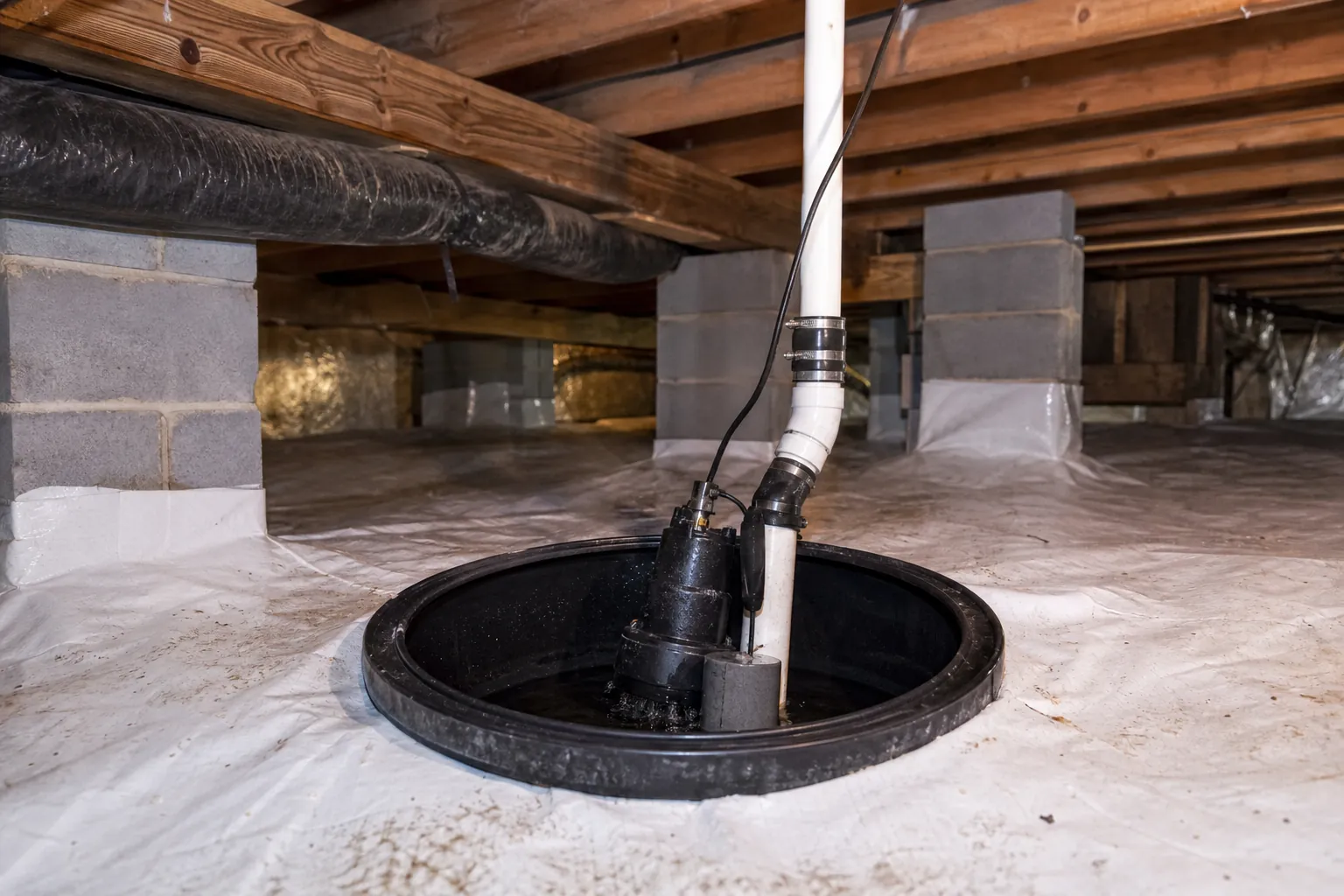
A sump pump moves pooled water out of a crawl space. If you're researching “sump pump crawl space” needs in Raleigh, start by finding the water source. A pump may help with collected water, but damp air, ground vapor, and outside runoff can call for other steps.
What does a crawl space sump pump do?
A crawl space sump pump removes water that reaches its basin. It does not pull moisture from the air or stop every leak. The crawl space encapsulation system guide explains the broader system. Compare crawl space moisture control options to see which moisture problem each tool addresses.
Think of the basin as a collection point. Water must have a path into it before the pump can help. The pump then sends that water through a discharge pipe. Its usefulness depends on both collection and discharge.
A wet patch far from the basin may remain wet. Soil levels, walls, and other barriers can block flow. A qualified contractor should assess those paths. Adding a pump without that review can leave the main problem unresolved.
Water on the ground differs from water vapor. A pump handles collected liquid water. A ground cover helps limit vapor from exposed soil. Equipment that removes moisture from air serves another role.
Raleigh's humid summers can make these differences easy to miss. Damp air may persist when no puddles are visible. At the same time, water may collect after rain. One home can have both issues.
The U.S. EPA's A Brief Guide to Mold, Moisture and Your Home stresses moisture control. Its guidance supports finding and fixing water sources. It does not establish which pump, drainage layout, or other work a particular home needs.
Start with a clear description of the problem. Say where water appears, when it arrives, and how long it stays. That gives a contractor more useful context than asking for a pump alone.
How can you tell where crawl space water comes from?
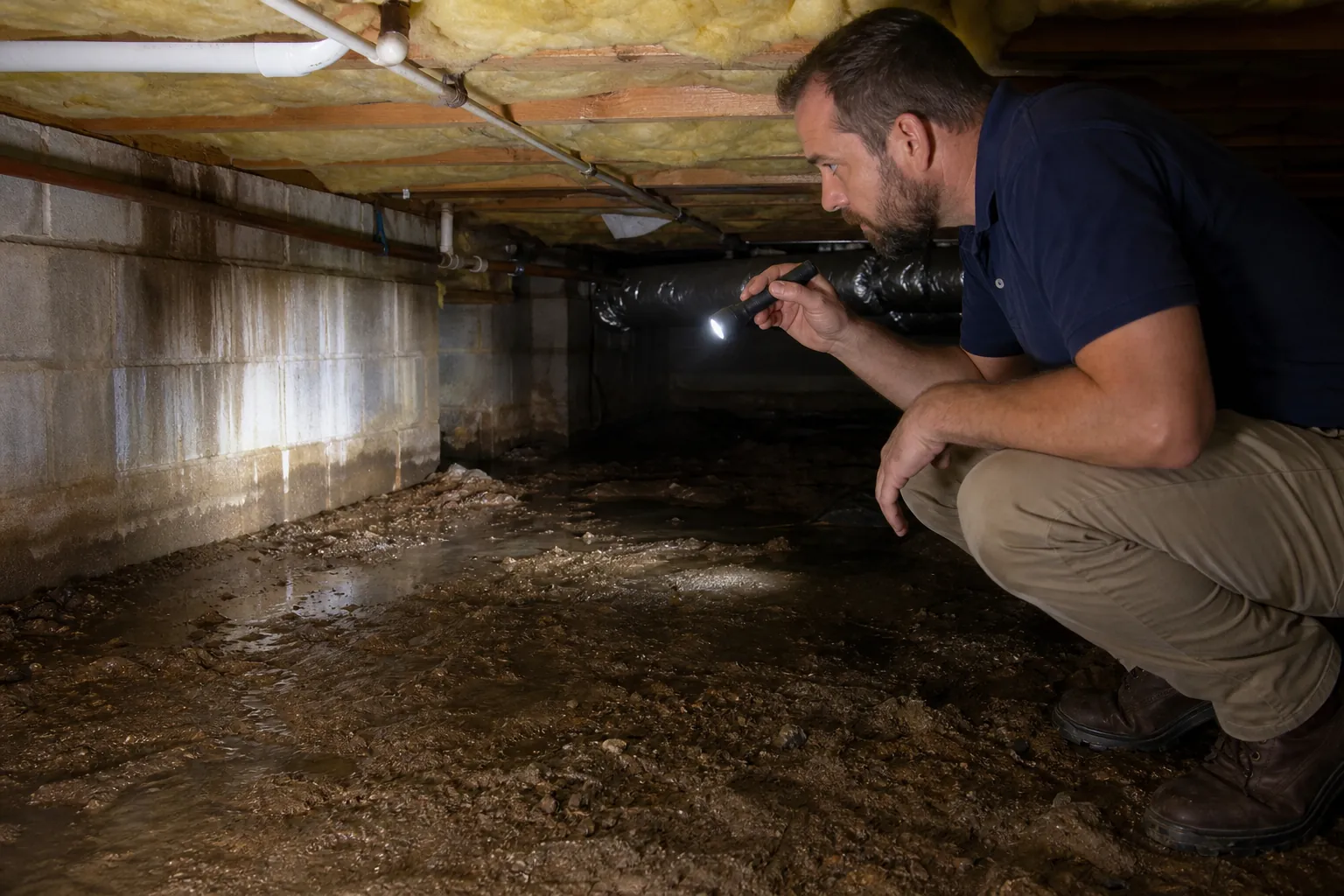
Look for patterns before choosing equipment, but leave unsafe access to professionals. Water after rain may need a different response than a plumbing leak. Review crawl space moisture inspection readings for measurement context. The crawl space encapsulation system guide shows how those findings fit a larger plan.
Timing offers clues, though it does not prove a cause. A wet area after rain may relate to runoff or seepage. A steady wet spot during dry weather may need a plumbing check. Several sources can overlap.
Start with what you can observe from safe, dry areas. Note roof runoff, downspout discharge, and places where water gathers outside. Don't enter standing water near wiring or equipment. Ask a qualified professional to assess unsafe conditions.
Keep a simple record before the visit. Use dates and plain descriptions rather than guesses about the cause. These details can help the inspector decide what to check.
- Record when water appears and how closely it follows rainfall.
- Describe the wet area without entering unsafe or flooded spaces.
- Note known plumbing leaks and any recent repair work.
- Share past drainage work and explain what changed afterward.
Separate observations from conclusions
A stain can show that water was present. It may not show when it arrived. A damp smell does not identify the source. Ask which findings are current, which are older, and what remains uncertain.
NC State Extension's Mold and Moisture Checklist supports checking moisture sources and conditions. Use that guidance as a broad starting point. It cannot diagnose your crawl space from a description or photo.
What should a crawl space sump pump plan include?
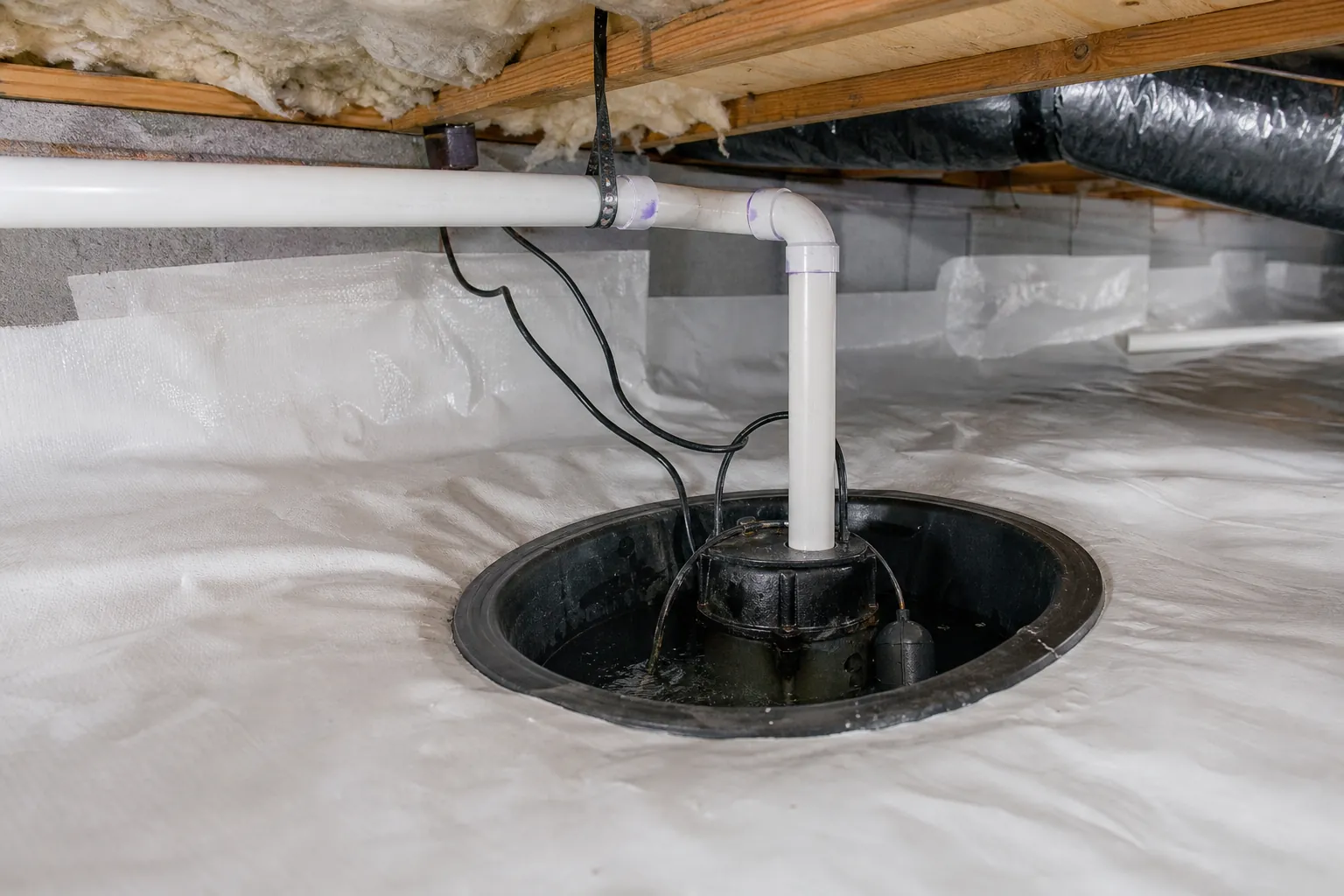
A useful plan covers water collection, the basin, pump controls, power, and discharge. It should explain how each part works together. Read the crawl space encapsulation system guide for system context. Use crawl space moisture inspection readings to frame questions about the conditions behind the proposed work.
A pump's product name does not describe the whole job. The plan should show how water reaches the basin. It should also explain where discharged water goes. Those paths matter as much as the equipment itself.
Pump selection depends on site conditions and the discharge route. A qualified installer should assess the expected water flow and lift. Don't choose equipment based on crawl space size alone. Ask for the reasons behind the proposed selection.
Controls need room to work without obstruction. The plan should account for access to the basin and pump. A covered basin still needs a way to be inspected. Service access should remain clear after other work.
Power and outage planning deserve separate discussion. An alarm warns of a problem but does not remove water. Backup equipment has its own limits and upkeep needs. Ask what happens if power fails or the main pump stops.
Use these questions to make a proposal easier to review. They help reveal missing details without requiring you to design the system.
- Ask how water will reach the basin from affected areas.
- Request a clear description of the planned discharge route.
- Confirm who will assess power needs and related electrical work.
- Ask how controls, alarms, and any backup equipment will be checked.
- Request access details for future cleaning, testing, and repairs.
Do you need a pump, vapor barrier, or dehumidifier?
These tools address different forms of moisture, so one cannot always replace another. Choose based on the water source and site findings. Compare crawl space moisture control options for their distinct roles. Read what crawl space encapsulation means before treating a pump as a complete moisture plan.
Start with the problem each tool can address. Collected water needs a way out. Exposed soil can release vapor. Damp air can need a separate response. More than one condition may exist at the same time.
The comparison below describes general roles, not a shopping list. It does not mean every home needs every measure. An inspection should explain which conditions exist and why a proposed tool fits them.
A vapor barrier does not pump water away. A dehumidifier is not a substitute for managing standing water. A sump pump does not seal exposed soil. Treating these tools as interchangeable can leave an important source untouched.
Work order can matter, too. Ask how active water problems will be addressed before other materials are placed. The plan should also explain how later work preserves access to the basin and discharge connections.
The U.S. Department of Energy's Unvented Conditioned Crawlspaces gives general design context. It describes a broader approach to crawl space conditions. It does not prove that adding a pump alone creates a conditioned crawl space.
| Measure | Main role | Key limit |
|---|---|---|
| Sump pump | Removes water reaching a basin | Does not dry the air |
| Vapor barrier | Limits vapor from covered soil | Does not remove pooled water |
| Dehumidifier | Removes moisture from air | Does not fix liquid water entry |
| Runoff correction | Addresses an outside water source | May leave other sources unresolved |
What affects the work scope and installation time?
Access, soil conditions, water entry, discharge routing, and power needs can change the work scope. A site visit should come before firm project details. The crawl space encapsulation system guide helps frame related work. Review crawl space moisture control options when comparing what different proposals actually include.
Two pump proposals may cover very different jobs. One may include only equipment replacement. Another may include a basin, collection work, and a new discharge route. Compare the written scope before treating them as equal.
Low clearance can limit how people and materials reach the work area. Stored items or old materials may affect access. The proposal should state what must be moved. It should name who handles that work.
Wet soil and hidden conditions can change the planned steps. Ask how new findings will be documented. A clear change process helps you understand added work before agreeing to it. Avoid relying on a verbal summary alone.
Electrical work and discharge decisions may involve separate qualified trades. Local rules may affect the proposed work. Ask the contractor and relevant Raleigh authority which approvals apply. General guidance cannot settle requirements for a specific property.
Timing should reflect the full scope, rather than pump placement alone. Ask about preparation, any required reviews, installation, and final testing. Request a schedule tied to those steps. Leave room for findings that are still unknown.
- Collect the inspection findings and define the water problem first.
- Compare written scopes that describe collection, discharge, power, and access.
- Resolve responsibility for approvals and work by other qualified trades.
- Review testing, cleanup, and care instructions before accepting the plan.
How should a crawl space sump pump be maintained?
Follow the equipment maker's care instructions and the installer's site plan. Regular checks should cover operation, access, and the discharge path. The crawl space encapsulation system guide explains why system care matters. Use crawl space moisture inspection readings to distinguish pump checks from broader moisture checks.
There is no single care schedule for every setup. Equipment, water conditions, and backup components can differ. Ask for written instructions for the installed model. The handoff should explain which checks require a trained professional.
Keep the basin and service area accessible. Don't stack stored items over covers or controls. Avoid changing the discharge route without a review. A change outside can affect where pumped water ends up.
Ask the installer to demonstrate an approved test method. Don't reach into energized equipment or handle wiring in wet conditions. If access is unsafe, arrange professional service. A test should not create a new risk.
Learn what each alarm means before it sounds. An alert may point to high water, lost power, or another fault. The meaning depends on the installed equipment. Keep the instructions where you can find them.
Report changes rather than trying to diagnose them by sound alone. Repeated cycling, new noise, or water outside the basin deserves review. A pump that runs is not proof that the whole space is dry.
Keep a short service record with dates and findings. Note any repairs, alarm events, or changes after storms. Share that history during later visits. It can help explain a pattern that one visit might miss.
What should Raleigh homeowners ask before approving work?
Ask for a clear link between the observed problem and each proposed step. The scope should explain limits, upkeep, and unresolved questions. Read what crawl space encapsulation means to clarify terms. Compare the proposal with the crawl space encapsulation system guide before treating one component as the whole solution.
Ask the contractor to separate facts from assumptions. Which water entry points were seen? Which remain suspected? If the cause is unclear, ask what further checks could narrow it down. Uncertainty should stay visible in the plan.
Request plain names for the work being proposed. A phrase such as moisture system can hide important differences. Ask which tasks address liquid water, soil vapor, and damp air. Each task should have a stated purpose.
Review where the discharge ends and who assessed that location. Pumping water out of the crawl space is only one step. The route must fit the property and applicable rules. Ask a qualified professional to resolve those details.
Ask how completion will be checked. A useful handoff explains what was tested and what the test showed. It should identify any remaining concerns. One successful pump cycle cannot establish how every future storm will affect the home.
Confirm who handles future service and how to report a problem. Don't assume every company offers pump installation or ongoing care. Ask Carolina Encapsulation Company directly which work it offers for your Raleigh property.
Keep the scope, product information, test notes, and care instructions together. Those records make later questions easier to answer. They also help another qualified professional understand the setup if you seek a second opinion.
Questions about next steps? Call Carolina Encapsulation Company at 704-207-9348 or review encapsulation.
Frequently Asked Questions
Is a crawl space sump pump the same as a sewage pump?
No. A crawl space sump pump is generally intended for collected water, not sewage. Wastewater requires equipment selected for that purpose. If water may contain sewage, avoid contact and seek qualified help. Don't assume an existing sump system can safely handle a plumbing backup.
Can I connect a sump pump to a sewer or street drain?
Don't assume either connection is allowed. Discharge rules depend on the local system and the property. Ask the relevant local authority and a qualified contractor about the proposed route. Keep the answer tied to your address. A general article cannot establish permission for a specific connection.
Does a sump pump use power when it is idle?
Power use depends on the installed equipment and controls. The pump motor runs when activated, while some alarms or backup controls may use power separately. Ask for the model's electrical information. Avoid estimating use from motor size alone, since run time depends on site conditions.
Will a sump pump remove an existing musty smell?
A pump may address collected water that contributes to damp conditions. It does not directly remove every source of odor. Wet materials, soil vapor, or other moisture sources may remain. The EPA's mold and moisture guide supports correcting moisture problems rather than relying on odor alone to judge conditions.
What if the home already has a sump pump?
Have the existing setup assessed before deciding to replace or expand it. Ask about the basin, controls, discharge route, and service history. New water does not always mean the pump itself has failed. Water may be bypassing the basin, or a separate source may need attention.
Sources
- Mold and Moisture Checklist, NC State Extension
- A Brief Guide to Mold, Moisture and Your Home, U.S. EPA
- Unvented Conditioned Crawlspaces, U.S. Department of Energy
Call 704-207-9348 to talk through next steps.