Crawl space encapsulation changes an open, ground-connected crawl space into a more controlled environment by managing soil vapor, outside air, liquid water, and humidity as a system. It usually involves more than floor plastic. The exact scope should respond to drainage, liner, vent, access, insulation, and equipment conditions documented during an inspection.
That distinction matters in North Carolina. Warm, humid outdoor air can enter through vents and openings, while exposed soil supplies another moisture path. Roof runoff, grade, leaks, and condensation add separate problems. Encapsulation can reduce several pathways, but it cannot repair every source or replace ongoing inspection.
What is crawl space encapsulation?
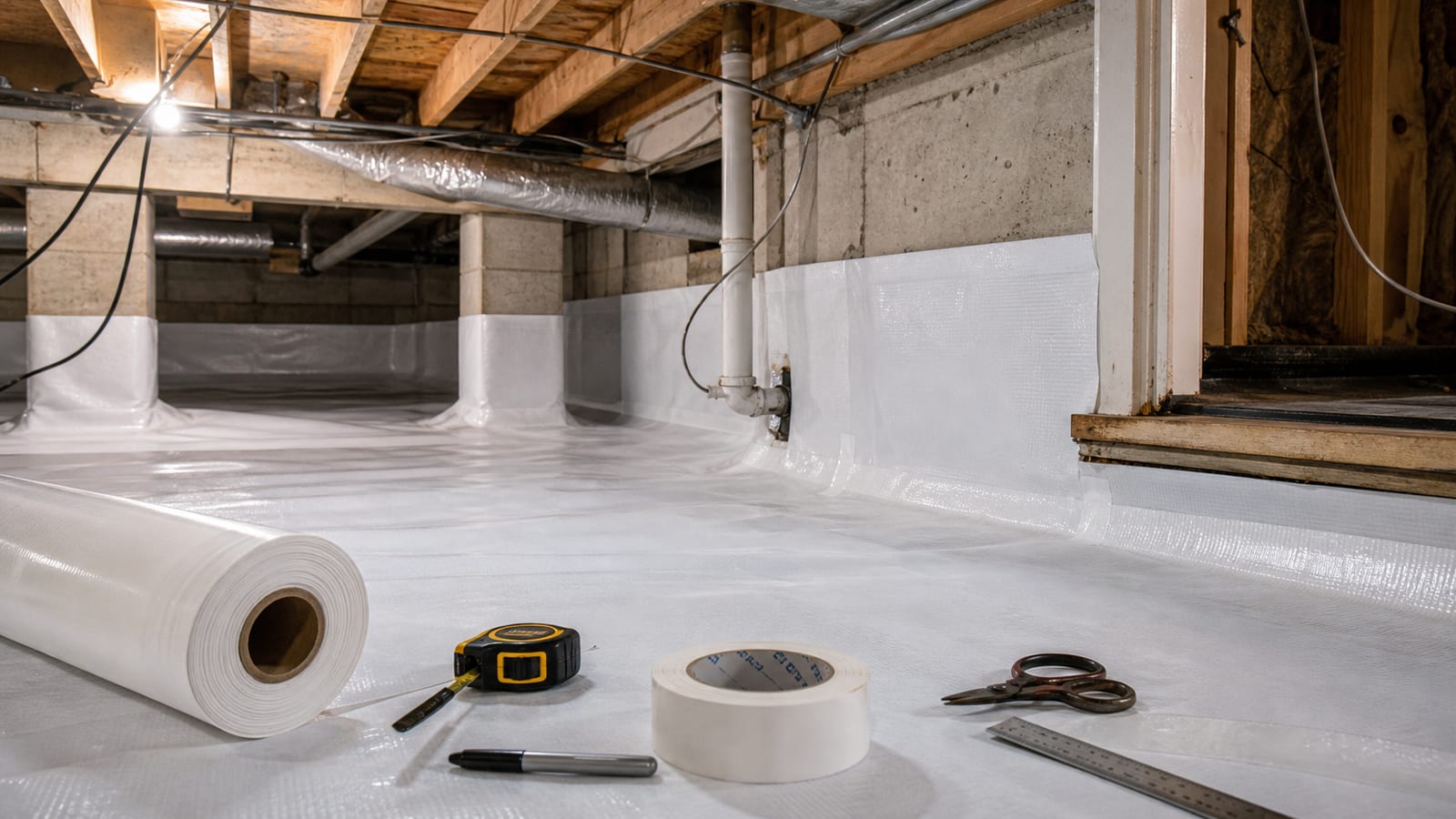
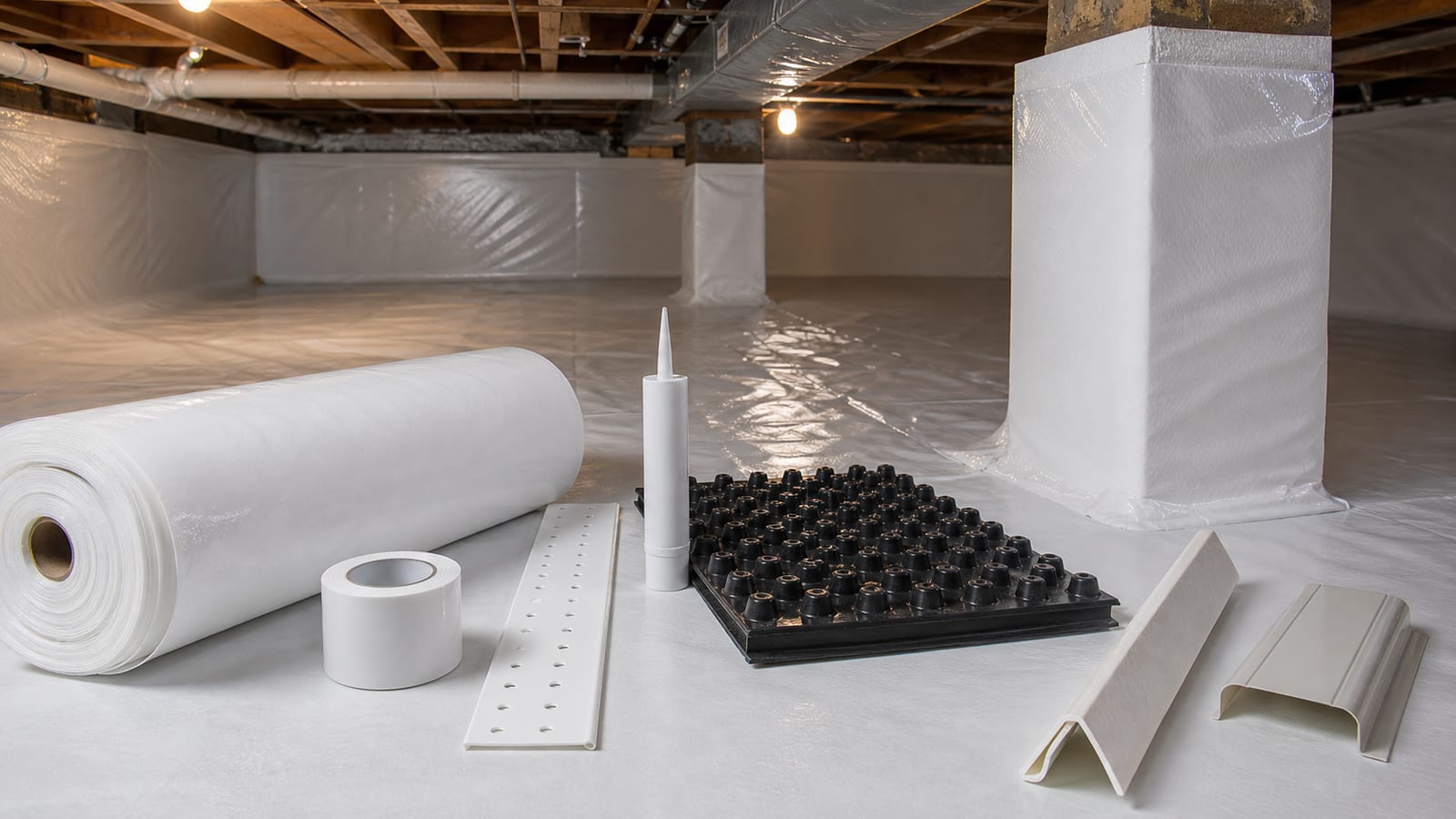
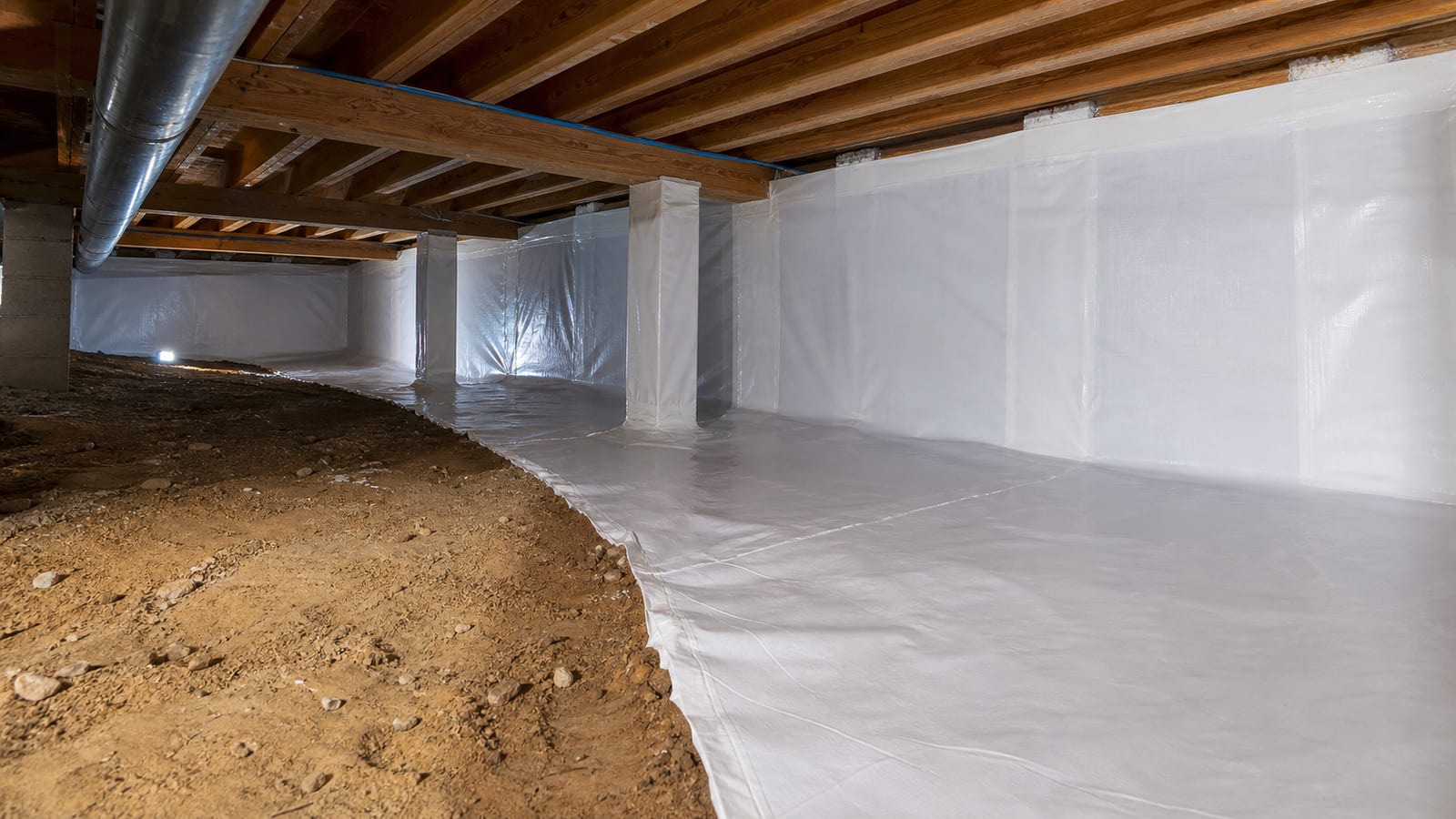
Crawl space encapsulation is the process of creating a continuous moisture and air-control boundary around a crawl space. Common elements include a sealed ground liner, wall and pier details, closed vents, a fitted access, drainage where needed, and planned humidity control. The system’s purpose is controlled performance, not simply a cleaner appearance.
A floor-only vapor barrier is narrower. It covers soil to reduce vapor movement but may leave foundation walls, vents, columns, seams, and access points outside the boundary. Full encapsulation usually addresses more of those transitions. The crawl space encapsulation system guide maps the components and shows why they must be coordinated.
The scope can differ from one house to the next. A dry crawl space with exposed soil presents a different starting point from a space with recurring wall seepage, damaged insulation, standing water, or an existing liner. A useful proposal states what was observed, what each component will change, and what remains outside the work.
Encapsulation should also preserve access. Plumbing joints, wiring, framing, supports, drains, and equipment still need inspection. Covering evidence without addressing its source makes later diagnosis harder.
The crawl space encapsulation service page explains how an inspection-based scope can connect these components for homes in the company’s service area.
What does encapsulation actually change?
Encapsulation primarily changes moisture movement and uncontrolled air exchange. It limits vapor rising from soil, reduces humid outdoor air entering through planned closures, and creates a cleaner surface for inspection. With suitable drainage and drying, it can make crawl space conditions more stable, but it does not make the space maintenance-free.
The most direct changes are:
- Ground communication: soil vapor meets a continuous liner rather than open crawl space air.
- Air pathways: vents and gaps no longer operate as uncontrolled openings in a planned closed-space design.
- Water visibility: a clean liner can make new leaks or seepage easier to locate, provided water is not trapped beneath it.
- Humidity management: sensors and mechanical drying can be used within a defined boundary.
- Service conditions: technicians can move across a clean surface while inspecting visible building systems.
What does not change automatically is equally important. Exterior water still needs a route away from the foundation. Plumbing can still leak. A sump pump still needs power and discharge. Wood that was already damaged does not regain structural capacity because the air becomes drier. Pests and other trades can still puncture or move material.
How is encapsulation different from laying plastic on the dirt?
Laying plastic on exposed soil addresses ground vapor, while encapsulation builds a more continuous boundary that may include walls, piers, seams, vents, access, and penetrations. A ground cover can be useful, but calling every sheet of plastic “encapsulation” hides major scope differences that affect water, air, inspection, and maintenance.
The encapsulation versus vapor barrier comparison helps separate those scopes. Questions to ask include:
- Does material cover all exposed soil?
- Are seams connected with compatible methods?
- How are walls and piers handled?
- Are vents and access points part of the boundary?
- What happens to water that reaches the space?
- How will humidity be measured and managed?
- Which areas remain visible for inspection?
A thin, loose sheet may still reduce soil exposure, but wrinkles, open seams, missing edges, and tears change its continuity. A heavy liner may still be incomplete if water sources and air openings are ignored. Performance depends on details and system fit, not on one material label.
What are the 6 main stages of a sound encapsulation project?
A sound project follows evidence from wetting source through long-term verification. The stages are diagnosis, source control, preparation, boundary installation, humidity planning, and maintenance documentation. Changing that order can trap water, hide damage, or make the finished system difficult to service.
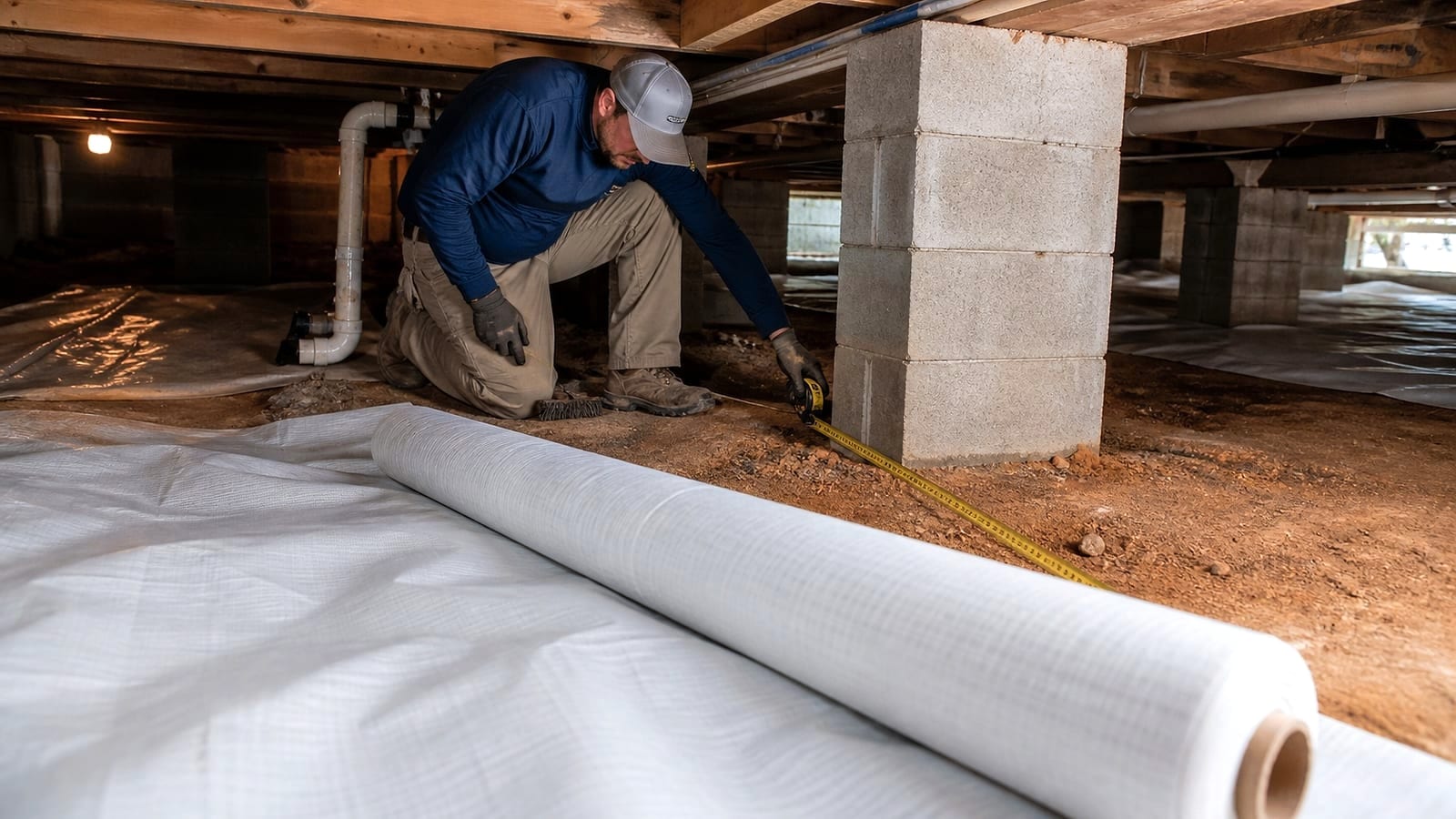
- Inspect and record conditions. Photograph water paths, soil, walls, framing, insulation, vents, access, drains, and equipment before disturbing evidence.
- Correct active sources. Address leaks and determine whether exterior or interior drainage must come before liner installation.
- Prepare the space. Remove inappropriate debris, protect sharp areas, and identify damaged materials requiring separate attention.
- Build continuous control layers. Fit the liner and air-control details around actual walls, piers, penetrations, and access conditions.
- Plan and verify humidity control. Choose sensor locations and determine how remaining moisture will be managed after the boundary changes.
- Create a maintenance baseline. Record finished details, equipment instructions, discharge routes, and inspection points.
Skipping the first two stages can produce a clean-looking result over an unresolved water problem. Skipping the last stage turns a working system into something no one knows how to verify.
Does encapsulation prevent mold?
Encapsulation can reduce moisture conditions that support mold growth, but it is not a guarantee that growth will never occur. Existing wet materials, leaks, condensation, poor drainage, or equipment failure can still create damp areas. Moisture control, material condition, cleaning scope, and follow-up observations must be evaluated separately.
The U.S. Environmental Protection Agency states that controlling moisture is central to controlling mold in its guide to mold, moisture, and the home. That principle supports source control rather than medical or universal outcome claims.
Visible growth should not be identified by color alone. Staining, dirt, mineral deposits, rust, and fungal growth can look similar in poor lighting. Photograph the area, note wetting conditions, and determine whether specialized evaluation or cleaning is appropriate. Encapsulation should not be used to hide material that still needs attention.
How do you know whether encapsulation fits your crawl space?
Encapsulation may fit when uncontrolled soil vapor and outdoor air contribute to damp conditions and the space can support a continuous, maintainable boundary. It is not the first answer to every wet crawl space. Active flooding, unresolved leaks, structural concerns, unsafe wiring, sewage, or inaccessible areas require the correct work sequence first.
Use these inspection questions:
- Is water present now or mainly after rain?
- Does it appear at a wall, pipe, duct, access, or low point?
- Is soil exposed or the existing liner discontinuous?
- Are vents, penetrations, or the access obvious air pathways?
- Is insulation wet, fallen, or concealing framing?
- Are wood conditions visibly changed?
- Is there a safe drainage destination?
- Can equipment and inspection areas remain accessible?
- Are humidity readings repeatable across time and location?
The crawl space encapsulation pros and cons guide provides a balanced decision framework. A free inspection can then connect that framework to the actual space.
How does Carolina Encapsulation Company define the scope?
Carolina Encapsulation Company serves Fuquay-Varina and surrounding Triangle communities. A free inspection reviews visible moisture paths, soil coverage, walls, vents, access points, framing, insulation, drainage, and existing equipment. The resulting discussion should name the job of each proposed component instead of treating encapsulation as a single undifferentiated product.
The process has honest limits. A crawl space inspection does not prove structural capacity, electrical safety, concealed plumbing condition, or the identity of visible growth. Those questions may require another qualified professional. The goal is to preserve evidence, identify the correct sequence, and avoid covering conditions that remain unresolved.
What maintenance does an encapsulated crawl space need?
An encapsulated crawl space needs regular observation of humidity, liner condition, drains, equipment, access closure, and exterior water routes. It should also be checked after heavy rain, plumbing work, pest activity, power outages, or another trade enters. Maintenance verifies that the system remains continuous and that new water has not appeared.
Create a baseline with dated photographs and sensor locations. Review:
- seams and wall attachments;
- pier transitions;
- punctures along service routes;
- water above or beneath the liner;
- drain and sump observations;
- dehumidifier filter, airflow, and condensate route;
- access-door fit;
- exterior gutters, downspouts, grade, and discharge;
- visible framing, ducts, pipes, and insulation.
Follow equipment instructions rather than inventing one maintenance interval. If energized components are wet, stop and arrange appropriate service.
Request a free crawl space inspection
If you are deciding between a ground barrier, selected sealing, and full encapsulation, start with documented conditions. Call Carolina Encapsulation Company at 704-207-9348 or use the contact page to request a free inspection in the service area.
Frequently asked questions about crawl space encapsulation
These common questions focus on scope, timing, and practical limits. Each answer should be confirmed against the conditions in the specific crawl space.
Can you encapsulate a crawl space with standing water?
Standing water should be traced and managed before it is covered. The source may involve exterior runoff, foundation entry, plumbing, drainage, or groundwater. A liner can be part of the final system, but it should not conceal an active path. Establish where collected water will go and how that route will be maintained.
Does encapsulation make a crawl space conditioned space?
Not automatically. “Encapsulated,” “closed,” and “conditioned” can describe related but different scopes. Insulation placement, air supply or transfer, drying equipment, code details, and mechanical design affect the result. Ask for the proposed boundary and humidity-control method in plain language rather than relying on one label.
Should old insulation be removed before encapsulation?
Removal depends on its condition, location, and the planned thermal boundary. Wet, fallen, contaminated, or obstructive material may require attention, while serviceable insulation may fit a different design. Inspect the framing behind it when safe. Do not remove material solely to make the crawl space look uniform.
Will a dehumidifier fix a crawl space without encapsulation?
A dehumidifier can remove moisture from air, but open vents, exposed soil, standing water, and leaks can keep adding moisture. Equipment should be part of a source-control plan, not a substitute for one. Document the moisture load and boundary before deciding whether mechanical drying alone can maintain the intended conditions.
Can encapsulation hide termite evidence?
Poorly planned wall coverage or storage can obstruct inspection areas. The scope should preserve access required for pest observations and coordinate with the property’s pest professional where appropriate. Do not assume a clean liner prevents termite activity. NC State Extension provides separate guidance on preventing termite problems in existing homes.
Is encapsulation permanent?
The control layers can be durable, but they are not maintenance-free or immune to damage. Trade access, pests, sharp objects, settlement, water events, and equipment failure can change performance. Regular inspections and compatible repairs help preserve continuity. A promise of permanent performance would ignore the building conditions around the system.
Encapsulation changes how a crawl space handles moisture and air, but it succeeds only as a complete, inspectable system. Define the water path, match each component to a job, record the finished condition, and verify performance over time. That approach is more useful than choosing a scope from appearance or terminology alone.
How this applies in Wake Forest, NC
For homeowners in Wake Forest, NC, use this topic as a way to organize observations before selecting work. Carolina Encapsulation Company serves Wake Forest, NC and surrounding Triangle communities, but the appropriate scope still depends on the water, moisture, materials, access, and equipment found at the property. Compare the crawl space encapsulation with the Crawl Space Encapsulation Systems: A Component-by-Component Guide in Sanford, NC before choosing a property-specific next step.