
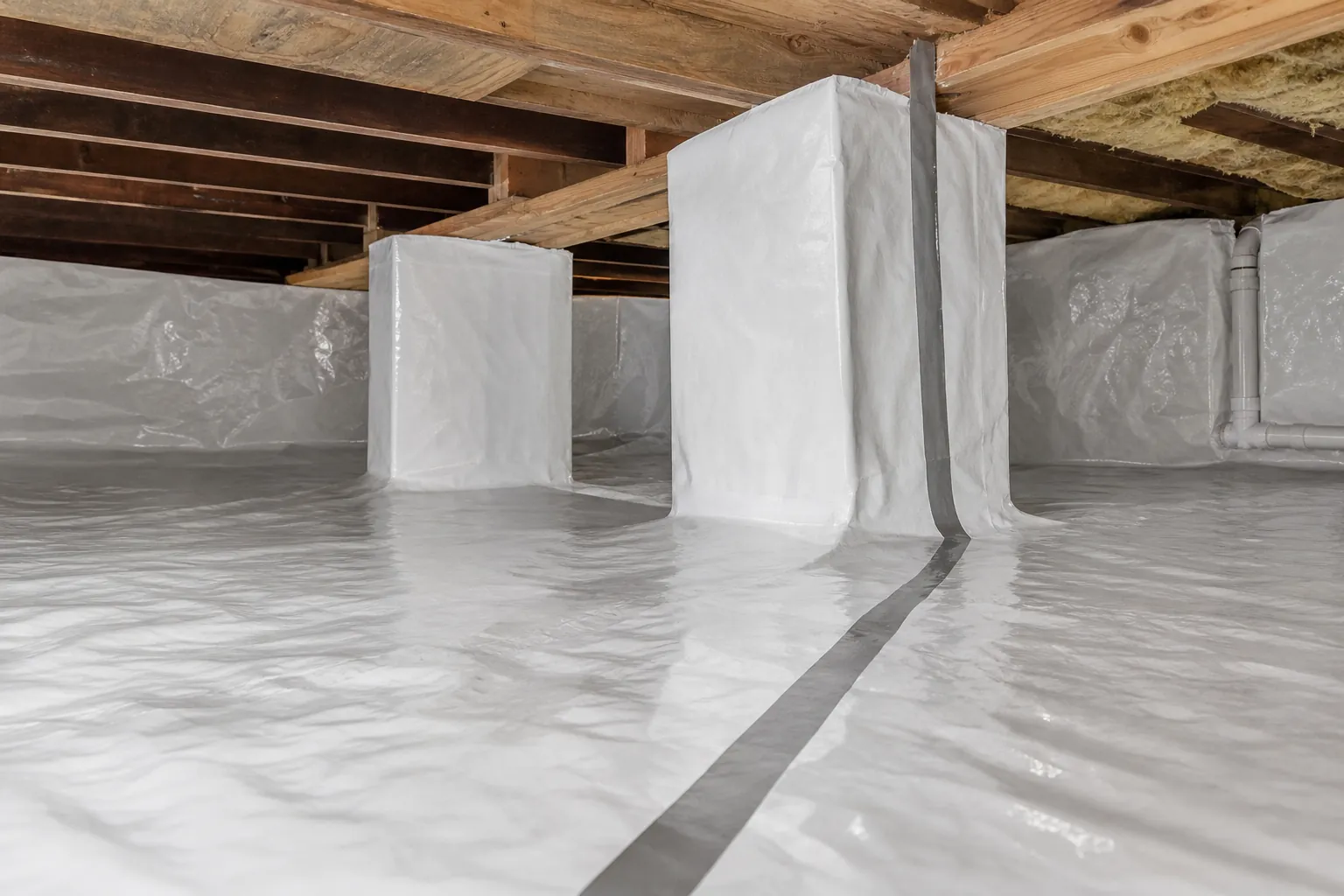
A crawl space liner needs to do more than cover exposed soil. It must form a durable moisture-control layer around foundation walls, support piers, pipes, and other obstacles. Those connections become especially important when the liner shifts during installation, maintenance, or changing conditions beneath the home.
Homeowners researching crawl space liner expansion joints often want to know whether their vapor barrier needs special joints to prevent tearing. The answer requires a distinction: most residential encapsulation liners use sealed overlaps and flexible transition details, not the engineered expansion-joint assemblies commonly associated with concrete floors or commercial roofing.
For North Carolina homeowners, the practical goal is a continuous liner system that accommodates ordinary movement without pulling seams apart. Understanding how those details work makes it easier to compare proposals, recognize installation problems, and maintain an encapsulated crawl space.
What Does An Expansion Joint Mean For A Crawl Space Liner?
An expansion joint in a building typically allows separate components to move without damaging each other. Concrete, masonry, and other rigid materials may need deliberately designed joints because they expand, contract, settle, or move under load.
A flexible crawl space liner behaves differently. Depending on its material and construction, it can bend and conform to uneven surfaces. Instead of requiring a standardized expansion joint at regular intervals, it generally needs properly sealed seams, suitable attachment methods, and enough flexibility at changes in direction.
The phrase “crawl space liner expansion joints” may describe a contractor's approach to movement at seams or transitions. It can also reflect confusion between a foundation joint and a vapor-barrier seam. Ask what the term means in the specific proposal rather than assuming every contractor is describing the same detail.
If a liner must cross an actual structural movement joint, that condition deserves individual evaluation. Simply pulling plastic tightly over the joint and taping it may not preserve either movement capacity or moisture control. The liner manufacturer and, when appropriate, a qualified building professional should guide that detail.
- A liner seam connects separate sheets of vapor-barrier material.
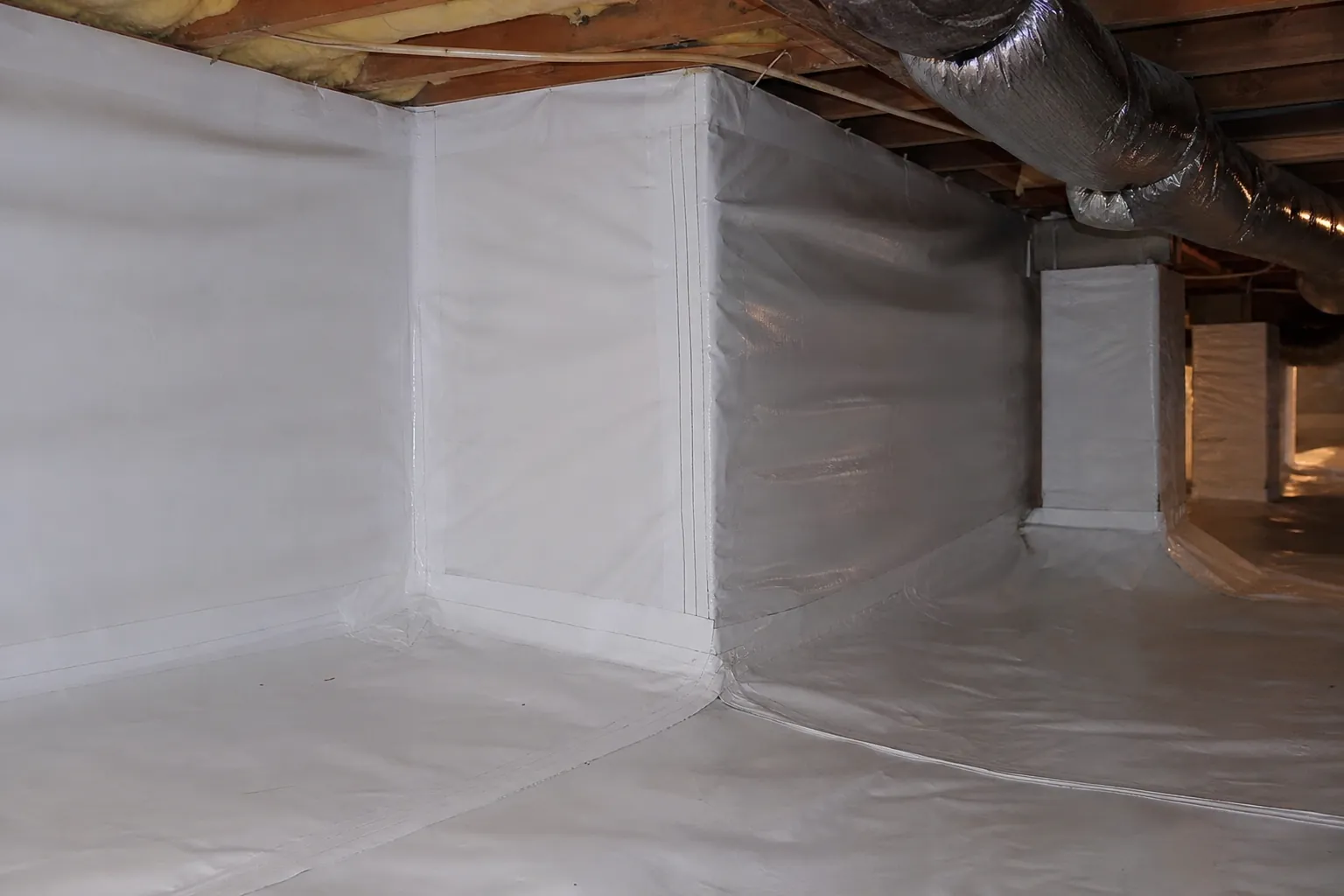
- A wall transition connects the ground liner to an approved wall liner or termination detail.
- A penetration detail seals around a pipe, pier, or other interruption.
- A structural expansion joint allows building components to move and may require a separate, specialized liner detail.
Why Movement Matters In North Carolina Crawl Spaces
North Carolina homes experience varying crawl space conditions across the coast, Piedmont, and mountains. Humidity, seasonal temperatures, soil characteristics, drainage, and construction methods all influence how an encapsulation system performs.
Movement does not always come from thermal expansion. A technician crawling toward an air handler can drag or wrinkle a liner. A loose attachment can allow a wall section to slide. Poorly supported material around a pier can become strained when someone steps on it.
Uneven soil also matters. If a liner spans a depression rather than resting on a reasonably prepared surface, foot traffic can force it downward. That pressure may concentrate at the nearest seam or attachment point, especially when the material was installed under tension.
Water introduces another concern. A vapor barrier controls moisture migration from the ground, but it does not replace drainage or repair a plumbing leak. Standing water beneath or above a liner can displace material, conceal problems, and complicate seam repairs.
These conditions explain why good detailing matters more than a label. A successful installation addresses site conditions first, then uses a compatible liner system with reliable connections. Adding more tape to an already stressed seam does not correct the source of the stress.
How Well-Designed Seams Accommodate Ordinary Movement
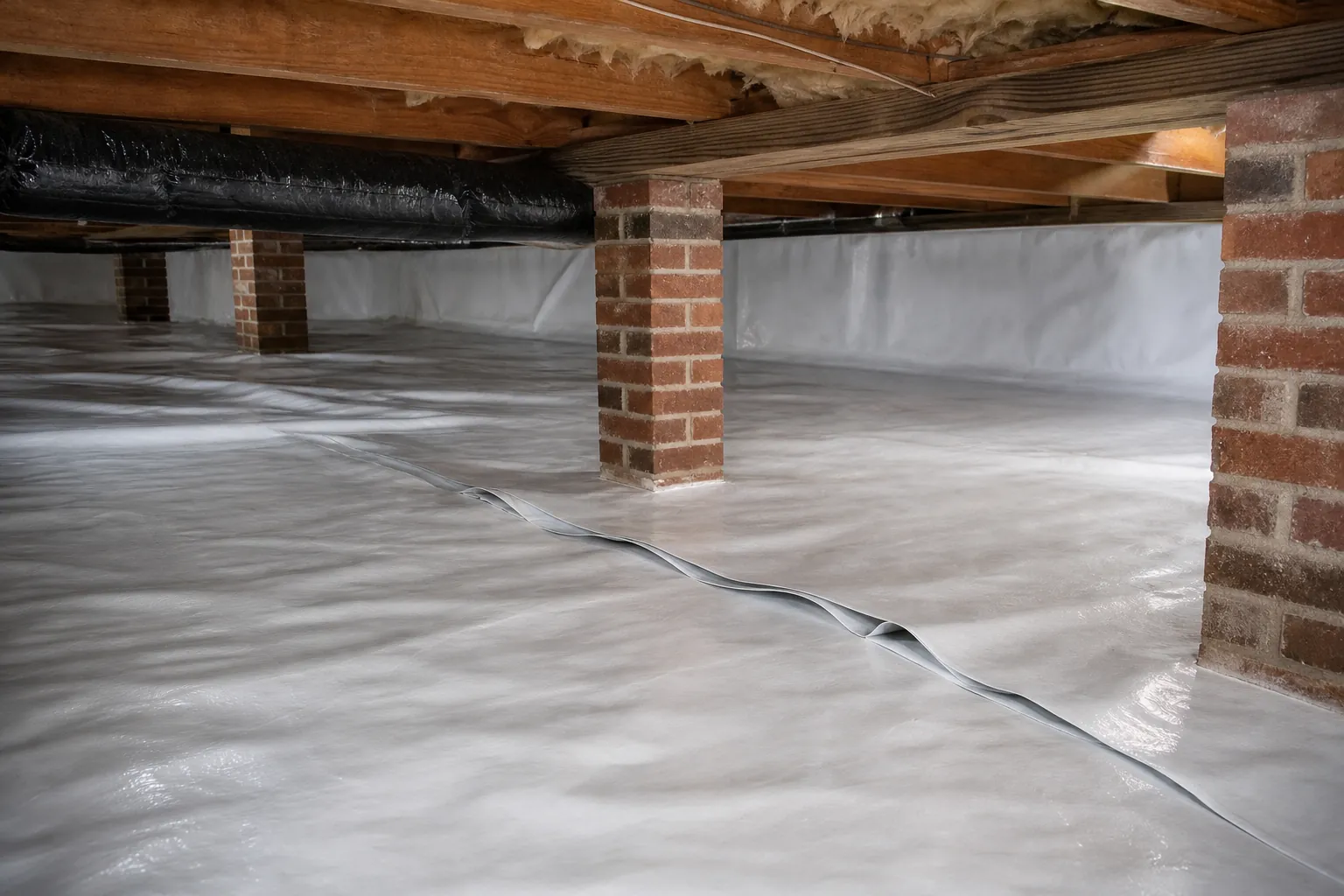
A sealed overlap is the usual connection between liner sheets. One sheet extends over another, and the installer joins them using a method approved for that material. Depending on the system, that may involve compatible tape, sealant, or a specified welding process.
There is no single overlap dimension or joining method that applies to every liner. Product instructions, applicable requirements, and installation conditions should determine the detail. A generic recommendation should not override the manufacturer's specifications.
The liner should lie naturally rather than being stretched tight across the crawl space. At corners and changes in elevation, careful folds or appropriately fitted pieces can reduce concentrated tension. This is different from leaving uncontrolled wrinkles that create trip hazards or collect water.
Seam placement can also improve durability. When practical, installers can keep seams away from frequently traveled routes and awkward transitions. Access to HVAC equipment, plumbing shutoffs, and electrical service points should influence the layout before the material is cut.
The joining surfaces need proper preparation. Dust, mud, moisture, and incompatible residues can interfere with adhesion. Installation temperature can affect some tapes and sealants, so their application limits matter even when the finished crawl space will be conditioned.
- Confirm that the joining products are compatible with the exact liner being installed.
- Require overlap dimensions and surface preparation to follow the liner system's instructions.
- Ask how the installer avoids tension at corners, wall transitions, and support piers.
- Plan a service route so routine maintenance does not repeatedly stress vulnerable connections.
Wall Attachments, Piers, And Pipes Need Different Details
A large, open section of floor liner is relatively straightforward. The more demanding work occurs where the liner meets another material or wraps around an obstruction. These transitions are common places for gaps, loose edges, and tears to develop.
At foundation walls, the liner may be secured using approved mechanical attachments, termination components, sealants, or a combination of methods. The appropriate approach depends on the substrate and the encapsulation system. Adhesive applied to dusty or deteriorated masonry may not provide a reliable connection.
Wall coverage must also respect inspection and building requirements. In North Carolina, termite inspection access can affect how high a liner extends and where a visible inspection area remains. Confirm the applicable detail with local requirements and the home's pest-management provider rather than assuming full coverage is always appropriate.
Support piers require careful fitting. Cutting a large opening around each pier and leaving the edges loose interrupts the moisture-control layer. A suitable wrap or transition should connect to the ground liner without creating a tight, easily damaged bridge.
Pipe penetrations need similar attention. A fitted collar or compatible sealed detail can close the opening while avoiding unnecessary strain on the pipe. The vapor barrier should not become a support for plumbing, wiring, or equipment.
Some penetrations involve additional safety requirements. Combustion appliances, hot surfaces, electrical components, and required clearances must remain accessible and compliant. Encapsulation details should never conceal a hazard or interfere with equipment operation.
What To Check Before The Liner Is Installed
Durable seams begin with preparation. Before installing the liner, the crawl space should be evaluated for water entry, damaged wood, plumbing leaks, debris, and unsafe conditions. Covering a problem can make it harder to find without making it less serious.
Sharp objects deserve particular attention. Broken masonry, nails, scrap metal, and construction debris can puncture a liner from below. Reasonable surface preparation reduces those risks and helps the material sit without unsupported spans.
If bulk water is present, determine its source. Exterior grading, downspout discharge, foundation drainage, or an interior drainage system may need attention. The right solution depends on the home, and a thicker liner alone will not solve a drainage problem.
Radon considerations should also be discussed when applicable. An encapsulation liner may form part of a soil-gas control approach, but moisture encapsulation does not automatically constitute a complete radon mitigation system. Testing and mitigation design should follow appropriate professional guidance.
- Ask whether existing leaks and drainage concerns will be addressed before encapsulation.
- Confirm that debris removal and preparation are included in the installation scope.
- Identify equipment that will need future access so its service path can be protected.
- Discuss termite inspection access, radon considerations, and any unusual foundation joints before work begins.
Choosing A Liner Without Relying On Thickness Alone
Thickness is an easy specification to compare, but it does not tell the whole story. Reinforcement, material composition, puncture resistance, flexibility, and seam compatibility can influence performance. Two liners with similar advertised thickness may behave differently during installation and service.
Ask for the product name and available technical information. Where available, documented water-vapor permeance and relevant durability testing provide more useful context than broad claims such as “industrial strength.” Product data should be interpreted alongside the intended use.
A reinforced liner may offer advantages where access is frequent, but every material still needs careful fitting and sealing. Reinforcement does not make an unsupported section immune to damage, and a heavy liner can still fail at a poorly prepared seam.
Accessories are part of the system. Tape, sealants, wall fasteners, protective pads, and transition materials should work together. Substituting an unrelated tape because it feels sticky can produce a connection that looks acceptable initially but lifts later.
Ask about warranty coverage as well. Material defects, installation workmanship, punctures from later service visits, and damage caused by water may receive different treatment. Understanding exclusions helps set realistic expectations for long-term care.
Signs A Seam Or Movement Detail Needs Attention
Periodic visual checks can reveal developing problems before they become extensive. Inspect from a safe, accessible location and avoid entering a crawl space with standing water, exposed electrical hazards, or other unsafe conditions.
A seam should remain connected without obvious openings. Tape edges that lift, areas that pull apart, or tears beside a sealed overlap deserve attention. Failure next to a seam can indicate tension in the liner rather than a problem with the adhesive alone.
Look at wall connections and transitions around piers. A liner hanging away from its termination may have lost attachment or been pulled by movement below. New damage after equipment service can help identify a traffic-related cause.
Odors, elevated humidity, and condensation can indicate broader moisture issues, but they do not prove a seam is leaking. Drainage, duct leakage, ventilation conditions, dehumidifier operation, and plumbing should also be considered.
- Arrange an inspection if a seam opens or a tear exposes soil.
- Investigate pooled water instead of treating it only as a liner-repair issue.
- Check whether damaged areas align with service routes or unsupported depressions.
- Keep photographs of changing conditions so a contractor can assess the pattern over time.
Repairing A Damaged Joint Without Repeating The Problem
A lasting repair starts by identifying why the connection failed. Contamination, incompatible products, inadequate overlap, foot traffic, water, and excessive tension call for different corrective steps. Covering every failure with another strip of tape can hide the cause.
For a localized puncture or tear, a compatible patch may be appropriate after the surface is cleaned and prepared. The patch dimensions and sealing method should follow the product guidance. Severely damaged or contaminated material may require replacement instead.
If the liner is stretched across a depression or pulled tightly around a pier, the repair may need additional material and a revised layout. Restoring flexibility can matter as much as restoring the seal. A patch applied while the area remains under tension may fail again.
Wall attachment failures require checking both the fastener system and the substrate. Loose masonry, unsuitable anchors, or an unapproved adhesive cannot be corrected reliably by concealing the connection.
Where an actual building movement joint is involved, seek a detail designed for that condition. Avoid rigidly fastening or bridging it in a way that defeats its purpose. Unexplained foundation movement also warrants assessment beyond the encapsulation work.
Questions To Ask When Comparing Encapsulation Proposals
A clear proposal should explain how the installation will maintain continuity across the crawl space. It should identify the liner, joining products, wall attachment approach, and treatment of important penetrations. Drainage and humidity-control work should be described separately enough to understand their roles.
If a proposal mentions expansion joints, ask where they will be installed and why. The contractor should explain whether the term refers to ordinary liner transitions or a genuine structural movement condition. A specific explanation is more useful than technical-sounding terminology.
- Ask which manufacturer's instructions govern seams, overlaps, and repairs.
- Ask how the system will accommodate ordinary movement without leaving unsealed gaps.
- Ask who is responsible for protecting or repairing the liner after future equipment service.
- Ask what maintenance and inspection schedule is recommended for the completed crawl space.
Carolina Encapsulation Company can discuss your crawl space concerns and help you identify the details that deserve attention. For guidance on liner seams, transitions, or an encapsulation project in North Carolina, call 704-207-9348.
The goal is not to add a special joint everywhere. It is to create a well-prepared, consistently sealed system that handles normal use, respects the home's construction, and remains accessible for inspection and maintenance.
Call 704-207-9348 to talk through next steps.