Short answer
A subfloor moisture reading is useful only with context. Record the meter type, exact material, location, depth or mode, temperature conditions, recent weather, visible evidence, and comparison readings from suitable reference areas. One number cannot identify the moisture source, determine how long the wood has been damp, or prove that structural repair is required.
North Carolina homeowners should treat readings as part of a pattern. Compare like materials using the same instrument and method, map where readings rise or fall, and connect the pattern with plumbing, rain, ground vapor, condensation, and air movement. If wood remains wet, readings climb, or material looks deteriorated, schedule an inspection rather than repeatedly measuring without a source investigation.
Understand what the meter is actually measuring
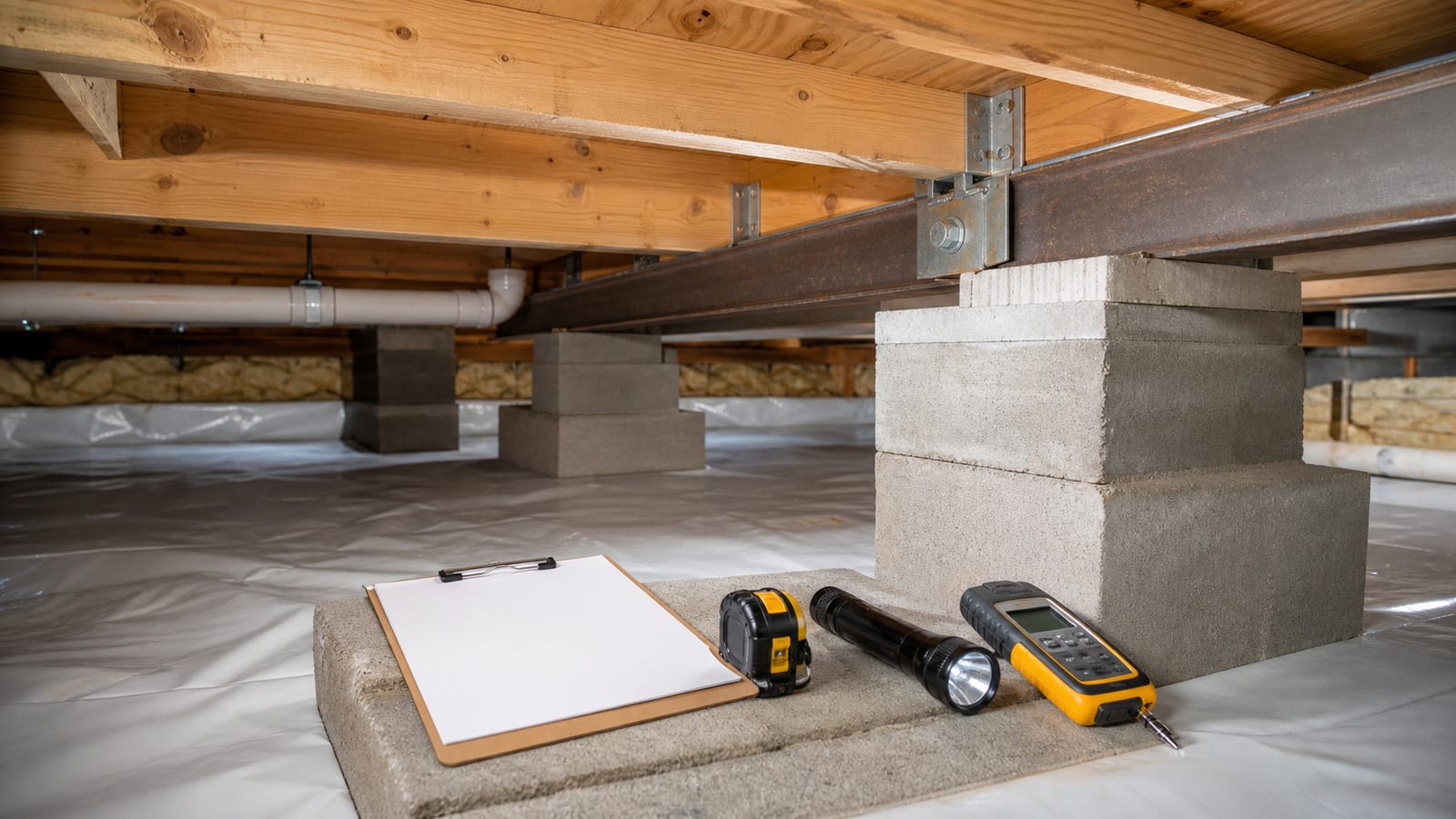
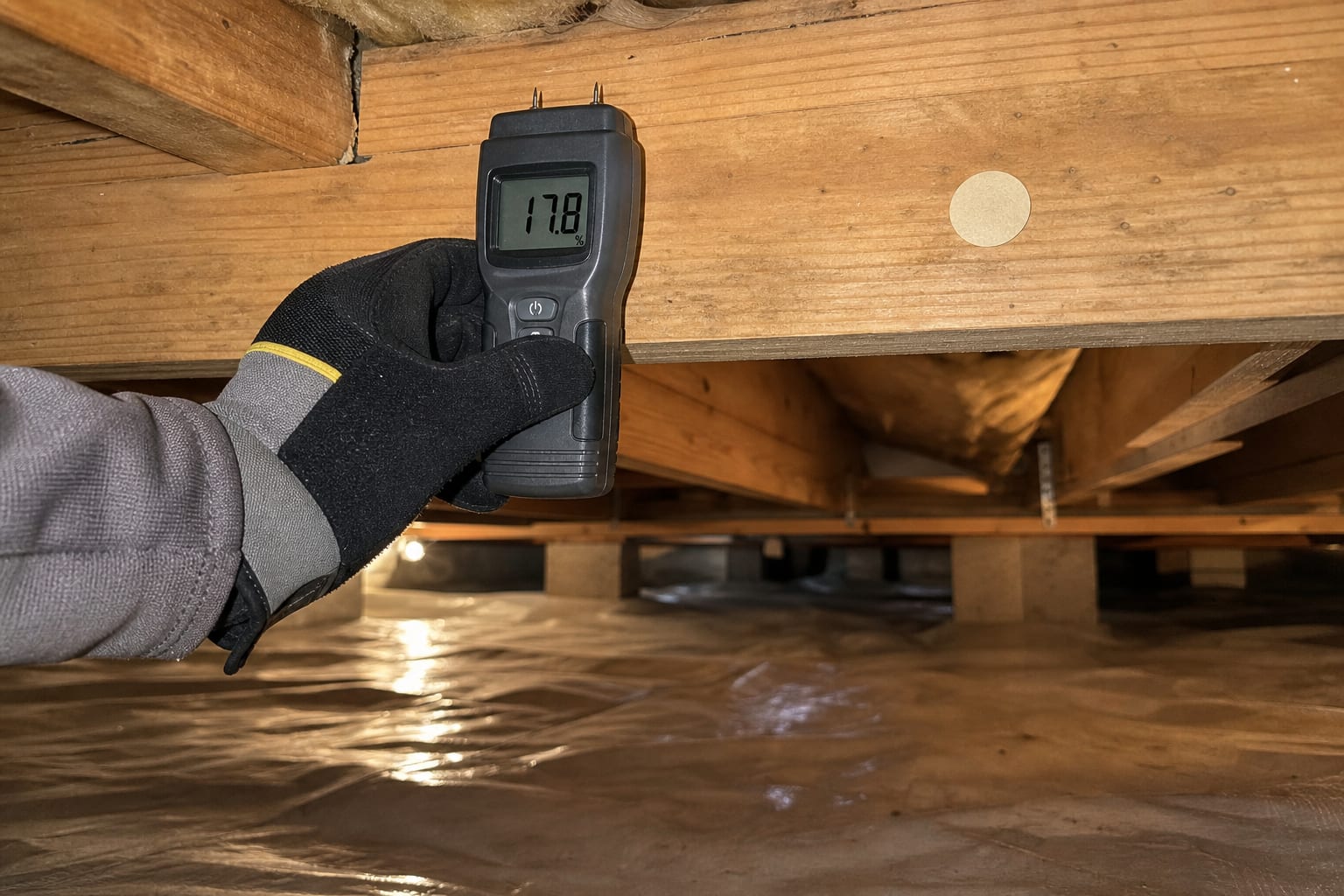
A handheld wood-moisture meter estimates moisture content through an electrical response calibrated for wood. It does not see hidden decay, calculate structural capacity, identify mold, or tell you where water originated.
Two common meter categories work differently:
- Pin meters use probes inserted into the material. Probe length, insertion direction, contact, and depth affect the reading.
- Pinless meters scan an area through an electromagnetic response. Scan depth, density, nearby metal, surface conditions, and calibration affect the result.
Neither category is automatically right for every job. The instrument instructions control how it should be used, and some meters include settings or correction tables for wood species and temperature. Record those settings rather than copying only the displayed percentage.
The USDA Forest Products Laboratory’s Wood Handbook explains that wood exchanges moisture with surrounding air and that equilibrium moisture content changes with relative humidity and temperature. This is why the same piece of wood can change across seasons without a plumbing leak. It is also why a stable baseline matters.
Build a repeatable reading map
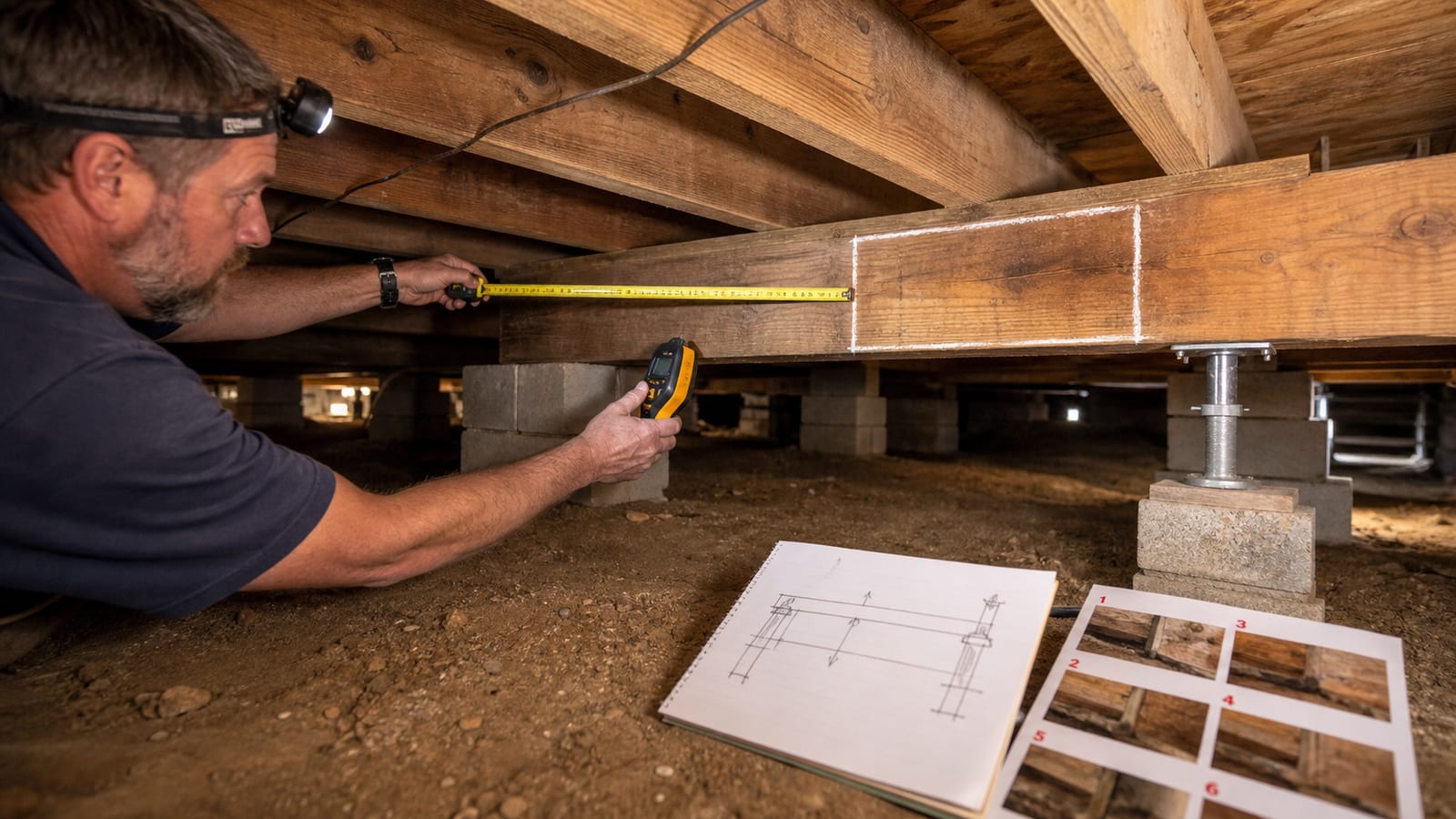
A good reading record allows another person to return to the same location and reproduce the method. “Subfloor was high” is not enough.
For each point, record:
- Date and time.
- Crawl space temperature and relative humidity if available.
- Recent rain, plumbing use, or HVAC operation.
- Meter manufacturer and model.
- Pin or pinless mode.
- Species or material setting when used.
- Exact surface tested, such as subfloor panel, joist, sill, or beam.
- Location relative to a wall, pier, room, plumbing fixture, or access.
- Reading and comparison reading.
- Visible stain, odor, condensation, softness, fungal growth, or insulation condition.
- Photograph filenames.
Use a simple plan with front, rear, left, and right walls. Mark the highest observation, nearby readings, and dry reference areas. Repeat the same points over time rather than selecting a new spot whenever a number seems surprising.
The site’s crawl space inspection checklist can help connect the reading map with water, ventilation, liner, drainage, and material observations.
Compare like with like
Compare subfloor to similar subfloor where possible, and framing lumber to similar framing. Engineered panels, solid-sawn lumber, treated wood, and surface coatings can respond differently. A pinless scan over a metal fastener or pipe can also distort the result.
Reference areas should be reasonably similar in material and exposure. A joist beside a supply duct is not always a good comparison for a sill at an exterior wall. Use multiple points rather than declaring one location “normal.”
Read the pattern, not just the peak
The shape of the readings often provides more useful direction than the highest number. A narrow cluster below a bathroom suggests a different inspection path from a broad elevation across the crawl space.
A localized pattern
Readings concentrated around a plumbing penetration, fixture area, drain, supply line, or condensate route can support a focused plumbing or HVAC review. Look for active droplets, staining boundaries, mineral residue, wet insulation, and whether the condition changes when equipment or fixtures operate.
Do not run water tests or operate equipment in a way that could create damage. A qualified trade can evaluate the system and determine whether the observed pattern connects to a leak or condensation.
A foundation-edge pattern
Higher readings along one exterior wall may warrant review of gutters, downspouts, grade, wall entry, sill conditions, and rain history. Map the pattern before and after meaningful rainfall if safe and practical. The foundation drainage improvements page explains why exterior water paths belong in the investigation.
A broad crawl space pattern
Broadly elevated readings may point toward high humidity, ground moisture, wet materials, or a system-wide change. Check the condition of vents or enclosure details, ground liner coverage, access door, dehumidifier, drains, and condensation on cool surfaces.
Relative humidity and wood moisture are related but not interchangeable. A hygrometer measures air conditions. A wood meter estimates moisture in a material. Use the ideal crawl space humidity guide for air-measurement context while keeping the datasets separate.
An isolated high point
An isolated reading should be confirmed. Move away from fasteners, check the surface, repeat with the same method, and compare another meter if a qualified inspector has one. The point may be genuinely wet, or it may reflect material density, metal, technique, or a surface condition.
Do not average away a confirmed wet point. Investigate why that location differs.
Put North Carolina’s WDIR moisture number in context
NCDA&CS states that, for the North Carolina WDIR process, wood moisture content of 20 percent or greater in a crawl space or other area is reported as a condition conducive to subterranean termites. That is a specific pest-reporting context, not a universal structural-failure line or a complete repair decision.
A home buyer may see the number on a WDIR while a moisture contractor records different points with another meter. Compare locations, materials, methods, and dates before treating the reports as contradictory. The article on North Carolina WDIR limitations explains the pest report’s scope.
Avoid turning any single threshold into a promise that wood below it is problem-free. Duration, repeated wetting, temperature, species, assembly, visible deterioration, and accessibility all matter.
Connect readings to visible conditions
Numbers should be reviewed alongside what the material looks, feels, and smells like, without destructive probing by an unqualified person.
Document:
- Darkening, tide marks, or new stains.
- Surface condensation.
- Wet or fallen insulation.
- Fastener corrosion.
- Fungal growth or musty odor.
- Soft, crumbling, split, or distorted material.
- Sagging panels or floor movement above.
- Water on the liner or soil.
- Damaged vapor barrier seams.
A visible condition can increase the urgency of evaluation even if the reading seems modest. Conversely, an old dry stain may remain visible after the source was corrected. Trend and source evidence separate those situations.
The wood rot problem page explains why material condition and moisture source need to be considered together.
Trace the source in a consistent order
Start with active and safety-sensitive conditions, then work outward.
- Avoid entry around standing water and electrical components.
- Check for active plumbing or condensate leaks through the appropriate trade.
- Note roof runoff, downspouts, grade, wall staining, and rain timing.
- Review ground-liner coverage, seams, wall connections, and penetrations.
- Record crawl space air conditions and condensation on cool surfaces.
- Check documented drainage and humidity-control equipment status.
- Compare wood readings across the mapped area.
- Recheck after the source is corrected using the same method.
This order does not prescribe a repair. It prevents a meter reading from becoming a shortcut around source identification. The crawl space moisture control service is the relevant system-level review.
Decide when monitoring is reasonable
Monitoring may be reasonable when no active source is found, material is stable, readings are confirmed, and a qualified review does not identify a condition requiring prompt work. The plan needs fixed points, timing, and triggers.
Use the same meter, settings, surface preparation, and locations. Record weather and equipment operation. Recheck after events that can explain change, such as substantial rain, a plumbing repair, seasonal HVAC startup, or dehumidifier service.
Triggers for inspection may include:
- A confirmed upward trend.
- A widening area of elevated readings.
- Recurring condensation or water.
- New odor or visible fungal growth.
- Wet insulation.
- Softening, distortion, or floor movement.
- Equipment alarms or drainage failure.
Monitoring should end when its trigger is reached. Continuing to log worsening readings without investigating the source is not a maintenance plan.
When structural review enters the picture
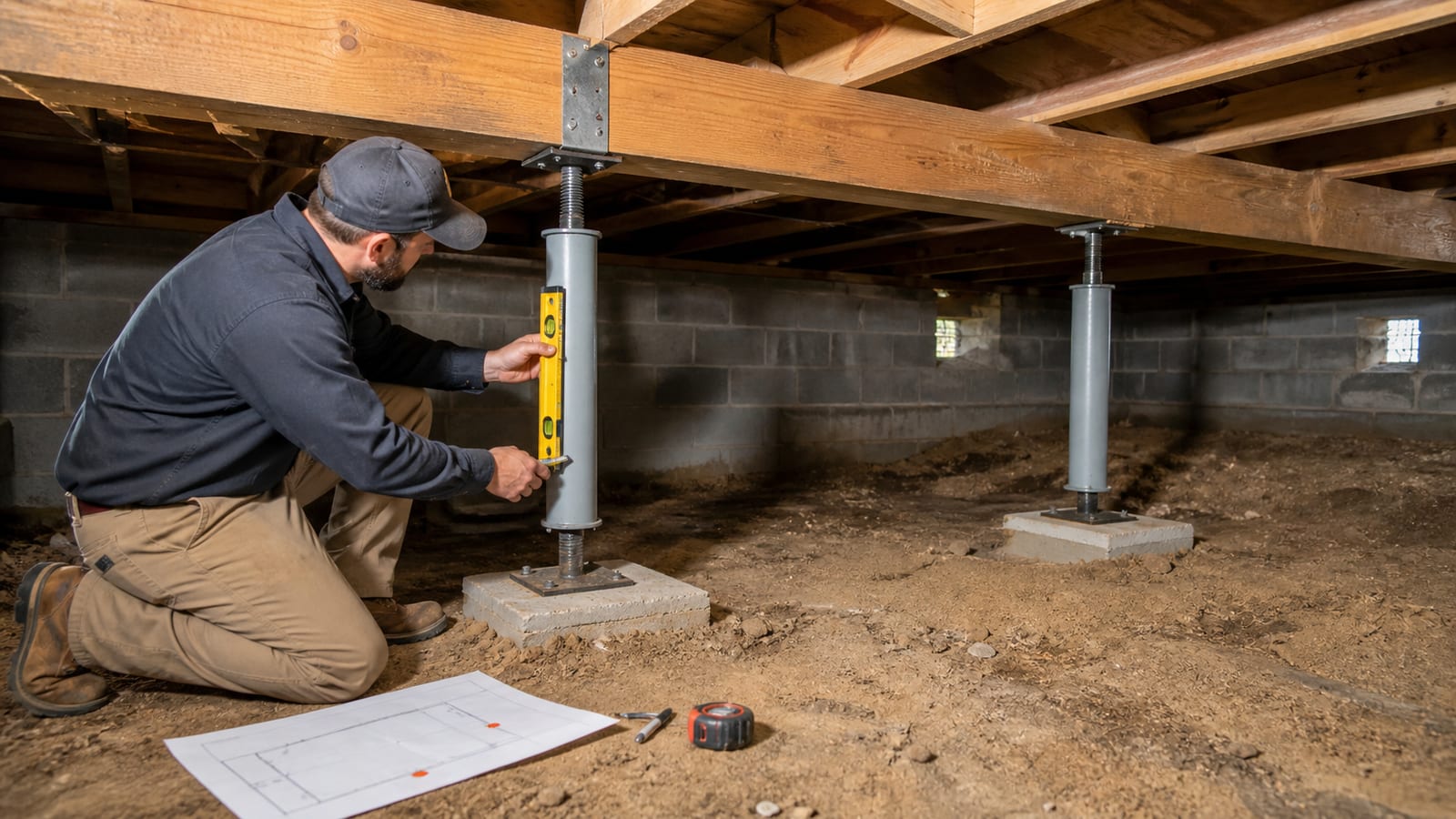
Moisture readings do not design structural repairs. If the floor feels different, panels sag, framing is split or displaced, wood appears deteriorated, or prior supports have been altered, document the symptom above and the framing below.
A qualified structural professional may need member dimensions, spans, connections, supports, loads, material condition, and repair history. The joist, beam, and subfloor repair page describes the service category, but a site-specific evaluation controls any structural recommendation.
Do not install supports, remove members, or conceal the area before appropriate review. Preserve photographs and moisture records because they may help explain whether a water source is active.
Limitations and when to schedule an inspection
Consumer meters have limitations, and readings can be affected by calibration, batteries, technique, material, temperature, coatings, metal, scan depth, and access. Concealed surfaces may differ from the exposed face. A reading cannot date a stain or confirm conditions inside a wall.
Schedule a focused inspection when:
- Readings remain elevated or rise across repeat checks.
- The wet pattern is near plumbing, HVAC, electrical components, or an exterior water path.
- Visible deterioration, fungal growth, or wet insulation is present.
- Floor movement or subfloor distortion appears.
- Large areas are inaccessible.
- Meter results conflict and the method is unclear.
- A buyer or seller needs documented conditions before work.
Carolina Encapsulation Company offers a free crawl space inspection in its confirmed service area. Use the contact page to schedule a moisture and visible-condition review. Structural, pest, plumbing, HVAC, and electrical conclusions may require separate professionals.
Frequently asked questions
What is a normal subfloor moisture reading?
There is no single number that answers every home, season, material, and meter method. Compare like materials at mapped locations, record temperature and humidity, and look for trends and visible evidence. A qualified inspector can interpret the readings in the context of the assembly and moisture source.
Why do two moisture meters give different results?
Meters may use different sensing methods, scan depths, calibrations, species settings, and temperature corrections. Fasteners, coatings, density, contact, and placement also matter. Compare methods and exact locations before concluding that one result is wrong.
Does a high reading prove the subfloor is rotten?
No. A high reading shows a moisture condition that needs context. Material deterioration requires visual and physical evaluation, and structural consequences require the appropriate professional. The reading should prompt source tracing, comparison points, and documentation rather than an automatic repair conclusion.
Can a pinless meter detect a hidden plumbing leak?
It may help map a moisture pattern, but it cannot identify the source by itself. Metal, density, depth, and surface conditions can affect the scan. A plumbing professional may need to evaluate the system when the pattern, timing, or visible evidence points toward a leak.
How should homeowners track readings over time?
Use repeatable labeled points, the same suitable meter and settings, and a log with date, weather, air conditions, equipment status, visible observations, and photographs. Define an action trigger before monitoring begins so rising or spreading moisture leads to inspection rather than endless measurement.
Sources and further reading
- USDA Forest Products Laboratory: Wood Handbook
- North Carolina Department of Agriculture: Homebuyer’s Guide to the Wood-Destroying Insect Report
- EPA: A Brief Guide to Mold, Moisture and Your Home
How this applies in Fuquay-Varina, NC
For a home in Fuquay-Varina, NC, connect the symptom above the floor with the exact framing, insulation, access, plumbing, duct, or moisture condition below it. A city-specific service area does not replace a property-specific structural or material assessment. Compare the joist beam subfloor repair with the Crawl Space Structural Repair: Joists, Beams, Posts, and Subfloors in Fuquay-Varina, NC before choosing a property-specific next step.