Short answer
A North Carolina Wood-Destroying Insect Information Report, commonly called a WDIR, records visible evidence of wood-destroying insects and certain conditions within the report’s defined scope. It also identifies areas that were inaccessible. It does not provide a complete crawl space moisture diagnosis, measure the extent of structural damage, evaluate every building system, or promise what will happen after the inspection date.
For a home buyer, the WDIR is one important document among several. Read it beside the general home inspection, seller records, repair documents, and any focused crawl space or structural evaluation. The most useful questions are what was visible, what was not accessible, where evidence was found, and which separate concerns need another professional.
What the WDIR is designed to report
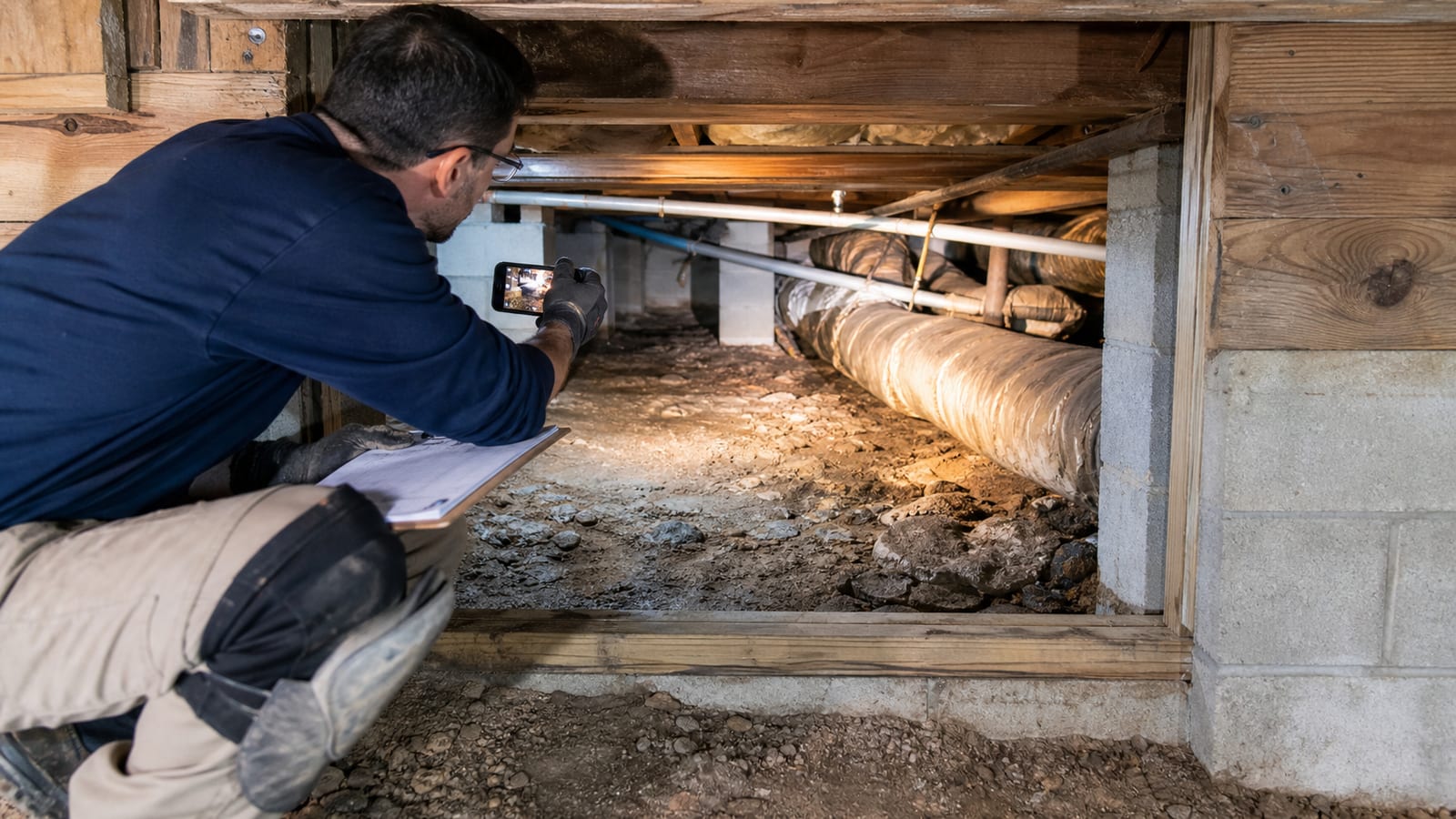
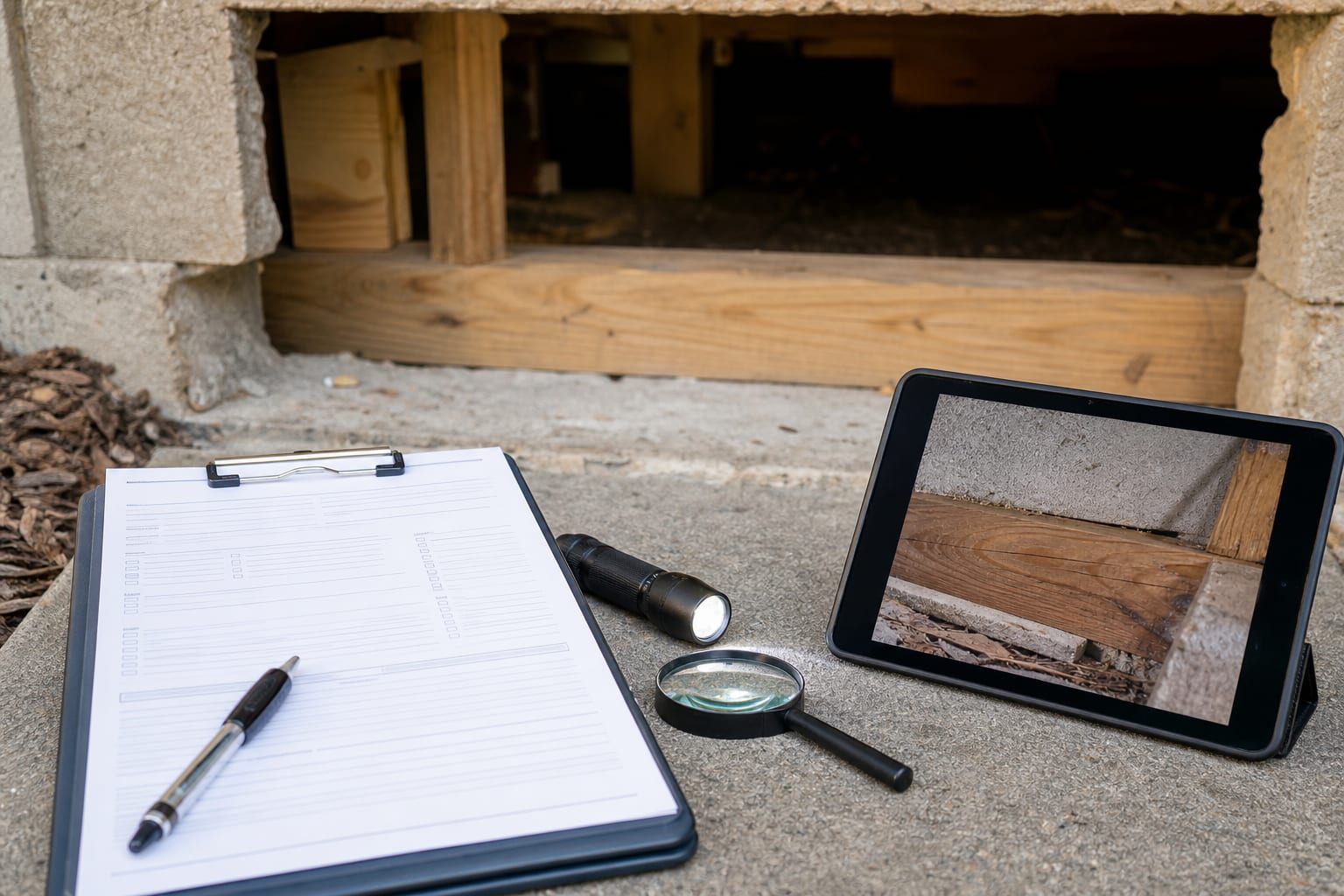
The North Carolina Department of Agriculture and Consumer Services describes the official WDIR as an information report for structures being sold. Its focus is visible evidence of wood-destroying insects and relevant conditions observed during a careful visual examination of accessible areas.
The report may address evidence associated with subterranean termites and other wood-destroying insects. It also records specific locations rather than relying on a broad phrase such as “in crawl space.” That location detail matters because a buyer needs to connect the report entry with photographs, framing, moisture observations, and any proposed work.
The WDIR’s purpose is not to approve or reject the house. A report can show no visible evidence in accessible areas while still listing limitations. It can also identify evidence that needs follow-up without establishing the full extent of affected material.
“Visible” and “accessible” are essential words
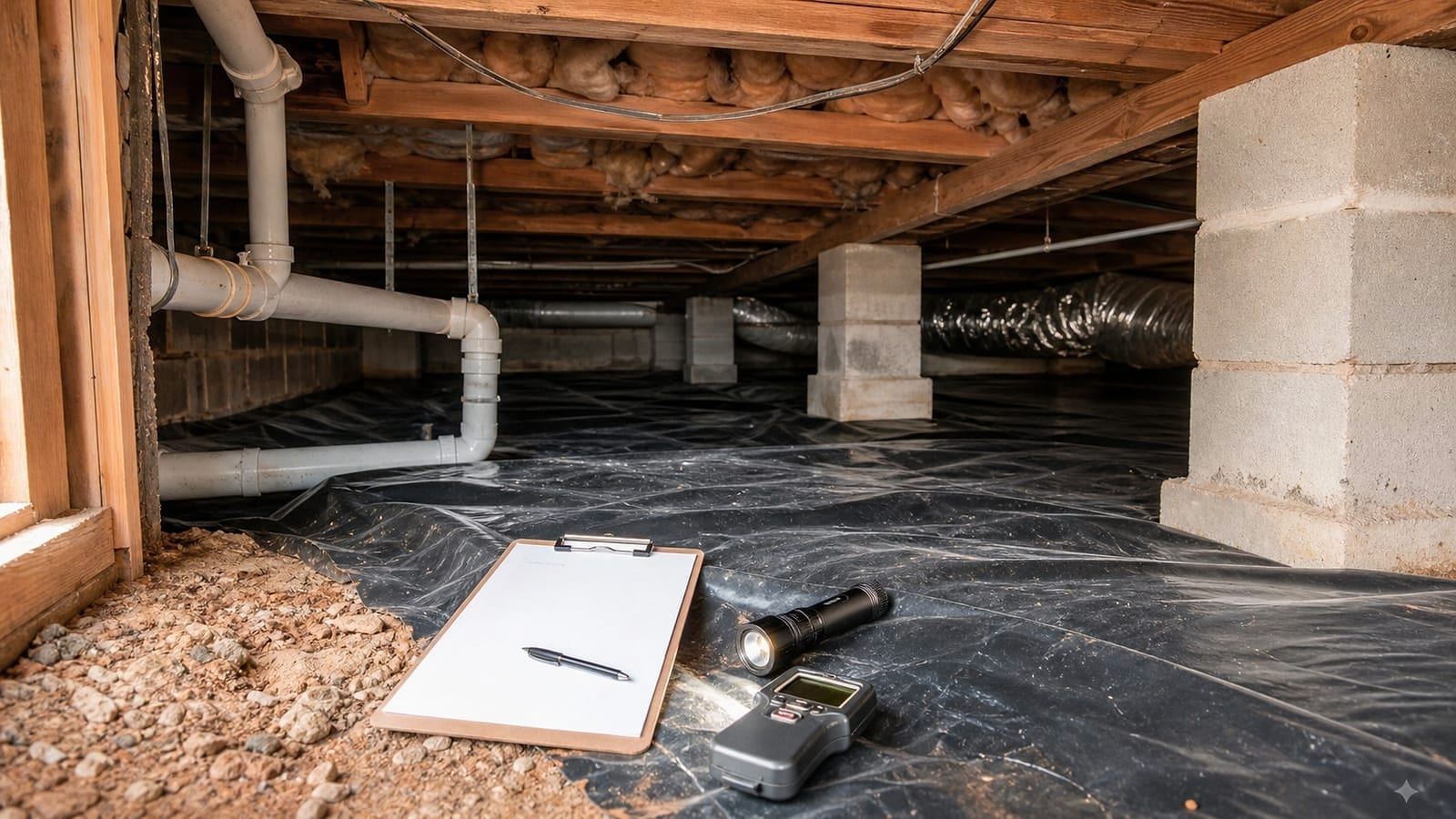
A visual inspection can evaluate only what the inspector can reach and see within the defined scope. Insulation may cover the subfloor. A low section may prevent entry. A liner may conceal the soil or part of the foundation wall. Stored materials, ducts, plumbing, finished walls, or locked access can also restrict inspection.
Read every accessibility note and locate the affected area on a sketch or photograph. Do not translate “inaccessible” into “no evidence.” It means the condition of that area was not established through the report’s visual process.
The crawl space inspection checklist can help buyers compare access notes across the WDIR and the home inspection without expanding either document beyond its actual scope.
What the WDIR can tell a buyer about crawl space conditions
A properly read WDIR can identify visible pest evidence, the specific area where it was observed, and certain conditions the report treats as conducive to subterranean termites. Those observations can guide questions about moisture, wood contact, debris, access, and prior treatment records.
According to the NCDA&CS consumer guidance, conditions that must be reported include wood in direct soil contact, cellulose debris beneath the structure, and excessively wet wood as defined for the WDIR process. The agency identifies wood moisture content of 20 percent or greater as a reportable conducive condition in that context.
That number should not be turned into a universal structural-repair threshold. The WDIR rule serves a pest-reporting purpose. A moisture reading still needs the exact material, meter method, location, comparison areas, recent weather, and visible condition. Structural conclusions require different evidence.
Location language should be specific
An entry such as “termite evidence at floor joists behind front porch” gives the buyer a usable reference. It can be compared with photographs, access conditions, repair proposals, and the room above. A vague summary copied into another report may lose that context.
Ask for:
- The exact member or surface where evidence was visible.
- Whether the evidence appeared current, prior, or could not be classified from the visible condition.
- Whether the inspector saw insects, tubes, wings, exit holes, damaged material, or debris.
- What areas around the finding were accessible.
- Whether earlier treatment evidence or records were available.
- Which conducive conditions were recorded nearby.
Do not disturb or remove suspected evidence before the appropriate pest professional documents it. Cleaning first can erase information needed for evaluation.
What the WDIR does not establish
The WDIR is not a complete report on structural integrity, wood decay, wildlife, plumbing, electrical, roofing, HVAC, drainage, or encapsulation performance. NCDA&CS specifically explains that structural and building-system defects require the appropriate home inspector, contractor, engineer, or other specialist.
That boundary protects the buyer from asking one document to answer unrelated questions. Visible insect evidence may occur beside water damage, but the pest report does not automatically identify the water source. A high wood-moisture reading may be reportable, but it does not tell whether moisture came from a plumbing leak, rain entry, ground vapor, or condensation.
It does not measure the extent of structural damage
If evidence appears in a wooden member, further evaluation may be necessary to determine material condition and repair scope. The WDIR does not calculate remaining capacity, design reinforcement, or determine whether a floor system is safe.
If the buyer observes sagging, movement, split members, altered supports, or visibly deteriorated wood, the sagging or bouncy floors page outlines the questions that connect the upstairs symptom with the framing below. A joist, beam, and subfloor review can document repair-related conditions, while structural conclusions may require a qualified structural professional.
It does not diagnose the crawl space moisture system
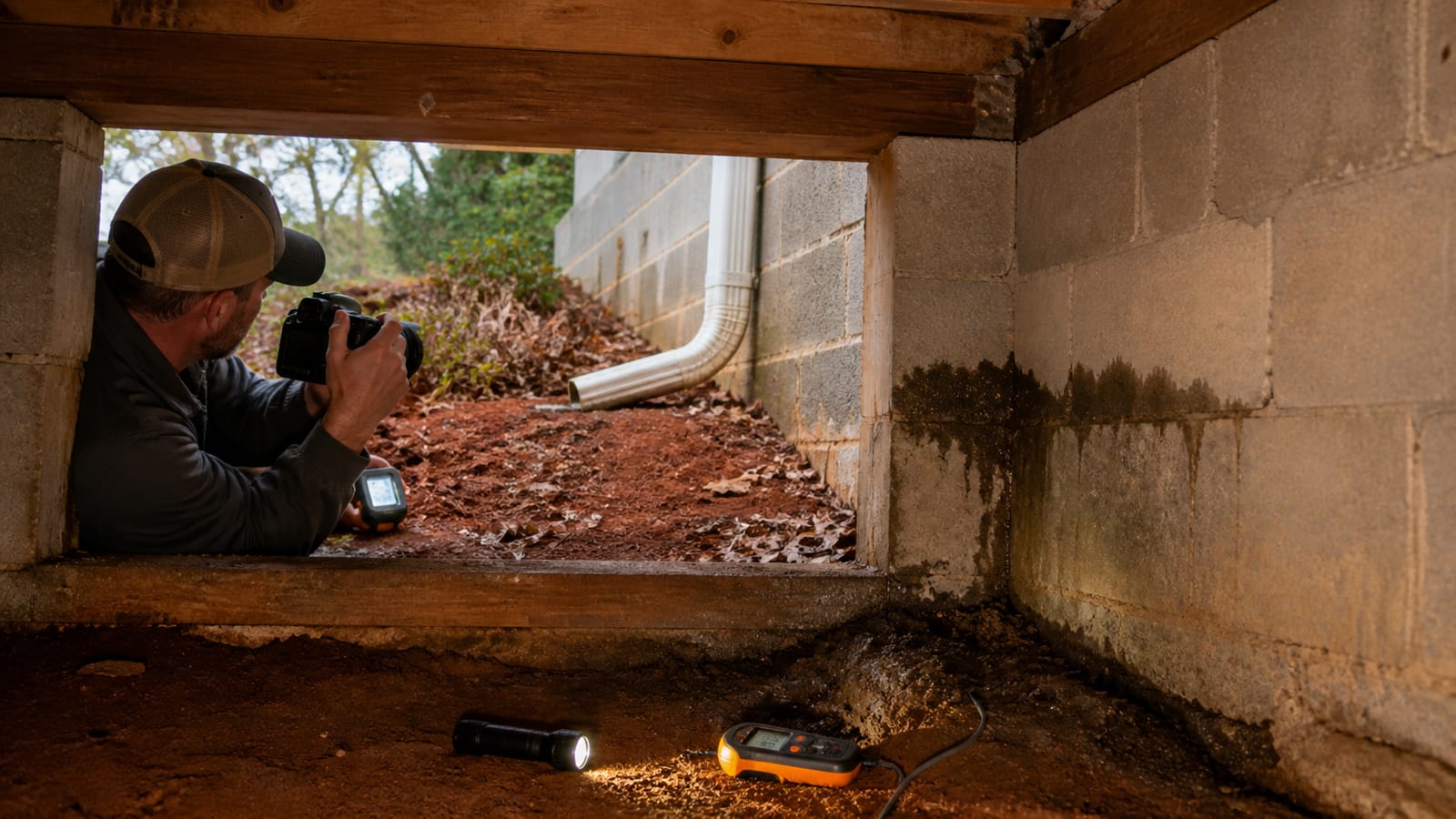
A WDIR may record wet wood as a conducive condition, but it does not provide a full water-management plan. A moisture assessment may need to trace:
- Roof runoff and downspout discharge.
- Exterior grade and low points.
- Wall or footing entry after rain.
- Plumbing supply, drain, or condensate leaks.
- Humid air contacting cool ducts or framing.
- Ground vapor and incomplete liner coverage.
- Sump, drain, or dehumidifier operation.
The crawl space moisture control service addresses those pathways as a system. Keep its findings separate from pest conclusions while sharing location-based evidence between professionals.
It does not evaluate encapsulation completeness
A pest inspector may note access limitations created by insulation, liners, or other installed materials. That does not amount to a full review of seams, wall attachments, pier details, drainage, humidity control, equipment, or access-door performance.
When buying a home with a sealed crawl space, request installation scope, before-and-after photographs, maintenance history, equipment manuals, drainage diagrams, and prior pest records. Also ask the pest professional whether visible inspection access remains adequate for the intended pest inspection.
How to read accessibility notes
Accessibility notes are not fine print. They define where the report could and could not provide visual information. Mark each listed area on a floor plan or inspection photograph, then compare it with the general home inspector’s limitations.
Common restrictions include:
- Clearance too low for safe entry.
- Standing water or another unsafe condition.
- Floor insulation covering wood surfaces.
- Ducts, plumbing, wiring, or equipment blocking a route.
- A sealed liner or wall insulation covering foundation surfaces.
- Stored materials or debris.
- Finished walls, ceilings, flooring, or cabinets.
- Locked, damaged, or obstructed access doors.
Some restrictions can be resolved non-destructively by clearing access or coordinating another visit. Others would require removal of material. The buyer, seller, transaction professionals, and relevant inspectors should agree on any invasive access before it occurs.
If an encapsulation liner needs temporary protection while inspectors or trades enter, use a documented access route and inspect the liner afterward. The separate article on protecting an encapsulation liner during trade access provides a practical handoff process.
Questions to ask when the WDIR reports evidence
Evidence should lead to clear follow-up questions rather than a rushed assumption about repair.
- Where exactly was the evidence found?
- What visible evidence was present?
- Was the surrounding area fully accessible?
- Does the report identify a conducive condition nearby?
- Are prior treatment or inspection records available?
- Was wood moisture measured, and where?
- Is there a separate structural or moisture concern in the same area?
- What evidence should remain visible for follow-up?
- Which professional should evaluate the next question?
A treatment proposal, if one is provided, is a separate decision from understanding the report. Buyers should review the report itself, the inspection limitations, and their transaction professionals’ advice.
Questions to ask when no visible evidence is reported
No visible evidence in accessible areas is useful information, but the buyer should still review limitations and surrounding conditions. Ask whether the entire crawl space was accessible, whether insulation concealed wood, whether moisture or debris was noted, and whether prior records exist.
Also compare the WDIR date and conditions with the general inspection. Water can change after storms, and materials can be moved after an inspection. A later repair or new obstruction may change what is visible.
Avoid describing the result as a “clearance.” NCDA&CS cautions that the report is not a clearance letter. Its value is the specific information observed on that date within its scope.
Coordinate reports without blending their conclusions
Create a transaction file with separate sections for pest, home inspection, crawl space moisture, structural, plumbing, HVAC, and repair records. Use the same location names across all documents.
For example:
- WDIR: visible evidence at a named joist near the rear porch.
- Home inspection: floor movement in the room above.
- Moisture inspection: elevated readings near a plumbing penetration.
- Plumbing review: active or inactive source determination.
- Structural review: member condition and any repair design.
The documents can inform one another without one professional making conclusions outside the professional’s scope. This method also makes the final record more useful to the next owner.
Limitations and when to request further inspection
A WDIR reflects visible conditions in accessible areas on the inspection date. It cannot reveal insects or damage inside concealed assemblies, predict future activity, or replace a dedicated assessment of every crawl space system.
Request focused follow-up when:
- The report lists inaccessible crawl space areas.
- Evidence is present in structural members.
- Wet wood or another conducive condition is reported.
- The home inspection identifies water, decay, or floor movement nearby.
- Encapsulation materials limit foundation or wood visibility.
- Prior treatment or repair records are incomplete.
- Reports use inconsistent locations or reach apparently conflicting observations.
- Conditions change before closing.
Carolina Encapsulation Company offers a free crawl space inspection within its confirmed service area for moisture, liner, drainage, equipment, and related visible conditions. The contact page is the scheduling path. Pest identification, pest treatment, structural conclusions, and transaction advice remain separate scopes.
Frequently asked questions
Is a North Carolina WDIR the same as a complete crawl space inspection?
No. The WDIR focuses on visible evidence of wood-destroying insects, defined conducive conditions, and accessibility. A complete crawl space condition review may also examine water paths, humidity, drainage, liner continuity, insulation, equipment, and materials. Structural and building-system questions can require additional professionals.
What does an inaccessible area mean on a WDIR?
It means that area could not be inspected visually within the report’s scope. It does not establish that the area has a problem, and it does not establish that the area is clear. Buyers should locate every limitation and decide with their transaction professionals whether additional access or review is needed.
Does no visible evidence mean termites cannot be present?
No report can establish the condition of every concealed area or predict future activity. “No visible evidence” describes what the inspector observed in accessible areas on the inspection date. Read that result together with listed limitations, conducive conditions, prior records, and any changes before closing.
Why can wet wood appear on a pest report?
North Carolina’s WDIR process treats excessively wet wood as a condition conducive to subterranean termites. The report can identify that condition, but a separate moisture investigation may be needed to determine whether the source is rain, plumbing, condensation, ground vapor, drainage, or equipment.
Should encapsulation materials be removed for a termite inspection?
Do not cut or remove the system without a coordinated plan. Ask the pest professional what must remain visible and where access is limited. If material must be moved, involve the appropriate crawl space professional so the liner, insulation, drainage, and enclosure can be protected and restored.
Sources and further reading
- North Carolina Department of Agriculture: Homebuyer’s Guide to the Wood-Destroying Insect Report
- North Carolina Department of Agriculture: WDIR 100 Enforcement Policy
- NC State Extension: Biology and Behavior of Eastern Subterranean Termites
How this applies in Garner, NC
For a home transaction in Garner, NC, keep crawl space reports, scope documents, equipment details, and maintenance records together. The city identifies the property context, while inspection, legal, pest, engineering, and code questions still belong to the professionals responsible for those scopes. Compare the crawl space inspection checklist with the How to Choose a Crawl Space Company Near Fuquay-Varina, NC before choosing a property-specific next step.