Short answer
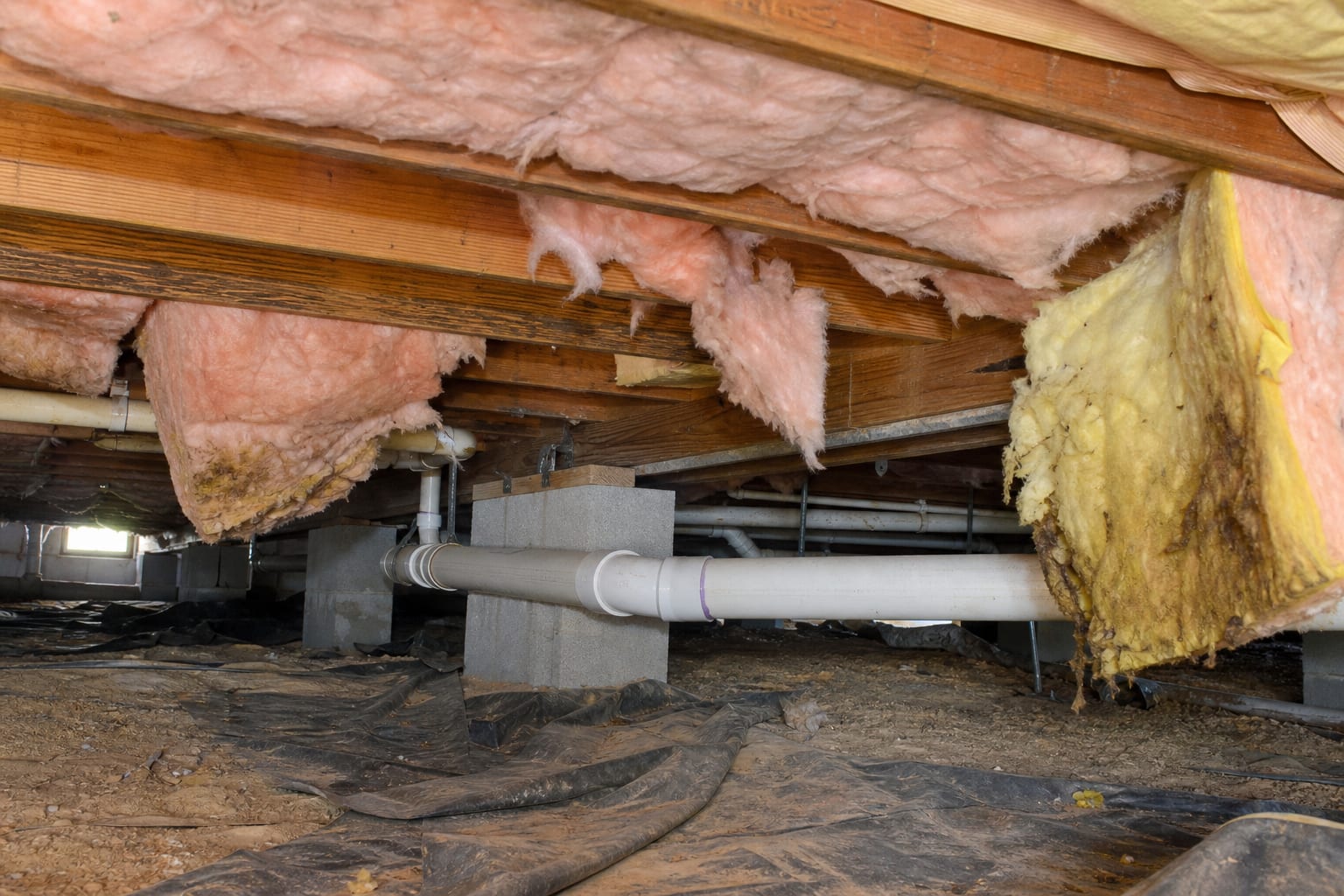
Fiberglass batts fall from crawl space joists when gravity overcomes their support or friction fit. Moisture, compressed or poorly sized batts, failed supports, repeated air movement, pest activity, and plumbing or HVAC work can accelerate the problem. Fallen insulation is a symptom. Before reinstalling or replacing it, inspect the material, framing, supports, moisture source, and crawl space strategy.
Dry, clean insulation that was displaced during trade access presents a different decision from wet, contaminated, compressed, or repeatedly fallen material. Correct the source and support problem first. Otherwise, newly placed batts may sag again, hide damp wood, or block access needed for inspection and repairs.
Start with how the batt was intended to stay in place
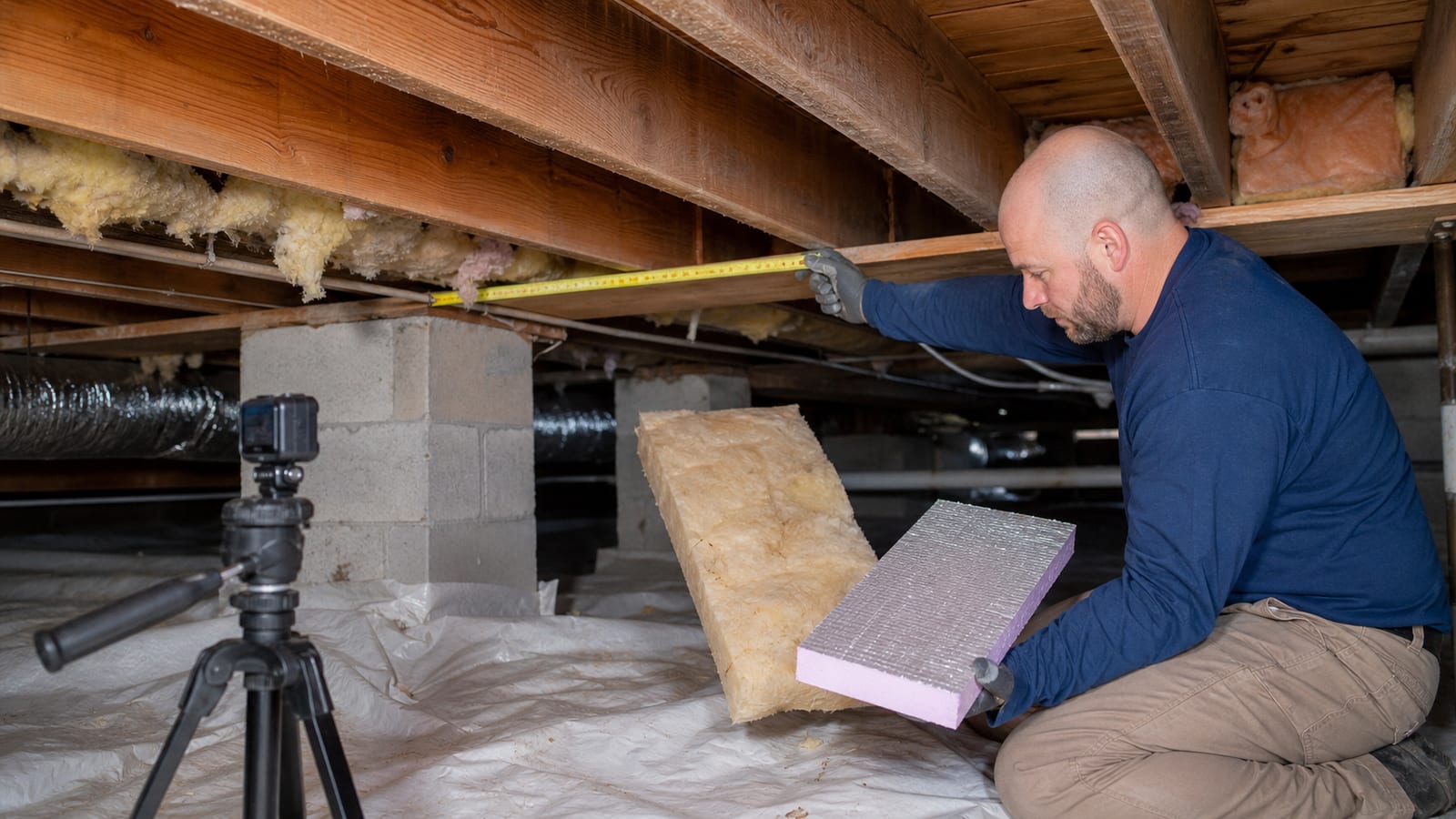
Fiberglass between floor joists works best when it fits the cavity, remains in contact with the underside of the floor, and has suitable support. The Building America Solution Center describes full contact and careful air sealing as important details for floors above vented crawl spaces.
Batts can lose that position when:
- They were cut too narrow for the joist bay.
- The cavity is irregular around wires, pipes, blocking, or ducts.
- Supports are missing, too widely spaced, loose, corroded, or damaged.
- Material was compressed around obstructions.
- A paper or foil facing was used in an unsuitable orientation or relied on as the only support.
- Trades pulled insulation down and did not restore it.
- Moisture increased weight or reduced stiffness.
- Animals or insects disturbed the material.
Document which bays are affected. One displaced batt beside a recent plumbing repair suggests a different path from widespread sagging across the entire space.
Moisture can turn a support issue into a material issue
Fiberglass fibers do not provide food for mold, but dust, facing, adjacent wood, and other materials can support growth when moisture persists. Wet insulation can hold water against framing, lose loft, collect debris, and become difficult to reinstall correctly.
The EPA’s moisture guidance emphasizes correcting the water source. Do not treat fallen insulation as a simple fastening problem when nearby wood is damp, ducts are sweating, the liner holds water, or a musty odor persists.
Trace common sources:
- A plumbing supply or drain leak.
- Condensate or sweating ducts.
- Rain entry at a wall or low point.
- Humid outdoor air entering a vented space and contacting cool surfaces.
- Ground vapor through exposed soil or an incomplete barrier.
- A sump, drain, or dehumidifier problem.
The falling or damaged insulation page connects the visible symptom to those inspection questions. A crawl space moisture control review can evaluate the larger pattern.
Look above and behind the insulation
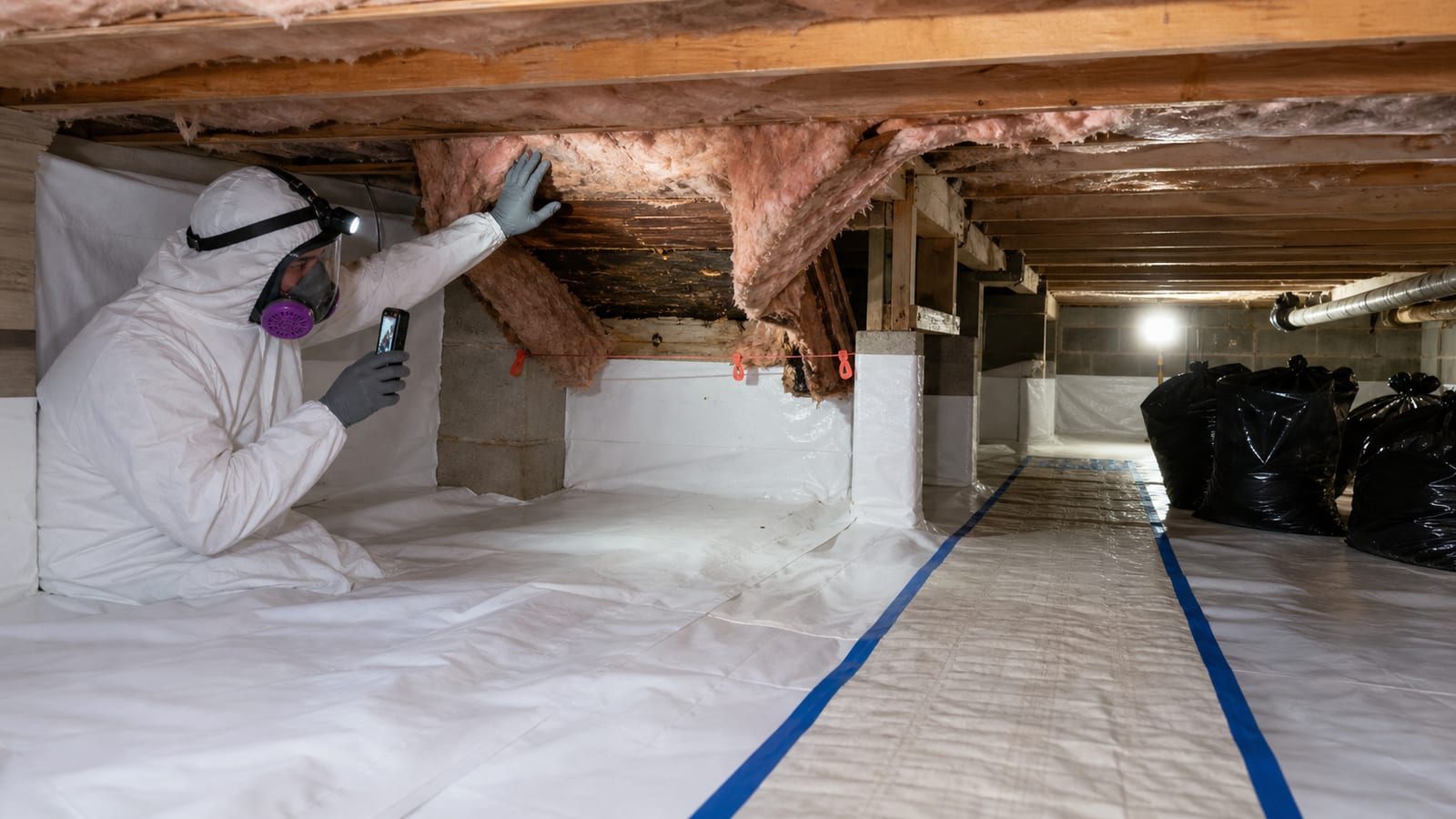
Do not push a fallen batt back into place before looking at the surface it covered. Photograph the subfloor and joist faces. Note staining, condensation, fastener corrosion, fungal growth, damaged wood, pest evidence, and plumbing penetrations.
If the batt is wet, heavily soiled, compressed, torn, or contaminated, handling and disposal may require appropriate protective practices and professional help. Fiberglass can irritate skin, eyes, and airways. Avoid disturbing material when pest waste, suspected hazardous material, or extensive fungal growth is present.
Air movement and pressure can contribute
Air moving through and around poorly fitted batts can reduce their effectiveness and contribute to fluttering or gradual displacement. Open foundation vents, leaky band areas, unsealed penetrations, and ducts can create uneven air paths.
Fiberglass is not an air barrier. Stuffing more material into a gap does not stop air leakage. In a vented crawl space, the floor assembly may need air sealing at penetrations and full insulation contact. In a closed crawl space, insulation may be located at the perimeter instead of between every floor joist, depending on the design and applicable requirements.
Do not remove floor insulation solely because the crawl space has a liner, and do not seal vents solely because batts are falling. The enclosure strategy, moisture control, combustion safety, permits, and local requirements need a coordinated review. The vent sealing and air sealing page describes one part of that system without making a universal design conclusion.
Trade access is a common localized cause
Plumbers, electricians, cable installers, pest professionals, and HVAC crews often need to reach the subfloor or joist bays. A batt may be removed to access a pipe, wire, duct, or fixture and then placed loosely back into the cavity.
Before work:
- Photograph the route and affected bays.
- Ask which insulation must be moved.
- Provide a clean place or suitable bag for dry reusable material.
- Protect the liner from sharp tools and removed fasteners.
- Confirm who will restore insulation and supports.
After work:
- Check that batts are dry and fully fitted.
- Verify supports were restored without damaging utilities.
- Remove scraps, fasteners, and debris.
- Inspect the liner and wall connections.
- Photograph the finished route.
The post on protecting an encapsulation liner during plumbing and HVAC work provides a coordinated checklist for the floor and the liner below it.
Pests can disturb insulation and hide evidence
Rodents and other animals can tunnel through, compress, tear, or pull down fiberglass. Insects may not be responsible for the fallen batt, but insulation can conceal wood surfaces that a pest professional needs to inspect.
Do not seal an entry point while an animal may be trapped inside, and do not remove suspected pest evidence before it is documented. A qualified pest or wildlife professional should address identification and control. The crawl space professional can then coordinate removal, cleaning, moisture work, and restoration within the verified scope.
The pest entry and damaged vapor barrier page helps homeowners document liner and access conditions without making a pest diagnosis.
Decide whether material can be reinstalled
Reinstallation may be reasonable when the fiberglass is dry, clean, undamaged, properly sized, and compatible with the intended assembly. The support system still needs correction.
Replacement or removal may be appropriate when:
- Material is wet and cannot be dried and restored appropriately.
- It is compressed, torn, missing large sections, or repeatedly falling.
- Pest contamination or debris cannot be safely addressed in place.
- The facing is damaged or installed in conflict with the intended assembly.
- The insulation conceals material that requires repair.
- The crawl space design is being changed through a properly evaluated project.
The insulation removal service and crawl space insulation installation service are separate because removal, source correction, and new installation are not always one automatic package.
Do not cover damp or deteriorated wood
If framing or subflooring is wet, soft, split, sagging, or visibly deteriorated, leave the affected area accessible for evaluation. New insulation can make later readings and visual inspection harder.
Document moisture readings with method and location. A structural professional may be needed when material condition or floor movement raises structural questions. The wood rot problem page explains why source control comes before finish restoration.
Review the support method carefully
Improvised supports can damage wiring, plumbing, ducts, framing, or the insulation itself. Supports should hold batts in full contact without excessive compression and should be compatible with the cavity and utilities.
Do not staple into unknown wiring paths, use sharp wire that can cut nearby materials, or attach supports to plumbing and ducts. If the cavity is irregular, the installation may need tailored pieces and air sealing rather than force-fitting a full batt.
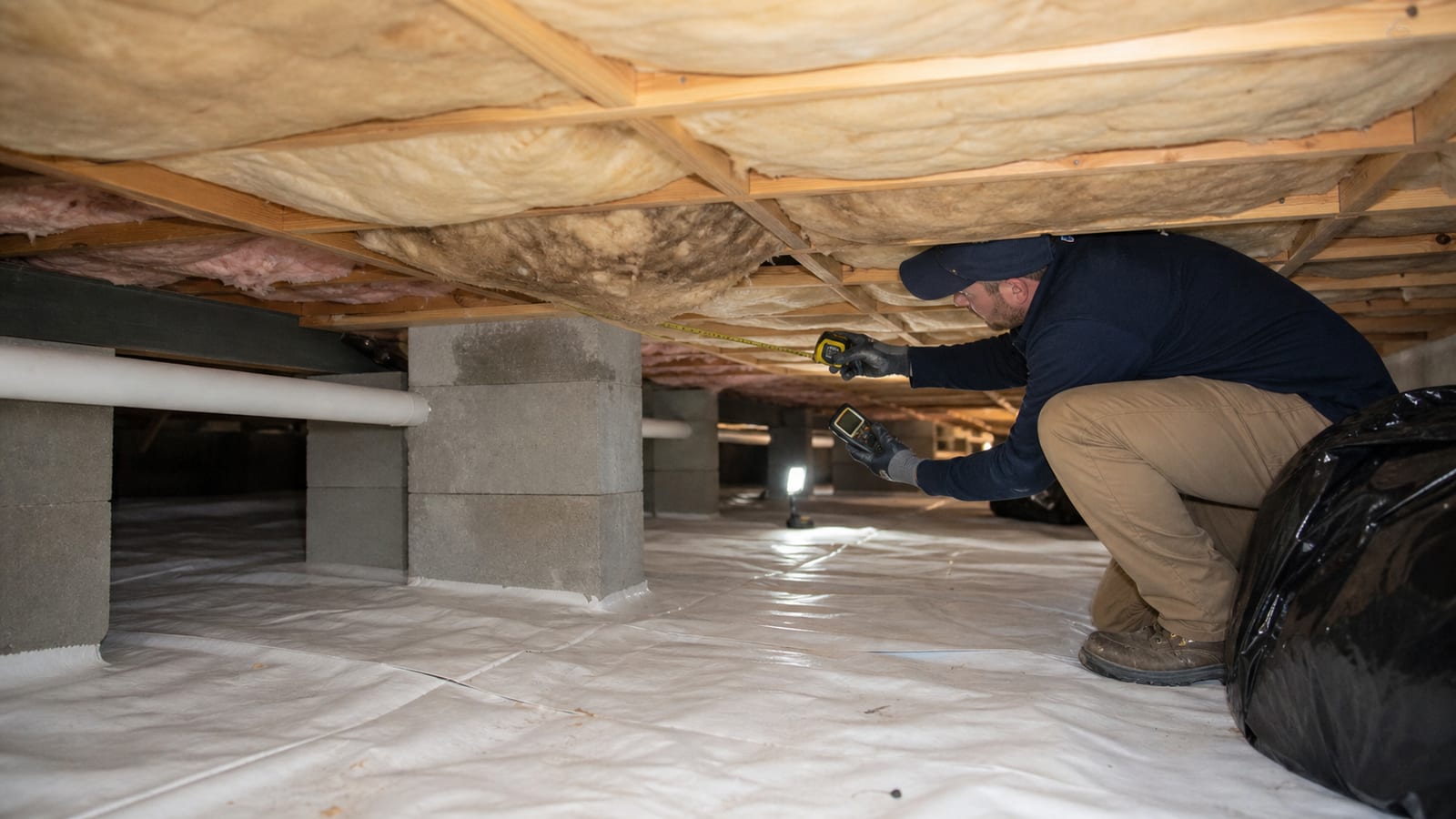
A professional inspection should record:
- Joist spacing and cavity depth.
- Batt width, thickness, condition, and facing.
- Support type, spacing, and attachment.
- Utilities in each affected bay.
- Air leaks and penetrations.
- Wood and moisture condition.
- Intended vented or closed crawl space strategy.
That record supports a durable scope rather than a quick cosmetic reset.
Document removed and restored bays
Create a simple joist-bay record whenever several batts are removed. Number bays from a fixed wall, photograph the exposed subfloor, and note pipes, wires, ducts, blocking, stains, and prior repairs. Record which insulation was discarded and which material was dry enough to retain. After restoration, take the same wide and close photographs so the next inspector can locate concealed conditions without pulling everything down again.
Keep disposal and new-material records with the crawl space maintenance file. Include the installation date, material description from the project documents, support method, and any areas intentionally left open for plumbing, structural, or pest follow-up. This record does not prove hidden wood stayed unchanged, but it prevents the next owner or trade from guessing why one bay differs from another.
When falling insulation signals a larger enclosure decision
Widespread failure can be a reason to evaluate the entire crawl space, especially when humidity, condensation, exposed soil, drainage, and air leakage occur together. It is not proof that encapsulation is the only answer.
Compare options based on:
- Bulk-water control.
- Ground-vapor control.
- Air and thermal boundary.
- Existing HVAC and combustion equipment.
- Insulation location and continuity.
- Dehumidification or conditioning strategy.
- Pest inspection access.
- Future service access.
- Local permit and code review.
The crawl space encapsulation service page describes a sealed system, while the DOE and Building America resources show why insulation location should match the enclosure approach.
Limitations and when to schedule an inspection
Visible fallen batts do not reveal conditions behind material that remains installed. Photographs cannot confirm wood strength, hidden contamination, air leakage, or the suitability of the original insulation design.
Schedule an inspection when:
- Falling insulation is widespread or recurring.
- Batts are wet, stained, compressed, or contaminated.
- Framing or subflooring is damp or visibly deteriorated.
- Ducts sweat or water appears on the liner.
- Pest activity or waste is suspected.
- Floor movement or sagging accompanies the insulation problem.
- Recent trade work disturbed multiple bays.
- The home is changing from vented to closed crawl space conditions.
Carolina Encapsulation Company offers a free crawl space inspection within its confirmed service area. Use the contact page for a condition and scope review. Pest, wildlife, structural, electrical, plumbing, HVAC, hazardous-material, and code questions may require separate qualified professionals.
Frequently asked questions
Can fallen fiberglass simply be pushed back between the joists?
Only after checking why it fell and whether it remains dry, clean, undamaged, correctly sized, and suitable for the assembly. Inspect the wood and utilities behind it, correct moisture or support problems, and use an appropriate support method. Otherwise, the material may fall again or conceal a continuing condition.
Does fallen insulation always mean the crawl space is too humid?
No. Humidity and water can contribute, but poor fit, failed supports, gravity, trade access, pests, and air movement can also cause displacement. Map where the failure occurs and compare it with wet materials, condensation, leaks, and recent work.
Should wet fiberglass insulation be dried in place?
The decision depends on the extent, contamination, facing, surrounding wood, and whether the source is corrected. Do not reinstall or cover wet material without evaluation. Professional removal may be appropriate when insulation is saturated, soiled, damaged, or conceals damp framing.
Is fiberglass between joists needed after encapsulation?
Not every crawl space uses the same insulation strategy. Closed systems may place the thermal boundary at foundation walls, while other assemblies retain floor insulation. Design, equipment, combustion safety, moisture control, pest access, permits, and applicable requirements should be reviewed before removing or relocating insulation.
Who should restore insulation after plumbing or HVAC work?
Decide that responsibility before work begins. The trade should identify what needs access, and the homeowner should document the route and existing condition. Restoration may involve the trade or a crawl space insulation professional, but it should include supports, utilities, cleanup, and liner inspection.
Sources and further reading
- Building America Solution Center: Insulating Crawl Space Floors in Existing Homes
- Building America Solution Center: Floor Above Unconditioned Basement or Vented Crawlspace
- U.S. Department of Energy: Unvented, Conditioned Crawlspaces
- EPA: A Brief Guide to Mold, Moisture and Your Home
How this applies in Willow Spring, NC
For a home in Willow Spring, NC, connect the symptom above the floor with the exact framing, insulation, access, plumbing, duct, or moisture condition below it. A city-specific service area does not replace a property-specific structural or material assessment. Compare the falling damaged insulation with the Crawl Space Insulation in North Carolina: Placement, Materials, and Moisture in Willow Spring, NC before choosing a property-specific next step.