
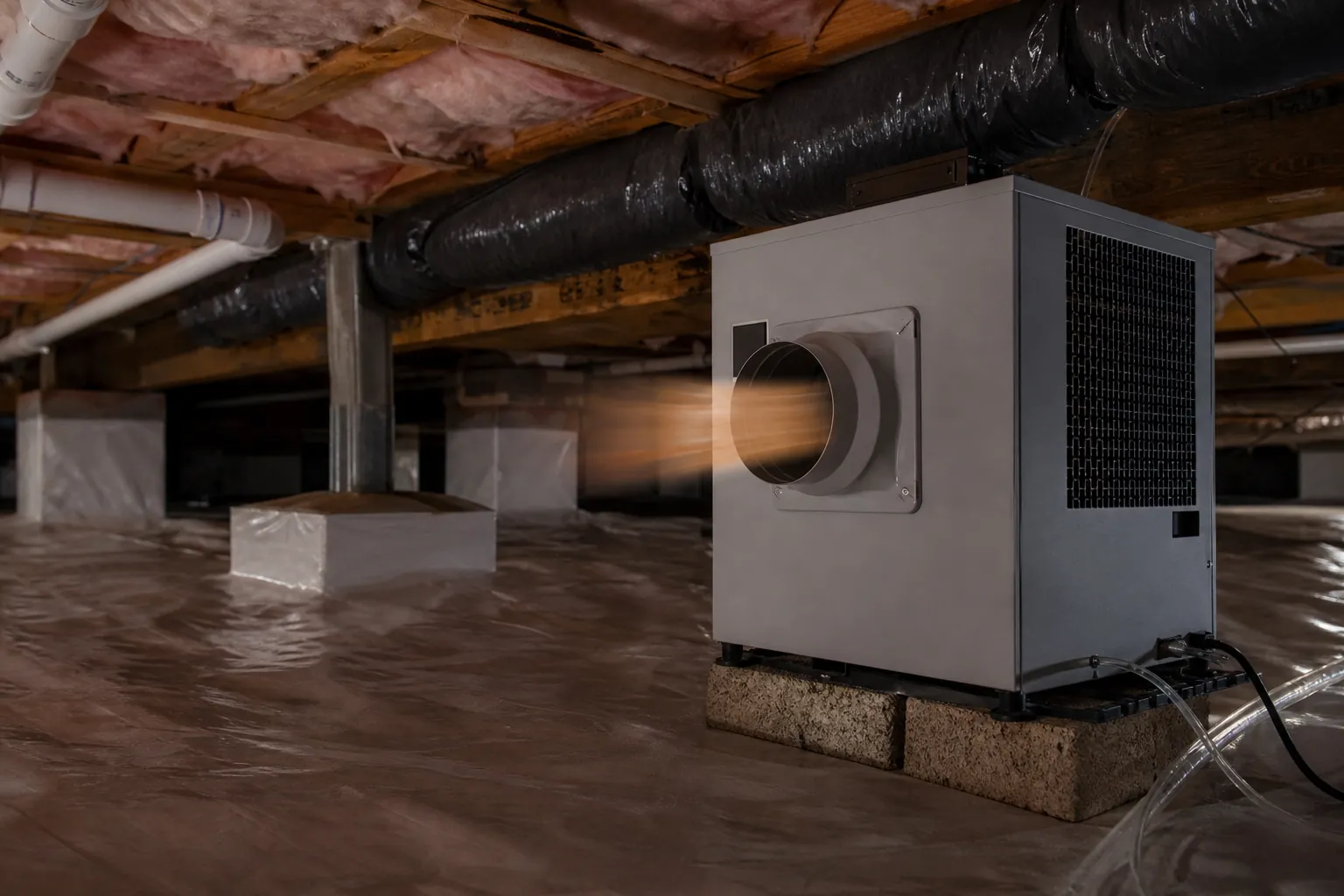
If you notice your crawl space dehumidifier blowing hot air, it is reasonable to wonder whether something is wrong. You installed the equipment to control moisture, not to heat the area under your home. However, warm discharge air is usually part of normal operation for a refrigerant dehumidifier.
The important distinction is between expected warmth and a unit that is overheating, running without removing moisture, or struggling against an uncontrolled moisture source. Temperature alone cannot tell you which situation you have.
For North Carolina homeowners, checking humidity trends, drainage, airflow, and crawl space conditions provides a much clearer answer. This guide explains what to look for, what you can safely check, and when Carolina Encapsulation Company can help you evaluate the equipment and the surrounding moisture-control system.
Why a crawl space dehumidifier produces warm air
Most dedicated crawl space dehumidifiers use a refrigeration cycle. A fan draws humid air across a cold evaporator coil. As that air cools below its dew point, water vapor condenses on the coil and drains into a collection system.
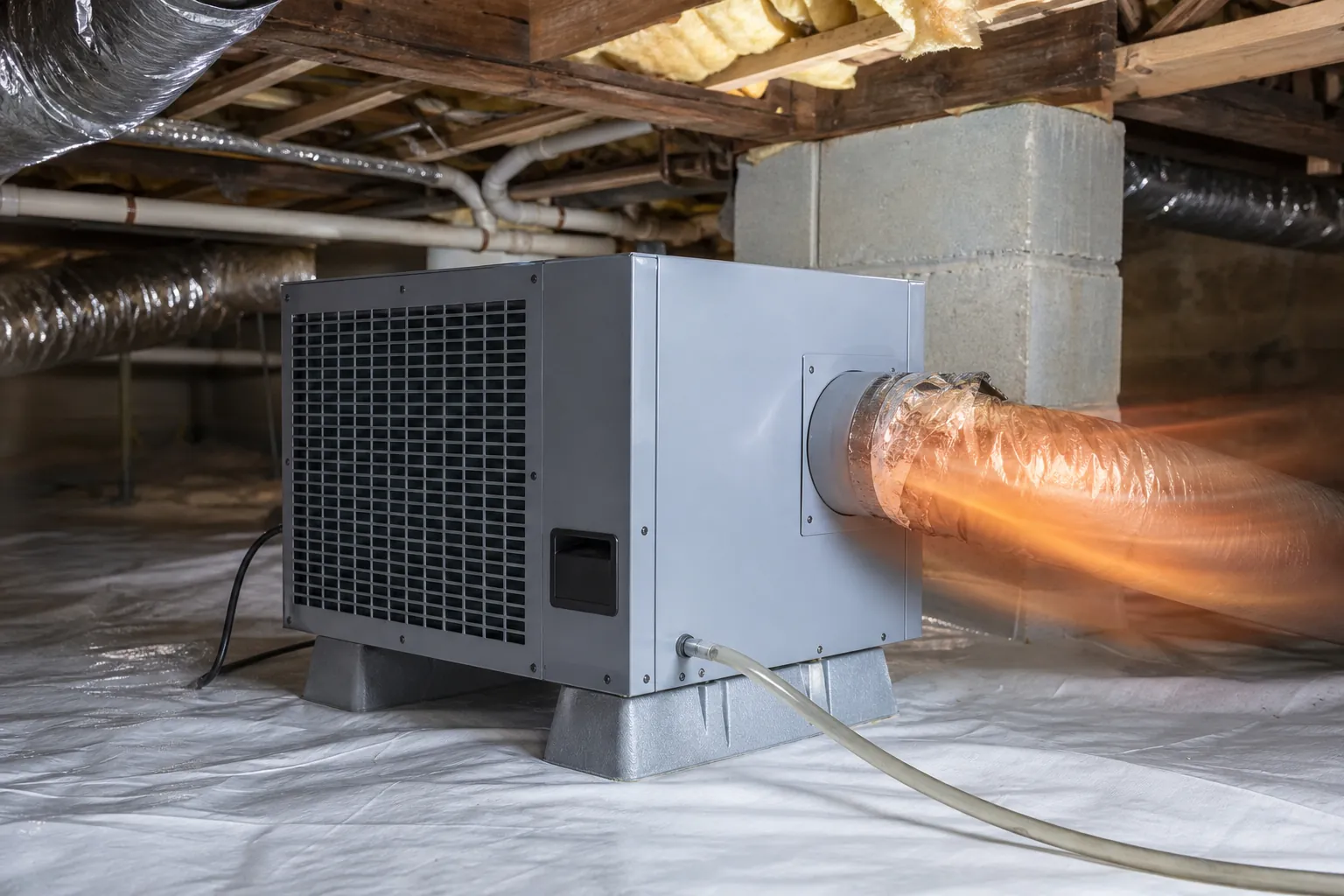
The air then passes across a warmer condenser coil before leaving the machine. This reheating step is intentional. The equipment releases heat from the refrigeration process, and the electrical energy used by the compressor and fan also becomes heat.
As a result, the air leaving a working unit commonly feels warmer and drier than the air entering it. A dehumidifier is not an air conditioner, even though both use refrigeration components. An air conditioner transfers heat outdoors; a standalone dehumidifier generally releases its heat into the same space where it operates.
How warm the outlet feels depends on the model, incoming temperature, humidity, airflow, and operating stage. There is no universal discharge temperature that proves every machine is operating correctly. Compare your observations with the manufacturer's specifications rather than relying on a temperature threshold found online.
A warm outlet accompanied by declining humidity and appropriate condensate drainage usually points toward normal operation. Warm air without those results deserves further investigation.
How to tell normal warmth from a problem
Start by looking at performance over time. A properly selected and installed dehumidifier should move the crawl space toward its humidity setpoint, although initial drying can take longer when wood, soil, or stored materials contain substantial moisture.
A common crawl space relative humidity target is approximately 45% to 55%, but the appropriate setting depends on equipment guidance and site conditions. Sustained readings above 60% are a reason to investigate moisture control. An independent hygrometer helps verify the unit's display.
Place that meter away from the discharge stream, exterior openings, and wet surfaces. A reading directly beside the warm outlet may not represent the rest of the crawl space because temperature affects relative humidity.
- Warm air is generally expected when humidity is moving toward the setpoint and the unit operates without unusual smells or sounds.
- Continued high humidity is concerning when the machine runs for long periods but conditions show little improvement.
- A burning smell, smoke, melted wiring, or repeated breaker trips requires stopping operation and obtaining professional help.
- Ice buildup, repeated shutdowns, or noticeably weak airflow can indicate an operating problem that needs diagnosis.
- Water pooling beneath the equipment suggests a drainage or installation issue, even if the discharge air feels normal.
Do not judge the machine by how uncomfortable the crawl space feels during one visit. A small enclosed area can feel warm while moisture removal is working correctly. Record humidity readings, weather conditions, and operating behavior so an inspection can focus on evidence.
Safe checks you can make before requesting service
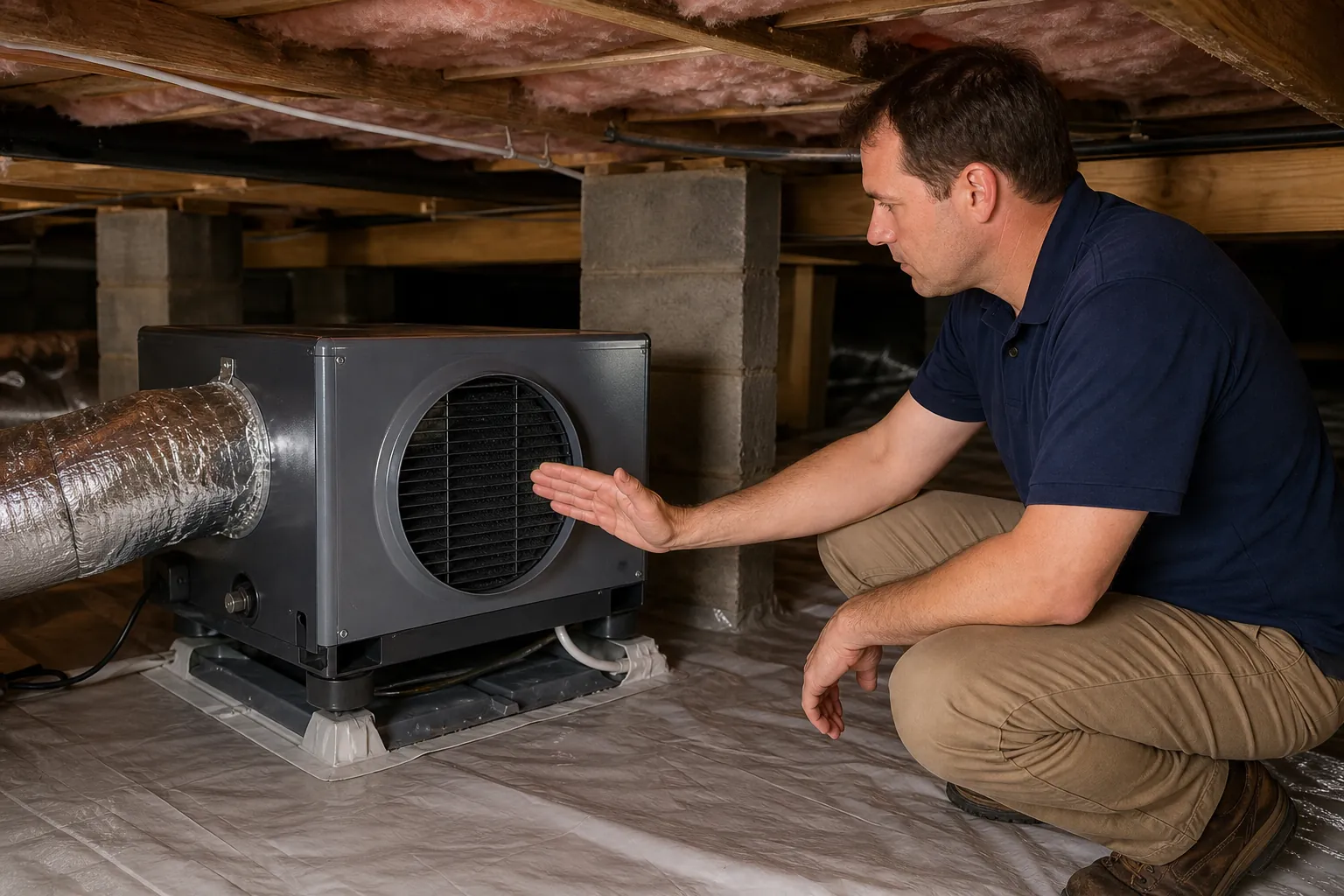
Before entering the crawl space, consider whether access is safe. Standing water near electrical equipment, damaged wiring, strong chemical odors, sewage, or unstable surfaces are reasons to stay out. Do not enter simply to inspect a dehumidifier when the surrounding conditions are hazardous.
If access is safe, keep your checks limited to items the manufacturer identifies as homeowner maintenance. Turn off and disconnect power as directed before handling filters or cleaning accessible components. Do not open electrical compartments or attempt refrigerant repairs.
Check the filter and exterior openings
A dirty filter can restrict airflow, reduce moisture-removal performance, and make the discharge feel unusually warm. Check the recommended cleaning or replacement schedule. Use the specified filter rather than a denser substitute that could restrict airflow.
Also look for boxes, insulation, loose liner material, or debris blocking the intake or outlet. Maintain the manufacturer's required clearances. A clear intake does not guarantee adequate airflow if the discharge is pressed against a wall or ductwork is obstructed.
Review the humidity setting
Confirm that the humidistat is set to a reasonable target and is not accidentally in a continuous operating mode. Some models keep the fan running after the compressor stops, so fan noise does not always mean active moisture removal.
If the displayed humidity differs substantially from an independent meter, allow both sensors time to stabilize in representative locations. Persistent disagreement may justify checking sensor placement or requesting a control evaluation.
Look at the drain arrangement
Inspect visible drain tubing for kinks, disconnections, and standing water. A gravity drain needs the slope and termination required by the manufacturer. A condensate pump needs power, a clear discharge path, and working controls.
Drainage can be intermittent, especially when humidity is already near the setpoint. No visible water at one moment does not prove the unit has failed. Conversely, an actively drying machine with consistently high humidity and no condensate merits a closer inspection.
Common reasons warm discharge comes with poor drying
When a crawl space dehumidifier blows warm air but humidity remains high, the issue may involve the equipment, the installation, or moisture entering the crawl space. Replacing the machine without identifying the cause can leave the original problem unchanged.
Restricted or poorly distributed airflow
Filters, dirty coils, damaged fans, or improper ducting can reduce performance. In a crawl space divided by foundation walls or narrow passages, the unit may repeatedly process nearby air while distant sections stay damp.
Short-circuiting occurs when discharged air returns quickly to the intake instead of circulating through the space. Equipment placement and any duct connections should follow the model's installation instructions. More ducting is not automatically better because excessive resistance can reduce airflow.
An ongoing moisture load
Exposed earth, plumbing leaks, foundation seepage, and outside air entering through gaps can supply moisture faster than a unit removes it. A dehumidifier manages water vapor; it does not repair leaks or replace bulk-water drainage.
If humidity rises after rainfall, inspect the water-management system rather than assuming the machine is defective. Gutters, downspouts, grading, foundation entry points, and any sump equipment may all be relevant.
Equipment operating outside its intended conditions
Every model has a rated operating temperature range and specified performance conditions. Cooler crawl spaces may reduce capacity or trigger defrost cycles. High moisture loads can also make a correctly functioning unit run longer than expected.
Nameplate capacity is measured under defined test conditions, not every possible crawl space environment. Equipment sizing should account for the actual temperature, leakage, moisture load, and layout, not floor area alone.
A mechanical or control fault
Compressor problems, refrigerant issues, fan faults, dirty internal coils, or inaccurate sensors can prevent effective drying. These conditions cannot be reliably diagnosed by touching the discharge grille.
A qualified service provider can evaluate operation against the manufacturer's requirements. Depending on the model and warranty terms, the next step may involve approved service, repair, or replacement rather than a homeowner adjustment.
Why North Carolina crawl spaces can be demanding
North Carolina has varied conditions, from humid coastal areas and the Piedmont to cooler mountain communities. During warm, humid weather, outside air can carry substantial moisture into a crawl space through vents, access doors, and other openings.
When that air meets cooler surfaces beneath the home, relative humidity can increase and condensation may develop. Seasonal rainfall can add a separate challenge through saturated soil, surface runoff, or groundwater entry.
This combination explains why equipment may run longer during muggy stretches or after wet weather. Longer runtime alone does not establish a malfunction. The more useful question is whether the system maintains acceptable moisture conditions while handling the seasonal load.
Track readings in more than one location if the crawl space has separate sections. An area near the unit may dry well while a remote corner remains damp. That difference can reveal an air-distribution issue or a localized water source.
Indoor symptoms also deserve context. Musty odors or uncomfortable floors can have several causes. Crawl space humidity measurements, visual inspection, and targeted evaluation are more reliable than attributing every household symptom to the dehumidifier.
How encapsulation affects dehumidifier performance
Encapsulation and dehumidification perform related but different jobs. A properly detailed ground vapor barrier limits moisture movement from the soil. Sealed seams, penetrations, and appropriate wall connections help maintain that barrier's effectiveness.
Air sealing reduces uncontrolled outdoor air exchange, while a dehumidifier removes moisture that remains or enters through unavoidable pathways. Together, these measures can reduce the load placed on the equipment.
However, encapsulation is not simply laying plastic over the ground. The crawl space should first be evaluated for bulk water, drainage needs, damaged materials, and installation constraints. Covering an unresolved leak does not eliminate its source.
- The ground liner should be inspected for open seams, tears, and exposed soil that allow moisture into the space.
- The access door and other openings should be evaluated for unwanted air leakage and water entry.
- Drainage measures should address liquid water separately from the humidity-control equipment.
- Airflow planning should account for foundation partitions and areas that the dehumidifier does not easily reach.
- Any vent closure or air-sealing work should comply with applicable code and account for combustion appliances where present.
If your dehumidifier started running constantly after a storm, equipment service may not be the only answer. Carolina Encapsulation Company can help assess whether crawl space conditions are increasing the drying load and whether improvements to moisture management are warranted.
When to shut the unit off and call for help
Ordinary warm air is not a reason to shut down a working dehumidifier. Turning it off during humid weather can allow moisture levels to rise. Safety warning signs, however, take priority over humidity control.
If you notice smoke, a burning odor, sparking, or damaged electrical components, stop using the equipment. Disconnect power only if you can do so safely without entering water or touching compromised components. For an active fire or immediate danger, leave the area and contact emergency services.
Repeated breaker trips should not be handled by continually resetting the breaker. An electrical professional may need to evaluate the circuit, while equipment service addresses the appliance. Do not assume a larger breaker is an appropriate solution.
Arrange a nonemergency inspection when humidity remains elevated despite reasonable settings, routine maintenance, and adequate operating time. Recurring ice, unexplained water around the unit, abnormal vibration, or frequent error messages also justify assistance.
Keep the model number, serial number, installation date, and warranty information available. Photographs of the drain setup, filter condition, display, and equipment placement can help explain the situation without repeated crawl space visits.
Questions homeowners often ask
Will warm discharge air damage my crawl space?
Expected discharge warmth from correctly installed equipment is generally not a damage signal. Keep the required clearances and avoid directing air at materials in ways the manufacturer prohibits. Unusual overheating or nearby heat damage requires inspection.
Should I open crawl space vents to release the heat?
Do not change a sealed crawl space design simply because the outlet feels warm. During humid weather, opening vents can introduce additional moisture and increase the unit's workload. If crawl space temperatures seem excessive, evaluate equipment operation and the overall design instead.
How long should the dehumidifier run?
There is no single correct daily runtime. Weather, initial moisture levels, air leakage, equipment capacity, and the humidity setting all affect operation. A newly addressed crawl space may need extended drying, while a stable space may require less operation.
Does hot air mean the compressor is working correctly?
No. Warm discharge supports only a limited observation about the air leaving the machine. Proper operation also requires moisture removal, adequate airflow, reliable drainage, and appropriate controls. Evaluate those results together.
Get a clear answer about your crawl space moisture
A crawl space dehumidifier blowing hot air is often doing exactly what it should. The best reassurance comes from steady humidity control, safe operation, and a crawl space that is not receiving uncontrolled water or outside moisture.
If the unit feels unusually hot or the space remains damp, avoid guessing at repairs. Start with safe maintenance checks and humidity records, then have the equipment and surrounding conditions evaluated as needed.
For help assessing a North Carolina crawl space, call Carolina Encapsulation Company at 704-207-9348. A careful look at moisture sources, encapsulation details, drainage, and equipment placement can help identify a practical next step.
Call 704-207-9348 to talk through next steps.