
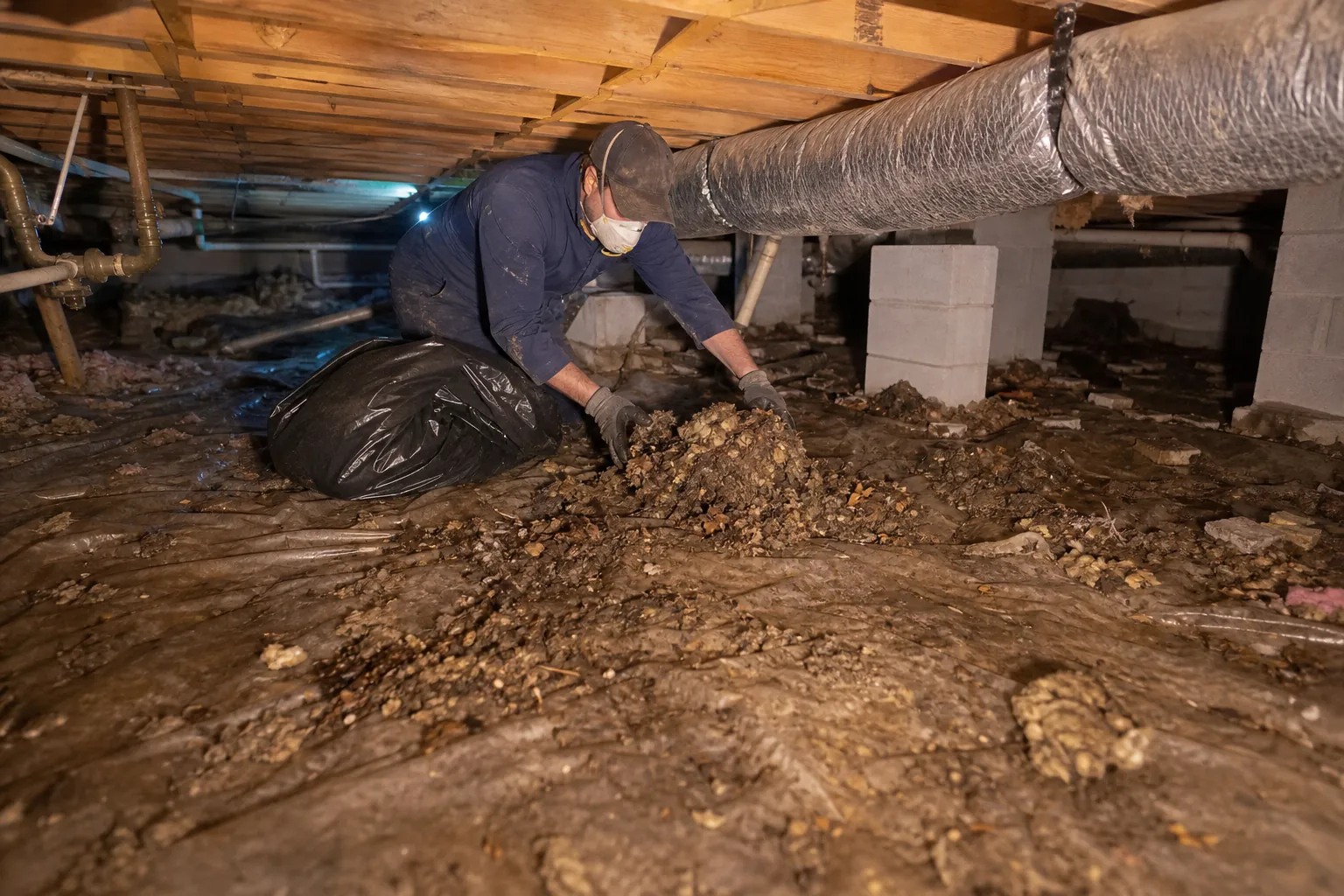
A dirty crawl space cleanout usually means removing loose debris and documenting visible conditions, then agreeing on any added work. The exact scope depends on what is present and what the provider offers. In Chapel Hill, ask for a clear list of included tasks before work starts.
What Does a Dirty Crawl Space Cleanout Include?
A crawl space cleanout often starts with a review of access and visible conditions. It may include removing loose debris, bagging waste, and noting concerns that need a separate review. Use the crawl space encapsulation system guide to understand related work, and see what crawl space encapsulation means before comparing scopes.
The word “cleanout” can mean different things from one quote to another. One provider may mean loose trash and scraps only. Another may include old insulation or other materials, if those tasks are offered and approved.
Ask for a written scope that names the areas to be cleared and the items to be removed. It should also say what stays in place. This helps prevent confusion when the crew finds materials that were not part of the original plan.
A cleanout does not, by itself, mean the crawl space is dry, sealed, or free of mold. Those are separate conditions or tasks. If you want any of them addressed, ask whether the provider offers that work and how it will be reviewed.
In Chapel Hill, crawl spaces may have different layouts, access points, and stored materials. The name of the service does not tell you what is under a specific home. A site review and clear scope are more useful than broad claims about what every cleanout includes.
How Is the Crawl Space Reviewed Before Cleanup?
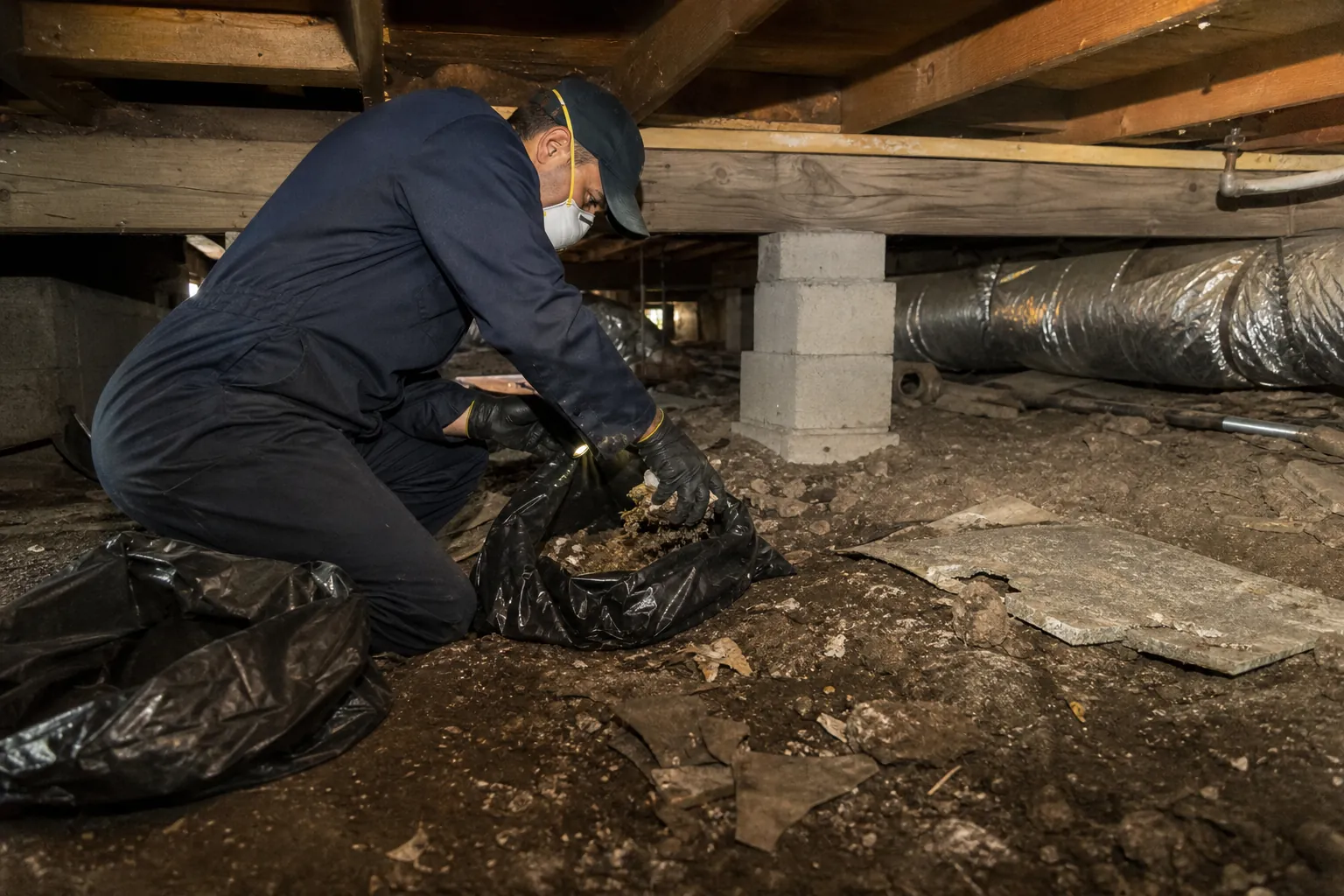
Before work is planned, a provider should establish how the crawl space can be reached and what can be seen safely. A review helps define the scope, but it cannot confirm every hidden condition. For context, read about crawl space moisture inspection readings and the crawl space encapsulation system guide.
The review may begin with the access opening, visible floor area, and any clear obstructions. A provider can explain what was observed and what could not be checked. Do not treat a quick look as proof that hidden areas are sound.
Ask how the team will handle low clearance, exposed wiring, standing water, animal waste, or sharp debris if any are present. These conditions can affect access and work planning. A provider should clarify limits and pause to discuss unexpected hazards rather than assume they are part of routine cleanup.
A useful review separates visible facts from questions that need another qualified person. For example, a concern about wiring may need an electrician. A suspected structural issue may need an appropriate building professional. The cleanout provider should not be expected to resolve every issue unless that work is clearly offered and within scope.
Write down what you want the review to answer. You might ask which areas will be checked, what items appear removable, and what needs separate approval. Keep the notes with the proposal so you can compare the planned work with the final scope.
- Ask which areas the provider can access and inspect.
- Ask what conditions may limit a safe review.
- Ask how newly found concerns will be reported.
- Ask which work requires a separate quote or qualified trade.
Which Materials May Be Removed, and Which Need a Separate Plan?
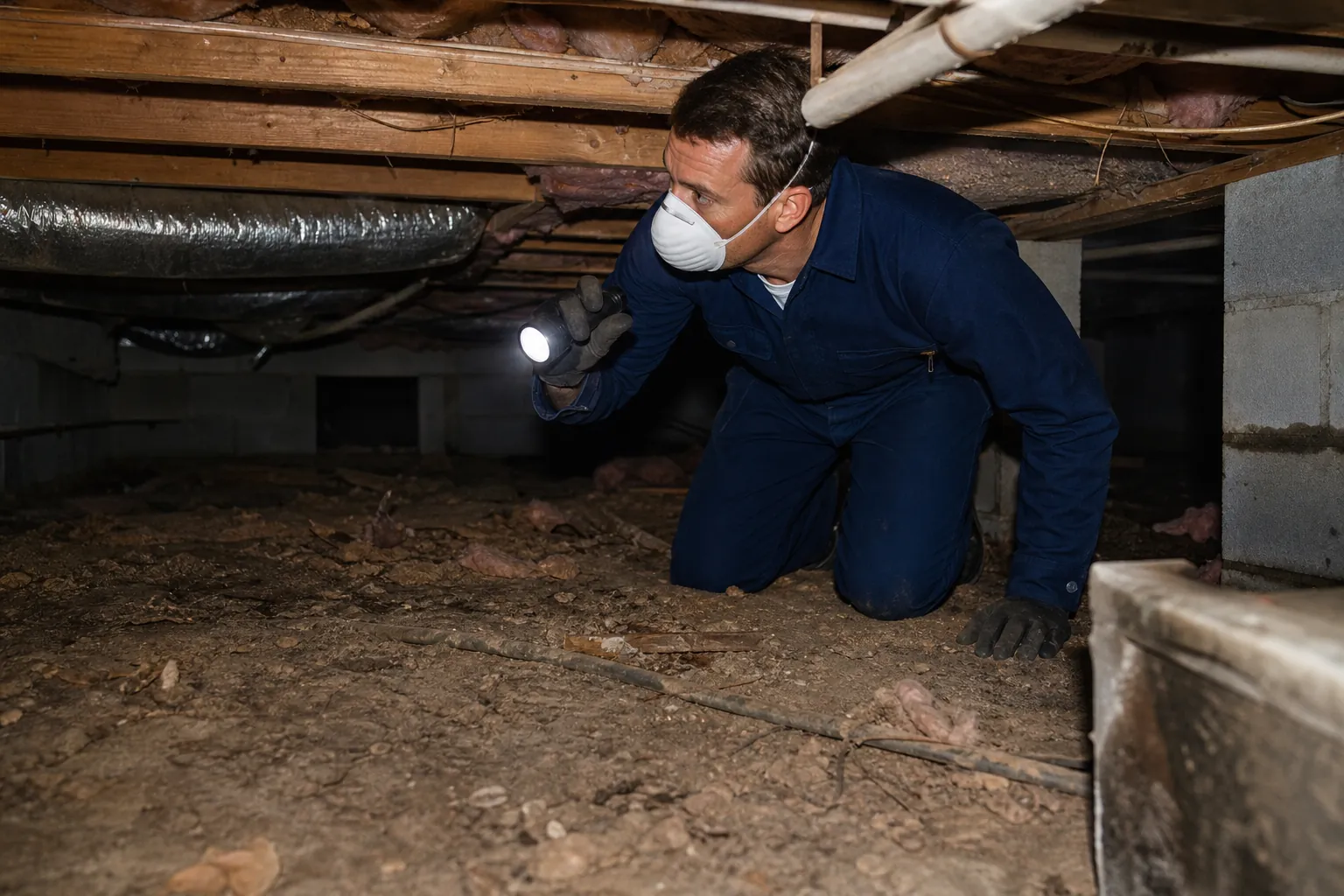
Loose, ordinary debris may be part of a cleanout, but removal rules depend on the material and provider scope. Do not assume insulation, animal waste, or suspect growth is included. Review crawl space moisture control options and crawl space encapsulation basics to separate cleanup from later work.
A clear item list makes the word “debris” less vague. Ask the provider to name the materials included, such as loose scraps or discarded objects, if those are present. Ask how the team will handle items that are heavy, wet, sharp, or difficult to reach.
Some materials call for more than ordinary debris handling. Old insulation, pest waste, suspected mold, chemical containers, and building materials may need special review or a separate service. Do not disturb material you suspect could be hazardous. Ask the provider what they can assess and who should handle it if they cannot.
A cleanout also may not include repairs. Damaged supports, pipes, wiring, ducts, or access doors need the right trade or professional. If the review raises a concern, get it described in writing and ask who is qualified to assess it before approving added work.
The removal plan should explain where removed items go and what disposal steps are included. Ask about any limits before the crew begins. Local disposal rules can vary by material, so check with the provider or the proper local authority when the plan is unclear.
- List each material the quote says it will remove.
- Mark items that are excluded or need separate approval.
- Ask how the crew will report unexpected materials.
- Confirm who handles disposal and any special waste limits.
Make a simple scope checklist
Compare proposals by task, not by label. A short checklist can show whether each provider means the same thing by “cleanout.” Keep unclear items open until the provider explains them.
How Do Moisture and Mold Concerns Affect Cleanup?
Moisture concerns can shape what happens after debris removal, but a cleanout alone does not control moisture or diagnose mold. Ask what was seen and what needs another review. For general background, use crawl space moisture control options and crawl space dehumidifier benefits.
North Carolina summers can bring hot, humid air. The Triangle also has soil that may hold water, and many crawl spaces have vents. These are useful local factors to discuss, but they do not prove that a particular crawl space has a moisture problem.
If water, damp materials, staining, or musty odors are noticed, ask that the observation be recorded. A visual note is not the same as a diagnosis. The U.S. EPA and NC State Extension offer general guidance on mold and moisture, but they cannot determine conditions in an individual home.
Removal of debris may make some areas easier to view, but it does not fix a water source. Moisture control may involve different choices, such as drainage review, vapor control, or equipment. The right path depends on the home and requires a suitable assessment.
Ask the provider to separate cleanup from proposed moisture work. Request the reason for each recommendation and ask what evidence supports it. For questions about building design or water entry, consult a qualified professional. Avoid choosing a solution based only on a product name or a single reading.
What Should You Ask Before Hiring a Cleanout Provider?
Before choosing a provider, compare the written tasks, exclusions, and steps for handling surprises. Confirm what access is needed and how the work will be reviewed when done. The crawl space encapsulation system guide gives broader context, while crawl space vapor barrier thickness choices covers one distinct later decision.
A short conversation can reveal whether a proposal matches your needs. Ask the same questions of each provider, and keep the answers in writing. Do not rely on a broad service label when the details matter.
For Chapel Hill homes, ask how the provider plans around the access opening and any tight or blocked areas. Ask what happens if the crew finds standing water, damaged materials, or a condition outside the agreed scope. Confirm that added work needs your approval before it begins.
Also ask what you should move or protect before the visit. Avoid entering a crawl space to prepare it yourself. If you have concerns about pets, stored items, or access to the home, raise them before the scheduled work.
A proposal should make it easy to see what you are paying for without adding assumptions. If the scope is unclear, ask for a revised version. If the answer remains vague, pause before authorizing the work.
- Request an itemized description of included cleanup tasks.
- Ask what materials and conditions fall outside the scope.
- Confirm how the provider will report unexpected findings.
- Get approval steps for added work in writing.
- Ask how the work area will be reviewed after cleanup.
What Happens After the Crawl Space Is Cleared?
After debris is removed, ask for a summary of completed tasks and any conditions that remain. Cleanup may improve access, but it does not prove the space is dry or repaired. Review crawl space moisture inspection readings and crawl space dehumidifier benefits before weighing separate moisture steps.
A closeout review should match the written scope. Ask which areas were cleared, whether any planned items remained, and why. If the provider found conditions outside the agreement, request notes and a clear next step rather than assuming the issue was fixed.
You may want to keep photos or written notes from before and after the work, if the provider supplies them. These records can help you track what changed. They are not a substitute for a qualified inspection when a concern involves structure, wiring, plumbing, or possible hazardous material.
If moisture remains a concern, ask what kind of assessment is appropriate. Readings can vary by location and conditions, so one number alone may not answer every question. A suitable professional can explain what was measured and what it means for that space.
Do not rush into encapsulation or equipment based on cleanup alone. Compare the available options, ask what problem each is meant to address, and confirm which provider offers each task. The right next step depends on findings and your priorities, not on the word “cleanout.”
Questions about next steps? Call Carolina Encapsulation Company at 704-207-9348 or review encapsulation.
Frequently Asked Questions
Should I enter the crawl space before a cleanout?
Do not enter if access, wiring, standing water, pests, or debris may create a risk. Crawl spaces can have hazards that are hard to judge from the opening. Share your concerns with the provider and ask what preparation is safe. If a condition may pose a health or safety risk, consult the right qualified professional.
Does a cleanout include mold removal?
Not necessarily. “Cleanout” does not define mold assessment or removal, and visible marks alone cannot confirm what they are. Ask the provider to state whether mold-related work is included and what it covers. For general moisture and mold information, consult the U.S. EPA or NC State Extension, then seek a qualified assessment for a specific home.
Can cleanup fix a damp crawl space?
Removing loose debris may make the area easier to view, but it does not stop water or control humidity by itself. Ask what moisture conditions were observed and what separate options are available. A qualified provider can explain the basis for any recommendation, and a relevant trade may be needed to address the source.
What should I do if the crew finds an unexpected problem?
Ask the crew to pause work in that area and describe what they found. Request written notes, the proposed next step, and any change to the scope. Do not approve added work until you understand it. If the issue involves a hazard or a trade outside the provider’s stated work, contact an appropriate qualified professional.
Sources
- Mold and Moisture Checklist, NC State Extension
- A Brief Guide to Mold, Moisture and Your Home, U.S. EPA
- Unvented Conditioned Crawlspaces, U.S. Department of Energy
Call 704-207-9348 to talk through next steps.