
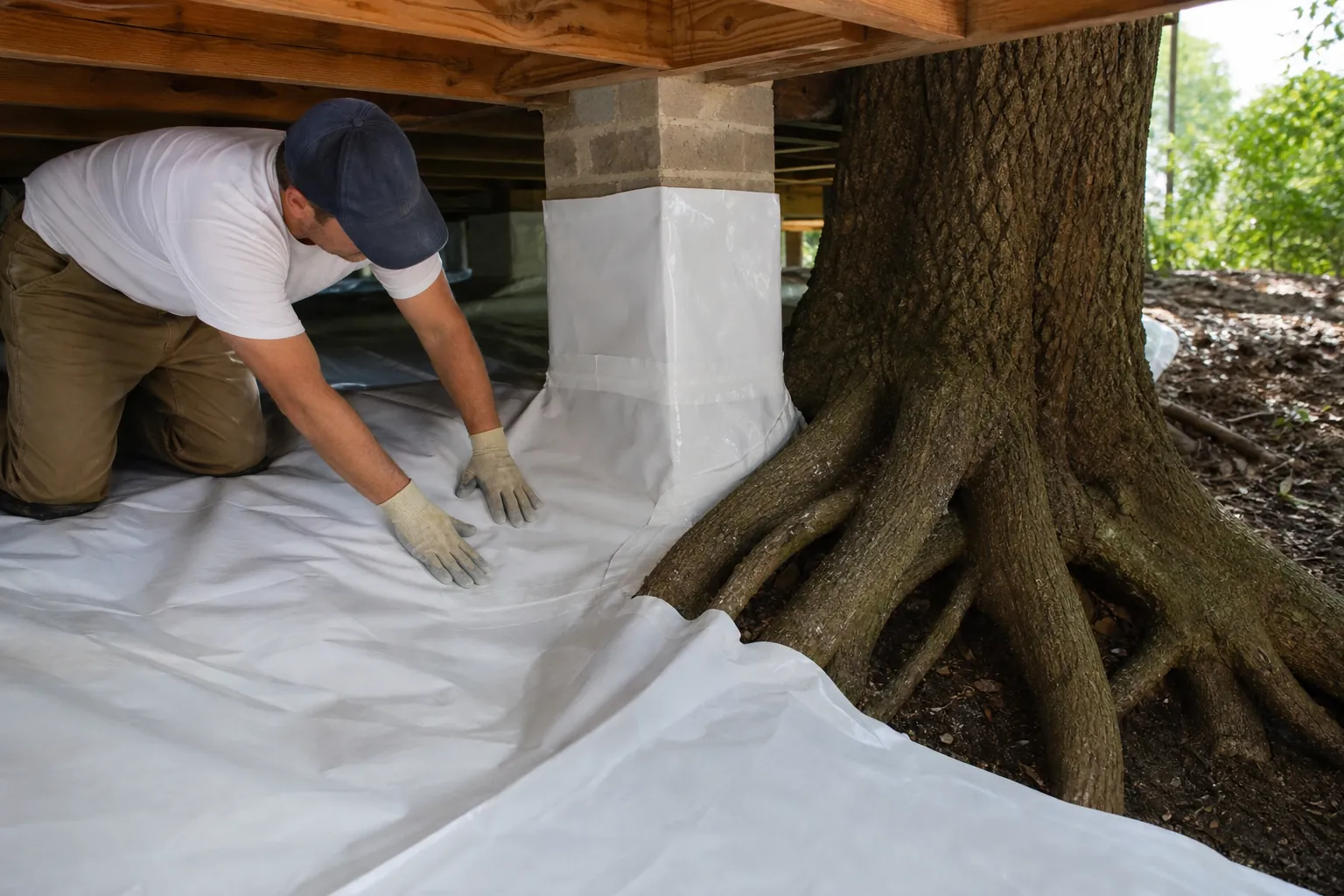
Mature trees provide shade, soften summer heat, and give North Carolina properties their character. They can also complicate work beneath a home when roots approach foundation walls, extend under footings, or appear inside a crawl space. The right response is not automatically to cut the roots or cover everything with plastic.
Crawl space encapsulation around tree roots requires a plan that considers moisture, the condition of the foundation, the health of the tree, and the details of the vapor barrier installation. A root is not simply another pipe penetration. It may grow, move, or signal an opening that needs closer investigation.
For homeowners considering Carolina Encapsulation Company, understanding these issues makes the initial inspection more productive. The goal is a drier, more manageable crawl space without creating avoidable problems for the house or nearby trees.
Why Tree Roots Appear Near Or Inside A Crawl Space
Roots generally follow conditions that support growth, including available water, oxygen, and suitable soil. A damp area beside a foundation can be attractive, especially when a downspout empties nearby or a plumbing leak keeps the ground wet. Roots may exploit existing gaps rather than create every opening themselves.
Small feeder roots and large woody roots present different concerns. Fine roots near the soil surface may indicate favorable growing conditions. A substantial woody root beside a footing raises different questions about clearance, tree stability, and possible movement. Size alone does not establish whether a root is damaging the home.
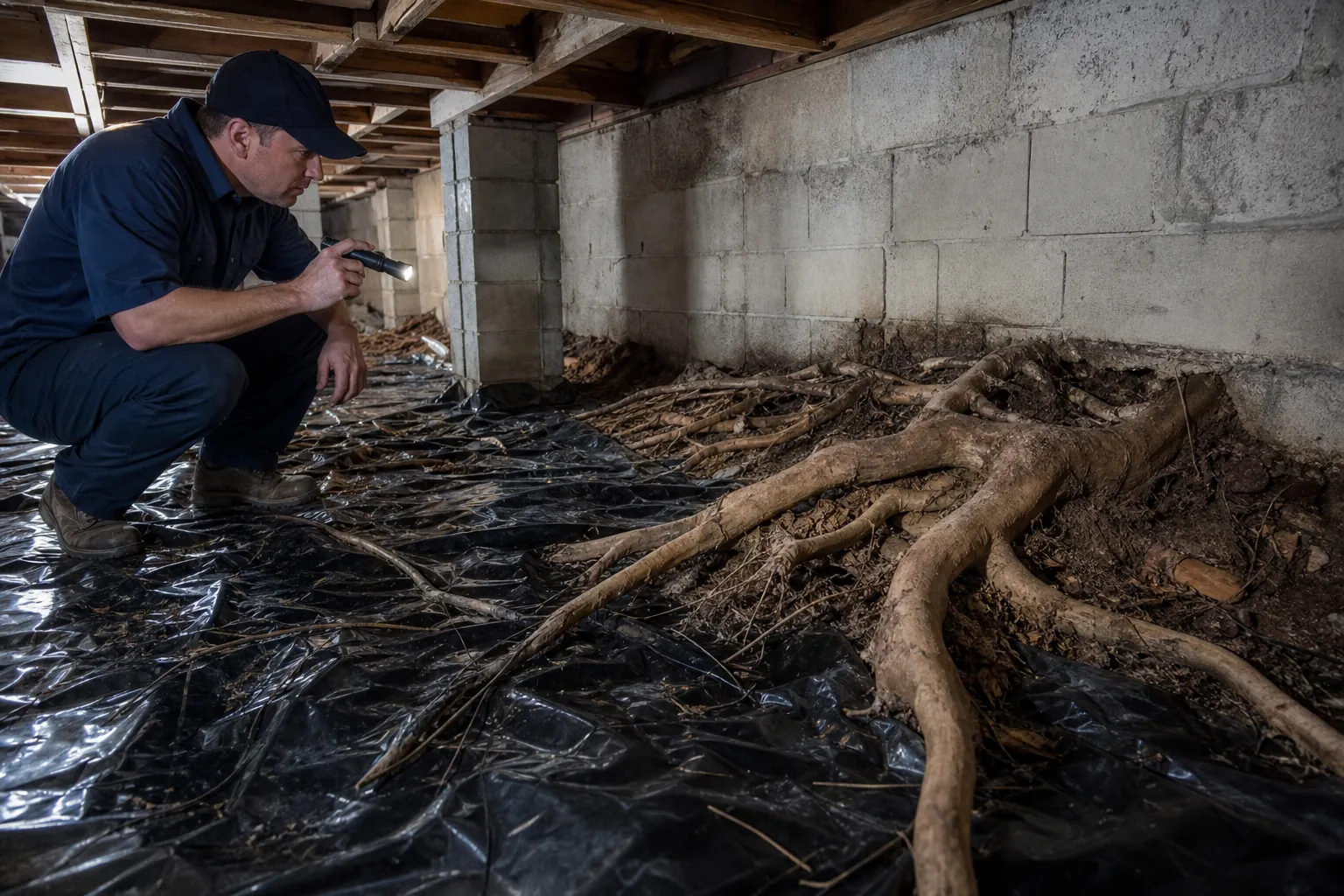
Some objects that look like roots are abandoned cables, old wood, or debris embedded in soil. Identification should happen before excavation or cutting. When roots are present, the inspection should document their location and their relationship to foundation components.
- A root entering through a wall opening calls for inspection of the opening, not just a patch over the root.
- A root lying across exposed soil may interfere with barrier placement even when no structural damage is visible.
- A root beneath or beside a footing should not be excavated casually to create a smoother installation surface.
- Repeated root growth in one damp location may point to a drainage problem or an ongoing leak.
The useful question is not simply whether roots are present. It is why they are there and what conditions need attention before the crawl space is sealed.
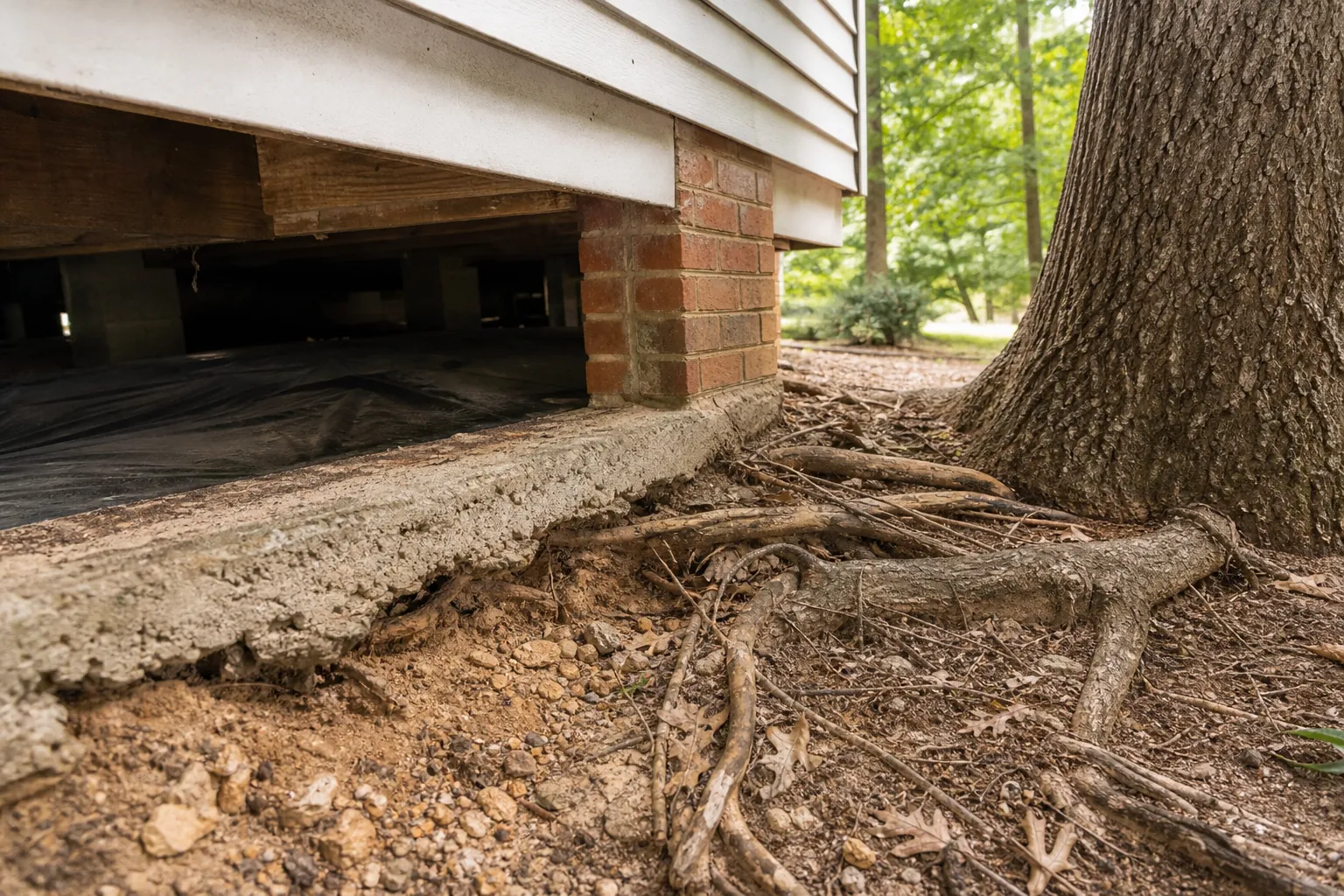
Start With An Inspection Of Water And Foundation Conditions
A vapor barrier can limit moisture moving from soil into crawl space air. It cannot repair a leaking supply line, stabilize a displaced foundation, or keep concentrated runoff away from the house by itself. Those conditions need to be identified before an encapsulation plan is finalized.
The inspection should include the crawl space floor, perimeter walls, piers, wood framing, access door, and visible plumbing. Outside, gutters, downspouts, grading, and low spots near trees deserve attention. A shaded side yard may stay wet longer, but persistent saturation should not be dismissed as a normal consequence of shade.
Look for water stains, pooled water, softened soil, damaged insulation, and visible wood deterioration. Foundation cracks should be evaluated in context. A crack near a root does not prove that the tree caused it, and covering the crack without understanding it can hide useful evidence.
North Carolina properties vary widely. Mountain slopes, Piedmont clay soils, and coastal areas with shallow groundwater can require different water-management approaches. The installation should respond to the property rather than rely on a single statewide formula.
- Ask where water enters and whether the evidence changes after heavy rain.
- Confirm whether plumbing or HVAC condensate contributes to wet soil near the roots.
- Identify foundation areas that need further evaluation before barrier attachment.
- Discuss whether drainage repairs should occur before or alongside encapsulation.
Photographs and a written scope help separate observed conditions from assumptions. They also make it easier to coordinate any outside drainage, tree care, or structural work.
When An Arborist Or Structural Professional Should Be Involved
Cutting a root can affect tree health and stability. The consequences depend on the species, root size, location, condition of the tree, and how many roots are disturbed. There is no universal cutting distance that is safe for every tree beside every home.
An ISA Certified Arborist can help assess whether a root can be pruned, should be preserved, or warrants a different approach. This is particularly important for substantial roots close to the trunk or trees with visible decline, lean, or storm damage. Encapsulation work should not substitute for a tree-risk assessment.
A structural engineer or appropriately qualified foundation professional may be needed when there are displaced masonry units, significant cracks, uneven support conditions, or suspected footing movement. An encapsulation contractor can document concerns, but moisture-control work alone does not resolve a structural problem.
Coordination matters when both specialties are involved. Removing soil to expose a root may also expose or undermine a footing. Conversely, foundation repairs can affect the root zone. The safest sequence is to establish the constraints before anyone begins cutting, digging, or fastening materials.
Even removing a tree is not an automatic foundation repair. Roots remain in the soil and decay over time, while changes in soil moisture can have additional effects. Tree removal, if recommended, needs its own plan rather than serving as a shortcut to encapsulation.
How Roots Affect Vapor Barrier Installation
A crawl space liner works best as a continuous system, with sealed seams and appropriate connections at walls, piers, and penetrations. Roots can complicate that continuity by creating irregular surfaces or moving over time. Simply draping thin plastic across them leaves vulnerable areas.
Where a root is approved to remain, the installer needs a detail that limits abrasion and accommodates the actual site conditions. Depending on the evaluation, that may involve protective material beneath the liner, a shaped transition, or a planned route around an obstruction. No detail should depend on burying an unresolved structural concern.
Adhesive should not be assumed to provide a permanent bond to living bark. Bark is uneven, can hold moisture, and changes as the root grows. A tight seal directly around a living root may eventually separate or constrict the root. These conditions require an installation-specific decision, not a generic promise.
Large roots may also make walking or servicing equipment difficult. A liner that bridges a sharp rise can be stretched when someone steps on it. Reinforcement and protected service paths can reduce wear, but they do not make every root configuration suitable for immediate encapsulation.
- Seams should be located and sealed with future access and expected wear in mind.
- Protective layers should address puncture risks without hiding conditions that still require evaluation.
- Wall attachments should use sound surfaces and details appropriate to the foundation and selected system.
- Root-related transitions should remain accessible for inspection when practical.
Before approving the project, ask how each root obstruction will be handled and what maintenance the detail may need. A clear explanation is more useful than a broad claim that the liner will seal everything permanently.
Address Drainage Before Relying On Encapsulation
Water management is especially important when trees and foundations share a confined area. Runoff that collects beside the house can maintain wet soil and raise crawl space humidity. Sealing soil vapor does not eliminate the source of liquid water.
Start with gutter maintenance and downspout discharge. Water should be directed to a suitable outlet without creating erosion, flooding a neighboring property, or concentrating flow in a vulnerable root zone. An extension that empties into a shallow depression may only move the problem a few feet.
Grading corrections also require care. Adding deep soil over established roots can reduce oxygen availability, while excavation can sever roots or disturb foundation support. Where trees are close to the house, an arborist may need to review significant grading changes.
Interior drainage and a sump system may be appropriate when water enters the crawl space despite exterior improvements or when groundwater conditions make exterior measures insufficient. These systems need a suitable discharge location and a maintenance plan. Their design should reflect how water actually moves through the site.
Root barriers are not a do-it-yourself substitute for investigation. Installing one can require trenching that cuts important roots, and its placement may create conflicts with utilities or footings. Consider a barrier only after evaluating whether it is appropriate for the tree and property.
The best water-management plan usually combines practical source control with measures inside the crawl space where needed. It should also preserve safe access to drains, pumps, and other components that require service.
Humidity Control Still Matters After The Liner Is Installed
Encapsulation addresses ground moisture and can reduce the entry of humid outdoor air when the enclosure is properly detailed. It does not guarantee that humidity will remain controlled without additional measures. North Carolina summers can put a sustained moisture load on crawl spaces.
A sealed crawl space may need a correctly sized dehumidifier or another approved moisture-control approach. Equipment selection should consider the crawl space size, leakage, site conditions, and the intended enclosure design. The discharge arrangement should not return collected water to soil beside the foundation.
A common operating goal is to keep relative humidity below 60 percent, although the appropriate settings and monitoring plan should be discussed for the specific home. Readings need context because temperature affects relative humidity. A single dry-day measurement does not describe year-round performance.
Vent closure, insulation, pest inspection access, and combustion safety also belong in the plan. Fuel-burning equipment in or connected to the crawl space may require professional review before enclosure changes. Local code requirements and any termite treatment warranty should be checked before materials are installed.
Tree roots make these ordinary details more important, not less important. An awkward liner transition can become a weak point, while inaccessible equipment makes maintenance harder. A complete scope should explain how the system will control moisture and remain serviceable.
Compare Proposals By Scope, Not Just Price
The cost of working around roots depends on what the inspection finds. A few surface obstructions are different from large roots entering through damaged masonry. Drainage work, restricted access, debris removal, liner protection, and outside professional evaluations can all affect the project.
A useful proposal distinguishes encapsulation work from tree care and structural repairs. If a task is excluded, that should be clear before scheduling. Otherwise, homeowners can discover late in the process that an essential problem remains unresolved.
- Ask whether the quote includes cleanup, seam sealing, wall attachment, and treatment of each identified obstruction.
- Request a description of any drainage or humidity-control equipment and its service requirements.
- Confirm who is responsible for arborist recommendations, approved root work, and foundation evaluation.
- Ask how unexpected roots or concealed damage will affect the scope and approval process.
- Review warranty terms for installation details, materials, equipment, and conditions outside the contractor's control.
Be cautious about promises that encapsulation will stop all future root growth or fix every moisture issue without inspection. A credible plan identifies limitations and explains how existing conditions will be managed.
Maintain The Crawl Space And Watch For Changes
After installation, inspect the crawl space periodically and after significant storms. Follow the maintenance schedule for the dehumidifier and sump equipment, if present. Keep service routes clear so technicians do not drag tools or equipment over raised roots beneath the liner.
Watch for lifted seams, tears, pooling water, unusual odors, or humidity readings that remain elevated. A bulge over a known root deserves inspection rather than immediate cutting through the liner. Document changes with photographs and contact the installer to discuss the appropriate response.
Outside, keep gutters functioning and revisit areas where runoff collects. Tree growth, landscaping changes, and settled soil can alter drainage over time. New excavation near the foundation should account for both the encapsulation system and the tree's root zone.
Continue termite inspections according to the applicable service agreement. Encapsulation is not termite treatment, and concealed inspection areas can complicate pest monitoring. If the liner needs to be opened for repairs or access, arrange for the affected area to be properly resealed afterward.
Maintenance does not need to be complicated, but it should be consistent. Catching a small water-management or liner problem early is easier than waiting until wet soil and elevated humidity return.
Plan A Solution That Respects The Home And The Trees
The best approach to crawl space encapsulation around tree roots begins with observation, not a cutting tool. Identify the roots, understand the water source, check the foundation, and establish which conditions must be addressed before installation. Then select liner details and moisture-control measures that fit the site.
Not every root requires removal, and not every root can safely remain within the proposed installation. Professional coordination helps clarify that distinction without sacrificing a mature tree or overlooking a concern beneath the house.
To discuss your North Carolina crawl space, call Carolina Encapsulation Company at 704-207-9348. Share what you have noticed, including visible roots, standing water, musty odors, or foundation changes. An informed conversation can help you plan the next step and understand what should be evaluated before encapsulation begins.
Call 704-207-9348 to talk through next steps.