
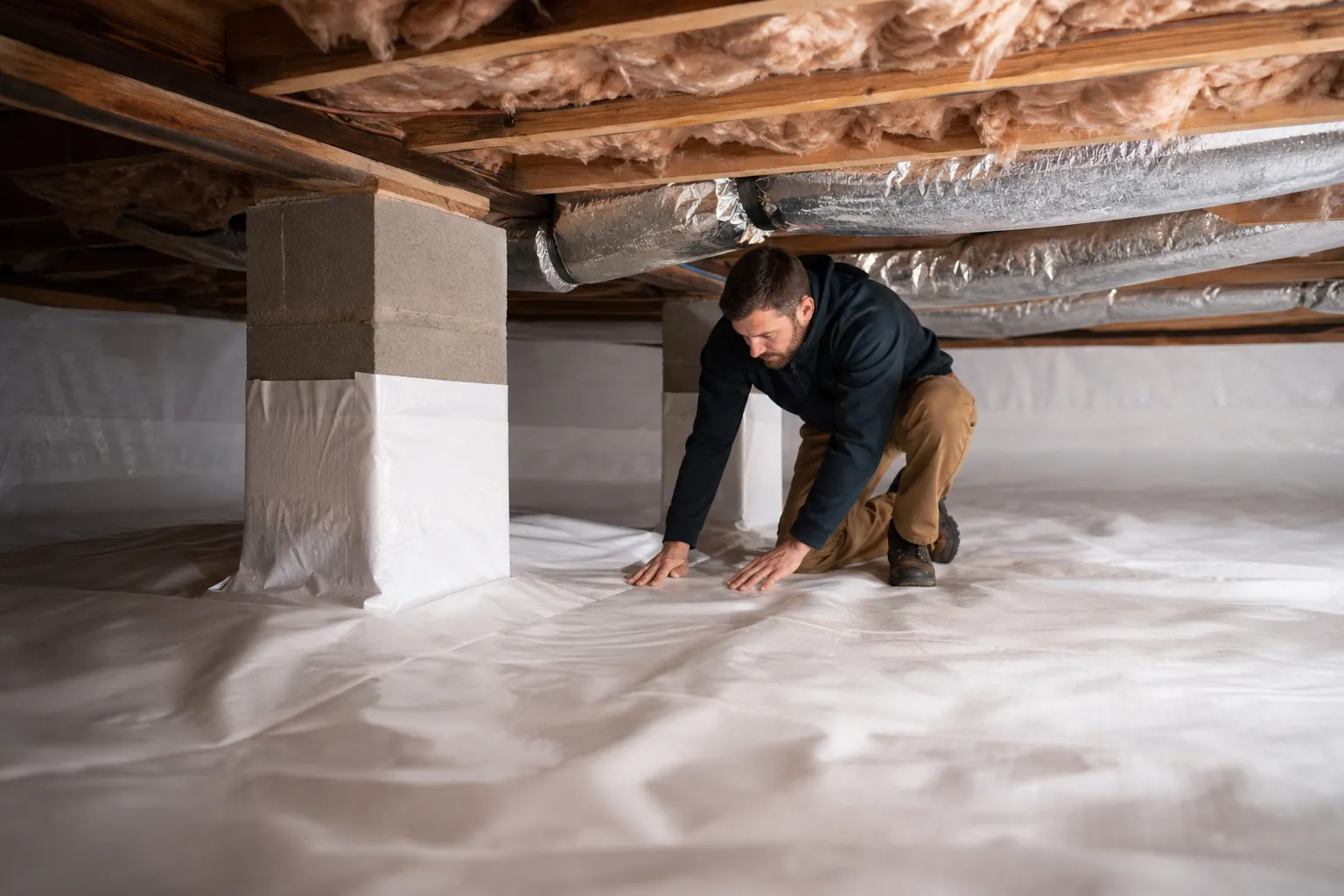
A crawl space liner can look substantial in a sample book and still be a poor fit for the space beneath your home. Thickness matters, but it does not tell you how easily water vapor passes through a material, how well it handles service traffic, or how reliably its seams can be sealed.
For North Carolina homeowners, the best comparison starts with the manufacturer's technical data and ends with an installation plan that fits the house. Humid summers, exposed soil, groundwater conditions, and ductwork all affect how an encapsulation system should be designed.
This guide explains crawl space liner product specifications in practical terms. It also identifies questions to ask Carolina Encapsulation Company when reviewing a proposed system, so you can compare more than a liner's color, price, or advertised thickness.
What A Crawl Space Liner Does And Does Not Do
A crawl space liner separates exposed soil from the air beneath your home. When its seams, edges, and penetrations are properly sealed, it limits moisture entering the crawl space through the ground. In an encapsulation project, the liner may also extend up foundation walls and around support piers as part of a continuous enclosure.
That barrier serves a different purpose from drainage. A liner does not make standing water disappear, repair a leaking plumbing line, or stop rainwater from entering through a foundation opening. Bulk-water problems need their own correction, which may involve exterior grading, gutter improvements, drainage, or a sump system.
A liner also does not independently control indoor humidity. An encapsulated crawl space needs an appropriate drying strategy, such as a properly sized dehumidifier or another code-compliant moisture-control approach. The right method depends on the building, mechanical systems, and applicable requirements.
Think of the liner as one component in a coordinated system. Its performance depends on the material itself, the preparation beneath it, the detailing around obstacles, and the way moisture is managed after installation.
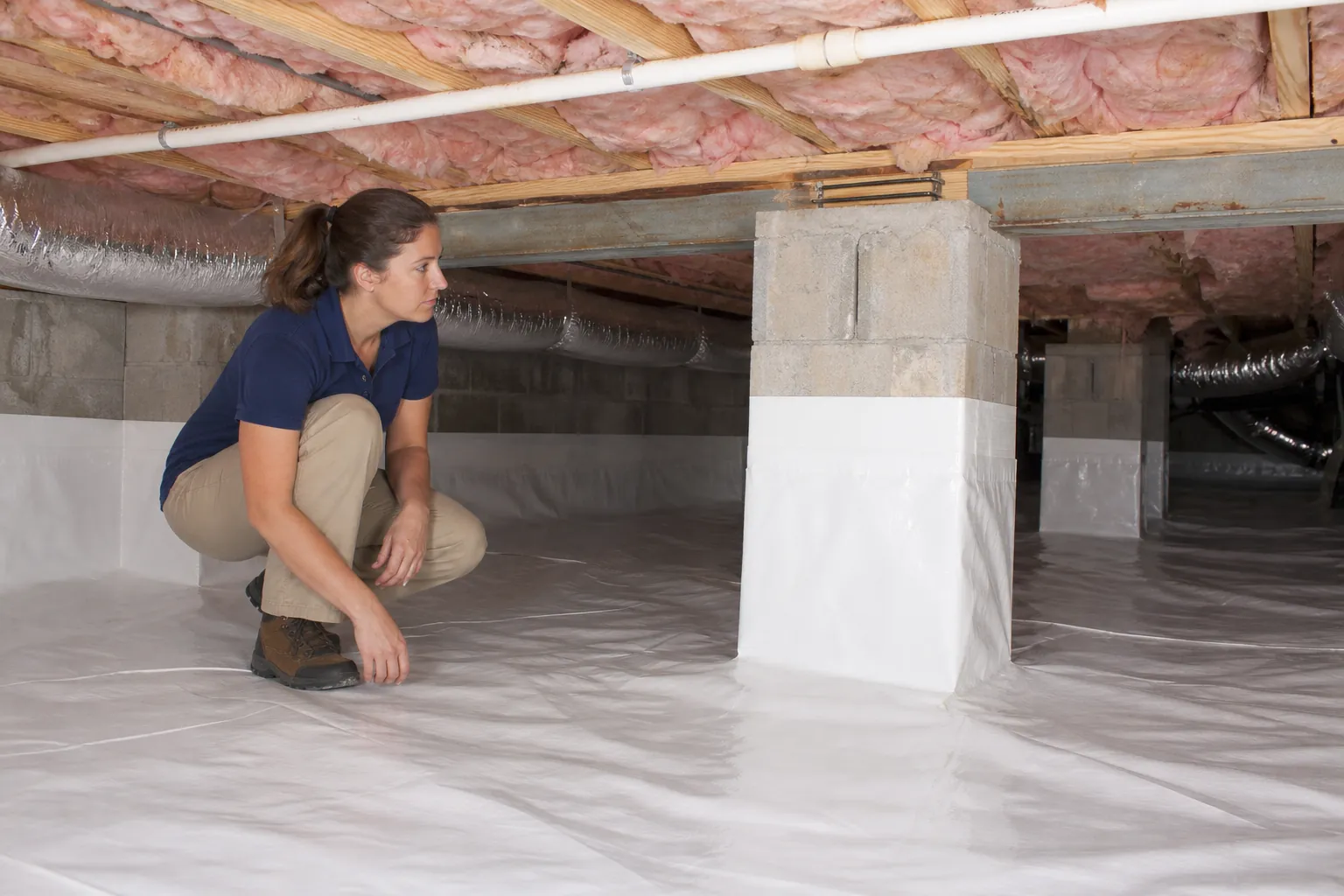
Thickness: Understand What A Mil Actually Measures
Liner thickness is commonly stated in mils. One mil equals one-thousandth of an inch, so a 20-mil liner has a nominal thickness of 0.020 inch. A mil is not a millimeter, and confusing those units can make a product sound much thicker than it is.
Thicker materials often provide more resistance to ordinary handling and wear, but thickness alone does not establish durability. Polymer formulation, reinforcement, layering, and manufacturing consistency can change how two liners with the same advertised thickness perform.
Ask whether the published number describes nominal thickness, minimum thickness, or a measurement taken at a particular part of a reinforced sheet. A textured or reinforced product may not have an identical thickness at every point.
- Ask the contractor to identify the exact manufacturer, product name, and nominal thickness in the proposal.
- Request clarification about whether the thickness applies to the full composite or an individual layer.
- Compare thickness alongside tested puncture, tear, and tensile properties rather than treating it as a complete quality rating.
- Consider how often plumbers, HVAC technicians, or other workers will need to move across the finished liner.
A lightly accessed crawl space and a space containing frequently serviced equipment have different demands. In either case, sharp stones, debris, and exposed fasteners should be addressed before installation. A thicker liner is not a substitute for preparation.
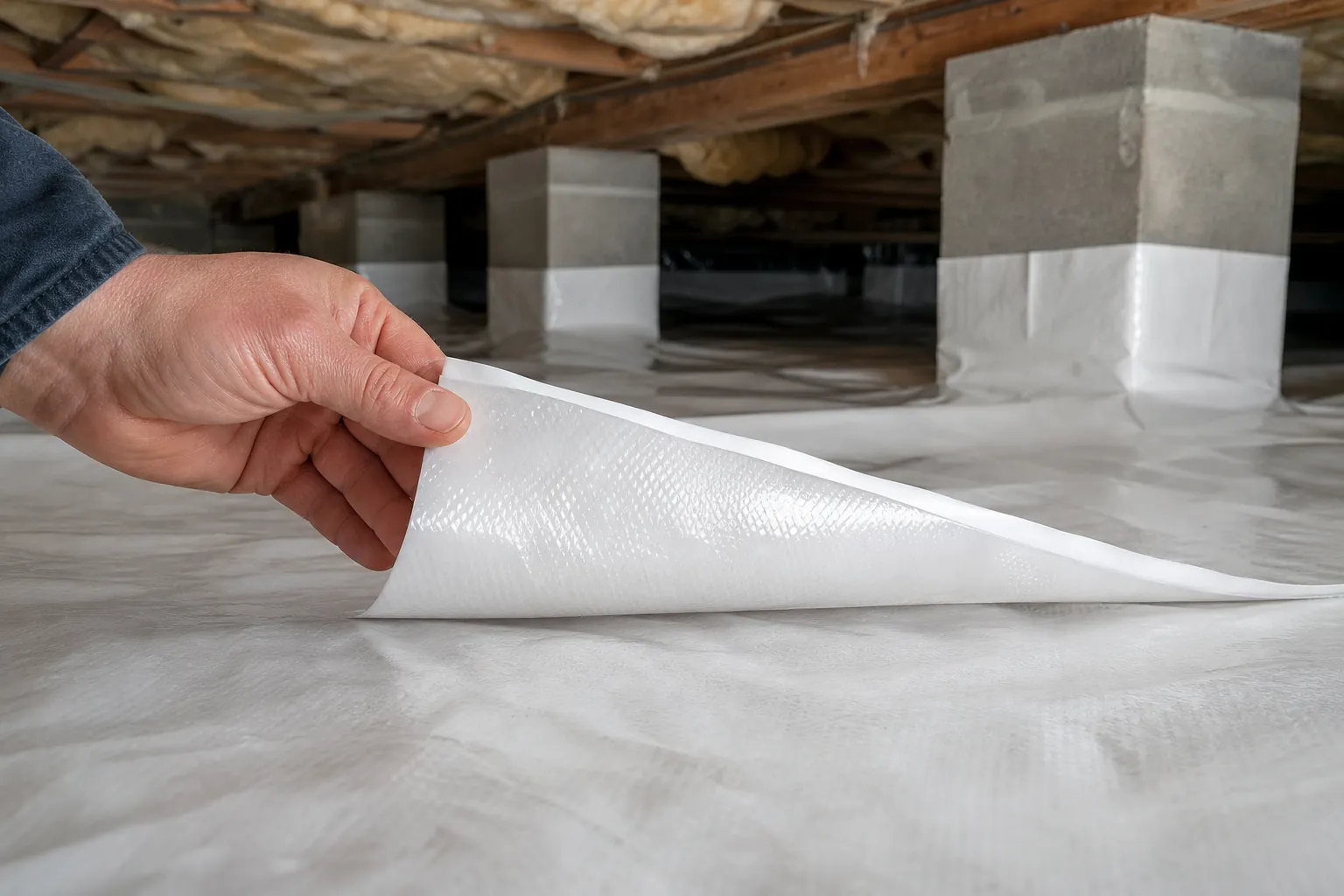
Permeance: Compare Resistance To Water Vapor
Water vapor permeance describes how readily moisture vapor moves through a material under specified test conditions. It is commonly reported in perms. A lower value generally means less vapor passes through the tested material.
This property matters because soil can release moisture even when no puddles are visible. A liner intended to control ground vapor should have documented vapor-resistance performance, not just a description such as heavy-duty plastic or waterproof sheeting.
ASTM E96/E96M is a commonly referenced test standard for water vapor transmission. However, results depend on the test procedure and environmental conditions. Two numbers are not necessarily comparable if one manufacturer used a different procedure or temperature and humidity conditions.
For context, a Class I vapor retarder has a permeance of 0.1 perm or less. That classification does not, by itself, prove that a product is suitable for every crawl space installation or satisfies every local requirement. Installation details and the applicable code provisions still matter.
- Ask for the stated permeance and the test standard supporting it.
- Check whether the report identifies the test procedure and conditions.
- Confirm that the documentation applies to the proposed product rather than a different liner in the same product family.
- Remember that open seams and unsealed edges allow moisture to bypass even a highly vapor-resistant sheet.
The useful question is not simply whether a liner blocks vapor. It is whether the documented material and the planned installation will create a continuous, durable ground vapor barrier.
Reinforcement, Puncture Resistance, And Tear Strength
Some crawl space liners use multiple layers with an internal reinforcing grid or scrim. Others are unreinforced sheets. Reinforcement can improve resistance to tearing or stretching, but the word reinforced does not establish a universal performance level.
Puncture resistance addresses the material's ability to withstand concentrated force from an object. Tear resistance describes how a tear starts or propagates under a particular test. Tensile strength measures resistance to pulling. These properties describe different failure modes and should not be treated as interchangeable.
When reviewing a data sheet, look for the test method, units, and whether results are reported in more than one direction. Reinforced materials can perform differently along the length and across the width of a roll.
A larger published number is meaningful only when the comparison uses compatible methods and units. For example, a puncture result from one testing setup should not be ranked directly against a result produced with a different probe or procedure.
Ask how vulnerable locations will be protected. Access routes, equipment service areas, and tight passages may benefit from compatible protective layers or designated walk paths. The protection should not interfere with drainage, hide a known water problem, or compromise the liner manufacturer's installation requirements.
Material Composition And Product Documentation
Polyethylene is common in crawl space liners, but products vary in construction and formulation. Some use reinforced laminates, while others use single-layer or multilayer films. Material descriptions help explain the product, but they are not a replacement for measured performance.
Claims about virgin resin, recycled content, or proprietary blends should be evaluated in context. None of those labels alone proves that a liner will resist punctures, retain its properties, or remain properly sealed beneath your home.
A useful submittal package includes a current technical data sheet, installation instructions, and warranty terms. If the proposed product has a code evaluation report or other relevant documentation, ask to review it and confirm its scope.
- Check that the product name on the quote matches the data sheet and warranty.
- Ask whether accessories must come from the same manufacturer to maintain compatibility or warranty coverage.
- Review any restrictions concerning sunlight exposure, storage conditions, chemicals, or installation temperature.
- Ask whether a proposed substitution requires your approval before installation begins.
Fire-related properties may also be relevant, depending on where and how the material is installed. Request applicable documentation rather than assuming a plastic liner is appropriate for every location. Keep the liner clear of heat-producing equipment according to equipment instructions and applicable requirements.
Seams, Tape, And Fasteners Are Part Of The Specification
A strong sheet with weak connections can leave an ineffective barrier. The proposal should explain how adjacent sheets overlap, how seams are sealed, and how the liner is secured at walls and penetrations.
There is no single overlap dimension that should be assumed for every product and project. The contractor should follow the manufacturer's instructions and applicable code requirements. Where those documents differ, the installation plan needs to resolve the requirements before work begins.
Tape must be compatible with the liner surface and suitable for the intended conditions. Dust, condensation, low temperatures, and wrinkled material can interfere with adhesion. Some systems may call for specific cleaning, primers, adhesives, or other preparation.
Wall attachment may use mechanical fasteners, termination components, sealants, or a combination of methods. Foundation surfaces vary, so the attachment detail should suit masonry, concrete, or other materials actually present.
- Ask how installers will prepare surfaces before applying seam tape or sealant.
- Confirm how plumbing, posts, pipes, and irregular foundation features will be sealed.
- Ask how wall attachments will resist separation without relying on tape alone where mechanical attachment is needed.
- Request an explanation of how repairs will be made if the liner is damaged during later service work.
These details are especially important in low-clearance crawl spaces. Tight working conditions make careful installation harder, but they do not make continuity less important.
North Carolina Conditions That Affect Liner Selection
North Carolina includes coastal, Piedmont, and mountain environments, with substantial differences in soil, elevation, weather, and site drainage. Even neighboring homes can have different crawl space conditions because of slope, foundation construction, or roof runoff.
During humid weather, outdoor air entering a cooler crawl space can contribute to elevated humidity and condensation. Ground vapor is another source of moisture. Addressing one source without assessing the others can leave the underlying problem unresolved.
Before selecting a liner, evaluate standing water, staining, plumbing leaks, damaged ductwork, wet insulation, wood moisture, and visible microbial growth. These observations help establish what work should happen before the ground is covered.
Termite inspection access also deserves attention. Wall liner placement and insulation details should preserve any required inspection areas and coordinate with the home's pest-control plan. Do not assume every foundation wall should be covered to the same height.
If radon is a concern, discuss testing and mitigation separately. A sealed ground membrane can be part of a radon-control system, but a standard encapsulation installation is not automatically a complete radon mitigation system.
Local permit and code requirements should be confirmed with the authority having jurisdiction. North Carolina requirements and local interpretations can affect the overall assembly, including insulation, moisture control, access, and combustion safety.
How To Compare Encapsulation Proposals Fairly
Two proposals that both promise a heavy-duty liner may include very different work. One might cover only the soil, while another includes wall detailing, pier wrapping, surface preparation, drainage, and humidity control. Compare the scope before comparing the total price.
Ask each contractor to separate the liner specification from the system design. That makes it easier to see whether a higher price reflects a different material, more preparation, additional equipment, or more complete sealing.
- The proposal should identify the liner manufacturer, product, thickness, and documented vapor performance.
- The scope should describe debris removal and the treatment of sharp or uneven surfaces.
- The installation plan should explain seams, wall edges, piers, penetrations, and access openings.
- Any drainage, sump, dehumidification, electrical, or insulation work should be clearly included or excluded.
- The agreement should distinguish material warranty coverage from workmanship coverage.
- The contractor should explain who handles permits, inspections, and any required coordination with other trades.
Be cautious with claims that a specific thickness eliminates every moisture problem or guarantees a dry crawl space regardless of site conditions. A useful proposal ties product choices to observed conditions and states what the system is designed to address.
Photos taken before and after installation can also help document concealed details. Ask what records you will receive and where product information, warranty documents, and equipment instructions will be kept.
Maintenance And Warranty Questions To Ask
After installation, the liner should remain inspectable. Periodic checks can reveal separated seams, damaged areas, plumbing leaks, or new water entry before they become more extensive problems. Check after major storms and after service work beneath the house.
Workers should understand that the liner is part of a moisture-control system, not a disposable floor covering. Provide a clear access route and ask service technicians to report damage rather than leaving a tear unnoticed.
If a repair is needed, use materials and procedures compatible with the installed product. Household tape or an unrelated adhesive may not provide a durable repair and could affect warranty coverage.
Read warranty terms carefully. Coverage may exclude punctures, improper installation, flooding, chemical exposure, or damage caused by other contractors. Ask who evaluates a claim, what documentation is required, and whether labor is included.
Humidity-control equipment also needs maintenance. Filters, condensate drains, pumps, and settings should be checked according to the equipment manufacturer's instructions. A liner warranty does not replace these routine responsibilities.
Choose A Documented Product And A Complete Plan
The most useful crawl space liner product specifications connect material performance to real installation conditions. Thickness, permeance, reinforcement, and tested strength all matter, but none can compensate for untreated water entry or poorly sealed connections.
For your North Carolina home, request a clearly identified product, comparable technical documentation, and a written installation scope. Then review how the liner will work with drainage, drying, inspection access, and future maintenance.
To discuss your crawl space and the liner specifications worth reviewing, call Carolina Encapsulation Company at 704-207-9348. A clear conversation about conditions, materials, and installation details can help you make a more informed decision.
Call 704-207-9348 to talk through next steps.