
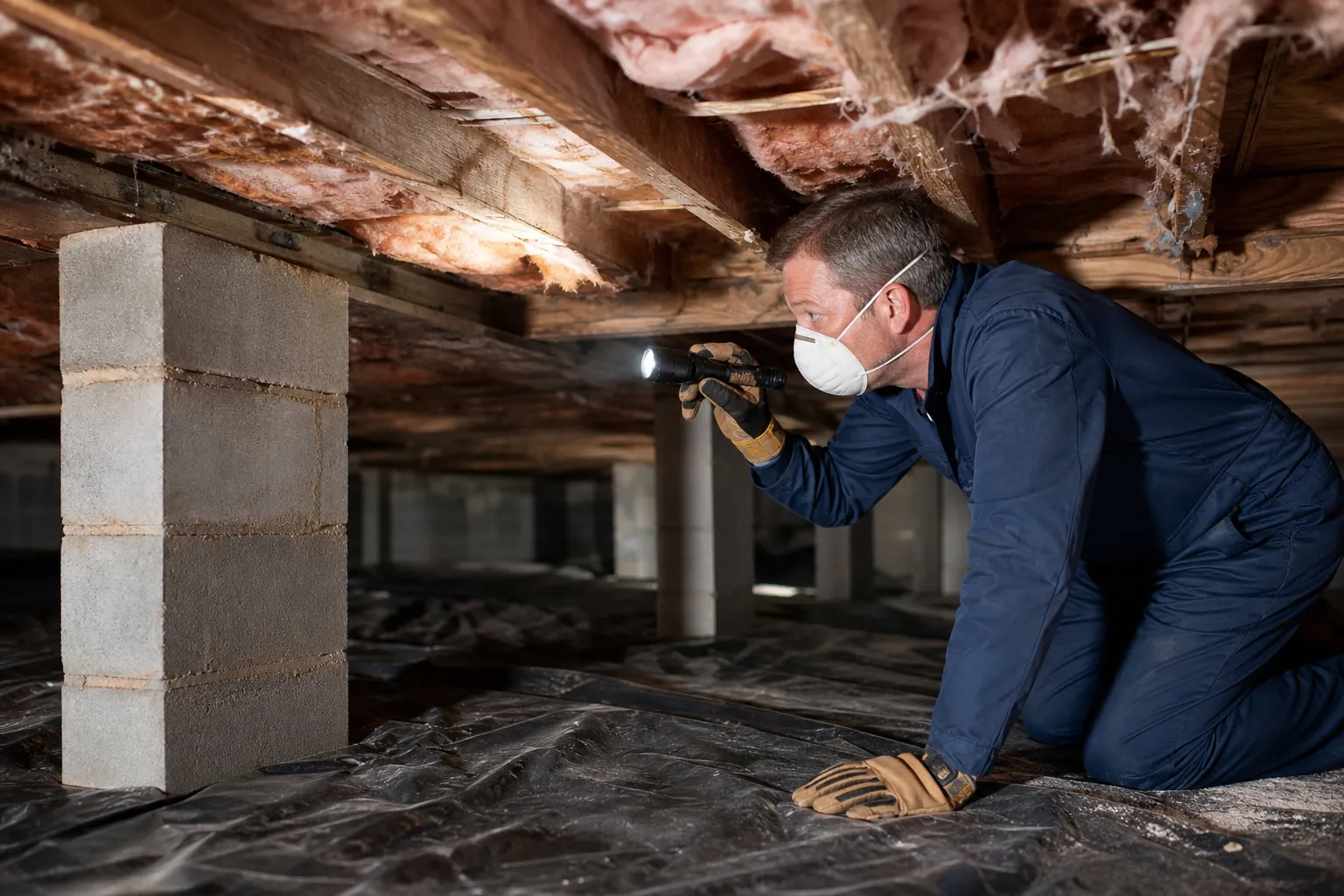
A musty smell near your floors, closets, or return air grille can be a sign that moisture is building up beneath your home. In Apex, hot, humid summers and moisture-retaining soils make crawl space conditions especially important. An odor may become stronger after rain, during humid weather, or when the heating and cooling system runs.
The right musty crawl space smell fix starts with finding the moisture source, not covering the odor with fragrance. Carolina Encapsulation Company helps homeowners understand how drainage, exposed soil, air leakage, and humidity affect the space beneath their homes. This guide explains what to check, which repairs matter, and how to prevent an odor from returning.
What a musty crawl space smell usually means
Musty odors often develop when damp organic materials support microbial activity. Wood framing, paper-faced materials, stored cardboard, and debris can all contribute when they stay wet or absorb moisture from humid air. The odor does not identify a particular organism, and smell alone cannot confirm the extent of a problem.
Some crawl spaces smell earthy because uncovered soil releases moisture and odors. Others contain wet insulation, a plumbing leak, or standing water. These conditions can overlap, so a single visible issue may not explain everything happening beneath the house.
Air movement can carry crawl space odors upstairs through plumbing penetrations, floor openings, duct leaks, and other gaps. Pressure differences from exhaust fans, heating and cooling equipment, and temperature changes can influence that movement. An odor in one room does not necessarily mean the source sits directly underneath it.
A sudden sewage smell, strong chemical odor, or suspected gas leak requires a different response. Do not assume every unpleasant smell is a humidity problem. Leave an unsafe area and contact the appropriate utility or qualified professional when the odor suggests an immediate hazard.
Why Apex crawl spaces can struggle with moisture
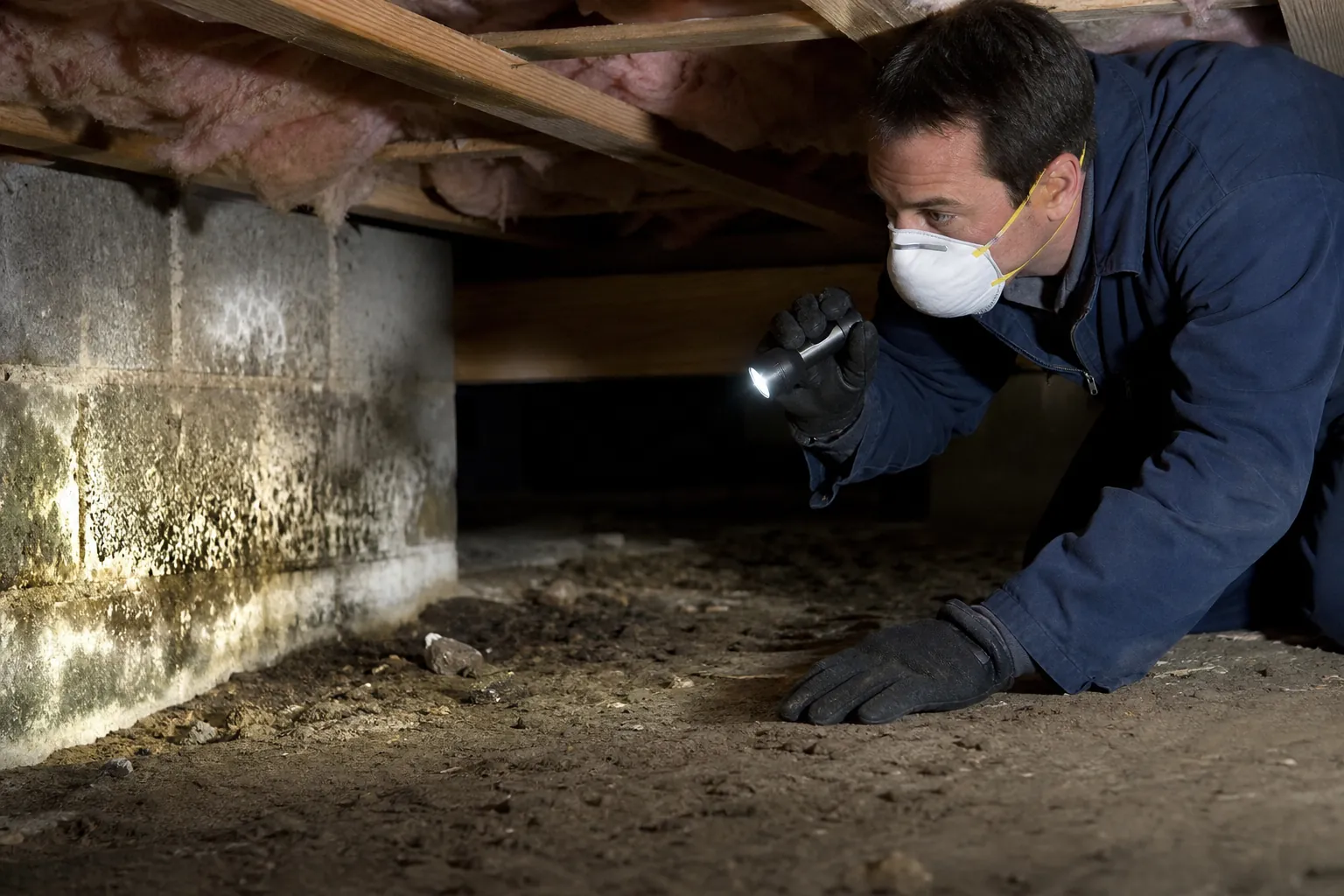
During North Carolina summers, outdoor air often carries substantial moisture. In a vented crawl space, that air can enter and contact cooler surfaces. Relative humidity increases as air cools, and condensation can form when a surface falls below the air's dew point. Opening more vents is therefore not a dependable summer drying strategy.
Red clay soils found around parts of the Triangle can hold water and drain slowly. Actual conditions vary by property, but slow-draining soil can prolong moisture exposure around foundations. Roof runoff, low spots, and landscaping that directs water toward the house can make the situation worse.
Many homes have vented crawl spaces with incomplete or aging ground covers. Gaps in plastic, uncovered perimeter soil, and loose seams allow ground moisture to evaporate into the crawl space. A thin sheet laid over only part of the soil may reduce some evaporation without providing consistent moisture control.
The result can be high summer crawl space humidity even without an obvious puddle. That distinction matters: a dry-looking surface does not prove that the air, framing, or insulation is dry. Measurements and an inspection provide a more useful picture than appearance alone.
Start with an inspection that follows the moisture
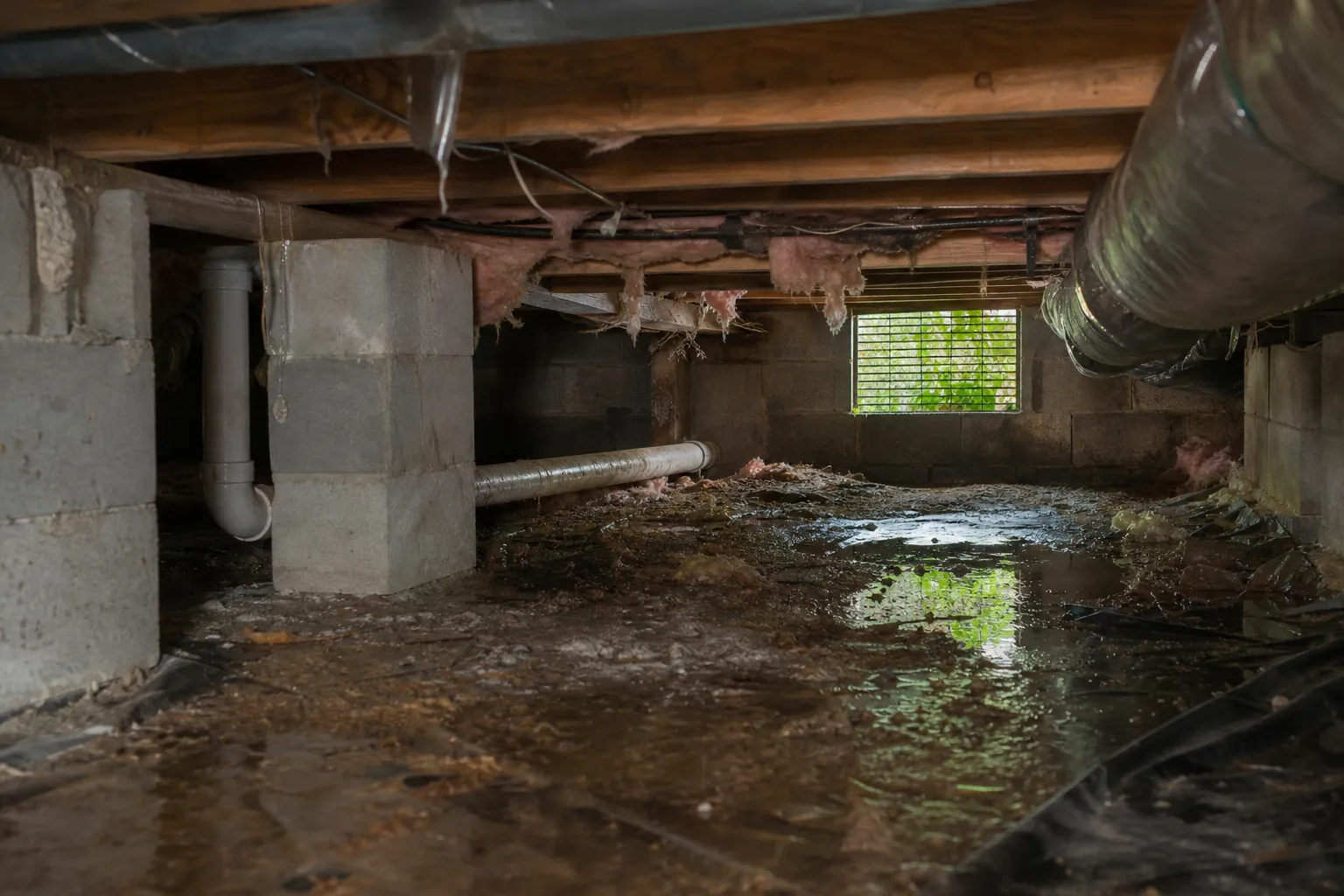
Before choosing equipment or replacing insulation, identify how water and humid air enter the space. A useful inspection considers the exterior, crawl space, and connections to the occupied home. It should distinguish active leaks from seasonal humidity and past damage.
Homeowners can check accessible exterior conditions, but entering a crawl space can involve electrical hazards, sharp debris, pests, and unstable materials. If access is difficult or conditions appear unsafe, leave the inspection to a qualified professional. Avoid disturbing suspected microbial growth or contaminated insulation.
- Check whether gutters overflow or downspouts discharge water close to the foundation.
- Look for low areas where rainwater collects beside the house or near the crawl space entrance.
- Ask the inspector to check supply lines, drain connections, and HVAC condensate piping for active leaks.
- Have exposed soil, ground-cover seams, foundation vents, and access doors evaluated for moisture and air entry.
- Request observations about damp insulation, wood staining, visible growth, and damaged framing.
- Ask for relative humidity readings and wood moisture measurements where they are appropriate.
A single humidity reading is only a snapshot. Weather, temperature, and equipment operation affect the result. Monitoring over several days or longer can help reveal whether humidity stays elevated, spikes after rain, or changes with HVAC operation.
Documenting these findings also makes repair proposals easier to compare. A recommendation should explain the observed problem, the proposed correction, and any conditions that require another trade, such as a plumber or structural repair specialist.
Fix liquid water problems before sealing the crawl space
Encapsulation is not a substitute for correcting an active plumbing leak or uncontrolled water entry. Covering wet ground without addressing the source can leave a hidden problem underneath the liner. Drainage and leak repairs should come first or be coordinated with the moisture-control installation.
Outside the home, gutter maintenance and downspout routing are common starting points. Water should discharge to a suitable location away from the foundation without creating erosion or problems on another property. Grading changes may help, but they must preserve appropriate foundation clearances and avoid trapping water.
Water that enters through the soil or along the footing may require a designed crawl space drainage system. A sump pump can remove collected water when gravity drainage is not practical. Its usefulness depends on proper collection, discharge routing, power, and ongoing maintenance.
Not every musty crawl space needs a sump pump. A home with humid air and soil evaporation but no recurring liquid water may need a different approach. The repair plan should follow the evidence rather than adding equipment simply because it is commonly included in other projects.
Remove odor-holding materials and address contamination
After the water source is controlled, the materials left behind still matter. Wet cardboard, construction scraps, and other organic debris can continue contributing odor. Insulation that is wet, contaminated, or deteriorated may need removal and replacement rather than drying in place.
Visible growth on framing deserves evaluation. Depending on the condition and extent, appropriate cleaning or remediation may be part of the project. Moisture control prevents the conditions that support recurrence, but it does not automatically remove existing growth or restore damaged materials.
Cleaning methods should suit the surface and contamination involved. Spraying household products into a crawl space without a plan can expose occupants and workers to fumes or leave residues. Mixing cleaning chemicals is dangerous. Odor fogging alone is not a reliable correction for persistent dampness.
If wood is soft, crumbling, or visibly damaged, request a structural assessment before assuming a moisture-control installation is sufficient. Pest-related damage may also require a separate evaluation. Encapsulation can help manage future moisture exposure, but it cannot restore lost structural strength.
How encapsulation helps stop musty odors at the source
Crawl space encapsulation uses a continuous ground vapor barrier and coordinated air-sealing details to limit moisture entering from the soil and outdoors. The liner should cover the ground, with seams and penetrations sealed appropriately. Wall and pier details should follow the installation design and applicable requirements.
Durability matters because the crawl space may still need service visits. A liner chosen for the expected traffic, along with careful fastening and sealed transitions, is more useful than plastic that shifts or tears easily. Access points should remain practical for plumbing, electrical, and HVAC maintenance.
For a closed crawl space, vents and exterior openings are typically addressed as part of the overall design. Closing vents without providing the required moisture-management strategy is not the same as encapsulating correctly. The finished system needs a dependable way to manage remaining moisture.
Termite inspection provisions also matter in North Carolina. Wall liner placement and insulation details should preserve required inspection access and comply with applicable code and pest-management requirements. Ask how the proposed system accommodates inspections rather than assuming every surface should be covered.
Encapsulation can reduce a major source of odor by limiting persistent dampness. However, results depend on drainage, cleanup, humidity control, and workmanship. A promise that plastic alone will instantly eliminate every smell overlooks the different materials and pathways involved.
Choose humidity control that fits the crawl space
Even after soil moisture and outdoor air entry are reduced, a closed crawl space needs a suitable drying strategy. Depending on the design and applicable requirements, that may involve a dedicated dehumidifier or another approved method. The choice should account for the home's layout and mechanical systems.
A crawl space dehumidifier should be selected for the actual moisture load and operating conditions, not just advertised square footage. Equipment placement should allow service access and effective air circulation. In divided or unusually shaped spaces, additional distribution planning may be necessary.
Collected water needs a dependable drain route. A gravity drain may work where elevation allows; other installations require a condensate pump. Either arrangement should be checked for clogs, secure connections, and a discharge location that does not put water back beneath the home.
A common practical humidity target is roughly 45 to 55 percent, with the aim of avoiding sustained levels above 60 percent. The appropriate setting can vary with temperature and system design. A monitor provides useful feedback, but wood moisture and physical conditions also help confirm whether the space is drying.
Running a small household dehumidifier in an open, vented crawl space may consume energy while continually treating incoming outdoor air. Equipment generally works better when paired with a coherent moisture-control plan. Ask how the proposed setup limits incoming moisture before comparing unit capacities.
Check the pathways carrying odors into the house
Stopping moisture beneath the house is the priority, but air leakage can influence how quickly indoor odors improve. Gaps around pipes, wiring, and other floor penetrations may connect the crawl space to occupied rooms. Appropriate air sealing can reduce those pathways while preserving required safety clearances.
Ductwork deserves attention when it runs through the crawl space. Leaky return ducts can draw in crawl space air. Supply leaks can also affect pressure and temperature conditions. A qualified HVAC professional can evaluate duct leakage, insulation, and equipment issues without guessing from odor alone.
Do not block combustion-air openings or alter fuel-burning appliance arrangements as a do-it-yourself odor repair. Closing a crawl space can change conditions around equipment located there. The installation plan should address combustion safety and ventilation requirements wherever they apply.
If the crawl space becomes dry but the smell remains, check other sources. A sink overflow, dried plumbing trap, roof leak, damp wall cavity, or stored material may produce a similar odor. Persistent symptoms warrant further investigation rather than repeated treatment of an already corrected space.
What to ask before approving a repair proposal
A useful proposal connects each task to a documented condition. It should make clear whether the work includes drainage, debris removal, insulation removal, cleaning, liner installation, air sealing, and humidity-control equipment. Vague promises of a complete solution can conceal important exclusions.
- Ask which moisture sources were identified and how each proposed repair addresses them.
- Confirm whether existing wet or contaminated materials will be removed, cleaned, or evaluated separately.
- Request details about liner seams, perimeter attachments, penetrations, and access-door treatment.
- Ask how termite inspection access and applicable crawl space requirements will be maintained.
- Confirm where dehumidifier condensate or sump discharge will go and who will maintain the equipment.
- Review warranty coverage, exclusions, and any recommended follow-up inspection schedule.
Cost varies with access, crawl space size, water entry, material condition, and the work required. A lower quote may exclude drainage or cleanup that another proposal includes. Comparing scope line by line is more informative than comparing the final price alone.
Keep the smell from returning
After repairs, moisture conditions should improve, but damp materials may take time to dry. Odors trapped in insulation or nearby finishes may also linger. Follow-up readings and inspections help distinguish normal drying from an unresolved moisture source.
Check humidity periodically, especially through the first humid summer and after significant rain. A monitor that can be read without entering the crawl space makes this easier. Investigate a sustained rise rather than waiting until the smell becomes noticeable upstairs again.
- Keep gutters clear and verify that downspouts remain connected and discharge correctly.
- Inspect the liner after service visits for tears, displaced sections, or opened seams.
- Maintain dehumidifier filters and drains according to the manufacturer's instructions.
- Test sump equipment as recommended and watch for discharge obstructions.
- Report new plumbing leaks, pest activity, or recurring odors promptly.
A musty crawl space smell fix works best when it combines source correction, appropriate cleanup, and lasting moisture control. For homeowners in Apex, that means accounting for humid summers, soil conditions, and the way the crawl space connects to the house.
If you want help identifying the cause beneath your home, call Carolina Encapsulation Company at 704-207-9348. A crawl space evaluation can help you understand the conditions and choose a practical repair plan without relying on odor-covering products or unnecessary equipment.
Call 704-207-9348 to talk through next steps.