
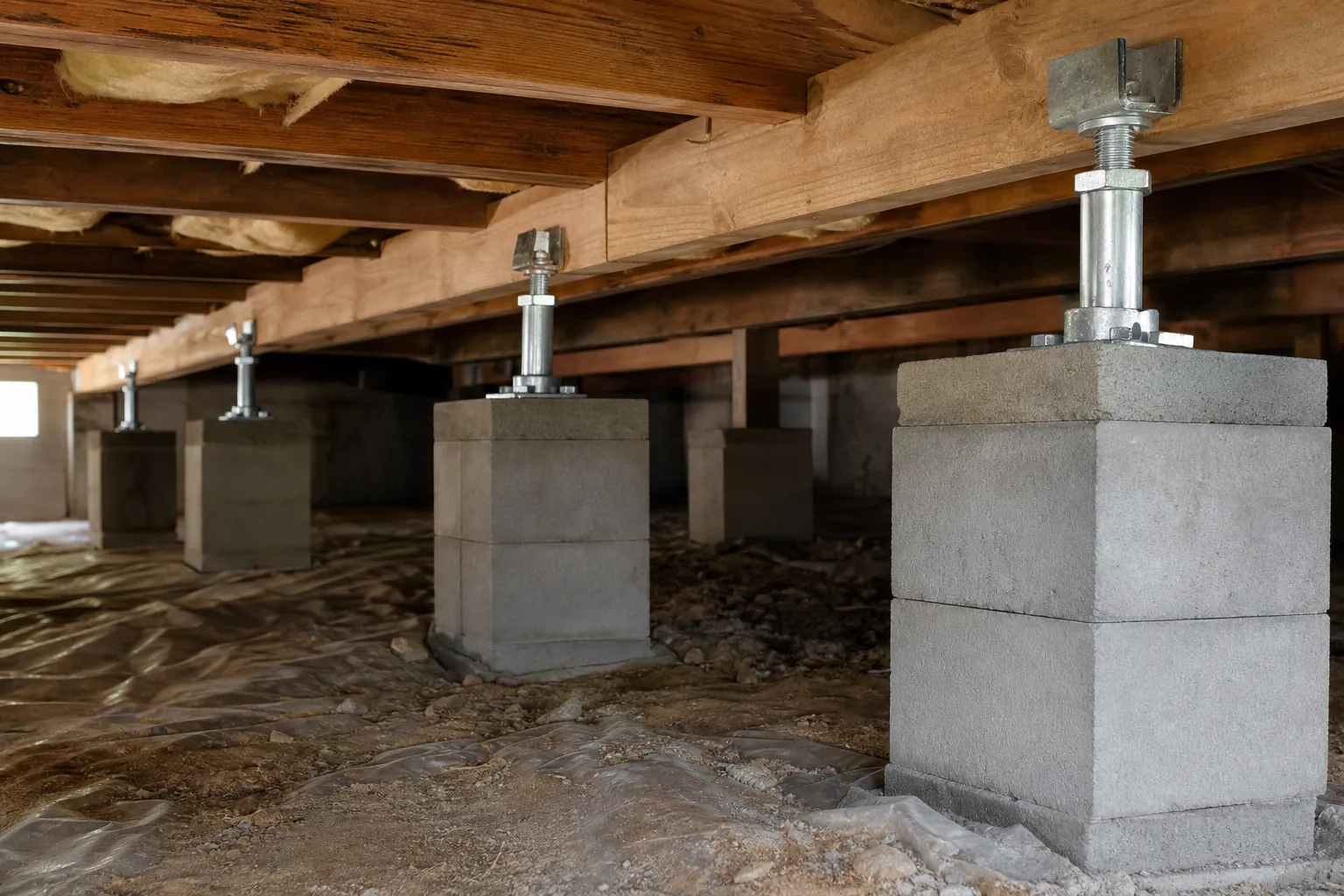
Piers and jacks in a crawl space are support parts that may help hold a beam or floor framing. The phrase piers and jacks crawl space often describes adjustable supports, but the right repair depends on what is moving and why. Check for moisture, note changes, and seek a qualified assessment before altering supports.
What Do Piers and Jacks in a Crawl Space Do?
Piers and jacks are parts of a support system beneath a home. A pier transfers weight to the ground, while a jack can provide a point of support beneath framing. To understand how these parts fit within moisture work, read the crawl space encapsulation system guide and crawl space encapsulation basics.
A crawl space may have beams, posts, masonry supports, or other parts beneath the floor. The layout varies by home. A support that looks like a jack may be one part of a larger setup, so its role should be confirmed before anyone changes it.
A support system carries loads from the floor framing toward the ground. If a support shifts, settles, or loses contact, nearby framing may move. That does not prove the support is the only cause. Soil conditions, water, rot, or past changes can also matter.
Piers and jacks do not control moisture by themselves. They address support, while a vapor barrier or other moisture measure has a different purpose. Read about crawl space moisture control options to separate these concerns.
How a pier differs from a jack
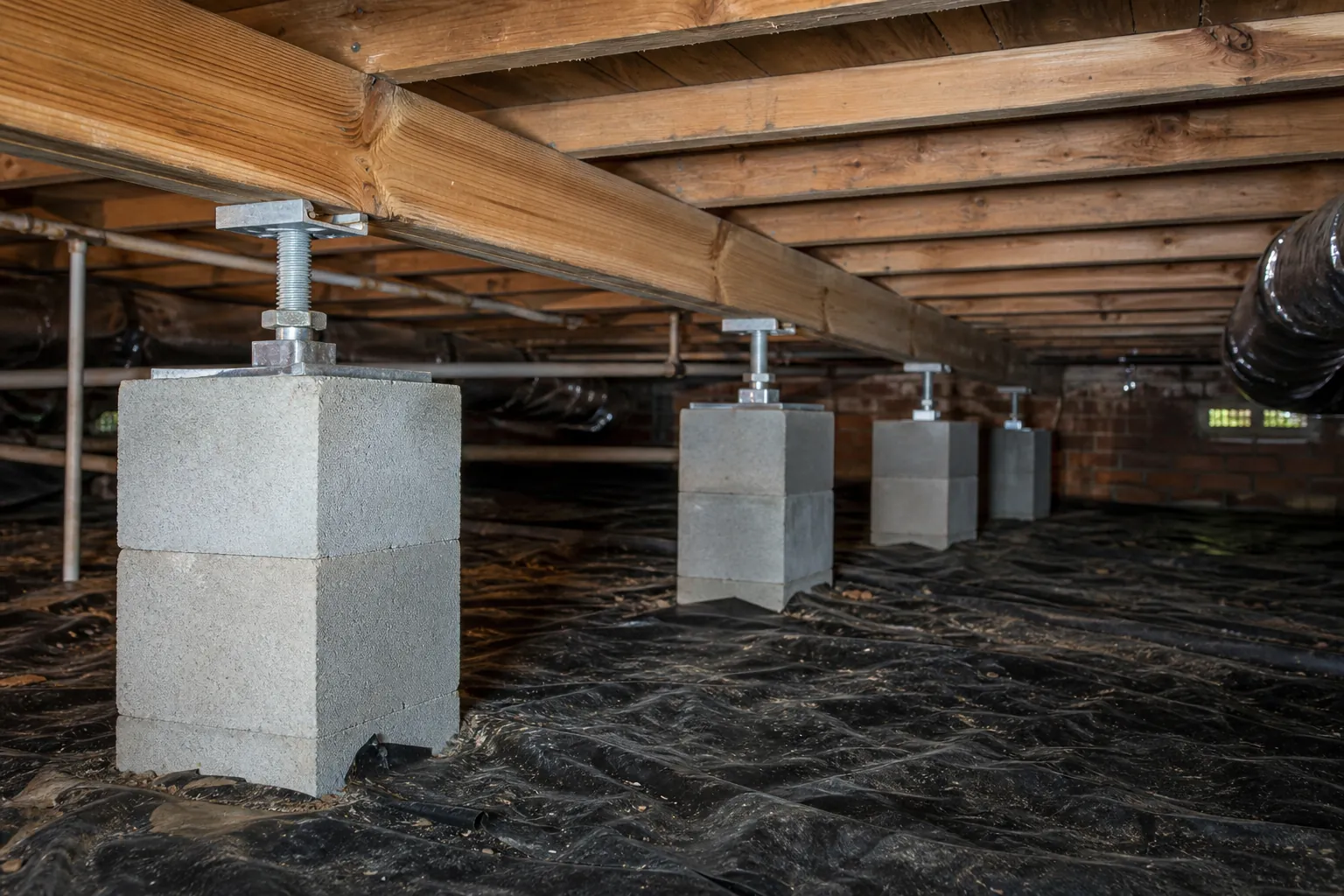
A pier is usually a base or column that bears on soil or another support surface. It may be made from masonry or another material. A jack is a device that can adjust or hold height at a support point. Some systems use both, while others use different designs.
Names alone do not tell you if a support is sound. The shape, material, connection, base, and load path all matter. A professional should identify the parts and explain how they work together in that home.
Why the whole load path matters
The load path is the route that weight takes from the floor framing to the ground. A new support may not help if it sits on a weak base or misses the framing it should support. The condition of nearby wood and the ground can also affect the assessment.
Avoid judging a repair by the visible hardware alone. Ask what framing the support serves, where the load goes, and what other conditions were checked. Clear answers help you understand the proposed work without guessing from a photo.
When Should You Look Into Crawl Space Supports?
Changes in floors or visible support parts can be a reason to look closer, but they do not identify the cause. Keep notes on what you see and when it changes. Pair that record with a review of crawl space moisture readings and the crawl space encapsulation system guide when moisture may also be present.
A floor that feels uneven can have more than one cause. Framing, finishes, support placement, and ground movement may all be relevant. A single symptom cannot show which part needs work, so avoid drawing a repair plan from one room or one visit.
In Lillington and the Triangle, hot, humid summers can make moisture worth checking in a crawl space. Red clay soils may hold water, but conditions vary from lot to lot. Local climate is useful context, not proof of a specific drainage or foundation problem.
A damp smell or visible water deserves attention as a moisture concern. It does not prove that a pier or jack has failed. Moisture can affect wood and the crawl space environment, so record the location and ask what needs inspection. The EPA's general mold and moisture guide offers background on moisture checks.
- Note where a floor feels different, and whether the change is new or longstanding.
- Take clear photos of visible supports, nearby wood, and any signs of moisture.
- Record dates after heavy rain or other events that seem linked to a change.
- Avoid moving, tightening, or removing a support while you gather information.
What Can Cause a Support or Floor to Shift?
A shifting support can relate to the ground, moisture, framing, or earlier work. Several causes can look alike from inside a crawl space. Ask for the conditions behind any proposed repair, and compare the findings with moisture control choices and encapsulation system basics without assuming one fixes the other.
Water that reaches the crawl space can change ground conditions or affect nearby materials over time. The path may be roof runoff, surface drainage, plumbing, or another source. Finding water in one spot does not reveal its origin, so a careful review should trace what may be feeding it.
Soil can vary across a property. Red clay is common in parts of North Carolina and can hold water, but it does not behave the same at every home. The home’s grading, downspouts, drainage, and crawl space layout can all shape what happens after rain.
Framing may also be part of the story. A beam, joist, or connection may have damage or an older alteration. A new support cannot correct every framing issue. The person assessing the system should explain whether the support, framing, ground, or more than one item needs attention.
Past repairs can make the picture harder to read. A support may have been added for a reason, and its position may reflect an earlier change. Ask for records if available, but do not assume old hardware is either safe or faulty based on age alone.
Moisture and structural support are linked, but distinct
Moisture control aims to manage water and humidity. Structural support aims to carry loads. A home may need attention to both, but one type of work does not automatically replace the other. The NC State Extension moisture checklist can help frame general observations, not diagnose a specific home.
A vapor barrier can cover soil as part of a moisture plan, but it does not act as a pier. Likewise, a jack does not remove humidity or stop water from entering. Keep the goals separate when you discuss options.
How Can You Prepare for a Support Assessment?
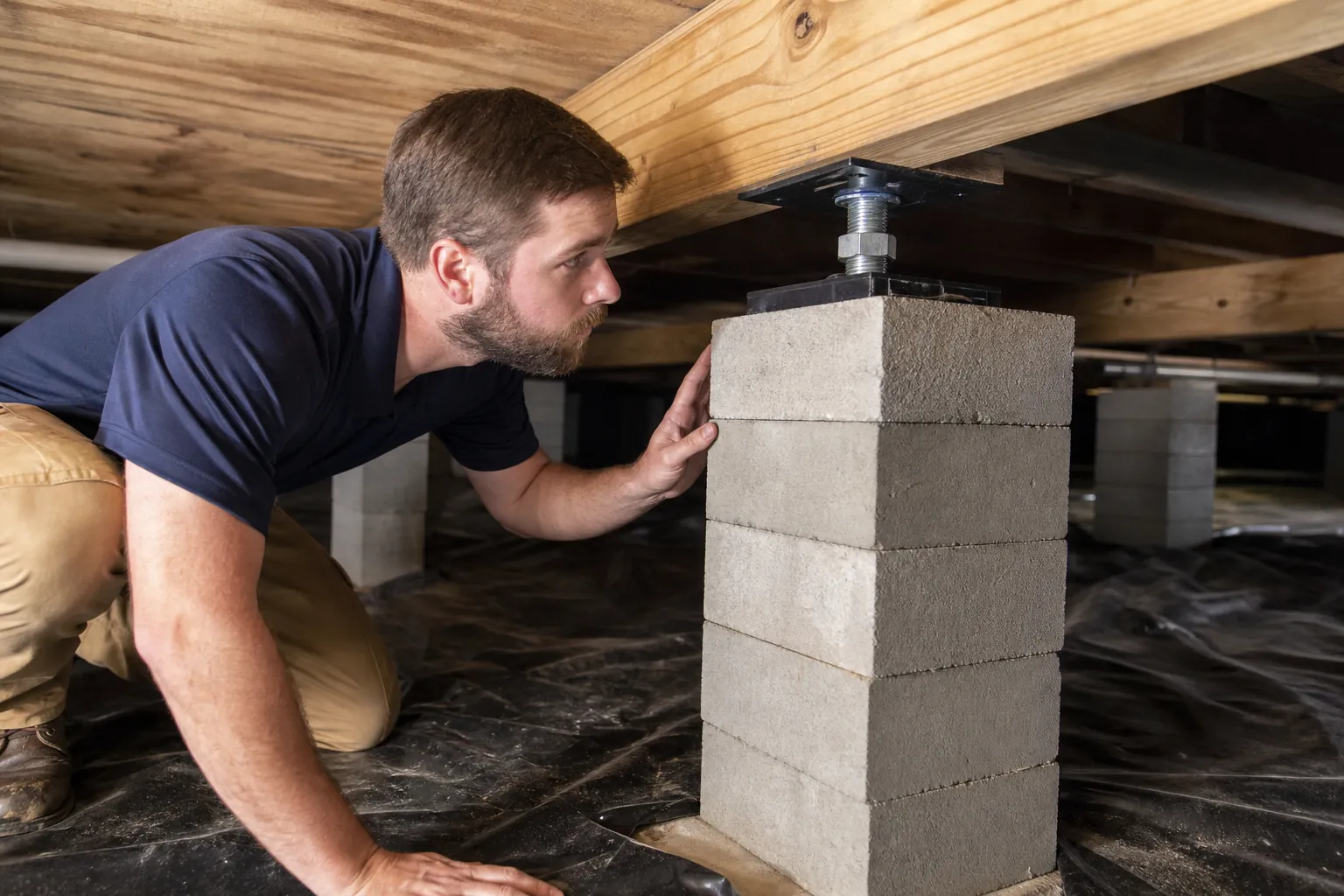
Prepare by recording symptoms, access limits, and visible moisture, then ask what the assessment will cover. Do not adjust a support yourself. For background on dampness, review moisture inspection readings and the vapor barrier thickness choices page, while keeping structural questions with a qualified professional.
A useful assessment starts with the concern you noticed. Share where it appears, how long it has been present, and whether it seems to change. Include repairs or plumbing work you know about. These details help the person assess the home with context rather than relying on a quick visual impression.
Access may be limited by stored items, low clearance, or conditions under the home. Do not enter an area that feels unsafe or that you cannot access without risk. Ask the professional what access is needed and how to prepare the space.
Moisture readings need context. A reading can vary by location and conditions, and it does not by itself identify a leak or structural cause. Learn more about crawl space moisture inspection readings before treating a number as a diagnosis.
- Write down the floor or room symptoms and when you first noticed them.
- Gather records or photos from earlier repairs if they are available.
- Point out water, damp odors, or visible changes without moving support parts.
- Ask what areas and components the assessment will include.
What Questions Should You Ask About a Repair Plan?
A useful repair plan names the observed problem, the parts involved, and the reason for each step. Ask how the proposed work relates to moisture and framing, then compare it with moisture control options and the crawl space encapsulation system guide. Get unclear terms explained before deciding.
Ask the person assessing the crawl space to show you the concern, if it is safe and practical to do so. Request a plain explanation of what they observed and what remains uncertain. A clear distinction between a confirmed condition and a possible cause can help you weigh next steps.
If a plan includes new or adjusted supports, ask where each support will sit and what part it will carry. Ask what the base rests on and how the work relates to existing framing. The answers should fit the home’s observed conditions, rather than rely on a generic description.
Ask if the plan also addresses water or humidity. If so, ask what source or condition that part of the work targets. An encapsulation or dehumidifier plan has a different purpose from structural support. Review crawl space dehumidifier benefits to understand where humidity control may fit.
Before work begins, ask about the scope, access, sequence, and any limits. Request written details for the work being proposed. If the plan involves structural decisions, seek advice from an appropriately qualified professional or the relevant authority.
- Ask what was observed and which parts need attention.
- Ask what the supports will carry and how they will bear on the ground.
- Ask which moisture concerns are included and which are outside the plan.
- Ask what follow-up or records you should keep after the work.
How Do Supports Fit Into a Crawl Space Plan?
A crawl space plan should distinguish structural support from moisture control and explain how each part serves its own goal. Review what crawl space encapsulation means and dehumidifier benefits in crawl spaces alongside the support discussion, then confirm which concerns are actually included in the proposed scope.
Homes with vented crawl spaces are common in many areas, but a vented design is not the same as a support problem. In a humid summer, outdoor air can add moisture under some conditions. The U.S. Department of Energy provides general context on unvented conditioned crawl spaces, not a project-specific design decision.
An encapsulation plan may involve measures aimed at soil moisture or humidity. A support plan may involve piers, jacks, framing, or the ground beneath them. These choices should follow the conditions found at the home, not a broad claim that one setup fits every crawl space.
Lillington homeowners can use local weather and soil as prompts for questions, not as a diagnosis. Ask whether water enters after rain, whether humidity is being measured, and whether visible support concerns were assessed separately. The answers should make clear which problem each proposed task addresses.
Keep records of the assessment and agreed scope. If later observations differ, note the location and date, then ask the appropriate professional to review them. Avoid changing supports or moisture equipment based on an online checklist alone.
Keep the scope clear
A written scope can help separate tasks, such as moisture work, support work, and repair of damaged materials. Ask what is included and what is excluded. Also ask what findings could change the plan once the crawl space is accessed.
If two contractors suggest different approaches, compare their observations and reasons, along with the products they propose. Ask each to explain the load path, moisture source, and limits of the work. For structural or building-code questions, consult a qualified authority.
Questions about next steps? Call Carolina Encapsulation Company at 704-207-9348 or review encapsulation.
Frequently Asked Questions
Can I tighten a crawl space jack myself?
Do not adjust a jack based on a floor symptom or online instructions. A change can affect the load it carries and nearby framing. First ask a qualified professional to identify the support, its base, and the reason for the symptom. If there is an immediate safety concern, keep people away from the area and contact the appropriate professional.
Do piers and jacks fix moisture problems?
Piers and jacks provide support; they do not remove water or control humidity by themselves. Moisture concerns need their own assessment, including where water comes from and how dampness is managed. A home may have both support and moisture issues, so ask that each concern be identified and addressed within a clear scope.
Does an uneven floor mean a pier has failed?
No. An uneven floor can have several causes, including framing, finish materials, or support movement. A floor symptom is useful information, but it cannot identify the cause on its own. Note where and when it occurs, then ask for an assessment of the framing and supports beneath that area.
Should a vapor barrier go in before support repairs?
There is no single sequence that fits every crawl space. The right order depends on the observed conditions and the work planned. Ask the people involved to explain how moisture measures and support work relate, and confirm what each task covers. A vapor barrier is a moisture measure, not a replacement for structural support.
What should I bring to a crawl space assessment?
Bring notes on when floor or support changes appeared, photos of visible conditions, and any repair records you have. Point out damp areas or water after rain. Do not move equipment or supports to prepare. Ask in advance about safe access, what the assessment covers, and any areas that may need to be cleared.
Sources
- Mold and Moisture Checklist, NC State Extension
- A Brief Guide to Mold, Moisture and Your Home, U.S. EPA
- Unvented Conditioned Crawlspaces, U.S. Department of Energy
Call 704-207-9348 to talk through next steps.