
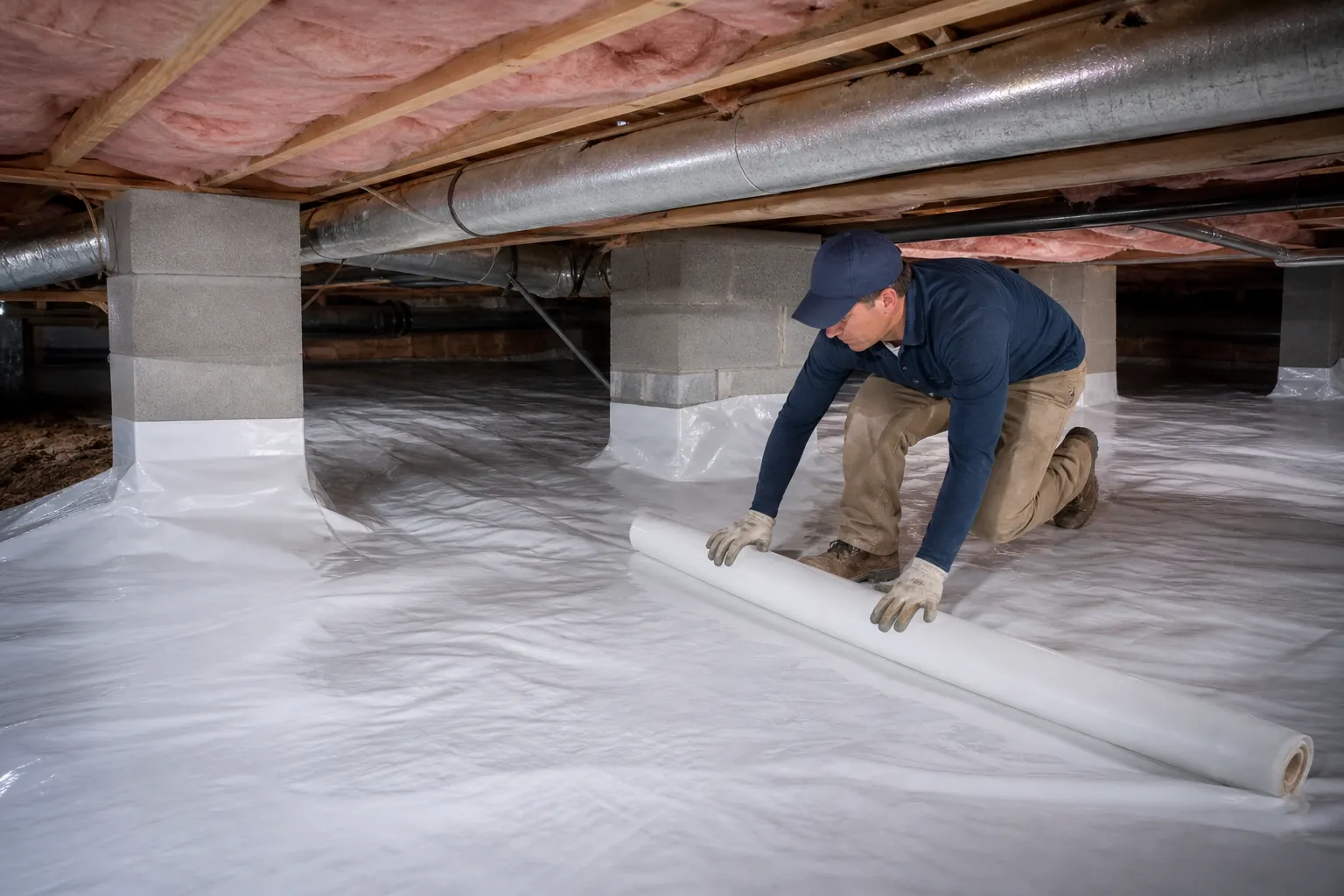
A crawl space can look dry and still contribute moisture to the home above it. Water vapor rises from exposed soil, especially when the ground stays damp after rain. In Cary, hot, humid summers and moisture-retaining clay soils make that source worth addressing. A properly installed vapor barrier helps separate the crawl space air from the soil beneath it.
However, covering the ground is not the same as solving every moisture problem. Standing water, humid outdoor air, plumbing leaks, and damaged insulation each need their own evaluation. Carolina Encapsulation Company helps homeowners understand the role of a vapor barrier crawl space installation and how it fits into a practical moisture-control plan.
Why Cary Crawl Spaces Need Moisture Control
Many North Carolina homes have vented crawl spaces. These spaces were designed to allow outside air to circulate beneath the house, but summer ventilation can introduce substantial humidity. When warm, moist air meets cooler surfaces such as ducts or pipes, condensation may form. Even without visible condensation, prolonged high humidity can affect wood, insulation, and stored materials.
Soil moisture adds another source. Red clay soils common in the Triangle can hold water and dry slowly. Conditions vary by property, but poor grading, roof runoff, and compacted soil can keep the ground near a foundation wet. Moisture can then move through uncovered crawl space soil as vapor.
A ground vapor barrier reduces that evaporation. It does not stop rainwater from entering through a foundation opening or make humid outdoor air disappear. Understanding those limits helps avoid spending money on a liner while overlooking the problem that keeps wetting it.
For Cary homeowners, the best starting point is an inspection that considers the crawl space and the surrounding property together. The direction water flows outside often explains what is happening underneath the house.
What A Crawl Space Vapor Barrier Does
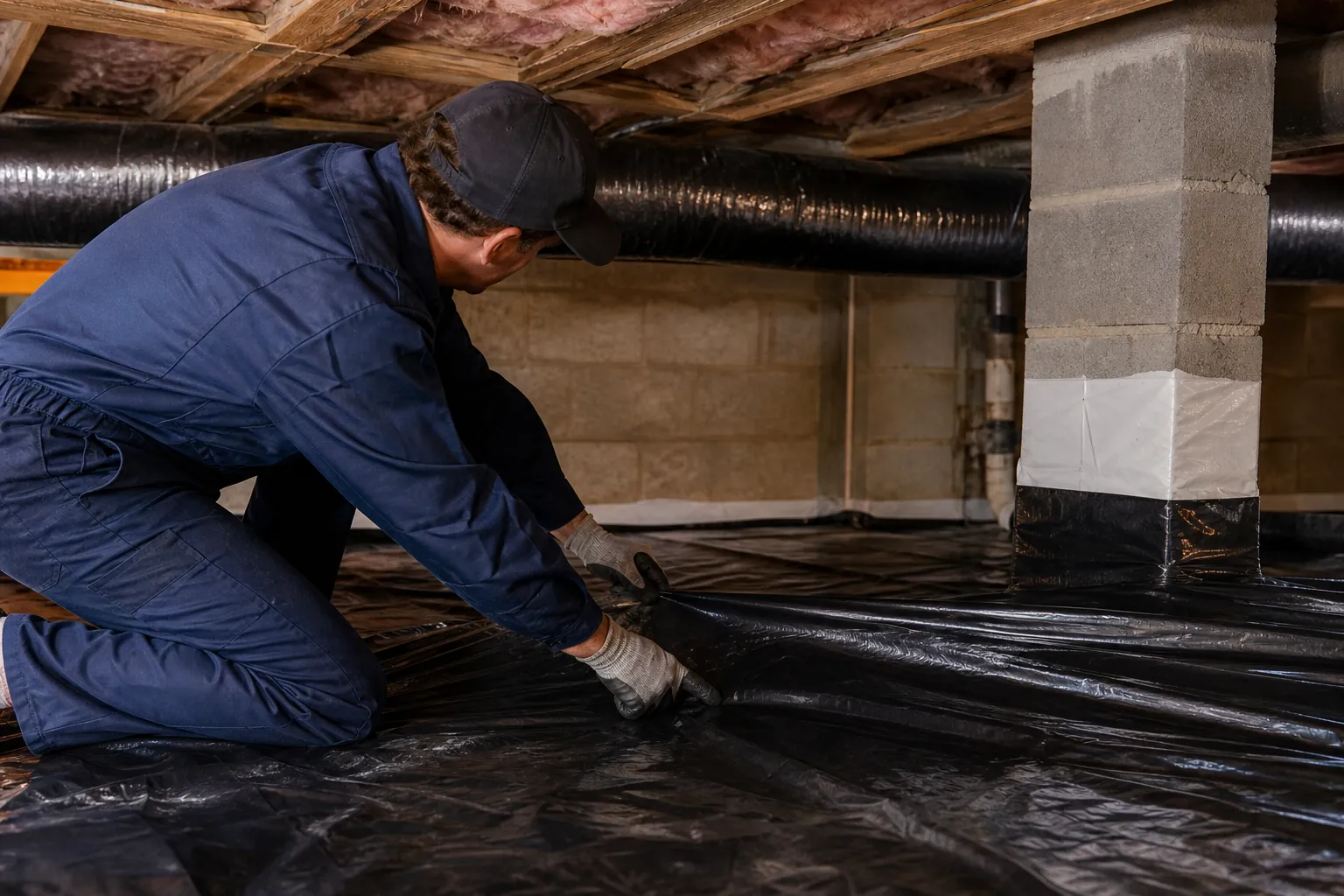
A vapor barrier is a membrane installed over exposed soil to limit the movement of water vapor into the crawl space. Polyethylene products are commonly used, with different thicknesses, reinforcement patterns, and installation requirements. Its effectiveness depends on both the material and the continuity of the finished installation.
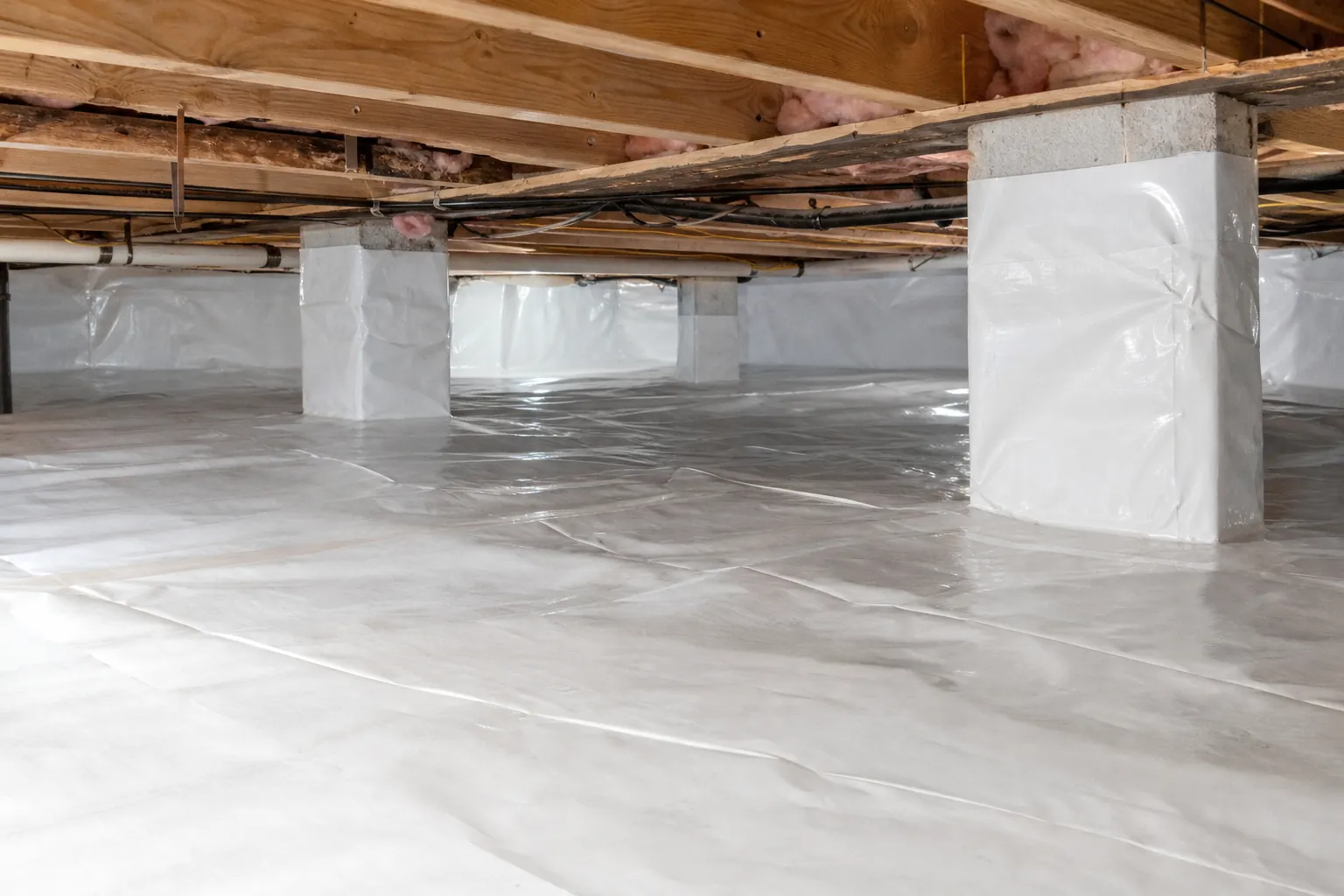
Loose sheets with open seams leave pathways for soil moisture. Gaps around piers, pipes, and edges can also reduce coverage. A durable installation uses compatible materials and appropriate detailing to create a continuous ground cover rather than a collection of disconnected pieces.
The liner also makes the space easier to inspect. Water on top of a light-colored membrane, damaged seams, or new pest activity may be easier to notice than on bare soil. This visibility is useful, but it does not replace regular checks.
A vapor barrier should not be described as waterproofing the entire crawl space. It manages vapor coming from the ground. Liquid water intrusion, air leakage, and humidity management remain separate issues that may require additional work.
Signs Your Existing Ground Cover Is Not Enough
Some crawl spaces already have plastic on the ground, but age, foot traffic, and previous repairs can compromise it. A quick look through the access opening may miss uncovered areas at the far perimeter or behind equipment. Inspecting the full space is important before deciding whether repair or replacement makes sense.
- Exposed soil between sheets allows ground moisture to enter the crawl space air.
- Torn material near the access door may indicate that the liner cannot tolerate routine service traffic.
- Loose or separated seams can create moisture pathways even when most of the ground appears covered.
- Water collected on top of the liner suggests a leak, drainage issue, or condensation source that needs investigation.
- Musty odors, damp insulation, or visible wood discoloration justify a broader moisture assessment.
None of these signs proves that a vapor barrier alone will correct the condition. For example, musty odors can have several sources, and wood discoloration is not a diagnosis of mold or structural damage. The goal is to identify causes before choosing a scope of work.
If the crawl space contains standing water, exposed electrical hazards, or unstable flooring, avoid entering it yourself. Arrange an appropriate professional evaluation instead.
Inspect Water Sources Before Installing A Liner
A successful installation starts with the sources of moisture, not the roll of material. The inspection should look for plumbing leaks, drainage problems, condensation, and evidence of past flooding. Seasonal conditions matter because a crawl space inspected during a dry week may behave differently after sustained rain.
Outside, check whether gutters overflow and whether downspouts discharge too close to the foundation. Look for low areas where water collects and landscaping that slopes toward the house. Correcting roof runoff or grading can reduce the water reaching the crawl space, though site constraints may require a more detailed drainage plan.
Inside, note the location of wet soil, foundation stains, and puddles. A persistent entry point may call for drainage and a sump system, depending on the conditions. A liner is not a substitute for safely collecting and discharging water.
Plumbing leaks should be repaired before the ground is covered. Damaged wood or suspected pest activity also deserves evaluation by the appropriate specialist. Installing new material over unresolved problems can make later repairs more complicated.
Ask for photographs and a written explanation of each observed issue. Clear documentation makes it easier to separate necessary moisture work from optional upgrades.
Choosing Material Thickness And Durability
Thickness is commonly expressed in mils, which are thousandths of an inch. A higher number generally means a thicker product, but thickness alone does not tell you how well a membrane will resist punctures or hold up around service equipment. Reinforcement, composition, seam treatment, and installation quality also matter.
A crawl space with frequent access to plumbing, HVAC equipment, or wiring needs a liner suited to repeated traffic. Rough ground, sharp debris, and tight access areas can increase the chance of damage. Preparation beneath the membrane is therefore part of durability, not just a cosmetic step.
- Ask which product is proposed and whether its specifications are available for review.
- Ask how the material handles punctures, service traffic, and repairs around equipment.
- Ask which tapes, sealants, and fasteners are compatible with the membrane.
- Ask whether the installation meets applicable local requirements and the manufacturer's instructions.
- Ask what the warranty covers for materials and workmanship, including any maintenance conditions.
The lowest material price may not produce the lowest long-term cost if thin sheets tear during routine maintenance. Conversely, the thickest available membrane is not automatically necessary everywhere. Choose a system suited to the crawl space conditions and intended use.
What Careful Vapor Barrier Installation Includes
Although every crawl space is different, a reliable installation follows a sensible sequence. Preparation comes first, followed by coverage and detailing, then a final inspection. Skipping preparation can leave a new liner resting on sharp objects, wet debris, or materials that should have been removed.
Preparation And Access
The work area should be assessed for debris, old ground cover, damaged insulation, and obstructions. Necessary removals should be included in the scope rather than assumed. Technicians also need a plan for working around pipes, ducts, wiring, and structural supports without damaging them.
Any active leak or significant water problem should be addressed before final installation. Where drying is needed, the sequence should allow the space to reach appropriate conditions rather than trapping water beneath a rushed finish.
Coverage And Seams
The membrane should cover the intended ground area with seams overlapped and secured according to the selected system and applicable requirements. Open gaps at corners or around penetrations undermine continuity. Detail work around piers and irregular foundation shapes is especially important.
Wall coverage and attachment depend on the project design. A ground-cover installation and a full encapsulation system may have different perimeter details. Required inspection clearances, including provisions relevant to termite inspections, should be respected.
Final Review
Before completion, the installer should check for tears, unsecured seams, missed soil, and interference with service access. Homeowners should receive an explanation of the finished work and photographs where practical. A tidy appearance is helpful, but continuity and correct detailing are the more important measures.
Vapor Barrier Vs. Full Crawl Space Encapsulation
A vapor barrier is one component of moisture control. Full crawl space encapsulation typically involves a more comprehensive approach that may include wall liners, sealing exterior vents and other air openings, an improved access door, and a planned method of humidity control. Drainage may also be needed when liquid water enters.
The distinction matters in Cary because ground moisture and summer air humidity can occur together. A ground liner can reduce evaporation while a vented crawl space continues receiving humid outdoor air. If humidity remains elevated, additional measures may be appropriate.
Encapsulation should be designed as a system, not as an instruction to close every opening. Combustion appliances, ventilation requirements, pest inspection access, and local code provisions can affect the approach. Those considerations should be reviewed before sealing the space.
For some homes, repairing drainage and installing a continuous ground cover may be a reasonable initial scope. Other homes need broader work to achieve stable conditions. Ask the contractor to explain why the recommended approach matches the evidence in your crawl space.
When Dehumidification And Drainage Matter
A crawl space dehumidifier removes moisture from the air, while a vapor barrier limits moisture entering from the soil. These functions complement each other, but neither replaces drainage when bulk water is present. The right combination depends on where moisture originates and how the space is configured.
Humidity readings are useful when interpreted over time. A single reading near the access opening may not represent the entire crawl space or its summer conditions. Monitoring can show whether a liner installation is enough or whether humidity remains persistently high.
Many moisture-control plans aim to keep relative humidity below about 60 percent, but an appropriate operating target should account for the space, equipment, and professional recommendations. Wood moisture measurements can provide additional information when wood dampness is a concern.
If a dehumidifier is installed, confirm that it has suitable capacity, service access, and a reliable condensate disposal method. If a sump pump is needed, discuss discharge routing, maintenance, and whether backup protection is appropriate. Equipment only helps when it can operate and drain as intended.
What Affects Installation Cost In Cary
The crawl space footprint is only one factor in pricing. Height, access, obstructions, existing debris, and the amount of detail work all affect labor. A clean, accessible crawl space with no water intrusion is a different project from a tight space requiring removal, drainage, and extensive perimeter work.
Material selection also affects the quote. Reinforced liners, attachment methods, seam products, and protective details should be identified clearly. If encapsulation or humidity-control equipment is included, those items should be distinguished from the ground-cover portion.
- Request a written scope that identifies the areas receiving ground and wall coverage.
- Confirm whether removal and disposal of existing material are included.
- Ask whether drainage repairs, electrical work, or dehumidification are priced separately.
- Confirm how penetrations, piers, access doors, and inspection clearances will be handled.
- Review warranty terms and any ongoing service requirements before approving the work.
Comparing itemized scopes is more useful than comparing totals alone. A lower quote may exclude work another contractor considers necessary. Ask for the reasoning behind each recommendation rather than assuming every difference is an upgrade or an omission.
Maintaining Your Crawl Space After Installation
A vapor barrier needs occasional inspection, especially after heavy rain or work by another service provider. Technicians accessing plumbing or HVAC equipment can accidentally damage a membrane. Prompt repairs help preserve the continuous coverage the installation was intended to provide.
Check for new water on the liner, separated seams, punctures, and unusual odors. If monitoring equipment is installed, pay attention to sustained changes rather than isolated fluctuations. Keep dehumidifier filters and drainage components maintained according to their instructions.
Outside maintenance remains important. Clear gutters, functioning downspouts, and appropriate drainage help reduce pressure on the crawl space moisture-control system. Avoid placing sharp objects or heavy storage items on the liner unless the installation was designed for that use.
Keep project photographs, product information, and warranty documents together. They can help future service providers understand the system and make compatible repairs. If conditions change, investigate the source instead of simply adding more plastic over the affected area.
Plan A Practical Crawl Space Assessment
The right vapor barrier crawl space solution starts with understanding your home. In Cary, that means considering moisture-retaining soil, humid summer air, foundation drainage, and the condition of the existing ground cover. No single product specification answers all of those questions.
Carolina Encapsulation Company can discuss your concerns and help you evaluate the next step. Call 704-207-9348 to ask about a crawl space assessment in Cary, NC. A clear inspection and written scope can help you choose between repairing a liner, replacing the ground cover, or considering a more complete moisture-control system.
Call 704-207-9348 to talk through next steps.