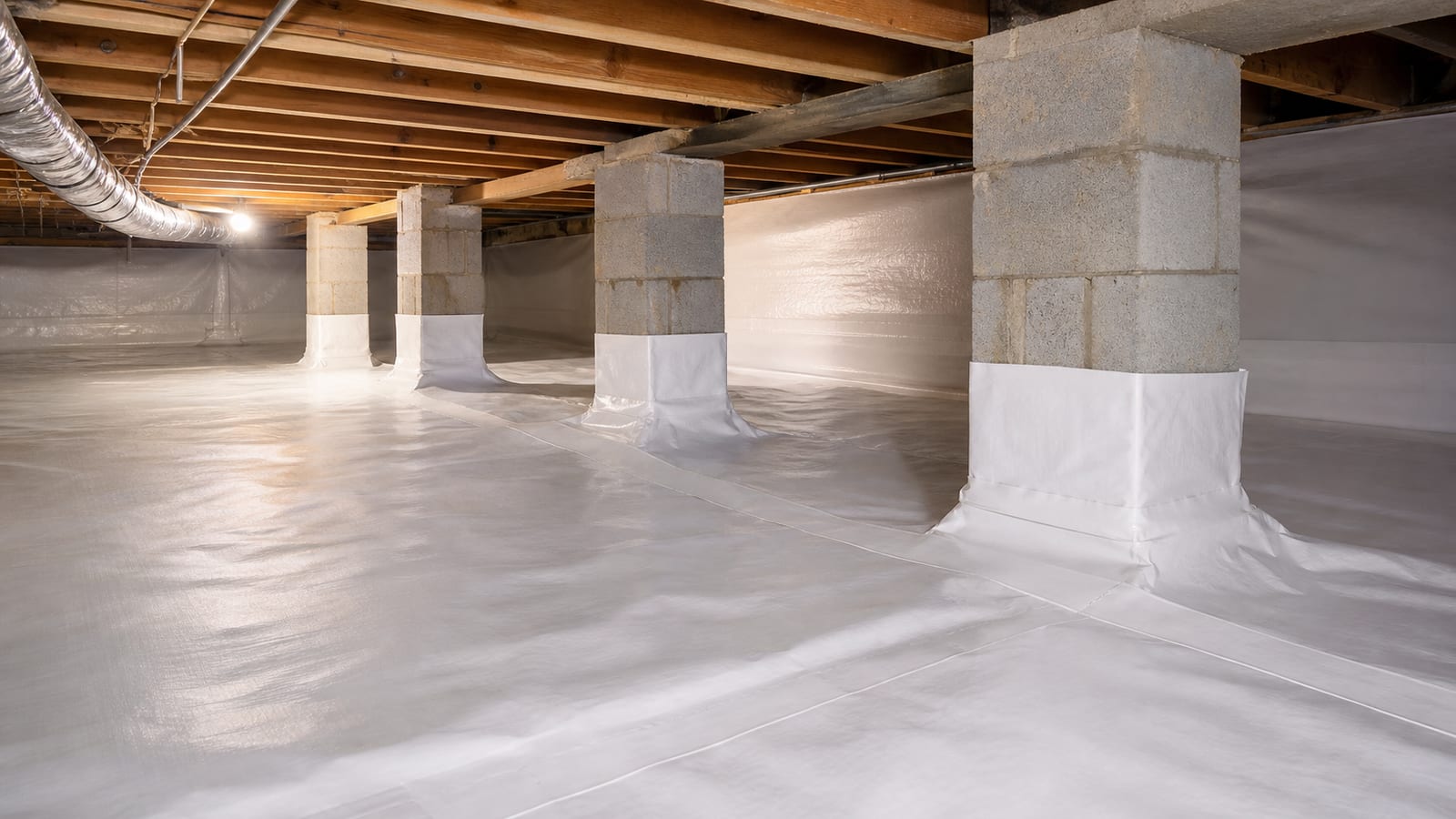
A crawl space dehumidifier quote should explain much more than the equipment model or a cabinet placed beneath the home. The proposal needs to connect the equipment to the condition being managed, its location, drainage route, electrical needs, access for service, and the water or air issues that may still need separate work.
That is why two dehumidifier proposals can look similar at first and differ substantially in scope. One may include a protected gravity drain, another a condensate pump, and another may leave the discharge path unclear. One may account for filter access and electrical coordination, while another may assume those details are already available. A total is only comparable after the whole installation is visible.
The crawl space dehumidifier installation cost-factors page covers the commercial decision. This guide helps you ask better questions before an inspection or proposal review.
What should a dehumidifier installation quote explain?
A dehumidifier installation quote should explain the humidity or moisture condition observed, equipment location, drainage method, final discharge route, electrical coordination, service clearance, and whether air leaks, standing water, or other sources need separate work. The proposal should show what the equipment is designed to do and what it is not intended to replace.
Start with the condition, not the cabinet
Before discussing equipment, record what changed in the crawl space. Note humidity readings with the sensor location, recent weather, whether the space has standing water or wet soil, whether an access door or vent was open, and whether plumbing or HVAC work recently occurred. One number on a humidistat is a snapshot. A useful record includes time, location, weather, equipment status, and visible materials.
North Carolina State Extension recommends keeping indoor humidity below 60 percent and checking crawl spaces for moisture leaks, insulation concerns, soil cover, and sump-pump function. That guidance does not select a unit for a home. It does support looking beyond the reading to the water, air, and material conditions that influence humidity. Record a second reading away from equipment when it is safe to do so, because placement can change the meaning of a single number. The ideal crawl space humidity guide explains how to record a more useful trend.
Identify the equipment location
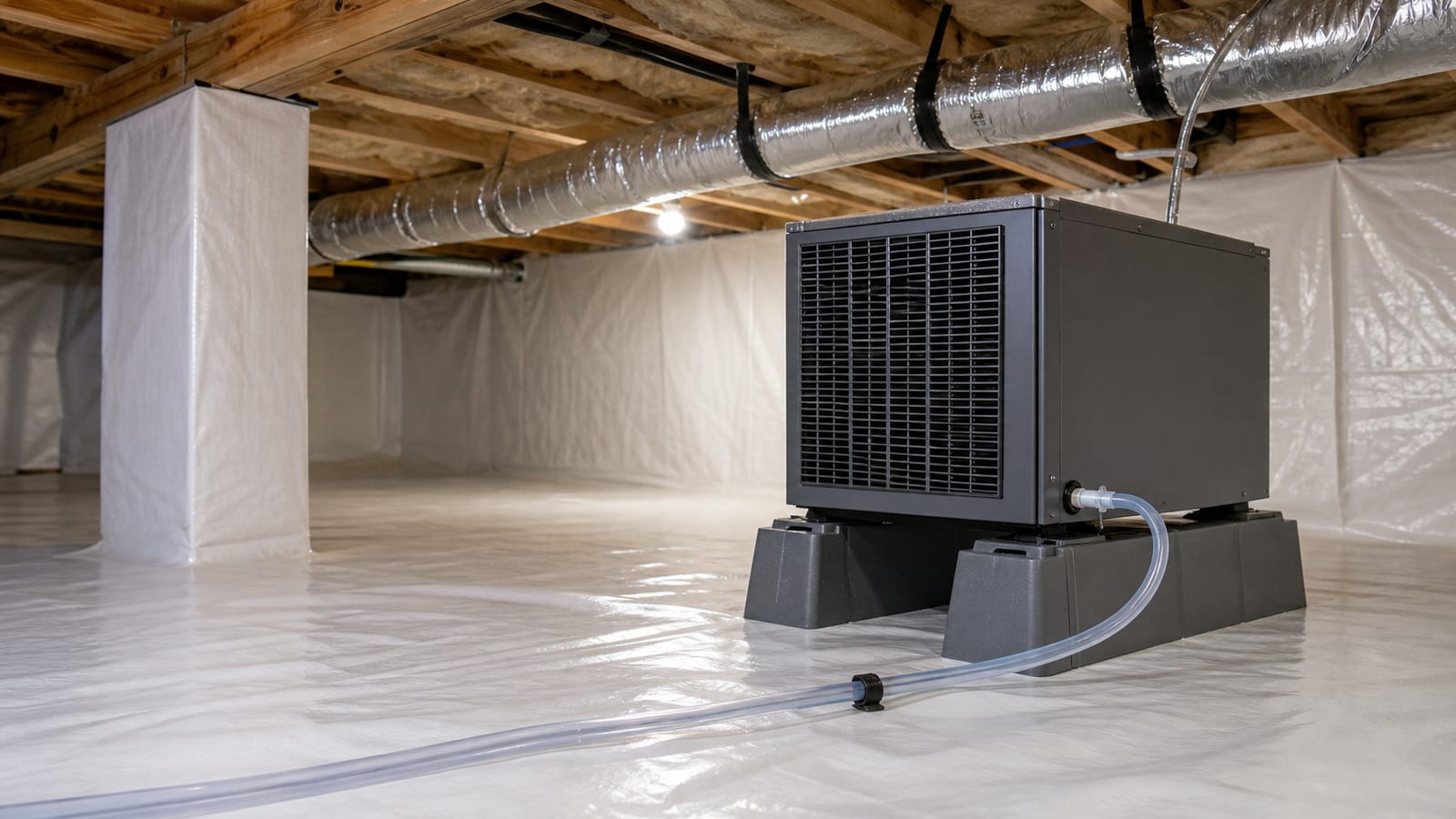
Ask where the unit will sit and why. The location needs enough clearance for airflow, filter changes, drain inspection, and later removal for service. It also needs a practical route for the drain and a way to protect the equipment from water, traffic, and unrelated work in the crawl space.
Location is also a maintenance decision. An equipment cabinet hidden behind permanently sealed material or placed where a person cannot safely reach the filter may create a future problem even if it appears to fit during installation. Ask how the access route will remain visible and protected after completion. The dehumidifier maintenance and filter replacement service page gives a useful follow-up lens.
Follow the condensate route from start to finish
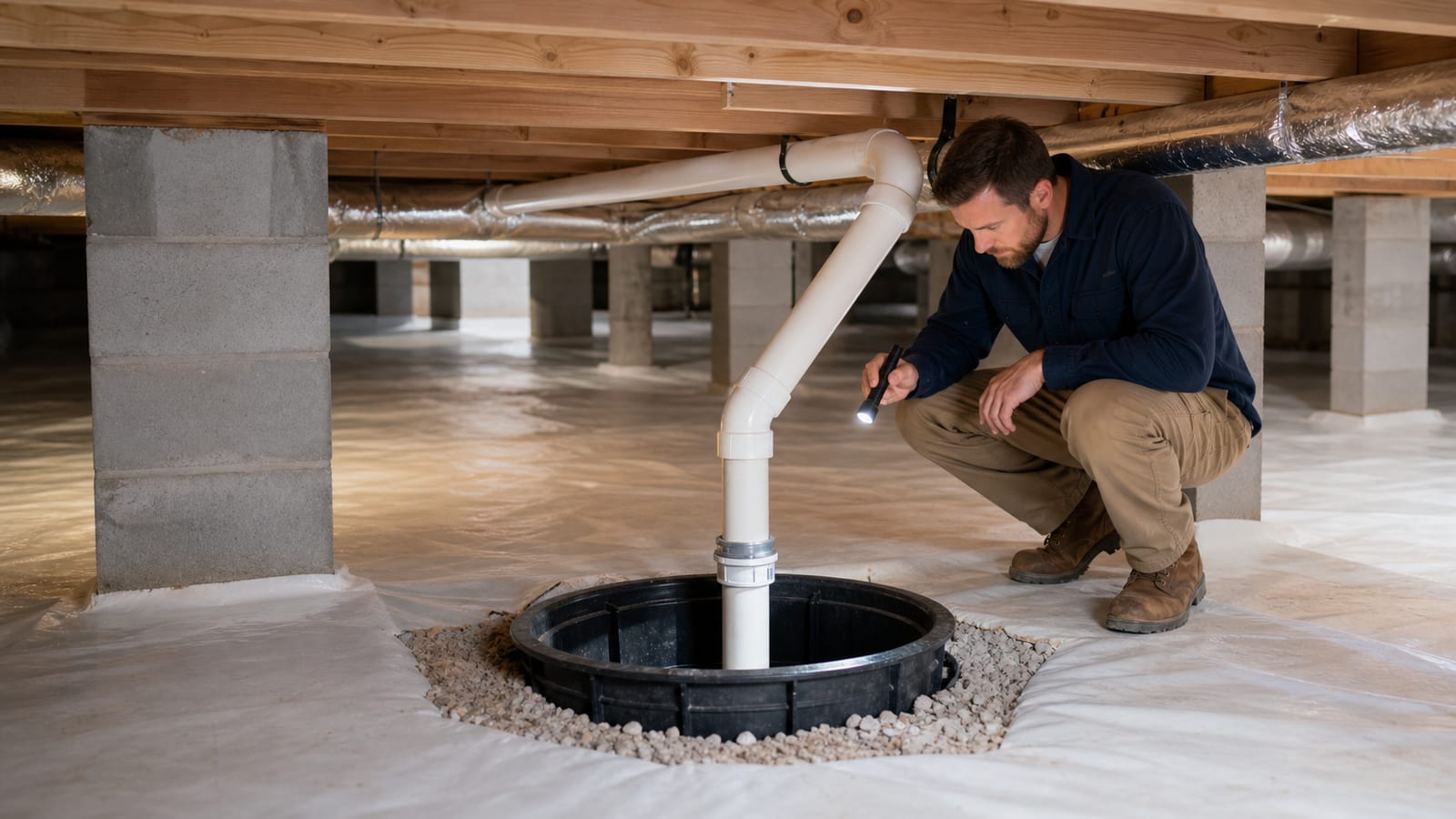
A quote should state whether condensate uses a gravity drain, a condensate pump, or another approved arrangement tied to the equipment instructions. Then follow the route: where water leaves the cabinet, whether the line falls or rises, where it is supported, whether a pump is involved, what power it needs, and where the final discharge can be observed.
A drain line that looks acceptable near the unit may still sag, kink, disconnect, or discharge where water returns toward the foundation. The gravity drain versus condensate pump guide explains the functional difference without selecting a route for a particular home. The critical point is that the drain has a complete, inspectable path.
Why do electrical and code questions affect the scope?
Electrical and code questions affect scope because a permanently installed moisture-control system can require equipment power, drainage, and coordination with the crawl space design. Requirements depend on the work proposed and the property. They should be evaluated, not assumed from a general description.
North Carolina OSFM lists a permanently installed dehumidifier with a condensate pump or drain and an electrical outlet as one moisture-vapor-control option for a closed crawl space under the cited residential-code provision. Its interpretation also explains why conversion work involving electrical or HVAC changes can involve a permit. That official reference is useful for asking what needs to be coordinated. It is not a universal permit answer for every dehumidifier or crawl space.
Ask the contractor how the equipment will be powered, who addresses electrical work if it is needed, whether the project changes the crawl space design, and what permit or inspection questions should be verified with the local authority. The North Carolina crawl space permits and code guide links the official source and keeps the discussion within its proper limits.
The drain and power questions to put in writing
Ask whether the proposed unit uses a gravity route or pump, where power is supplied, how the drain is protected, where the final outlet is located, what happens during an outage, and how the system signals a drainage problem if the installed equipment offers that feature. The answer should rely on the actual equipment documentation, not assumptions about a generic unit.
Do not open electrical compartments, bypass a float, splice wiring, or disconnect a condensate line as a homeowner check. It is appropriate to record visible tubing, note water around the equipment, look for a visible outlet, and report changes. Service and electrical decisions should follow the equipment instructions and the professional scope involved.
What conditions are outside a dehumidifier’s job?
Active water entry, a plumbing leak, an unresolved drainage route, damaged framing, and inaccessible equipment are outside a dehumidifier’s job. The unit may be part of a coordinated moisture-control plan, but it does not identify the source of liquid water or repair materials already affected by moisture.
Standing water and drainage
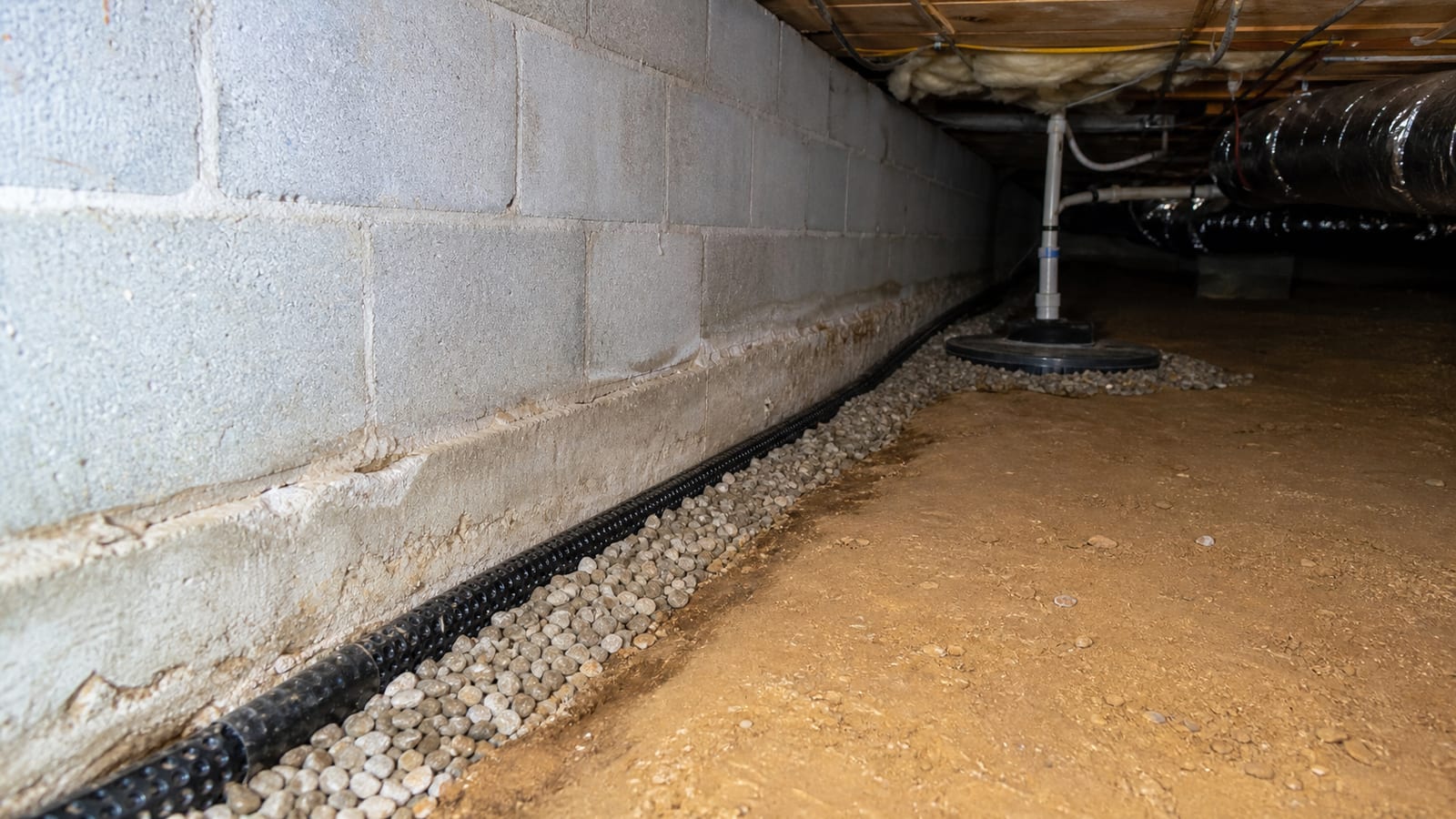
If water is visible beneath the home, ask where it enters, where it collects, whether it appears after rain, and whether a drain, sump, exterior water change, or other investigation is needed. A dehumidifier is not a substitute for tracing that path. The crawl space drainage cost-factors page helps distinguish water-management work from humidity-control equipment.
Openings and air movement
An access door, vent, utility penetration, or other opening can influence how the crawl space behaves. The final plan needs to match the intended crawl space design. A dehumidifier cannot by itself define whether the space is vented, closed, conditioned, or otherwise configured. The vent sealing and air sealing service page explains why openings should be assessed as part of the whole system.
Damaged materials and cleaning
Wet insulation, visible surface growth, debris, and material deterioration may require a separate scope. The U.S. Environmental Protection Agency explains that moisture control is fundamental to controlling mold. That supports addressing the source and material condition together, rather than treating a new appliance as a replacement for cleaning or repair. An inspection should state which visible conditions belong to which part of the project.
Capacity and monitoring
General guidance cannot determine the capacity, placement, or configuration needed for a specific crawl space. Those decisions rely on the space, moisture conditions, design, equipment documentation, power, drainage, access, and any applicable code review. Humidity monitoring can reveal a change, but it cannot identify every reason for the change without a site-specific inspection.
How should I compare two dehumidifier proposals?
Compare the observed condition, equipment location, drain route, power, access, maintenance plan, and exclusions before comparing totals. Two proposals are not equivalent when one includes a complete and visible condensate route while the other does not, or when one identifies water-path work that the other leaves unaddressed.
Use this review order:
- What humidity or moisture condition did each proposal observe?
- Where will the unit sit, and can filters and controls be reached later?
- Does the condensate route fall continuously, use a pump, or require another arrangement?
- Where does the route end, and can the discharge be inspected?
- What electrical work, coordination, or code questions are identified?
- Are standing water, drainage, access, air openings, cleaning, or repair addressed separately?
- What maintenance instructions and equipment documentation will be provided?
The crawl space cost-planning pillar shows how the dehumidifier scope fits beside water, vapor, insulation, and repair decisions. Ask the inspector to relate each recommendation to something visible or measured at the home.
When should I schedule an inspection?
Schedule an inspection when humidity remains elevated, water appears around the unit, the condensate route cannot be found, the line contains standing water, the pump cycles without a visible outlet, the crawl space smells musty, an access opening is not sealing, or you are comparing proposals with different drainage and power assumptions.
A free inspection can review the condition, equipment location, access, visible drainage path, and other systems beneath the home. Bring any humidity records, photographs after rain, model information, and prior work documents. You can request a free inspection after reviewing the dehumidifier installation service page.
Frequently asked questions
Does every crawl space dehumidifier need a condensate pump?
No. A gravity route may work when the equipment outlet can maintain continuous fall to a suitable discharge. A pump may be considered when the route must rise. The correct arrangement depends on the actual elevations, equipment instructions, access, power, and final outlet.
Can a dehumidifier solve standing water in a crawl space?
No. It manages moisture in the air and creates condensate that must be drained. Standing water requires the water path to be investigated. The source, collection route, discharge, drainage, plumbing, and exterior conditions should be considered before equipment is expected to manage the result.
Why does dehumidifier access affect the quote?
Filters, drains, controls, alarms, and equipment connections need periodic inspection or service. Tight access, obstructions, and a poorly planned route can increase the work and make future maintenance difficult. The proposal should identify how the equipment remains reachable after the project is complete.
Does a dehumidifier proposal include electrical work?
It may or may not, depending on the existing power and the planned equipment. Ask the contractor to state what is included, which work requires another trade, and whether code or permit questions should be verified. Do not assume the same electrical scope applies at every property.
Can I choose a dehumidifier from square footage alone?
No. Square footage does not show humidity conditions, crawl space volume, air openings, water entry, drainage, equipment clearance, power, or access. A site-specific evaluation and the equipment documentation are needed before installation details can be chosen responsibly.
Sources and further reading
- North Carolina OSFM: Permit Required for Closed Crawl Space
- North Carolina State Extension: Mold and Moisture Checklist
- U.S. Environmental Protection Agency: A Brief Guide to Mold, Moisture and Your Home
How this applies in Raleigh, NC
For homeowners in Raleigh, NC, use this topic as a way to organize observations before selecting work. Carolina Encapsulation Company serves Raleigh, NC and surrounding Triangle communities, but the appropriate scope still depends on the water, moisture, materials, access, and equipment found at the property. Compare the crawl space dehumidifier installation cost with the Crawl Space Cost Planning in North Carolina: How to Compare Scope Before Price in Sanford, NC before choosing a property-specific next step.