
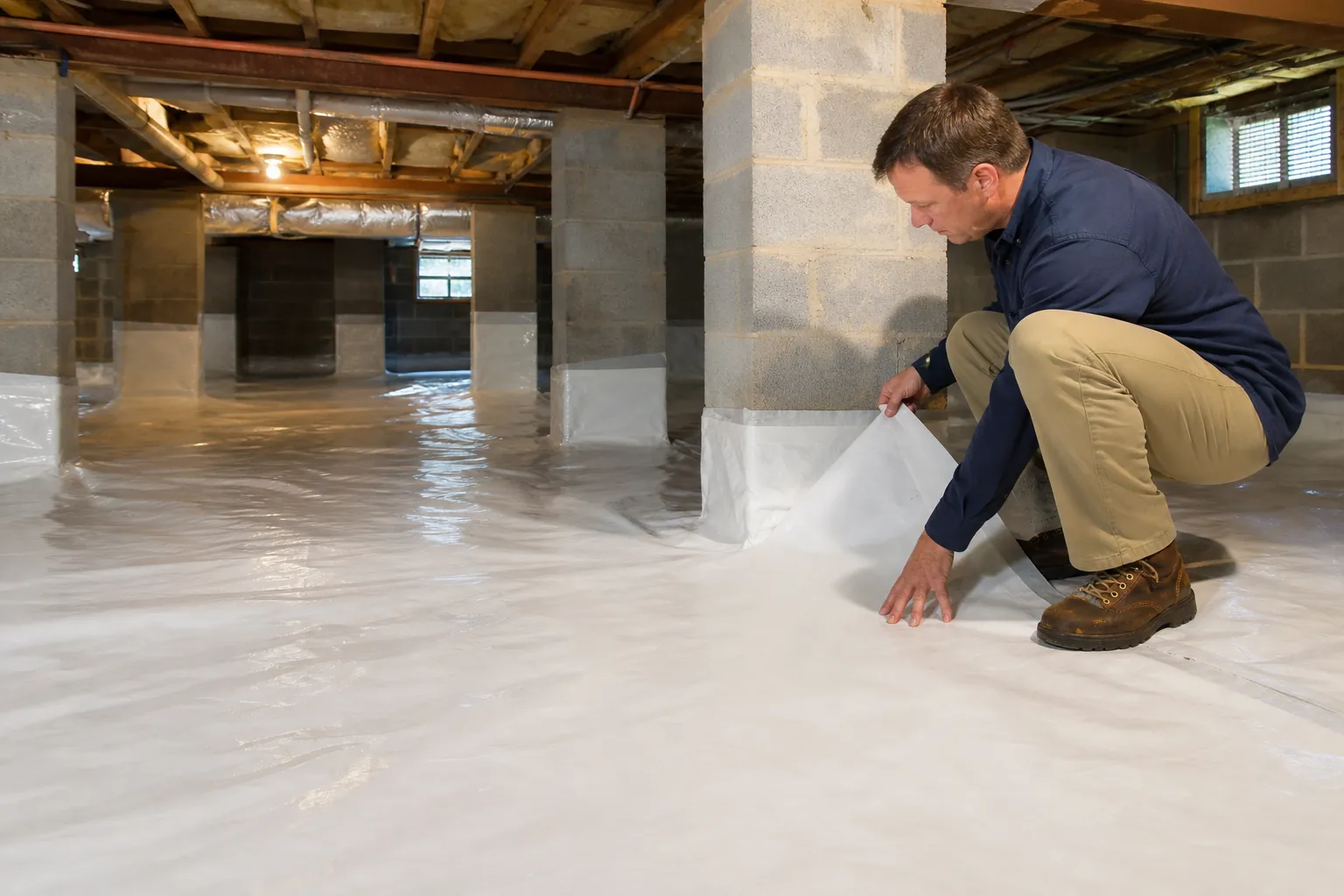
A crawl space liner can look substantial and still leave important questions unanswered. How much water vapor passes through it? Will it hold up when someone services plumbing or ductwork? Can the seams and edges be sealed reliably? These questions matter more than color, a glossy finish, or a thickness claim alone.
For North Carolina homeowners, understanding a crawl space vapor barrier permeance rating helps separate measurable moisture resistance from marketing language. The rating describes vapor movement through a material, but it does not tell the whole story about an installed crawl space system.
Carolina Encapsulation Company encourages homeowners to compare material specifications alongside drainage, installation details, and humidity management. Here is how to read the numbers and use them when discussing an encapsulation project.
What a vapor barrier permeance rating actually measures
Permeance measures how readily water vapor moves through a material under a difference in vapor pressure. In U.S. building product literature, it is commonly expressed in perms. A lower number means less vapor passes through the tested material under the stated conditions.
A perm is a unit of water vapor transmission normalized for area, time, and vapor pressure difference. You do not need to calculate it yourself to compare products. You do need to know whether the values were obtained using comparable test methods and conditions.
Water vapor is moisture in its gaseous form. It is different from liquid water entering through a foundation wall, collecting after a storm, or leaking from a pipe. A low-perm liner helps control vapor diffusion from soil, but its rating does not establish that the entire crawl space is waterproof.
Building science commonly groups vapor retarders into three classes:
- Class I materials have a permeance of 0.1 perm or less and provide very strong resistance to vapor diffusion.
- Class II materials have a permeance greater than 0.1 perm and no more than 1.0 perm.
- Class III materials have a permeance greater than 1.0 perm and no more than 10 perms.
These classifications describe vapor resistance, not installation quality or suitability for every assembly. For a ground liner intended to strongly limit soil vapor, a documented Class I rating is a useful starting point. Local requirements and the full project design still matter.
Why this rating matters in North Carolina crawl spaces
North Carolina has varied terrain and weather, but many homes share a recurring challenge: humid air above ground and damp soil beneath the house. Summer humidity, rainfall, and site drainage can all influence crawl space conditions.
Exposed earth can release moisture into the crawl space even when there is no visible standing water. That moisture can raise relative humidity and contribute to conditions that support fungal growth on susceptible materials. It can also affect insulation, stored items, and wood components over time.
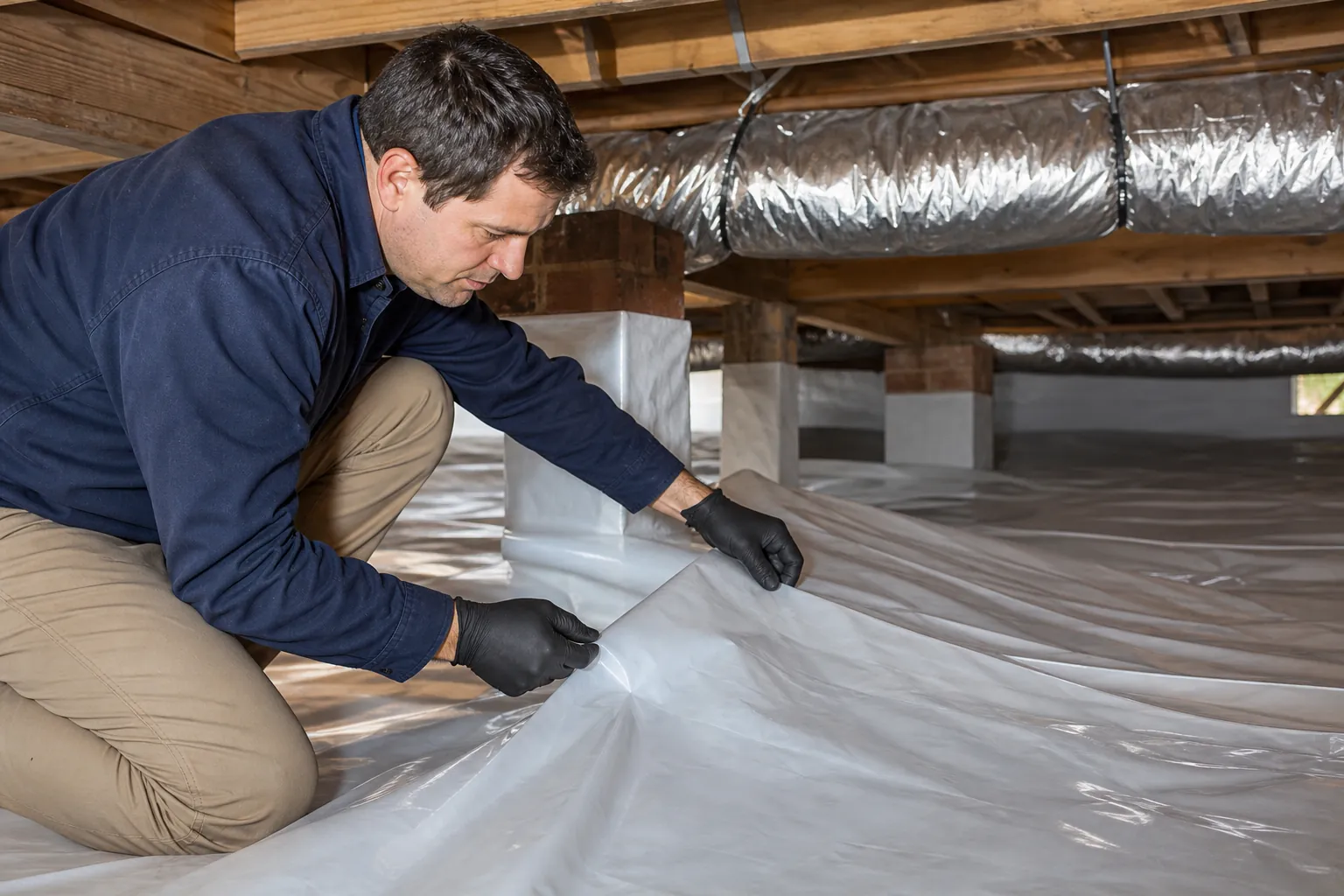
A low-permeance ground cover reduces one important moisture source. It creates resistance between the soil and the crawl space air. Covering the soil continuously is especially important because an uncovered strip or poorly sealed penetration bypasses the liner's measured resistance.
Outdoor air can introduce another moisture load. During humid weather, bringing that air into a cooler crawl space can raise relative humidity or cause condensation on cold surfaces. A ground liner alone does not control this process.
That is why encapsulation should be evaluated as a system rather than a roll of plastic. Depending on the home, the work may involve drainage corrections, sealed vents, air sealing, insulation decisions, and a designed drying strategy. The appropriate approach should reflect the foundation, equipment, and applicable code requirements.
Perm rating and liner thickness are not the same thing
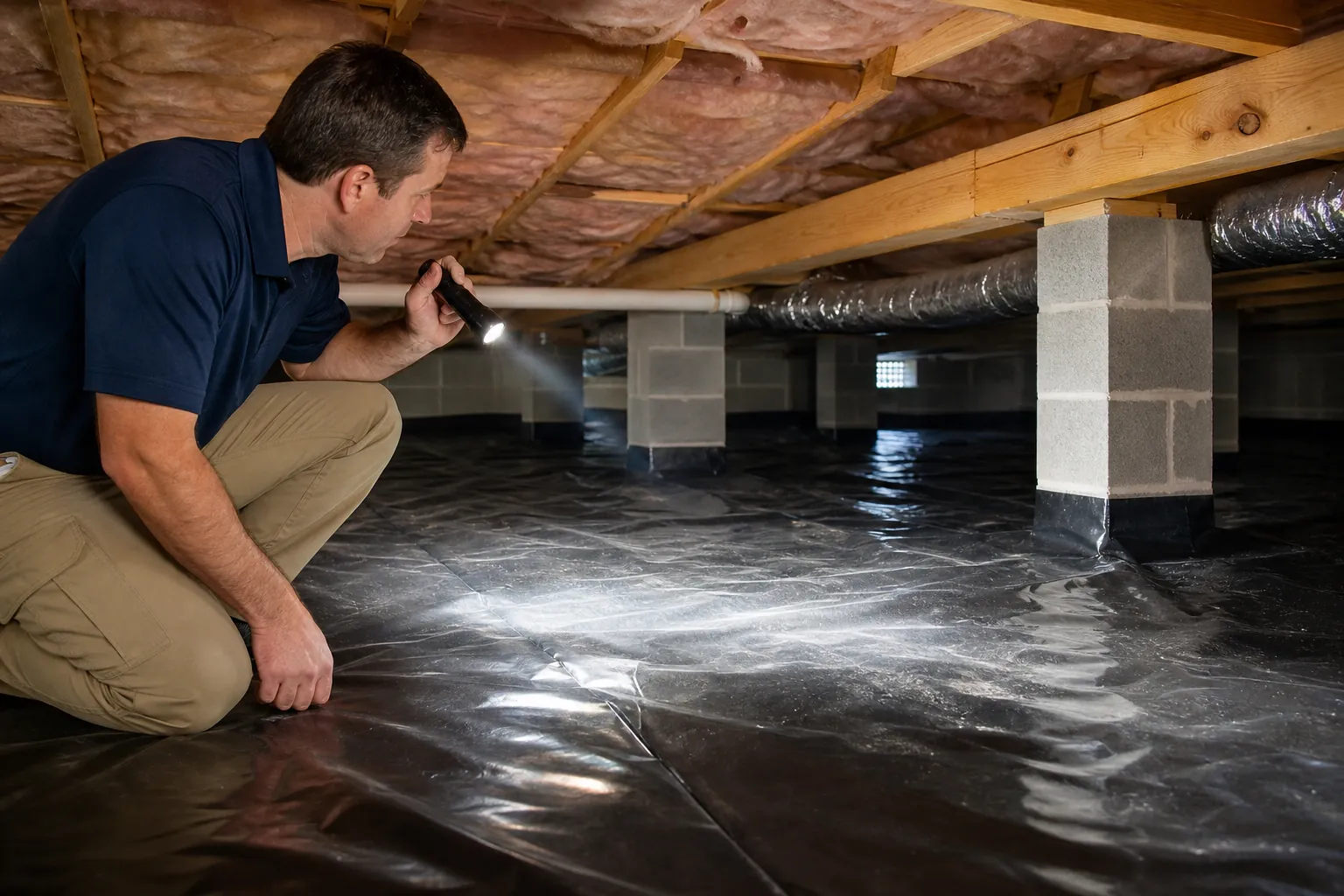
Thickness is usually listed in mils. One mil equals one-thousandth of an inch. Permeance is listed in perms. These measurements describe different properties, even though thicker versions of the same material may provide greater vapor resistance.
A thicker liner is not automatically the lower-permeance product when the materials or manufacturing methods differ. Reinforcement, coatings, and the composition of individual layers can affect performance. Comparing thickness alone leaves out information that a published test report can provide.
Thickness does matter for practical reasons. A crawl space with regular equipment maintenance needs a liner that can tolerate expected traffic. Rough soil, small stones, uneven surfaces, and installation handling can increase the chance of punctures or tears.
Reinforced liners may improve certain strength characteristics, but the word reinforced is not a complete durability specification. Ask about the relevant tear, tensile, or puncture data when available, and ask how the installer prepares the ground before laying the material.
- Use the perm rating to evaluate resistance to water vapor diffusion.
- Use thickness and strength data to evaluate how the liner may handle installation and service traffic.
- Use installation details to evaluate whether the finished ground cover will remain continuous.
- Use warranty terms to understand what is covered and what maintenance or exclusions apply.
The better comparison is not simply thin versus thick. It is a comparison of documented vapor resistance, practical durability, and the details that keep the system intact.
How to read a product data sheet without getting misled
Start by locating the actual permeance value, its units, and the named test method. ASTM E96 is commonly used to evaluate water vapor transmission through materials. However, a reference to ASTM E96 alone does not make every listed result directly comparable.
The standard includes different procedures and test conditions. Temperature, relative humidity, and whether a dry-cup or wet-cup procedure was used can affect results. Some materials respond differently as humidity changes.
Ask for the test procedure and conditions behind the reported number. If two products were tested differently, treat a small numerical difference cautiously. A qualified installer or manufacturer should be able to explain whether the comparison is meaningful.
Also confirm that the report applies to the exact product being proposed. A brochure may describe a product family that includes multiple thicknesses or constructions. The tested sample should match the liner specification in your estimate.
Watch for confusion between permeance and permeability. Permeability describes a material property normalized for thickness, while permeance describes transmission through a particular material thickness or assembly. Values using different units should not be compared as though they mean the same thing.
Finally, distinguish a measured result from a broad claim. Phrases such as moisture-proof or premium barrier do not replace a numeric rating. A useful proposal identifies the product clearly enough that you can verify its specifications.
Why seams and edges can matter more than small rating differences
A laboratory test measures a sample of material. Your crawl space contains seams, foundation walls, piers, access openings, and utility penetrations. Those features determine whether moisture can bypass the ground cover.
Imagine comparing two liners that both have very low permeance. If one is installed with open seams and exposed soil around piers, its stronger published number may offer little practical advantage. The openings become easier pathways for moisture than diffusion through the intact sheet.
Seams should be overlapped and sealed using methods compatible with the selected liner. The overlap dimensions and sealing products should follow the manufacturer's instructions and applicable requirements. Generic tape is not automatically suitable for a damp, dusty crawl space environment.
Wall and pier transitions need careful detailing too. Depending on the project design, the liner may extend up foundation surfaces and be attached and sealed with compatible components. Surfaces should be prepared so the connection can perform as intended.
Termite inspection access is an important consideration in North Carolina. Wall coverage and insulation details should preserve any required inspection gaps and allow coordination with the home's pest professional. Sealing a crawl space should not prevent necessary inspections.
- Ask how seams will be sealed and which tapes or adhesives will be used.
- Ask how the liner will connect to foundation walls, piers, and irregular surfaces.
- Ask how plumbing, supports, and other penetrations will be detailed.
- Ask how required termite inspection areas and access routes will remain available.
Photographs of completed details can help you understand the proposed work. They should support, not replace, a written scope that identifies the materials and installation approach.
A low perm rating cannot solve a drainage problem
Standing water calls for a different investigation than elevated humidity alone. If water enters after rainfall, the source may involve grading, roof runoff, foundation drainage, groundwater, or another site-specific condition. Plumbing leaks need their own repairs.
A liner installed over an unresolved water problem can conceal symptoms without controlling the source. Water may collect beneath the cover, move toward weak details, or create conditions that require additional drainage measures.
Before choosing a product, inspect the crawl space and surrounding property. Useful observations include where water appears, whether it follows storms, and whether gutters or downspouts discharge near the foundation. Conditions can vary by season, so one dry visit may not tell the entire story.
Some homes need exterior drainage corrections. Others may require a properly designed interior drainage system and sump arrangement. These are project decisions, not automatic additions to every encapsulation job.
Ask the contractor to distinguish between liquid water control, soil vapor control, and air humidity control. Each has a different purpose. A sound recommendation explains which problems are present and how each proposed component addresses them.
Choosing a sensible permeance target for your project
For many crawl space ground-cover applications, a verified Class I material provides strong resistance to soil vapor diffusion. The exact specification should account for code requirements, the selected encapsulation approach, and product documentation.
There is usually less value in chasing the smallest possible number once both products already provide very low permeance. Reducing a rating from one low value to another does not guarantee a proportionate improvement in whole-space humidity. Air leakage, drainage, and incomplete coverage may have a much larger effect.
This does not mean the rating is unimportant. It means the number should be used as a qualification tool, then considered alongside durability and workmanship. A reliable low-perm liner with well-executed details is generally a more useful goal than a standout specification paired with an incomplete scope.
Service needs should influence selection. A crawl space containing an air handler, water heater, or frequently serviced plumbing may benefit from a more durable liner and protected travel routes. A contractor should explain how future access will work without compromising the moisture barrier.
Budget comparisons should use equivalent scopes. A lower estimate may exclude wall attachments, seam sealing, debris removal, drainage work, or humidity-control equipment. Differences in these items can matter more than small differences in the liner's published perm rating.
Questions to ask before approving an encapsulation estimate
You do not need to become a building scientist to review a proposal. A short set of specific questions can reveal whether the recommendation is grounded in the actual crawl space conditions.
- What is the exact liner product, and can you provide its permeance rating and supporting test information?
- Does the reported rating apply to the thickness and construction included in this estimate?
- What evidence of water entry, soil moisture, or humid air leakage did the inspection identify?
- Which preparation steps will reduce puncture risk and help seams and attachments stay secure?
- What drainage work, if any, must be completed before the liner is installed?
- How will the finished crawl space be dried, and how will humidity be monitored?
- What maintenance is expected, and who handles repairs if future service work damages the liner?
Clear answers should connect the material specification to the installation plan. Be cautious when a proposal focuses only on thickness or promises that one component will eliminate every moisture issue.
Ask for written documentation of exclusions as well. Structural repairs, pest treatment, plumbing repairs, and electrical work may fall outside an encapsulation contractor's scope. Knowing that before work begins helps prevent misunderstandings.
Keeping the barrier effective after installation
Once installed, the liner should remain part of a maintained system. Periodic checks can catch loose seams, damaged areas, disconnected equipment, or new leaks before they become larger problems.
Relative humidity monitoring is useful, but a single reading does not establish year-round performance. Readings change with weather, temperature, equipment operation, and sensor location. Track trends and ask the contractor what range is appropriate for your crawl space.
If a dehumidifier is installed, follow its filter and drainage maintenance instructions. A blocked drain or dirty filter can undermine performance even when the ground cover remains intact. Sump equipment, if present, also needs appropriate inspection and maintenance.
Tell plumbers, HVAC technicians, and other service providers that the liner is a moisture-control component. Encourage them to avoid unnecessary cuts and report damage. Repairs should use materials and procedures compatible with the original installation.
Reinspect after significant storms or major under-house service work. The goal is not constant worry. It is a manageable routine that protects the investment and identifies changes early.
Get a clearer plan for your North Carolina crawl space
The crawl space vapor barrier permeance rating tells you how strongly a material resists vapor diffusion. It does not tell you whether drainage is adequate, seams are sealed, or the space has an effective drying strategy. Those details need to be evaluated together.
When reviewing options, look for a documented low-perm liner, durability suited to your crawl space, and a written installation scope that addresses the actual moisture sources. That combination is more meaningful than an impressive number by itself.
For help discussing your North Carolina crawl space and the specifications behind a proposed encapsulation system, call Carolina Encapsulation Company at 704-207-9348. A careful assessment can help you understand what your home needs before you choose materials or approve the work.
Call 704-207-9348 to talk through next steps.