

A crawl space repair estimate describes work based on what can be inspected before the project begins. Once old insulation comes down, debris is removed, or access improves, the crew may find conditions that were previously hidden. Those discoveries can require a different repair plan.
That is where crawl space repair change orders come in. A change order documents an adjustment to the original scope, price, schedule, or materials. Handled properly, it gives you a clear decision point instead of an unexpected charge at the end of the job.
For North Carolina homeowners, the goal is not to reject every change or approve every recommendation. It is to understand what changed, why it matters, and what your options are. This guide explains how to evaluate proposed changes during moisture control, structural repair, insulation removal, and crawl space encapsulation projects.
What a crawl space repair change order should include
A change order is an addition to, or revision of, the agreement you already have. It should connect a newly identified condition or requested upgrade to specific work. A vague statement such as “additional crawl space repairs” does not give you enough information to make an informed choice.
The document should make the financial effect understandable, too. If one material is replaced by another, ask whether the original material allowance is being credited. If work is removed, that reduction should be reflected rather than leaving you to infer the revised total.
- The change order should describe the condition that prompted the proposed change and where it was found.
- It should identify the added, removed, or revised work, including relevant quantities and materials.
- It should state the price adjustment and whether that amount is fixed, estimated, or dependent on stated conditions.
- It should explain any effect on the completion schedule and list unresolved dependencies.
- It should record your approval using the process established in the original agreement.
Keep the approved document with your estimate, contract, photos, invoices, and warranty information. A text message may help document a conversation, but a complete written scope is easier to review later.

Why hidden conditions lead to scope changes
Crawl spaces are not always fully visible during an initial inspection. Low clearance, stored belongings, ductwork, fallen insulation, and existing liners can obstruct the view. Standing water or unsafe conditions can also limit where an inspector can reasonably go.
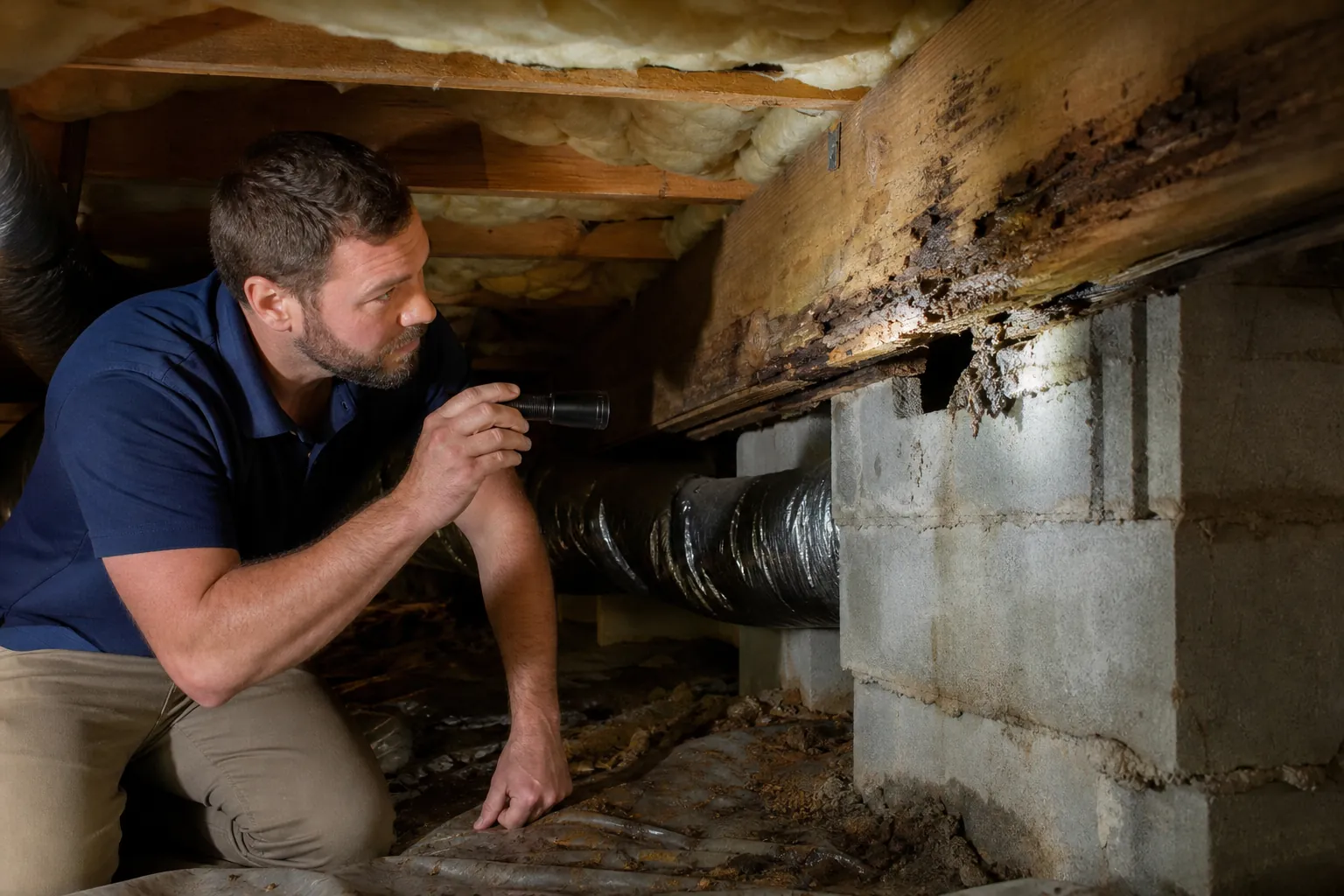
After cleanup, a contractor may discover damaged framing, a plumbing leak, deteriorated supports, or an uneven floor surface that changes the installation approach. These findings do not automatically mean the original inspection was careless. However, the contractor should explain what prevented the issue from being identified earlier.
Consider a joist concealed by old insulation. Removing that insulation may reveal deterioration that needs evaluation before a new liner is installed. The appropriate response could involve structural assessment, repair, or further investigation. It should not be an unexplained instruction to buy more services.
Homeowner requests can also create changes. Adding a more durable liner, improving the access door, or expanding drainage beyond the original scope may be reasonable, but these are requested upgrades rather than hidden-condition repairs. Keeping those categories separate makes the conversation clearer.
Distinguishing necessary repairs from optional upgrades
A useful change order explains whether the proposed work addresses safety, active damage, installation requirements, long-term performance, or personal preference. Not every improvement carries the same urgency.
Structural deterioration may need evaluation before encapsulation proceeds. An active plumbing leak should be corrected rather than enclosed beneath a new system. A liner upgrade in a storage area, by contrast, may be a preference rather than a requirement for the originally specified installation.
Ask the contractor to explain what happens if you decline or postpone the change. A specific answer helps you compare options. “The liner cannot be sealed properly around this damaged access opening” is more informative than “You really need this.”
- Ask whether the change corrects an existing defect or improves an otherwise workable design.
- Ask which parts of the original project can proceed safely without the added work.
- Ask whether a lower-cost alternative would address the same condition and what tradeoffs it introduces.
- Ask whether postponing the work affects a stated warranty or performance expectation, and request the applicable terms.
If a recommendation involves structural stability, electrical hazards, or suspected wood-destroying organisms, an appropriately qualified professional may need to assess it. An encapsulation proposal alone should not substitute for every specialized evaluation.
North Carolina moisture conditions that can affect the plan
North Carolina crawl spaces face different moisture pressures depending on location, terrain, soil, and the home itself. Humid weather can contribute to condensation when moist air encounters cooler surfaces. Rain runoff, plumbing leaks, and groundwater can create separate problems that require different solutions.
A change order should identify which moisture source is being addressed. A dehumidifier manages airborne moisture, but it is not a replacement for correcting bulk water entry. A ground vapor barrier limits moisture migration from exposed soil, but it does not repair a leaking supply line.
Site observations matter more than broad regional assumptions. A house on a sloping lot may receive runoff at one foundation wall, while another home may have water concentrated near a low point beneath the floor. Drainage recommendations should reflect the actual route and destination of that water.
If water appears after heavy rain during the project, ask how that observation changes the original diagnosis. Photos, location notes, and a description of the proposed drainage route can help you understand whether the revision is targeted. The plan should also address discharge location, maintenance access, and any applicable local requirements.
How to evaluate the added price
The right question is not simply whether the added price seems high. It is whether the price matches a clearly defined amount of work. Access difficulty, material handling, disposal, specialized labor, and working clearance can all affect crawl space repair costs.
Request quantities where they are practical. Framing repairs might be described by affected members and repair method. Liner changes might identify material specifications and coverage. Drainage work might list the proposed route, components, and approximate length, subject to stated field conditions.
Compare the new scope with the original agreement to avoid paying twice for overlapping work. If the original proposal included debris removal, a change order for additional disposal should explain what unexpected material exceeds that allowance.
- Ask for the added price and the revised project total in the same document.
- Ask whether labor, materials, disposal, equipment, and applicable charges are included.
- Ask whether deleted work or replaced materials produce a credit.
- Ask how any allowance or unit-price arrangement will be reconciled against actual quantities.
- Ask whether payment is due at approval, at a milestone, or after the added work is completed.
You do not necessarily need the contractor’s internal cost breakdown. You do need enough scope detail to understand what you are purchasing and how the final charge will be determined.
A practical approval process before extra work begins
Start by reviewing the original contract’s change procedure. It may specify who can authorize revisions, how approval is recorded, and how unknown conditions are handled. Follow that process and ask questions if the language is unclear.
When a new issue is found, request photos and a short explanation before discussing solutions. Photos should show both the close-up condition and enough surrounding context to identify its location. Video or an annotated sketch can help when access is difficult.
Next, review the proposed work, price, schedule impact, and alternatives together. If the change depends on another contractor, such as a plumber, clarify who arranges that service and whether its cost is included.
Approve only a version you understand. If a document changes during the conversation, request the updated version rather than signing an earlier draft with verbal corrections.
If an immediate hazard is discovered, ask what temporary protective measures are needed and what they will cost. Safety-related pauses or limited protective work should be distinguished from approval of a larger repair package. Avoid entering the crawl space yourself if the contractor reports unsafe conditions.
Common examples during encapsulation projects
Framing damage exposed during insulation removal
A crew removes sagging insulation and finds deteriorated wood. The proposed change should identify the affected area and explain the next step. Depending on the extent and cause, that may include further assessment, repair specifications, or coordination with a qualified structural professional.
The moisture source also needs attention. Replacing damaged wood without addressing the condition that contributed to it can leave the underlying problem unresolved.
A plumbing leak discovered during cleanup
A leaking pipe becomes visible after debris is cleared. The contractor should explain whether work must pause and whether a separate plumbing service is required. Ask who pays for that service, who schedules it, and how the completed repair will be checked before enclosure.
Drainage added after water entry is observed
New evidence may support adding a drainage component. Ask where the water enters, how it will reach the collection point, and where it will discharge. If a pump is proposed, clarify electrical needs, service access, and whether backup features are included or optional.
An access opening that needs improvement
A damaged or poorly fitting access door may complicate sealing and future maintenance. The change should describe the replacement or repair, its dimensions or relevant specifications, and whether framing modifications are included. A basic repair and a more extensive access upgrade should not be presented as the same scope.
Warning signs that deserve a pause
A legitimate hidden condition can still be handled poorly. Pause when the explanation is unclear, the price is undefined, or you feel pressured to approve without seeing the issue.
One change order is not inherently a problem. Multiple small changes can also be legitimate, but they deserve a consolidated review. Ask for the current approved total, pending changes, and remaining uncertainties before making another decision.
- Be cautious when the contractor cannot distinguish new work from items already included in the estimate.
- Request clarification when a recommendation changes from optional to mandatory without new evidence.
- Do not rely on an oral promise that contradicts the written scope or payment terms.
- Ask for a pause if extra work is underway but approval, pricing, or responsibility remains unresolved.
- Consider an independent assessment when a costly recommendation rests on a diagnosis that has not been adequately explained.
If you disagree, document the issue calmly and refer back to the agreement. Identify which work is disputed and ask whether undisputed work can continue without covering areas that still need evaluation. For contract or legal disputes, seek guidance from an appropriate North Carolina professional rather than relying on general project advice.
Reducing surprises before the project starts
You cannot eliminate every hidden condition, but you can improve the baseline. Ask what areas were inspected, what could not be reached, and what assumptions were used to prepare the estimate. Inspection limitations should be discussed before they become expensive discoveries.
Review exclusions carefully. Structural repairs, plumbing, electrical work, pest treatment, debris removal, and drainage may or may not be included in a particular proposal. Do not assume a phrase such as “complete encapsulation” covers every possible crawl space issue.
Also ask how the contractor handles uncertain quantities. A clearly defined allowance or unit price can make a later adjustment easier to evaluate, but only when the measurement method and authorization process are understood.
Set a communication plan. Identify the person authorized to approve changes, the preferred contact method, and what happens if that person is unavailable. A realistic contingency budget can help with unexpected findings, but having money reserved is not permission for the contractor to spend it without approval.
Checking the finished work against approved changes
At completion, compare the final invoice with the original scope and each approved change order. Confirm that credits, allowances, and revised quantities have been reconciled. Ask about any unexplained difference before closing out the project.
Request completion photos for work you cannot easily inspect. These should show relevant repaired areas, installed components, and access points. Keep product information and maintenance instructions with the project records, especially for pumps and dehumidifiers.
Clarify which warranty applies to each portion of the work and which responsibilities remain yours. Routine equipment maintenance, drainage discharge checks, and prompt attention to new leaks can affect ongoing performance. The closeout conversation should leave you knowing what was completed and how to care for it.
Get a clear plan for your crawl space repair
Good crawl space repair change orders turn new information into documented choices. They explain the condition, define the response, show the cost, and give you a chance to approve the next step. That approach helps protect both your budget and the quality of the finished project.
If you are planning crawl space work in North Carolina, contact Carolina Encapsulation Company at 704-207-9348. Discuss your concerns, ask about inspection limitations, and request a written scope so you can make informed decisions before work begins.
Call 704-207-9348 to talk through next steps.