
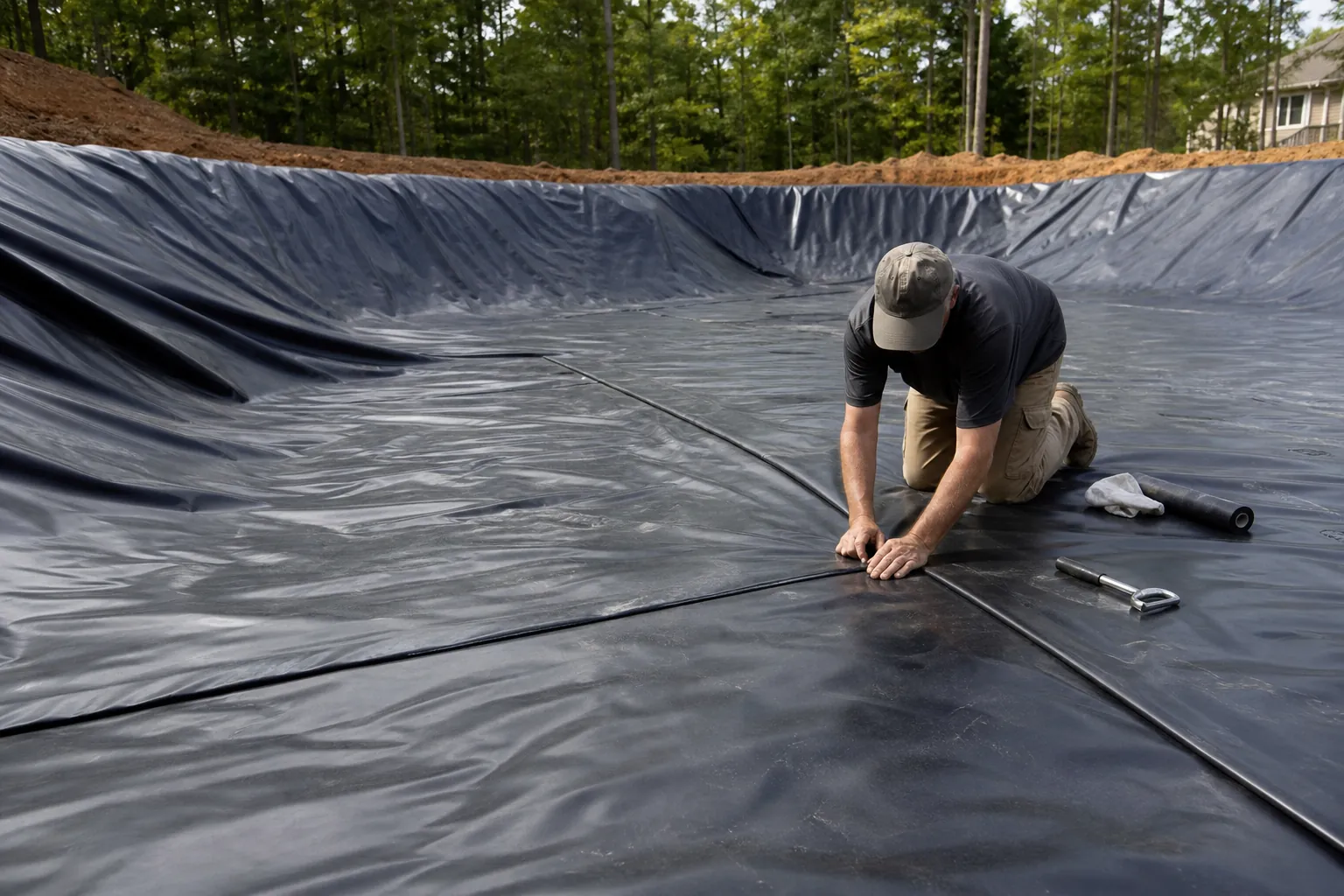
Poly liner seams and edges show where sheets join and where the liner meets walls, piers, or other surfaces. These points affect ground coverage and help guide crew inspections. In Apex, NC, review the crawl space and full moisture plan, since sheet material alone does not show how the space is managed.
How Do Poly Liner Seams And Edges Fit Into A Crawl Space Plan?
Poly liner seams and edges are key details in a ground-cover layer. Seams join sheets, while edges meet walls, piers, and other surfaces. For a wider view, read the crawl space encapsulation system guide and crawl space encapsulation basics before judging one detail on its own.
A liner is one part of a crawl space moisture plan. Its seams and edges help define where the material lies and where one section meets another. The final arrangement depends on the shape and condition of the space.
A useful review starts with what the liner is meant to cover. Look at the ground, support piers, walls, and any changes in height or direction. A simple, open floor may need fewer sheet joins than a space with many turns or obstacles.
The liner should be considered alongside other moisture control choices. A ground cover does not explain how moisture enters through other paths, or how humidity in the space will be managed. The crawl space moisture control options guide can help frame those broader questions.
In Apex and the wider Triangle, hot, humid summers can bring high outdoor humidity. Red clay soils may hold water, and vented crawl spaces are common. Those conditions make it useful to assess the space itself rather than assume every crawl space needs the same layout.
What Do Seams And Edges Mean?
A seam is where two sections of liner meet. An edge is a boundary where the liner ends or meets another surface. A seam can lie across an open floor, while an edge may follow a wall or wrap around a pier.
These terms describe locations, not a specific method or result. Materials, surface conditions, and the design affect how each detail is handled. Ask for a clear explanation of the planned layout, especially where the liner changes direction or meets an obstruction.
Why Look At The Whole Space?
A single seam may look neat while the overall coverage still leaves questions. Check how sheets relate to the full floor area and to the space's boundaries. Also note any visible gaps, folds, tears, or areas hidden from view.
A visual review cannot confirm every hidden condition. If there are signs of standing water, damage, or persistent dampness, those issues may need separate review by an appropriate professional. The liner detail should not distract from a larger moisture concern.
Where Are Crawl Space Liner Seams Usually Planned?
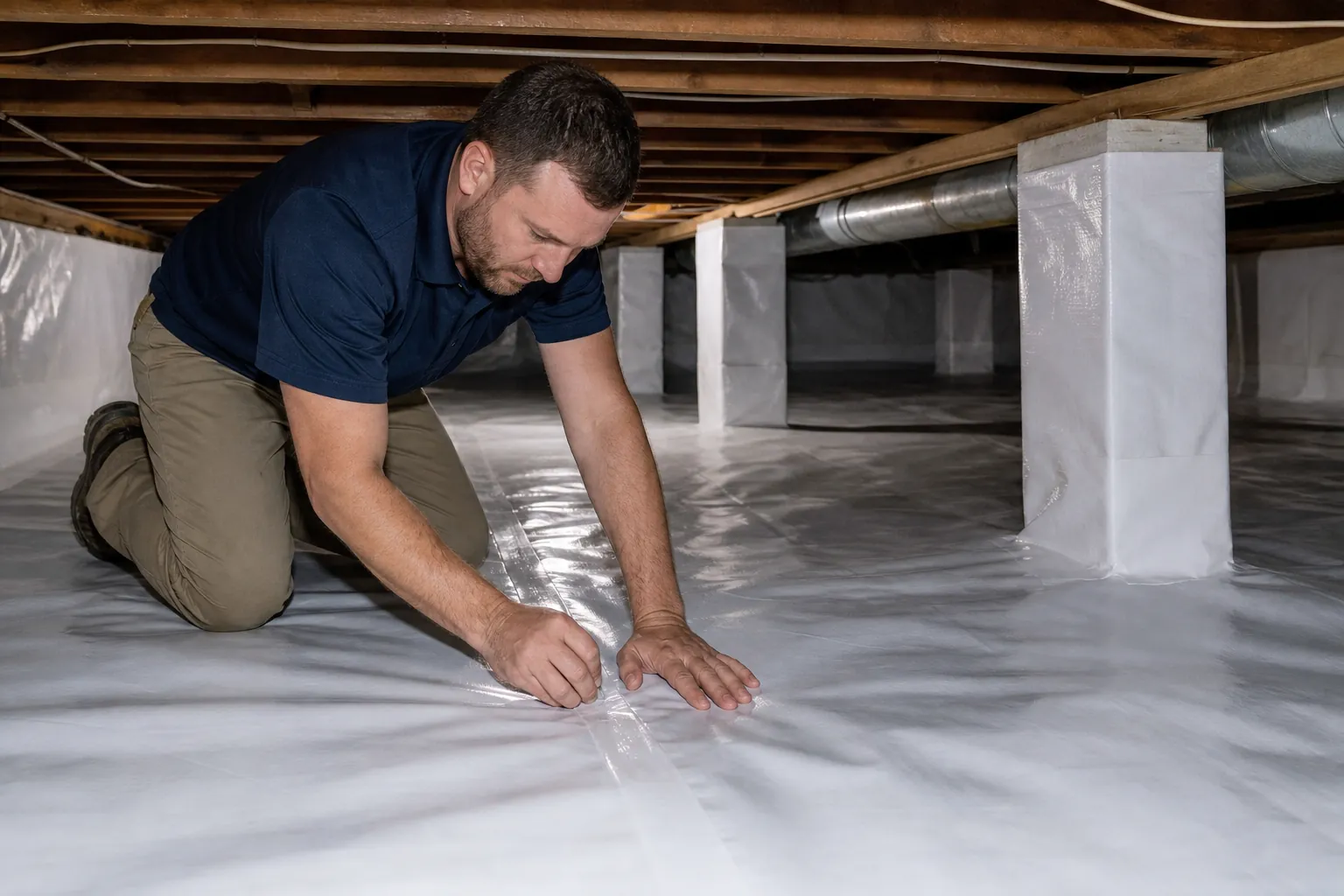
Seams are planned where separate sheets must meet to cover a floor or other intended area. The layout depends on the space's dimensions, shape, and obstacles. Review the vapor barrier thickness choices and encapsulation system guide to see how liner details fit into a larger design discussion.
A plan can show the direction of sheets and where their edges meet. This makes it easier to discuss the layout before work starts or to review visible details afterward. The plan should reflect the actual crawl space, rather than a generic drawing.
Piers, posts, steps, access points, and uneven ground can shape the sheet pattern. A seam may be needed to work around an obstacle. Tight areas can also make it harder to see how material lies against the ground or around a support.
There is no single seam pattern that suits every crawl space. The number and placement of joins depend on the material size and the area being covered. Ask what the layout is intended to cover, and which areas are outside that scope.
A helpful review focuses on continuity and clarity. Can you follow the liner across the visible floor? Are boundaries and transitions easy to identify? If a section cannot be seen, ask how it will be checked or documented.
- Mark piers, posts, and other obstacles on a simple crawl space sketch.
- Ask which floor areas the liner plan intends to cover.
- Note seams or boundaries that are hard to see or reach.
- Compare the visible layout with the explanation you were given.
How Do Obstacles Change The Layout?
A support pier can split a broad floor into smaller areas. The liner may need to meet the pier or pass around it, depending on the plan. A narrow passage or low clearance can also affect how sheets are moved and positioned.
Look for a clear explanation of these transitions. Ask how the plan treats corners, posts, and spots where the floor changes height. The answer should describe the proposed approach, not claim that every site can use one standard detail.
If there are many obstacles, take notes or mark them on a simple sketch. This gives everyone a shared way to discuss the layout. Do not assume that a visible sheet edge means a problem; ask what the edge represents in the plan.
What Should A Layout Review Include?
Start with the intended coverage area and the sheet arrangement. Then look at seams, boundaries, and visible transitions. Make a note of areas that are blocked from view or that appear different from the plan.
Keep questions specific. Ask which spaces are included, where sheets meet, and how the boundaries are addressed. Clear questions help separate a design choice from a missed detail or an area that was never part of the work.
How Should You Review A Liner Seam And Its Overlap?
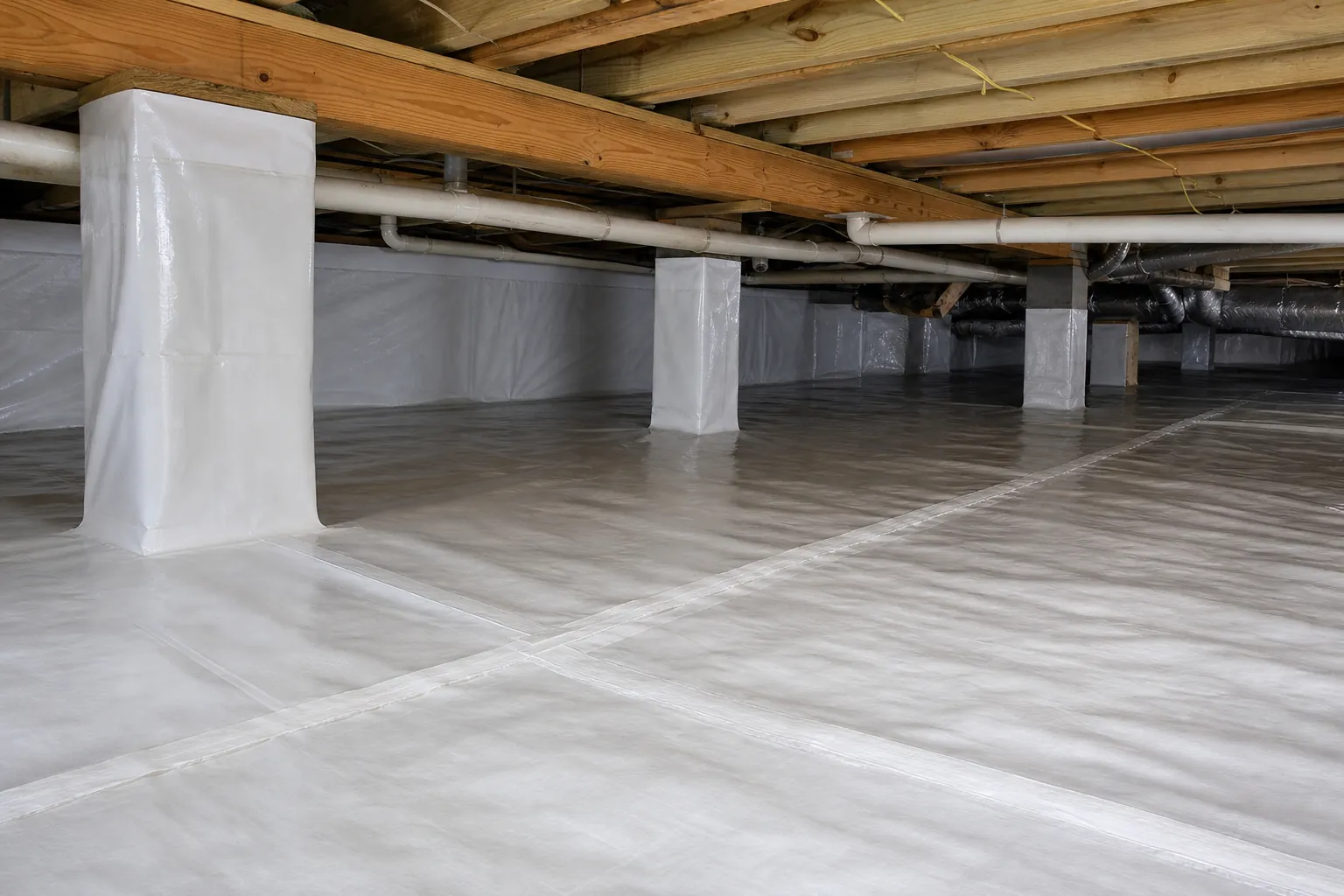
Review a seam by checking that its location and treatment match the stated plan. A visible overlap alone cannot show every hidden detail. For context, compare the moisture control options and crawl space moisture readings with the conditions that prompted the liner work.
When two sheets meet, ask how the seam is meant to remain in place and what you should be able to see. The answer may depend on the product and the intended use. Avoid treating one measurement or appearance as a rule for every material and space.
Some seams may be easy to view from above. Others may sit near a pier, wall, or tight area. If you cannot inspect a detail safely or clearly, ask the person responsible for the work to explain it. Do not move material or enter an unsafe area just to get a closer look.
A seam review should also consider the surrounding floor. Is the material lying in a way that matches the plan? Are there visible tears, loose corners, or signs that water has moved across or under the area? These are observations to discuss, not a diagnosis.
Moisture readings can provide one piece of information, but they do not replace a full assessment. Readings vary by location, conditions, and method. The guide to crawl space moisture readings can help you prepare questions about what was measured and what the result can show.
What Can You See From A Visual Check?
A visual check can show where sheets meet and whether the visible material looks intact. It may also reveal spots that need a closer explanation, such as a curled edge or a section hidden by stored items.
A visual check cannot confirm what lies beneath the liner or how concealed details were made. Keep that limit in mind when reviewing photos or a completed space. Ask for clear notes about areas you could not see.
What Questions Help Clarify The Seam?
Ask what materials were used and how the seam was planned for that product. Then ask how the seam fits with the coverage area and any nearby wall or support detail. These questions invite a useful explanation without assuming a defect.
If a seam has shifted or opened, describe what you noticed and where it is. Photos taken from a safe, accessible spot may help explain the concern. A qualified person can say whether the condition needs review or repair.
How Do Liner Edges Meet Walls, Piers, And Other Surfaces?
Edges are transition points, so their treatment depends on the surface and the intended coverage. Review the crawl space system guide and encapsulation basics to understand why edge details should be discussed as part of the full plan, not in isolation.
A liner edge can meet a foundation wall, pier, post, doorway, or other boundary. Each surface may differ in shape and condition. That makes it important to ask how the design handles the specific transition in your crawl space.
Look for a clear description of where the liner ends and what happens at that boundary. An edge may be visible from the floor, or it may be difficult to inspect because of a tight corner. The explanation should match what can be seen and what the plan includes.
Do not assume that every edge must use the same attachment or finish. The right detail depends on the materials and conditions, and those choices should be explained by the person responsible for the work. If the surface is damaged or wet, that condition may also need attention.
In Triangle homes, summer humidity and soil that holds water can make moisture questions more noticeable. But local weather does not reveal what is happening in one specific crawl space. Look for signs and ask for an assessment based on that space.
What Should You Ask About A Wall Edge?
Ask where the liner is meant to stop and how the wall transition is handled. If the wall has uneven areas, openings, or visible damage, point those out. The person reviewing the space can explain how those features affect the planned detail.
Also ask whether the edge is within the agreed coverage area. A clear scope helps avoid confusion about what was included. If some wall sections are excluded, ask why and what that means for the overall plan.
How Do Piers And Posts Affect Edges?
Piers and posts create smaller boundaries within the floor area. Liner may need to meet or pass around them, so the result can look different from a wide, open floor. Check that each transition has been considered in the explanation.
A difficult-to-see edge should be called out rather than guessed at. Ask for a view or description that shows the relevant area, if it is safe and practical. This is especially helpful when an obstruction hides the floor around a support.
What Other Moisture Factors Matter Beyond The Liner?
A liner addresses only part of a crawl space moisture picture. Drainage, humidity, air movement, and water entry may also matter, depending on the site. Use the moisture control options guide and dehumidifier benefits overview to frame questions without assuming one fix suits every home.
Moisture can have more than one source. Water may enter from outdoors, collect at low spots, or arise from humid air. A liner's seams and edges should therefore be reviewed with other visible conditions, rather than treated as proof that moisture is solved.
The U.S. EPA and NC State Extension offer general information about moisture and mold. Their guidance can help readers understand broad prevention and inspection topics, but it cannot diagnose a particular home or confirm what work it needs.
A dehumidifier may be part of some crawl space plans, but it is not a stand-alone answer to every moisture concern. Ask what issue each proposed measure addresses and how it relates to other parts of the plan. The crawl space dehumidifier guide offers more context.
If you see standing water, active leaks, damaged materials, or a strong musty odor, treat those as separate concerns to discuss. A liner seam review cannot determine the source or severity. Seek an appropriate qualified professional when the condition calls for specialized assessment.
- Record where you see dampness, water, or visible material changes.
- Ask which moisture concern each part of the plan is meant to address.
- Keep liner questions separate from drainage or structural concerns.
- Seek qualified help for issues that need an on-site assessment.
How Can You Keep The Review Grounded?
Write down what you see, where it is, and when you noticed it. Keep observations separate from conclusions. For example, note a damp-looking area rather than deciding on your own how water got there.
Ask how the liner plan relates to those observations. Find out what is included, what is outside the scope, and whether another assessment is needed. This can help you compare explanations without relying on broad claims.
When Should You Ask For More Help?
Get help from a qualified professional when the concern involves active water, structural damage, suspected mold, or a safety issue. The right person depends on the question. General online information cannot inspect the space or tell you what a specific home needs.
For a suspected mold issue, use sound judgment and follow relevant public health guidance. Avoid disturbing material that may be affected. A professional can advise on inspection and next steps based on the conditions they find.
How Can You Prepare For A Liner Review In Apex?
Prepare by noting the crawl space conditions, the areas covered, and your questions about seams and edges. The encapsulation system guide and liner thickness choices can help you discuss the plan without assuming a product or design is right for every Apex home.
Start with the reason for the review. You may be planning work, checking a completed area, or trying to understand a moisture concern. Each goal calls for different questions, so make that purpose clear before discussing details.
In Apex, hot and humid summers can raise outdoor humidity. Red clay soils may hold water, and many local crawl spaces have vents. These are useful regional context points, not proof that a particular home has a moisture problem or needs a specific product.
If you can access the space safely, note its layout and any visible concerns. Do not enter if access is unsafe, and do not move wiring, pipes, or stored items. Photos may help if they can be taken from a safe place.
Ask for the proposed coverage area and a plain explanation of seams, edges, and transitions. If several choices are discussed, ask what each one changes and why it fits the observed conditions. Keep the answers with your notes so you can compare them later.
- Write down the main reason you want the liner or its details reviewed.
- List visible concerns and note where they appear in the crawl space.
- Ask which areas and transitions the proposed work includes.
- Keep the explanation and any follow-up questions with your home records.
What Information Is Useful To Bring?
Bring a brief list of concerns, such as wet areas, odors, or visible liner damage. Include when you first noticed each one and whether it changes with weather. Avoid guessing at a cause if you do not know it.
A sketch can show where the access opening, piers, and visible concerns sit. It does not need exact measurements. Its purpose is to help you point to the same area during a discussion.
What Should You Confirm Before Work?
Confirm the scope, materials, coverage, and how visible transitions will be handled. Ask how areas that cannot be seen will be reviewed. Make sure the explanation reflects your crawl space rather than relying on broad claims.
Also ask what falls outside the work and who to contact with questions. Do not rely on assumptions about service, timing, or results. Those details should be confirmed directly with the provider.
Questions about next steps? Call Carolina Encapsulation Company at 704-207-9348 or review encapsulation.
Frequently Asked Questions
Does a visible seam mean the liner is damaged?
No. A seam is where separate sheets meet, so seeing one can be normal. Its appearance alone does not show whether it was planned or installed as intended. Ask how that seam fits the layout and whether the visible condition matches the stated plan. If it has shifted, opened, or torn, describe what you see and request a review.
Can I check liner seams and edges myself?
You can look from a safe, accessible place and note visible details. Do not enter a space that feels unsafe or move wiring, pipes, or other items. A visual check cannot show concealed work or diagnose moisture. If a detail is blocked or unclear, ask a qualified person to explain it.
Does thicker liner always mean better seam performance?
Thickness is one factor, but it does not answer every question about the material, layout, or site conditions. Ask which product is proposed and how its seams and edges are meant to be handled. The right choice depends on the plan and the space, so avoid relying on a single feature as proof of suitability.
Will a crawl space liner stop all moisture?
A liner is one part of a moisture plan, not proof that every source has been addressed. Water entry, humidity, drainage, and other conditions may also matter. Ask what issue the liner is meant to address and whether other concerns need review. A qualified professional should assess site-specific problems.
What should I do if I see water near a liner edge?
Note the location and what you can see, but do not assume the source. Avoid disturbing the area if it may be unsafe or damaged. Ask an appropriate qualified professional to assess active water, leaks, or related damage. A seam or edge review by itself cannot determine where water came from.
Sources
- Mold and Moisture Checklist, NC State Extension
- A Brief Guide to Mold, Moisture and Your Home, U.S. EPA
- Unvented Conditioned Crawlspaces, U.S. Department of Energy
Call 704-207-9348 to talk through next steps.