
Crawl Space Comparisons
Straight comparisons to help you choose, from full encapsulation versus a vapor barrier alone to how vapor barrier thickness holds up. Each one lays it out side by side.
How should you compare crawl space options?
Compare each option by the condition it is meant to control, the work included in the scope, and the way it fits with the rest of the crawl space. A material can be useful without being a complete solution. The clearest choice is the one that connects drainage, ground moisture, outside air, humidity, insulation, and damaged materials in a logical order.
Start with the symptom you can observe. If the space has puddling or recurring water after rain, review crawl space drainage systems before comparing liner thickness. If the main concern is damp air or condensation, the useful comparison may involve moisture-control methods, air sealing, and dehumidification. If floors feel uneven or framing looks damaged, a structural repair assessment belongs in a separate part of the conversation.
Use the comparisons below to understand function and tradeoffs, then bring those questions to an inspection. The goal is not to find one product that sounds strongest. It is to determine which combination addresses the conditions beneath your home without paying for work that does not serve a clear purpose.
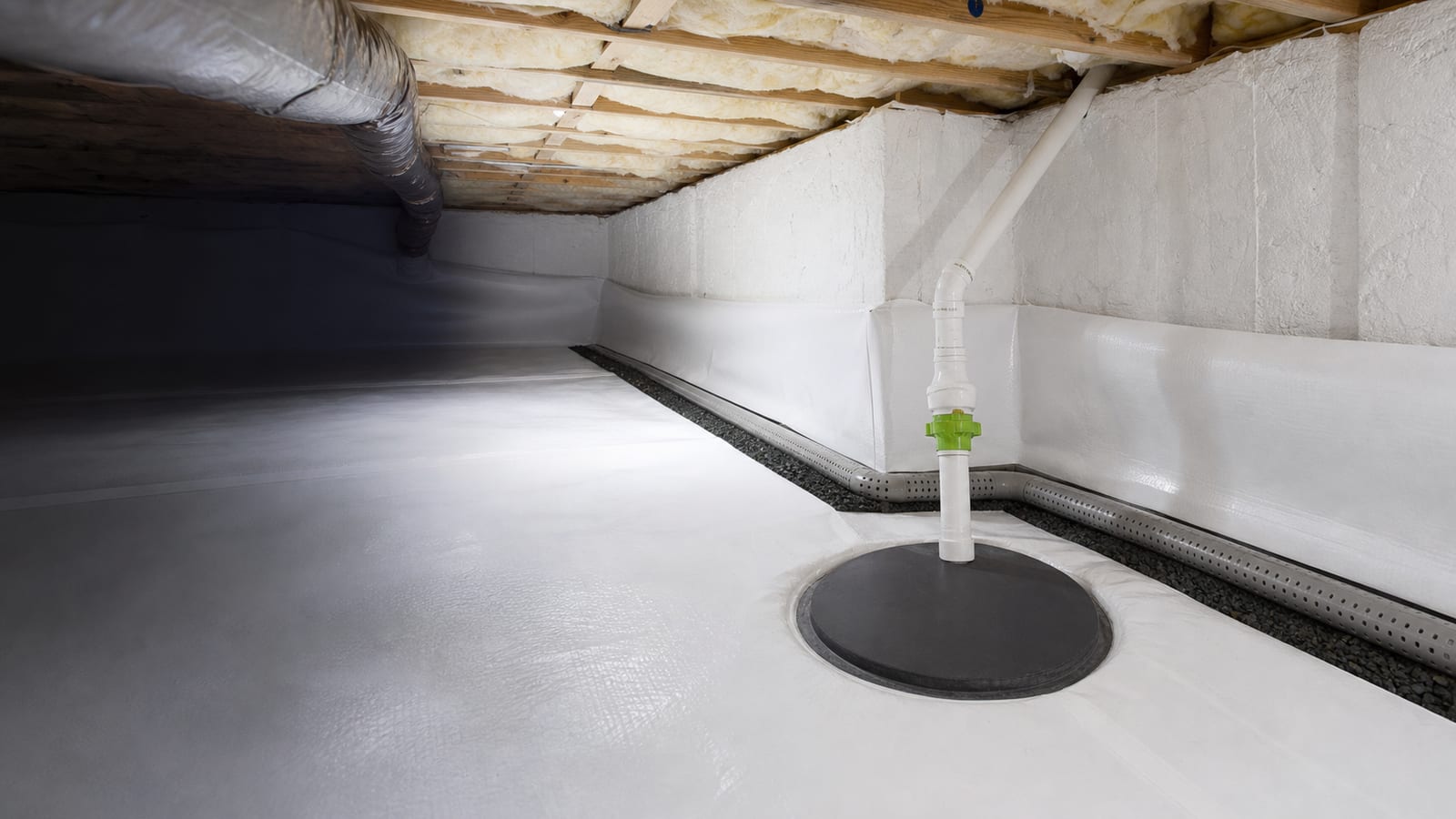
Choose the comparison that matches your decision
Each comparison separates the job a material or method performs from the larger system around it.
Encapsulation vs. Vapor Barrier
A vapor barrier is one layer of a sealed floor covering; encapsulation is the full system, sealing floor, walls, and piers and add…
Compare →Vented vs. Sealed Crawl Space
A vented crawl space lets outdoor air in through foundation vents, which in a humid climate adds moisture instead of removing it. …
Compare →6-mil vs. 12-mil vs. 20-mil Vapor Barrier
Vapor barrier thickness is measured in mils, and more mils means a tougher, more durable barrier. A 6-mil sheet is thin and tears …
Compare →Crawl Space Encapsulation vs. Waterproofing
Encapsulation manages ground vapor, outside-air exchange, and remaining humidity as part of a controlled crawl-space system. Water…
Compare →Crawl Space Dehumidifier vs. Ventilation
Ventilation exchanges crawl-space air with outdoor air. A dehumidifier removes moisture from the air it treats and needs an approp…
Compare →Crawl Space Sump Pump vs. French Drain
A French drain collects or redirects water along a defined path. A sump pump moves collected water from a basin through a discharg…
Compare →Crawl Space Repair vs. Replacement
Repair addresses a defined, accessible condition while preserving material that remains suitable for the approved scope. Replaceme…
Compare →Interior French Drain vs. Foundation Drainage
An interior French drain manages water within or immediately around the crawl-space collection path. Foundation drainage is a broa…
Compare →Compare the problem before comparing materials
A useful material comparison starts with the source of the moisture. Ground vapor, liquid water, humid outside air, plumbing leaks, and condensation can create different patterns. They can also occur together. If the cause is unclear, comparing products first can make two very different proposals look as though they solve the same problem.
Write down what you see, when it happens, and whether it changes after rain or during humid weather. The crawl space problem library can help you organize those observations. Standing water points toward one decision path, while musty odors, sweating ducts, damaged insulation, or bouncy floors may lead to different questions.
Once the condition is defined, compare how each option handles it. Ask whether water must be routed away, whether exposed soil needs to be covered, whether vents and penetrations are part of the air-sealing scope, and whether mechanical humidity control is included. A proposal should make those relationships understandable.
Compare the complete installation scope
Two proposals can name the same service while including different preparation, materials, transitions, equipment, and follow-up. For a ground liner, compare how the surface is prepared, how seams are handled, and how the material meets walls and piers. For a sealed system, compare the treatment of vents, access doors, penetrations, drainage, and humidity.
Separate moisture work from repairs. Removing damaged insulation, cleaning affected surfaces, or repairing wood may be relevant, but those tasks should not hide the underlying water or humidity plan. The crawl space inspection checklist gives you a practical set of questions to use when reviewing the space and the written scope.
Also ask what is not included. A clear exclusion is easier to evaluate than a broad promise. It lets you see whether another trade, another phase of work, or monitoring is needed before the crawl space can be considered stable.
What should a good crawl space comparison help you decide?
A good comparison should help you decide what must happen first, which parts work together, and which options are unnecessary for the conditions observed. It should also make the limits of each option clear. A vapor barrier can reduce ground vapor, but it does not route active water. A dehumidifier can manage air moisture, but it is not a substitute for correcting a recurring water path.
Look for a sequence you can explain in plain language. Water management comes before covering evidence of water. Moisture sources are addressed before damaged materials are replaced. Structural concerns are evaluated on their own facts. The crawl space cost-factor hub can help you see why scope and access affect pricing, while the service hub explains the role of each major service.
If two options still seem close, ask what evidence would change the recommendation. That question keeps the conversation focused on your home. A free inspection is useful because it allows the comparison to begin with visible conditions, measurements, access, and the way the crawl space is built.
Questions About Comparing Crawl Space Work
Is crawl space encapsulation the same as installing a vapor barrier?
No. A vapor barrier is one material used to limit ground moisture. Encapsulation is a broader system that may include a sealed ground cover, wall treatment, air sealing, drainage planning, and humidity control. The right scope depends on the water, moisture, and building conditions found during an inspection.
Is a thicker vapor barrier always the better choice?
Thickness affects durability, but it is not the only decision. Seams, fastening, wall transitions, pier treatment, surface preparation, access, and the conditions beneath the material all matter. Compare the complete installation scope and intended use instead of choosing from mil thickness alone.
Should a crawl space stay vented or be sealed?
That decision should be based on the home, the moisture pattern, and the full control plan. Closing vents without addressing water, ground moisture, air leakage, and humidity can leave important causes unresolved. Review the sealed and vented approaches as systems rather than as one isolated change.
How do I compare two crawl space proposals?
Match each line item to an observed condition. Look for clear treatment of drainage, ground moisture, air sealing, humidity control, insulation, cleaning, and structural work where relevant. Ask what is included, what is excluded, and what should be monitored after completion.
Can an inspection help me choose between options?
Yes. An inspection can document visible water paths, ground-cover condition, humidity concerns, insulation, framing, vents, and access. That evidence makes it easier to compare options because each recommendation can be tied to a condition in the space instead of a generic package.
Still Deciding?
A free inspection gives you a recommendation for your exact space.