
Moisture Control in Willow Spring, NC
Managing humidity and dampness under the home so conditions stay stable year-round. Serving Willow Spring, NC and nearby communities.
Prefer to talk? Call 704-207-9348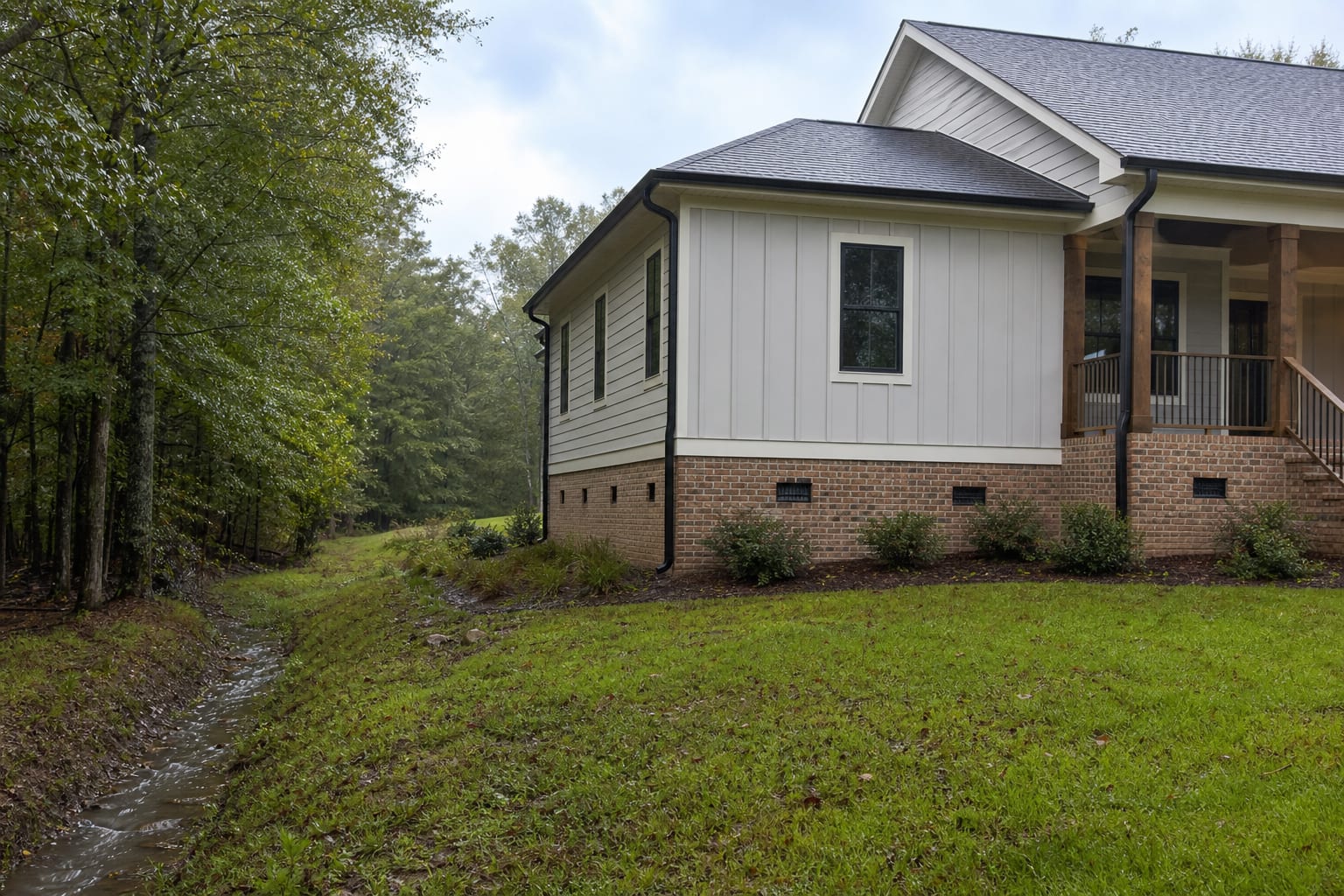
Moisture Control in Willow Spring, NC: Crawl space moisture control is about managing humidity and dampness under the home so conditions stay steady through the year rather than swinging damp on every humid day. It brings together a sealed barrier to block moisture from the soil, humidity management to keep the air in a controlled range, and drainage where liquid water is present. It is a system rather than a single device, because a dehumidifier left running in an unsealed space is fighting the outdoor air it keeps letting in. Moisture reaches a crawl space both as water and as humid air, and an approach that handles only one leaves the space damp. For a Willow Spring home, we scope moisture control to the sources the inspection actually finds, aiming for a stable space instead of one that reacts to whatever the weather is doing outside.
What the Willow Spring setting adds to this crawl space moisture control decision
Willow Spring straddles Wake and Johnston Counties beside Fuquay-Varina and is a spread-out community of larger lots and rural roads. For moisture control, the local detail that counts is how water and dampness reach the ground under a home. With many properties lacking municipal storm drainage, water moves naturally across and under the lots, keeping the soil below the crawl space damp and feeding humid air into the space through the year. On lots that sit in a low spot, the soil holds more water after heavy rain, which raises the moisture the air control has to manage. That mix of steady ground dampness and wetter spells is what makes an open crawl space hard to keep stable on its own. We look at both the humid air and any liquid water on your lot so the moisture control is scoped to the whole picture rather than one part of it.
What evidence separates one Willow Spring crawl space moisture control scope from another?
A moisture control inspection reads the space as a balance of water and air. We take relative humidity readings at several points and moisture readings on the framing and soil to establish where the space currently sits. Then we trace the sources: bare or poorly covered soil giving off ground moisture, vents and gaps letting humid outdoor air in, and any liquid water seeping or pooling on the floor. We look at the existing barrier and how well it is sealed, and at whether cool surfaces are collecting condensation. The order runs from measuring the conditions to identifying what is driving them, because the plan has to target the sources rather than the symptom. A humidity number on its own does not tell us whether the fix is more sealing, more air control, or handling water first, so the inspection ties each reading to its cause.
What belongs in the post-work Willow Spring crawl space moisture control file?
Moisture control stays effective when the humidity is watched and the equipment is kept in shape. A simple gauge in the space lets you see whether the air is holding its range, and a reading that starts creeping up is the cue to look closer. The sealing, the drainage, and any dehumidifier should be checked so a clogged filter, a blocked drain, or a loose seam does not quietly let the space drift damp again. Rather than a fixed calendar, we suggest checking more often through the wetter part of the year and easing off when readings stay steady, matching the attention to how the space is actually performing.
A concise Willow Spring crawl space moisture control review path before approval
A comparable crawl space moisture control proposal in Willow Spring explains the finding, the task, the boundary, and the final check in plain language. For crawl space moisture control, begin by comparing existing drainage and equipment with liquid-water evidence at the Willow Spring address. A second checkpoint is soil-vapor exposure, because it can change whether the plan should create a monitoring plan before another line item begins. The written proposal should show how it will separate bulk water from air moisture, correct the verified source in sequence, and define barrier and air-sealing work, with locations or quantities wherever they can be documented. Keep humid-air entry points separate from safe humidity readings and sensor location until photos, measurements, or timing connect them to one cause. If review of wet materials and odor timing falls outside the provider's role, the scope should name the dependency instead of implying that it is included. After completion, use the home foundation file to compare readings with rain and season, service filters and condensate routes, and investigate persistent changes instead of resetting them. This brief adds a local decision path without claiming that every Willow Spring home has the same accessible crawl space condition. Crawl Space Moisture Control can solve a defined accessible crawl space problem in Willow Spring, but it should not be used as a label for every damp, damaged, or uncomfortable condition. Willow Spring is an unincorporated community spanning parts of Wake and Johnston counties near Fuquay-Varina. Read that local fact beside humid-air entry points; the relationship is a question for the pre-project inspection, not a finding supplied by the city page. The location record describes spread-out properties, larger lots, and rural roads. For this crawl space moisture control decision, use that second fact to plan access and documentation around safe humidity readings and sensor location. Planning crawl space moisture control for a Willow Spring home requires two records: what the accessible crawl space shows now and what the proposed work is expected to change. Surface drainage and ground conditions can differ from lot to lot without a single municipal pattern. If evidence for existing drainage and equipment is present but liquid-water evidence is not documented, the proposal should explain why it will create a monitoring plan and what observation supports that order. If the opposite pattern is documented, the provider should revisit whether to separate bulk water from air moisture instead of carrying the first assumption into the quote. A accessible crawl space pre-project inspection should connect rain timing and lot observations to evidence at the foundation. That final Willow Spring note makes soil-vapor exposure a useful checkpoint while leaving the actual condition to the home foundation pre-project inspection. Treat crawl space moisture control in Willow Spring as a sequence of verified decisions rather than a product bundle chosen before the accessible crawl space is inspected. A line item to size equipment only after the space is understood needs a location, a stated purpose, and an exclusion that tells the customer where the service stops. The next line should route condensate to a clear destination and identify the photo, measurement, equipment detail, or access note used to close it. For closeout, log readings from a consistent location and place the dated observation beside the original Willow Spring pre-project inspection record. A later reviewer should be able to see which crawl space moisture control decision came from local context, which came from site evidence, and which remained outside the approved scope. A useful Willow Spring plan for crawl space moisture control connects visible evidence to a defined task instead of applying a preset package to every accessible crawl space. For the Willow Spring comparison, a line item to create a monitoring plan should identify the supporting observation and the earlier task it depends on. A separate line to define barrier and air-sealing work should name responsibility, access, and the point at which the customer can inspect the result. Willow Spring properties do not share one automatic crawl space moisture control scope, so the first job is to record what is present and what changed. Use safe humidity readings and sensor location as one proposal checkpoint and wet materials and odor timing as another, because combining them without evidence can hide a missing dependency. The completed Willow Spring file should leave compare readings with rain and season and service filters and condensate routes as clear follow-up actions rather than generic maintenance language.
What should happen before crawl space moisture control work is approved in Willow Spring?
The plan for moisture control addresses both forms of moisture in sequence. Liquid water is handled first with drainage where the space takes it on, because no amount of air control keeps up with standing water. Next the space is sealed, the barrier laid and its seams closed, and vents and gaps that admit humid outside air are shut off so the air inside is no longer tied to the weather. Then humidity management is added and set to hold the air in a controlled range, and confirmed to hold it under real conditions rather than installed and left. Moisture control shares most of its parts with encapsulation and waterproofing, and the difference is largely one of scope, so we coordinate those and a dehumidifier to match the level your space needs instead of over- or under-building it.
Follow the crawl space humidity and moisture diagnosis silo
Start with the Crawl Space Moisture Control pillar for the complete service definition. Use the Willow Spring, NC service-area hub for local coverage and nearby service paths.
- Crawl Space Moisture Inspection: Readings to Request in Durham, NC
- Crawl Space Dehumidifier Installation Near Me: Sizing, Drainage, and Placement in Lillington, NC
- Crawl Space Dehumidifier Service: Filter, Drain, and Humidity Checks in Raleigh, NC
- Crawl Space Dehumidifier Maintenance: A Homeowner Service Checklist in Apex, NC
Services that may connect to moisture control
These are the four closest service dependencies for this scope. The inspection should determine whether any belongs in the plan and in what order.
Frequently Asked Questions
What humidity level should a crawl space be kept at?
A controlled crawl space is generally held well below the point where mold and dampness take hold, and holding it steady matters more than any single reading. The specific target depends on the space, and we set it to the conditions the inspection finds under your home.
Do I still need humidity control if the space is already sealed?
Often, yes. Sealing blocks moisture from the soil and shuts out humid outdoor air, but the air already in the space, and any that slips in, still carries humidity that needs active management. Sealing and humidity control work together, which is why moisture control usually includes both.
Do you offer a free inspection before scoping moisture control?
Yes. Every project starts with a free crawl space inspection so you can see the humidity and moisture conditions for yourself before any work begins. The plan, and the humidity target, are built from what that inspection shows in your space.
Need Moisture Control in Willow Spring?
A free inspection makes the next step clear. Serving Willow Spring, NC and nearby communities.