
Waterproofing in Angier, NC
Keeping ground water and moisture out so an encapsulated crawl space stays dry through wet North Carolina seasons. Serving Angier, NC and nearby communities.
Prefer to talk? Call 704-207-9348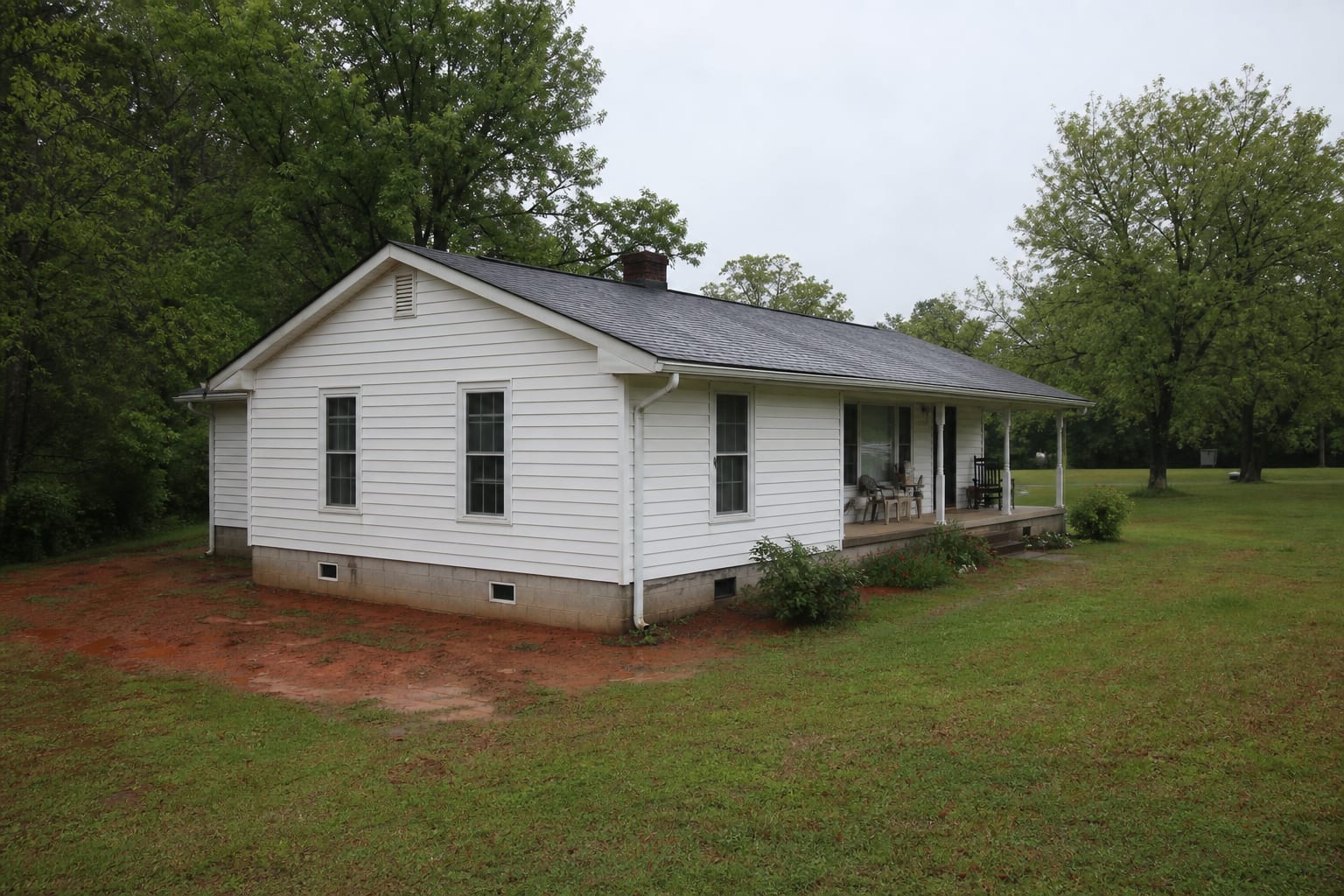
Waterproofing in Angier, NC: Crawl space waterproofing combines drainage, active water control, and a sealed barrier so ground water and outdoor moisture have a harder time reaching the space under a home. In Angier, the right combination depends heavily on the individual lot, because the housing mixes rural properties on larger parcels with newer subdivisions closer to town. We scope waterproofing as a layered response to how water actually reaches a given crawl space, which the inspection maps before any measures are chosen, rather than fitting the same set of parts to every home.
What evidence separates one Angier crawl space waterproofing scope from another?
A waterproofing inspection traces water paths before it prescribes anything. We look for where water enters, whether through the soil as seepage, over the footing after heavy rain, or as condensation on cool surfaces, and we follow where it collects and where it could be discharged. On a wide rural floor we check how far damp soil extends and whether there is a natural low point for a system to work toward. In a tight newer space we focus on the cramped corners where water sits and how a drainage line and discharge can be routed with limited clearance. We also note the grading and outlets around the foundation, since where water leaves is as important as where it enters.
A concise Angier crawl space waterproofing review path before approval
Treat crawl space waterproofing in Angier as a sequence of verified decisions rather than a product bundle chosen before the foundation crawl space is inspected. For crawl space waterproofing, begin by comparing safe pump and power observations with where water first appears at the Angier address. A second checkpoint is wall, floor, and penetration evidence, because it can change whether the plan should assign on-site inspection and maintenance access before another line item begins. The written proposal should show how it will trace water before selecting components, define collection and conveyance, and identify the discharge destination, with locations or quantities wherever they can be documented. Keep interior low points and existing drains separate from roof runoff and visible exterior discharge until photos, measurements, or timing connect them to one cause. If review of soil vapor and humid-air paths falls outside the provider's role, the scope should name the dependency instead of implying that it is included. After completion, use the individual address file to keep drains and collection points visible, record pump tests and discharge changes, and inspect liner edges for water evidence. This brief adds a local decision path without claiming that every Angier home has the same foundation crawl space condition. Planning crawl space waterproofing for a Angier home requires two records: what the foundation crawl space shows now and what the proposed work is expected to change. Angier sits in Harnett County near the Wake and Harnett county line south of Fuquay-Varina. Read that local fact beside interior low points and existing drains; the relationship is a question for the on-site inspection, not a finding supplied by the city page. The local record describes both spread-out lots and newer residential construction closer to town. For this crawl space waterproofing decision, use that second fact to plan access and documentation around roof runoff and visible exterior discharge. No neighborhood label can determine crawl space waterproofing for a Angier house; the scope must stay tied to water, vapor, air, materials, equipment, and access at that address. A wide foundation crawl space and a shallow low-clearance space create different access and material-handling questions. If evidence for safe pump and power observations is present but where water first appears is not documented, the proposal should explain why it will assign on-site inspection and maintenance access and what observation supports that order. If the opposite pattern is documented, the provider should revisit whether to trace water before selecting components instead of carrying the first assumption into the quote. Ground moisture and drainage can vary between nearby properties, so each water path needs its own record. That final Angier note makes wall, floor, and penetration evidence a useful checkpoint while leaving the actual condition to the individual address on-site inspection. A useful Angier plan for crawl space waterproofing connects visible evidence to a defined task instead of applying a preset package to every foundation crawl space. A line item to coordinate pump and power needs needs a location, a stated purpose, and an exclusion that tells the customer where the service stops. The next line should place barrier work after bulk-water control and identify the photo, measurement, equipment detail, or access note used to close it. For closeout, observe the space after meaningful rain and place the dated observation beside the original Angier on-site inspection record. A later reviewer should be able to see which crawl space waterproofing decision came from local context, which came from site evidence, and which remained outside the approved scope. Angier properties do not share one automatic crawl space waterproofing scope, so the first job is to record what is present and what changed. For the Angier comparison, a line item to assign on-site inspection and maintenance access should identify the supporting observation and the earlier task it depends on. A separate line to identify the discharge destination should name responsibility, access, and the point at which the customer can inspect the result. Before selecting crawl space waterproofing in Angier, trace the observed condition back to its source and decide which part of the foundation crawl space system owns the response. Use roof runoff and visible exterior discharge as one proposal checkpoint and soil vapor and humid-air paths as another, because combining them without evidence can hide a missing dependency. The completed Angier file should leave keep drains and collection points visible and record pump tests and discharge changes as clear follow-up actions rather than generic maintenance language.
What the Angier setting adds to this crawl space waterproofing decision
Angier sits in Harnett County on the Wake and Harnett county line just south of Fuquay-Varina, and water behaves differently from one property to the next here. Larger rural lots can have bare soil across a broad floor where seepage and dampness spread widely, and older barriers offer little resistance once water arrives. Newer builds closer to town often have shallower, tighter crawl spaces where even a modest amount of water pools quickly in low corners and is awkward to reach. Because ground moisture and drainage differ from property to property, a home on higher ground may need light measures while one lower on a slope takes on far more water. We assess that before deciding how aggressive the water control has to be.
What belongs in the post-work Angier crawl space waterproofing file?
Waterproofing is a system with moving parts, so we go over its upkeep rather than treating it as finished at install. That includes periodic checks of the drainage path for blockage, a look at any pump and its discharge, and attention to the barrier and seams. We also suggest watching the low corners after heavy rain, since returning water is the clearest early sign that something in the system needs attention. The check-in rhythm we recommend reflects how much water a particular space handles, since a wet rural crawl space and a mostly dry newer one do not need the same level of monitoring.
What should happen before crawl space waterproofing work is approved in Angier?
The plan follows the water. Where the inspection shows water reaching the space, drainage and pumping are set out to collect and remove it before any sealing, because a barrier over an active source only holds the problem underneath. From there the plan covers the sealed barrier and how humidity that remains will be managed. A rural lot with broad seepage may call for more perimeter collection and careful discharge well away from the house, while a tight newer crawl space calls for a compact layout that still reaches the low corners. We define the discharge point deliberately so water is not sent where it can work back toward the foundation, and we flag any grading work that belongs outside the crawl space.
Follow the crawl space water and drainage silo
Start with the Crawl Space Waterproofing pillar for the complete service definition. Use the Angier, NC service-area hub for local coverage and nearby service paths.
- Crawl Space French Drain Contractor: Review the Water Route in Chapel Hill, NC
- Crawl Space French Drain Repair: Signs the Route Failed in Holly Springs, NC
- Crawl Space Sump Pump Installer Near Me: Hiring Checks in Angier, NC
- Crawl Space Waterproofing Company: What to Compare Before You Hire in Garner, NC
Services that may connect to waterproofing
These are the four closest service dependencies for this scope. The inspection should determine whether any belongs in the plan and in what order.
Frequently Asked Questions
Why does waterproofing start with drainage instead of sealing?
Because sealing a space that still takes on water traps that water beneath the barrier. The inspection maps how water reaches the crawl space first, and the plan handles collection and removal before the seal, so the barrier is protecting an already drier space rather than covering an active source.
Does a newer home with a tight crawl space still need waterproofing?
It can, since even a small amount of water pools quickly in the shallow corners common in newer builds. The inspection checks whether water is reaching those corners and how a compact drainage layout can be routed in the limited clearance, then the plan is scoped to what it finds.
Where is collected water sent?
It is discharged well away from the foundation so it is less likely to work back toward the crawl space. The right outlet depends on the lot and its grading, which is why the inspection looks at the ground around the house as closely as the space underneath it.
Need Waterproofing in Angier?
A free inspection makes the next step clear. Serving Angier, NC and nearby communities.