
Crawl Space Encapsulation in Raleigh, NC
A sealed vapor barrier system across the floor, walls, and piers, paired with moisture control, to close the crawl space off from ground moisture and humid air. Serving Raleigh, NC and nearby communities.
Prefer to talk? Call 704-207-9348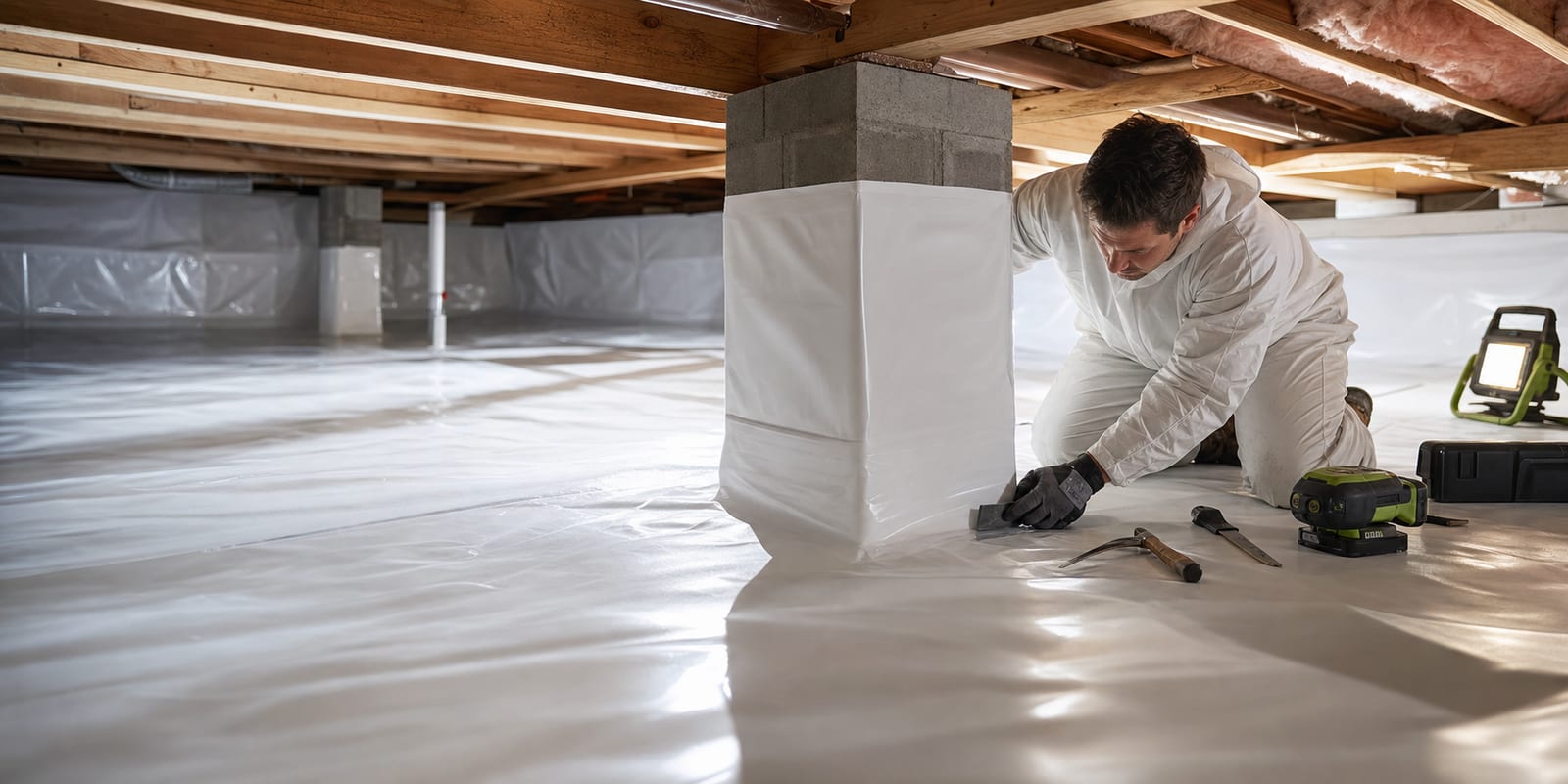
Crawl Space Encapsulation in Raleigh, NC: Crawl space encapsulation in Raleigh is a system decision, not simply a choice to place clean material over the ground. The service record defines encapsulation as a sealed vapor barrier across the floor, walls, and piers, paired with moisture control so ground moisture and humid air are addressed together. That combination is especially relevant to the range of crawl spaces described in the Raleigh location record, from older vented construction to newer suburban homes with varied existing barrier details. The correct scope depends on what the liner, walls, openings, drainage, framing, and air are doing at the specific property.
How do you build a property-specific crawl space encapsulation record in Raleigh?
The inspection should establish whether the crawl space is taking on liquid water, releasing vapor from exposed soil, receiving humid air through vents, or showing several pathways at once. For an older vented Raleigh crawl space, the review should document existing plastic, open soil, vent condition, insulation, wall and pier transitions, odor, visible staining, and safe humidity readings. For a newer space with an existing barrier, the inspection should locate incomplete edges, unsealed penetrations, gaps around piers, open access details, and any water beneath or above the material. Exterior observations should include safe review of runoff, low ground, and where water appears to move after rain.
What makes a Raleigh crawl space encapsulation plan complete?
A Raleigh encapsulation plan should begin with unresolved bulk water. If the inspection finds water entry or pooling, drainage and collection need to be defined before the sealed liner is completed. Once liquid-water paths are addressed, the plan can specify preparation, continuous floor coverage, sealed seams, wall and pier details, vent and gap sealing, access treatment, and dedicated humidity control. The written scope should distinguish what will be sealed from what must remain accessible for inspection or service. It should also explain how the dehumidifier drains and how the system can be checked later. The service should match the observed crawl space rather than assuming the same package for an older vented home and a newer suburban home.
Which local variables shape crawl space encapsulation in Raleigh
For crawl space encapsulation, Raleigh's service-area context includes older Inside-the-Beltline homes, newer suburban homes, established vented crawl spaces, and humid Piedmont summers. Those facts make the sequence important. The local context simply gives the inspection a reason to compare rain history, low areas, foundation-wall evidence, ground cover, and humidity before a sealed system is specified. Raleigh is the state capital and Wake County's largest city. That scale does not make one crawl space encapsulation scope appropriate across the city. An older Inside-the-Beltline house with a vented crawl space can present different access, barrier, insulation, and framing details from a newer suburban home. The free inspection should document the specific property before work is selected.
How Raleigh evidence connects to the crawl space encapsulation scope
Raleigh properties do not share one automatic crawl space encapsulation scope, so the first job is to record what is present and what changed. For crawl space encapsulation, begin by comparing humidity equipment and condensate routing with ground cover and exposed soil at the Raleigh address. A second checkpoint is floor, wall, and pier transitions, because it can change whether the plan should define humidity control and drainage before another line item begins. The written proposal should show how it will correct verified water paths first, remove listed debris or failed material, and create continuous floor coverage, with locations or quantities wherever they can be documented. Keep vents, gaps, and the access door separate from bulk-water evidence and low points until photos, measurements, or timing connect them to one cause. If review of framing, insulation, ducts, and plumbing falls outside the provider's role, the scope should name the dependency instead of implying that it is included. After completion, use the residence file to inspect seams, walls, and wrapped piers, check equipment filters and drains, and document any later trade entry. This brief adds a local decision path without claiming that every Raleigh home has the same below-floor crawl space condition. Raleigh owners should be able to read a crawl space encapsulation scope and see why every component is present, what it depends on, and how it will be checked. Raleigh combines older Inside-the-Beltline houses with decades of newer suburban growth. Read that local fact beside vents, gaps, and the access door; the relationship is a question for the field review, not a finding supplied by the city page. A long-established vented below-floor crawl space can differ sharply from a newer space with partial barrier details. For this crawl space encapsulation decision, use that second fact to plan access and documentation around bulk-water evidence and low points. Crawl Space Encapsulation in Raleigh should start with the condition below the individual home, because the city name cannot identify a water path, material problem, or required component. The city scale does not make one service package suitable across Wake County properties. If evidence for humidity equipment and condensate routing is present but ground cover and exposed soil is not documented, the proposal should explain why it will define humidity control and drainage and what observation supports that order. If the opposite pattern is documented, the provider should revisit whether to correct verified water paths first instead of carrying the first assumption into the quote. Humid Piedmont summers and rain history make water, ground cover, air paths, and access useful checkpoints. That final Raleigh note makes floor, wall, and pier transitions a useful checkpoint while leaving the actual condition to the residence field review. Before selecting crawl space encapsulation in Raleigh, trace the observed condition back to its source and decide which part of the below-floor crawl space system owns the response. A line item to seal seams and termination details needs a location, a stated purpose, and an exclusion that tells the customer where the service stops. The next line should preserve field review and service access and identify the photo, measurement, equipment detail, or access note used to close it. For closeout, record humidity with dates and weather and place the dated observation beside the original Raleigh field review record. A later reviewer should be able to see which crawl space encapsulation decision came from local context, which came from site evidence, and which remained outside the approved scope. A Raleigh field review turns crawl space encapsulation from a broad search term into a residence-specific scope with observable reasons for each line item. For the Raleigh comparison, a line item to define humidity control and drainage should identify the supporting observation and the earlier task it depends on. A separate line to create continuous floor coverage should name responsibility, access, and the point at which the customer can inspect the result. The practical question in Raleigh is not whether crawl space encapsulation exists as a service, but whether its components match the documented below-floor crawl space condition. Use bulk-water evidence and low points as one proposal checkpoint and framing, insulation, ducts, and plumbing as another, because combining them without evidence can hide a missing dependency. The completed Raleigh file should leave inspect seams, walls, and wrapped piers and check equipment filters and drains as clear follow-up actions rather than generic maintenance language. Raleigh's older Inside-the-Beltline housing is a prompt to photograph access, additions, vents, and earlier material rather than evidence that any one defect exists. Newer suburban construction can still have a distinct barrier, drainage, equipment, or clearance question that must be checked at the address. The size of the city makes a residence sketch more useful because a broad Raleigh label cannot preserve where an observation occurred. Humid Piedmont weather belongs in the timing notes, while the water source, material condition, and service decision remain tied to the home. For crawl space encapsulation, apply those Raleigh distinctions to humidity equipment and condensate routing, floor, wall, and pier transitions, and bulk-water evidence and low points one location at a time. The provider should connect correct verified water paths first to a documented finding and should explain whether remove listed debris or failed material changes access or sequencing. Close the local comparison by stating how the owner will document any later trade entry and when a change at framing, insulation, ducts, and plumbing requires another review.
What should be checked after crawl space encapsulation in Raleigh?
After encapsulation, a Raleigh homeowner should keep a simple record of humidity, equipment service, drain condition, liner changes, and post-rain observations. The access should close as intended, seams and wall attachments should remain intact, and no later trade should leave punctures or open penetrations. A clean liner makes change easier to see, but it does not remove the need to check for water underneath, dehumidifier drainage, or new exterior runoff patterns. Maintenance should follow the installed equipment instructions and document what was actually observed.
Follow the crawl space encapsulation silo
Start with the Crawl Space Encapsulation pillar for the complete service definition. Use the Raleigh, NC service-area hub for local coverage and nearby service paths.
Services that may connect to crawl space encapsulation
These are the four closest service dependencies for this scope. The inspection should determine whether any belongs in the plan and in what order.
Frequently Asked Questions
Does every Raleigh crawl space need full encapsulation?
No. The Raleigh record specifically describes a mix of older vented crawl spaces and newer suburban homes with varied existing barrier details. An inspection should identify ground vapor, humid-air entry, liquid water, and existing system gaps before the scope is chosen. Some properties may need drainage before sealing, while another may need continuous barrier details and humidity control. For crawl space encapsulation, Raleigh's service-area context includes older Inside-the-Beltline homes, newer suburban homes, established vented crawl spaces, and humid Piedmont summers.
Why should drainage be checked before encapsulating a Raleigh crawl space?
For crawl space encapsulation, Raleigh's service-area context includes older Inside-the-Beltline homes, newer suburban homes, established vented crawl spaces, and humid Piedmont summers. A liner can separate the crawl space from soil vapor, but it should not be installed over an unresolved water path without a plan for collection and discharge. The inspection should determine whether water enters after rain, where it collects, and whether drainage or a sump is needed before the floor, wall, and pier sealing is completed.
What should be documented after a Raleigh encapsulation project?
Keep the final scope, photos of floor, walls, piers, vents, access, drainage, and equipment, plus manuals and maintenance notes. Record the dehumidifier drain route and any sump discharge. Take comparison photos after significant rain and after another trade enters. The goal is to make later changes visible and show the next inspector how the Raleigh crawl space system was intended to manage water, vapor, and humid air.
Need Crawl Space Encapsulation in Raleigh?
A free inspection makes the next step clear. Serving Raleigh, NC and nearby communities.