
Insulation Installation in Willow Spring, NC
Insulating the sealed crawl space perimeter to support stable, controlled conditions. Serving Willow Spring, NC and nearby communities.
Prefer to talk? Call 704-207-9348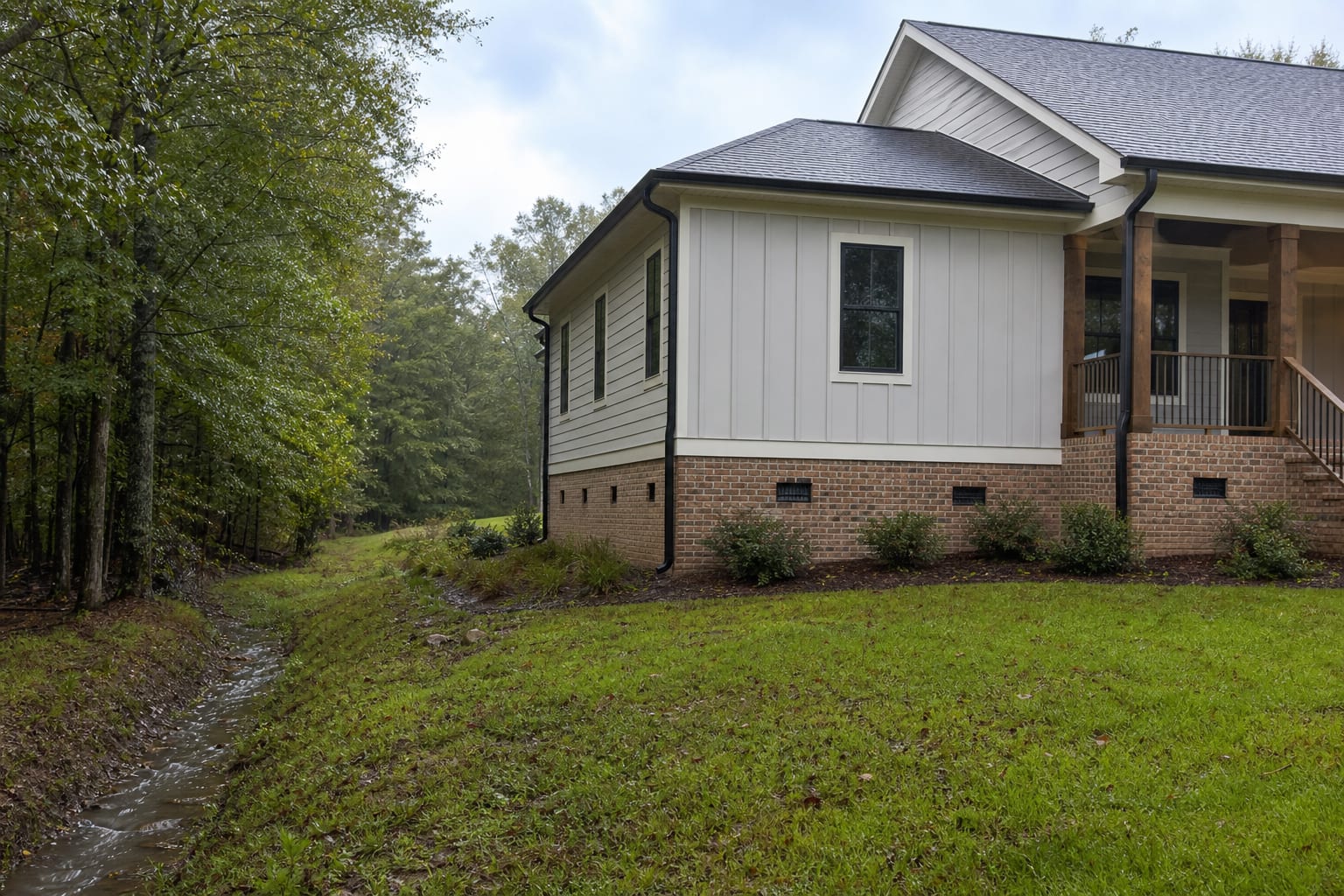
Insulation Installation in Willow Spring, NC: Crawl space insulation installation in Willow Spring should support the selected vented or sealed-space design after liquid water, ground vapor, and humidity are managed. Perimeter insulation in a sealed crawl space serves a different role from material installed between floor joists in a vented one. The scope should state exactly where insulation belongs, how it integrates with the liner and air seal, and which framing, drains, sump components, equipment, utilities, and pest-inspection areas must remain accessible. Insulation is a thermal component and should not be sold as a substitute for moisture control.
Which observations define the insulation installation scope in Willow Spring?
Confirm that bulk water is managed, wet materials are addressed, and the barrier, vents, access, drainage, and humidity-control design are defined. Document wall and pier surfaces, rim areas, penetrations, joists, beams, subfloor, existing insulation, plumbing, ducts, wiring, drains, sump, dehumidifier, condensate route, and required service clearances. Map any section that should remain visible for structural or pest inspection. A cool or uneven floor should be connected to actual thermal and framing evidence rather than treated as proof of one missing insulation section. State where limited access prevents full observation before the installation plan is accepted.
What makes this Willow Spring insulation installation decision different?
Treat insulation installation in Willow Spring as a sequence of verified decisions rather than a product bundle chosen before the crawl space area is inspected. For insulation installation, begin by comparing rim, wall, and floor air paths with duct and pipe clearances at the Willow Spring address. A second checkpoint is access to field inspection areas, because it can change whether the plan should state material and location before another line item begins. The written proposal should show how it will detail support and edge treatment, preserve service and field inspection access, and define the thermal boundary, with locations or quantities wherever they can be documented. Keep existing insulation and fasteners separate from wood moisture and active leaks until photos, measurements, or timing connect them to one cause. If review of the intended crawl space area design falls outside the provider's role, the scope should name the dependency instead of implying that it is included. After completion, use the project address file to document later utility work, inspect for sagging or displacement, and watch moisture near the installed assembly. This brief adds a local decision path without claiming that every Willow Spring home has the same crawl space area condition. Planning insulation installation for a Willow Spring home requires two records: what the crawl space area shows now and what the proposed work is expected to change. Willow Spring is an unincorporated community spanning parts of Wake and Johnston counties near Fuquay-Varina. Read that local fact beside existing insulation and fasteners; the relationship is a question for the field inspection, not a finding supplied by the city page. The location record describes spread-out properties, larger lots, and rural roads. For this insulation installation decision, use that second fact to plan access and documentation around wood moisture and active leaks. No neighborhood label can determine insulation installation for a Willow Spring house; the scope must stay tied to water, vapor, air, materials, equipment, and access at that address. Surface drainage and ground conditions can differ from lot to lot without a single municipal pattern. If evidence for rim, wall, and floor air paths is present but duct and pipe clearances is not documented, the proposal should explain why it will state material and location and what observation supports that order. If the opposite pattern is documented, the provider should revisit whether to detail support and edge treatment instead of carrying the first assumption into the quote. A crawl space area field inspection should connect rain timing and lot observations to evidence at the foundation. That final Willow Spring note makes access to field inspection areas a useful checkpoint while leaving the actual condition to the project address field inspection. A useful Willow Spring plan for insulation installation connects visible evidence to a defined task instead of applying a preset package to every crawl space area. A line item to remove listed failed material needs a location, a stated purpose, and an exclusion that tells the customer where the service stops. The next line should correct moisture before installation and identify the photo, measurement, equipment detail, or access note used to close it. For closeout, keep vents and enclosure details consistent with the design and place the dated observation beside the original Willow Spring field inspection record. A later reviewer should be able to see which insulation installation decision came from local context, which came from site evidence, and which remained outside the approved scope. Willow Spring properties do not share one automatic insulation installation scope, so the first job is to record what is present and what changed. For the Willow Spring comparison, a line item to state material and location should identify the supporting observation and the earlier task it depends on. A separate line to define the thermal boundary should name responsibility, access, and the point at which the customer can inspect the result. Before selecting insulation installation in Willow Spring, trace the observed condition back to its source and decide which part of the crawl space area system owns the response. Use wood moisture and active leaks as one proposal checkpoint and the intended crawl space area design as another, because combining them without evidence can hide a missing dependency. The completed Willow Spring file should leave document later utility work and inspect for sagging or displacement as clear follow-up actions rather than generic maintenance language.
Why Willow Spring conditions matter before insulation installation
Willow Spring's large rural lots and natural drainage routes make preparation important. The unincorporated community lies across the Wake and Johnston county line beside Fuquay-Varina, and municipal storm drainage is absent on many properties. Water can move across or beneath a lot, with low crawl spaces taking on ground water after heavy rain. These conditions do not determine insulation type, but they do require the inspection to resolve bulk water and evaluate soil-vapor coverage before material conceals walls or framing. Damp soil, humid outdoor air, plumbing, duct condensation, and prior insulation condition should be separated for the individual house.
What Willow Spring changes deserve a follow-up insulation installation inspection?
Keep the layout, material records, completion photographs, and intentionally open inspection areas. Track Willow Spring water, humidity, liner, drainage, and equipment because moisture control protects the installation. After plumbing, HVAC, pest, electrical, or cable work, confirm that insulation was not removed, compressed, displaced, or placed over a drain or control. Compare transitions at the access, piers, rim, walls, and utility penetrations with the original images. Loose material, damp edges, odor, or concealed equipment should be evaluated before restoration. Record temporary removal and show how the insulation, barrier, air seal, and service clearance were restored. Use the completion record to identify any section intentionally left clear for structural or pest inspection. Where material meets the liner or a sealed wall, photograph the transition without concealing drains or damp surfaces. In a Willow Spring crawl space affected by later rural water, inspect the source first and remove only what is needed for safe evaluation rather than covering a changed condition.
How do Willow Spring findings become a insulation installation work plan?
The Willow Spring plan should identify material location, preparation, fastening or attachment approach, transitions, inspection gaps, and integration with the sealed barrier. Do not cover active leaks, wet masonry, unknown deposits, uncertain framing, drain inlets, equipment controls, or service paths. If earlier insulation was removed, use its bay map and source records before closing the area. The design should distinguish insulation from encapsulation, drainage, air sealing, and dehumidification and explain how those components continue to perform their own roles. Completion photographs should show wall, pier, access, utility, and equipment clearances before the space becomes harder to view.
Follow the crawl space insulation silo
Start with the Insulation Installation pillar for the complete service definition. Use the Willow Spring, NC service-area hub for local coverage and nearby service paths.
- Crawl Space Insulation Repair: When a Small Fix Is Enough in Willow Spring, NC
- Crawl Space Insulation Replacement: Removal, Drying, and Reinstallation in Angier, NC
- Crawl Space Insulation Company: Questions to Ask About Moisture First in Lillington, NC
- How Do You Compare Crawl Space Insulation Contractors in Wake Forest, NC?
Services that may connect to insulation installation
These are the four closest service dependencies for this scope. The inspection should determine whether any belongs in the plan and in what order.
Frequently Asked Questions
Will insulation stop ground water on a Willow Spring lot?
No. Liquid water needs source correction and may require drainage or a sump. Soil vapor needs a continuous barrier, and humid enclosed air may need sealing and dehumidification. Insulation performs a thermal role after those moisture conditions are incorporated into the design.
Can insulation be installed over a wet wall or framing member?
It should not conceal active wetting or an uncertain material condition. The source, drying, and any required repair should be documented first. Important connections, drains, equipment, pest-inspection areas, and service routes should remain accessible after installation.
Why photograph insulation clearances?
Completion images show where material ends around piers, vents, access, drains, plumbing, wiring, and equipment. Later trades can compare their work with that baseline and restore displaced sections without covering a service point or breaking the barrier and air-seal details.
Need Insulation Installation in Willow Spring?
A free inspection makes the next step clear. Serving Willow Spring, NC and nearby communities.