
Structural Repair in Willow Spring, NC
Addressing structural concerns under the home, coordinating with the right trade when needed. Serving Willow Spring, NC and nearby communities.
Prefer to talk? Call 704-207-9348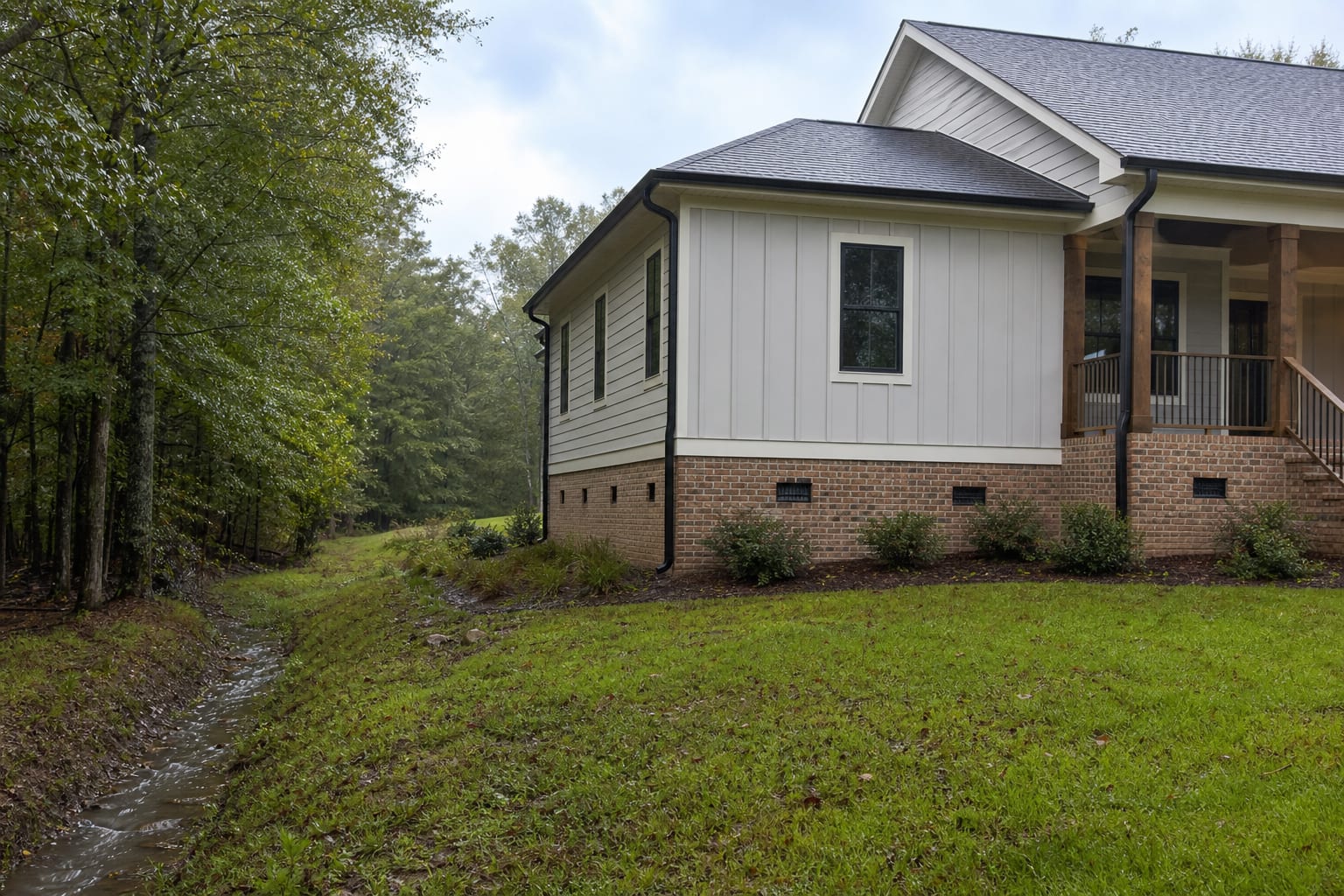
Structural Repair in Willow Spring, NC: Crawl space structural repair in Willow Spring addresses a specific beam, joist, subfloor, support, bearing point, or connection after the condition and contributing causes are evaluated. Floor movement, dark wood, moisture, odor, or a low rural lot can justify inspection, but none proves that a framing component has failed. The repair plan should identify exact locations, access, preparation, support sequence, connection details, and any appropriate professional evaluation. Encapsulation and dehumidification can help control moisture around a repair, but they are not structural work and should not be described as such.
How local construction changes a Willow Spring structural repair scope
The unincorporated Willow Spring community stretches across larger lots on the Wake and Johnston county line beside Fuquay-Varina. Many properties do not have municipal storm drainage, so water can travel naturally across or beneath the land. A crawl space in a low spot can receive ground water after heavy rain. Those locked facts make moisture mapping important around framing, while remaining insufficient to establish decay, settlement, or failure. Plumbing leakage, HVAC condensate, ground vapor, vented humidity, fastening, alterations, support layout, and earlier repairs can create different patterns. Direct member-by-member evidence must control the structural scope.
How is a Willow Spring crawl space checked before structural repair?
Map the indoor symptom relative to walls, fixtures, and floor areas, then locate the related crawl space beams, joists, subfloor, supports, bearings, connections, spans, notches, holes, fasteners, and prior work. Record moisture and visible conditions on adjacent members, not only the most obvious area. Check nearby plumbing, ducts, drainage, barrier, standing water, insulation, and access restrictions. Do not call dark color decay or label a member failed from a photograph alone. If insulation blocks the view, identify controlled removal needed for evaluation. State which areas cannot be observed and route engineering or other qualified review where the condition requires it.
How do Willow Spring homeowners keep the structural repair scope visible after completion?
Keep the original symptom map, measurements, professional recommendations when used, and before, during, and after photographs. Continue maintenance for the drainage, barrier, sealing, sump, and humidity components connected to the moisture source. Reinspect the repaired Willow Spring area after comparable wet weather and after plumbing, HVAC, pest, electrical, or remodeling work nearby. Preserve clear views of important bearings and connections. Renewed dampness, staining, movement, loose hardware, or a change in the indoor symptom should be compared with the baseline. A new observation deserves evaluation rather than an assumption that the same component failed again. Note every new notch, hole, utility penetration, added load, or alteration near the repair because later work can change the surrounding floor system. If the original indoor symptom changes, map its new location before entering the crawl space. Comparing both views helps separate moisture recurrence, an adjacent member issue, and a finish-floor condition from the completed structural scope.
Connecting Willow Spring context to structural repair line items
Before selecting structural repair in Willow Spring, trace the observed condition back to its source and decide which part of the crawl space area system owns the response. For structural repair, begin by comparing conditions needing engineering or another trade with the reported floor symptom at the Willow Spring address. A second checkpoint is joists, beams, posts, and bearings, because it can change whether the plan should document final member and support conditions before another line item begins. The written proposal should show how it will locate each affected member, state temporary support when required, and define the repair method and responsibility, with locations or quantities wherever they can be documented. Keep footings and support alignment separate from wood damage and moisture until photos, measurements, or timing connect them to one cause. If review of past alterations and additions falls outside the provider's role, the scope should name the dependency instead of implying that it is included. After completion, use the project address file to monitor the corrected moisture source, recheck supported areas for change, and avoid undocumented adjustment by later trades. This brief adds a local decision path without claiming that every Willow Spring home has the same crawl space area condition. Structural Repair in Willow Spring should start with the condition below the individual home, because the city name cannot identify a water path, material problem, or required component. Willow Spring is an unincorporated community spanning parts of Wake and Johnston counties near Fuquay-Varina. Read that local fact beside footings and support alignment; the relationship is a question for the field inspection, not a finding supplied by the city page. The location record describes spread-out properties, larger lots, and rural roads. For this structural repair decision, use that second fact to plan access and documentation around wood damage and moisture. For a Willow Spring customer, structural repair becomes a clear decision only after water, air, materials, access, and existing equipment are documented separately. Surface drainage and ground conditions can differ from lot to lot without a single municipal pattern. If evidence for conditions needing engineering or another trade is present but the reported floor symptom is not documented, the proposal should explain why it will document final member and support conditions and what observation supports that order. If the opposite pattern is documented, the provider should revisit whether to locate each affected member instead of carrying the first assumption into the quote. A crawl space area field inspection should connect rain timing and lot observations to evidence at the foundation. That final Willow Spring note makes joists, beams, posts, and bearings a useful checkpoint while leaving the actual condition to the project address field inspection. A Willow Spring field inspection turns structural repair from a broad search term into a project address-specific scope with observable reasons for each line item. A line item to correct the moisture driver needs a location, a stated purpose, and an exclusion that tells the customer where the service stops. The next line should separate observed damage from hidden work and identify the photo, measurement, equipment detail, or access note used to close it. For closeout, retain the member map and photos and place the dated observation beside the original Willow Spring field inspection record. A later reviewer should be able to see which structural repair decision came from local context, which came from site evidence, and which remained outside the approved scope. The practical question in Willow Spring is not whether structural repair exists as a service, but whether its components match the documented crawl space area condition. For the Willow Spring comparison, a line item to document final member and support conditions should identify the supporting observation and the earlier task it depends on. A separate line to define the repair method and responsibility should name responsibility, access, and the point at which the customer can inspect the result. A comparable structural repair proposal in Willow Spring explains the finding, the task, the boundary, and the final check in plain language. Use wood damage and moisture as one proposal checkpoint and past alterations and additions as another, because combining them without evidence can hide a missing dependency. The completed Willow Spring file should leave monitor the corrected moisture source and recheck supported areas for change as clear follow-up actions rather than generic maintenance language.
Which Willow Spring structural repair tasks and exclusions make the proposal comparable?
The Willow Spring plan should identify each component, location, observed condition, preparation, temporary support when required, repair sequence, connection documentation, and moisture-source correction. If active rural water, plumbing, condensate, or high humidity affects the area, the plan should coordinate drainage, barrier, drying, or equipment work without presenting those measures as the repair itself. Access routes must protect utilities and foundation supports. Completion photographs should show bearing and connections before insulation or other material obscures them. The written scope should distinguish included framing from adjacent areas that remain suitable, inaccessible, uncertain, or assigned to another qualified discipline.
Follow the crawl space structural repair silo
Start with the Structural Repair pillar for the complete service definition. Use the Willow Spring, NC service-area hub for local coverage and nearby service paths.
- Crawl Space Structural Repair Near Me: When Floors Sag or Bounce in Raleigh, NC
- Crawl Space Jack Installation: When Added Support May Be Appropriate in Holly Springs, NC
- Floor Support Repair: What to Inspect Before Adding Jacks in Apex, NC
- Floor Joist Repair Contractor: What a Structural Estimate Should Document in Lillington, NC
Services that may connect to structural repair
These are the four closest service dependencies for this scope. The inspection should determine whether any belongs in the plan and in what order.
Frequently Asked Questions
Does a wet Willow Spring crawl space automatically need structural repair?
No. Water and humidity can affect framing, but the member must be directly evaluated. A crawl space may need drainage, drying, barrier, or equipment work without structural damage. Repair belongs in the scope only where the beam, joist, subfloor, support, or connection evidence supports it.
Why inspect adjacent framing instead of only the visible spot?
Water and load paths can extend beyond one stain or floor symptom. Comparing neighboring members, supports, connections, and moisture conditions helps define the actual boundary and avoids both an incomplete repair and unsupported work on framing that remains suitable.
Should rural drainage be fixed before a framing repair?
The sequence depends on safety, access, active water, and the repair. Immediate support concerns may need priority, while water removal, drainage, plumbing correction, or drying may be needed to expose and protect the area. The written plan should state the order and responsibilities.
Need Structural Repair in Willow Spring?
A free inspection makes the next step clear. Serving Willow Spring, NC and nearby communities.