The best insulation for a crawl space with a dirt floor depends first on whether the space will remain vented or become closed. Before selecting batts, foam board, or spray-applied foam, control soil vapor, bulk water, and humid-air entry. Insulation cannot make an exposed-soil crawl space dry, and wet conditions can quickly undermine new material.
A dirt floor is not just an unfinished surface. Soil can release water vapor into the crawl space even when no puddles are visible. Rain, groundwater, foundation-wall entry, and plumbing leaks can add liquid water too. In North Carolina’s warm, humid conditions, choosing insulation before resolving those sources can lead to sagging batts, condensation, hidden dampness, and repeated work.
What insulation works best over a dirt-floor crawl space?
There is no single best product for every dirt-floor crawl space. In a vented design, floor-joist insulation is common. In a properly closed design, perimeter insulation may be appropriate. The best choice is the material and location that complete the intended enclosure after ground vapor, drainage, air leakage, and wet materials are addressed.
For a vented crawl space, fiberglass or another approved cavity insulation may be placed beneath the subfloor. It needs full contact with the floor above, correct support, and continuous coverage. The exposed ground still needs attention because insulation does not block soil moisture. Open vents also keep the crawl space connected to outdoor conditions.
For a closed crawl space, the ground and perimeter become parts of a coordinated moisture and thermal system. A continuous ground liner, sealed penetrations, perimeter details, closed vents, controlled access, drainage where needed, and an appropriate drying strategy work together. Insulation may then move to eligible foundation walls or another location specified for the design.
The U.S. Department of Energy’s unvented and conditioned crawl space overview describes how the crawl space can be brought within the building enclosure. It supports a system decision, not a product-only shortcut.
Why does exposed soil change the insulation decision?
Exposed soil changes the decision because it can add water vapor continuously and can become a bulk-water pathway during wet weather. Insulation manages heat flow, not ground vapor. If the floor remains uncovered or poorly covered, the crawl space may stay humid enough to damage insulation, condense on cool surfaces, and keep wood damp.
Dry-looking soil can still release moisture. Surface appearance changes with temperature and recent weather, while vapor movement can continue below. A plastic sheet that covers only part of the floor may reduce some evaporation but leave large openings at edges, piers, seams, and penetrations.
Bulk water requires a separate diagnosis. Water may enter at a low foundation wall, flow beneath an access door, rise at a low point, spill from a plumbing line, or collect from a condensate problem. A ground liner should not be expected to function as a drainage system. Water can remain trapped above or below it if the source and route are not managed.
Humid air is the third concern. Outdoor air entering through vents can contact cool ducts and framing. Condensation can occur even when the soil liner is complete. That is why crawl space moisture control evaluates vapor, liquid water, and air movement as related but distinct issues.
Should you cover the dirt before installing insulation?
Yes, exposed soil should be addressed before new insulation is treated as complete moisture-resistant work. The specific ground-covering detail depends on whether the crawl space stays vented or becomes closed. Coverage, seams, walls, piers, penetrations, drainage, access, and future inspection must all be considered instead of placing a loose sheet only where it is easy.
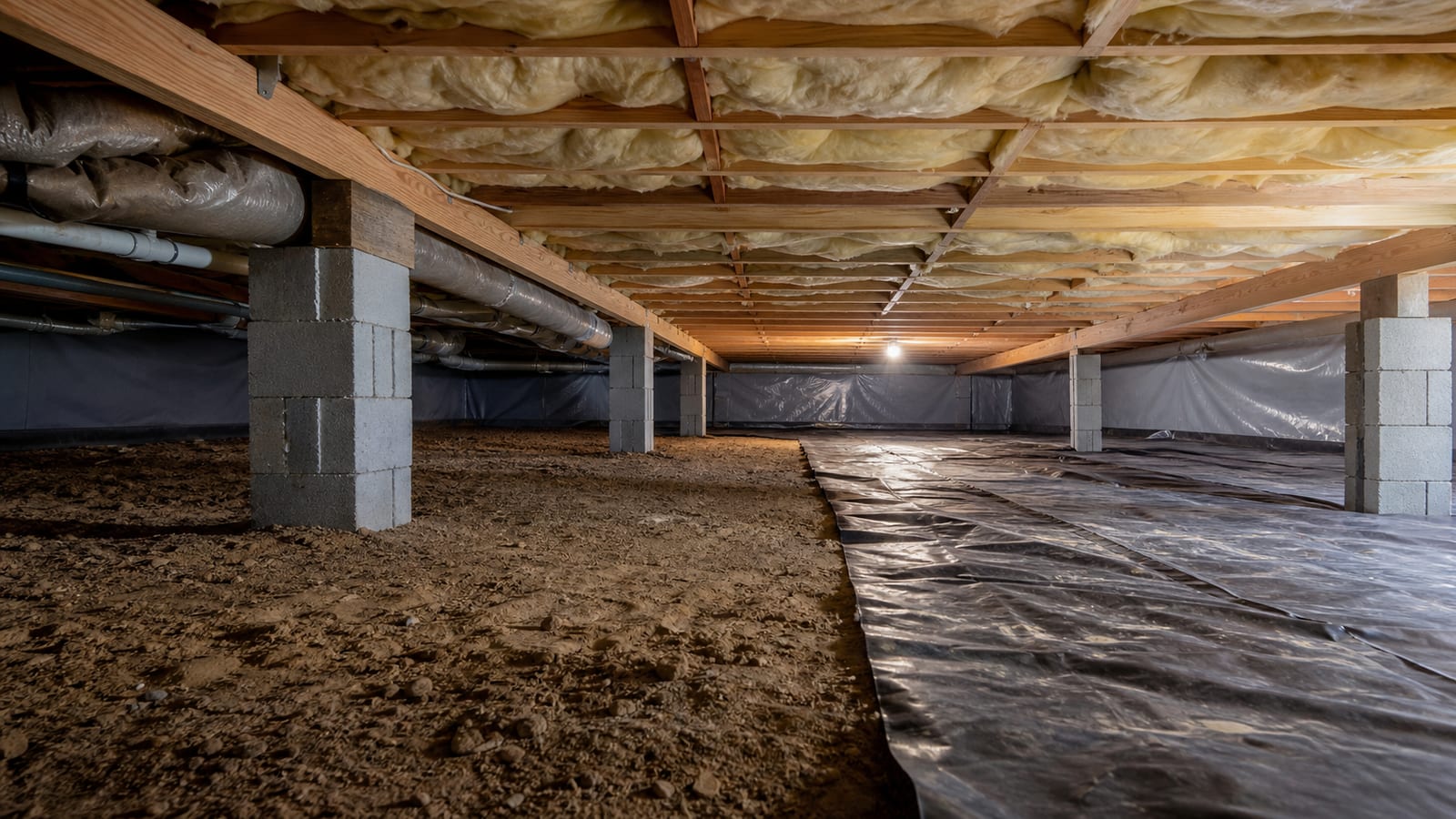
In a vented space, ground coverage can reduce soil vapor even though outdoor air still enters. In a closed space, the ground liner becomes a more integrated part of the air and vapor-control system. That usually requires more deliberate seam, edge, and penetration treatment.
Before covering soil, document low points, evidence of runoff, plumbing locations, drains, sump components, termite access requirements, and visible foundation conditions. A liner can hide where water first appears. Photos and location notes preserve evidence for future troubleshooting.
Do not seal over debris, sharp objects, wet organic material, animal waste, or unknown contamination. These conditions can damage the liner or create unsafe handling. Remove only what can be handled safely and keep structural, electrical, and biological hazards outside a homeowner cleanout scope.
What are the top 6 steps before insulating a dirt-floor crawl space?
The right sequence prevents insulation from becoming a cover for unresolved moisture:
-
Define the enclosure
Decide whether the crawl space remains vented or becomes closed. This choice controls where insulation belongs, how vents and access are treated, and how humidity is managed. Do not combine isolated details from both designs without a coherent assembly.
-
Trace liquid water
Inspect after rain when possible. Look at grading, downspouts, wall staining, low points, plumbing, condensate, and equipment drains. Record the path and timing rather than assuming every wet area comes from groundwater.
-
Evaluate soil-vapor coverage
Note uncovered ground, torn plastic, open seams, lifted edges, pier gaps, and penetrations. Determine whether the existing sheet is a temporary ground cover or part of a detailed closed-crawl-space liner system.
-
Inspect materials above
Check joists, subfloor, beams, ducts, pipes, and existing insulation for dampness, condensation, staining, sagging, gaps, and pest disturbance. Stop where access, electricity, structure, or contamination makes inspection unsafe.
-
Resolve drainage and drying
Correct active water sources and decide how the space will dry. A liner and insulation can slow observation of remaining water. Confirm drains, sump components, and dehumidification are appropriate to the actual design.
-
Install and document the thermal layer
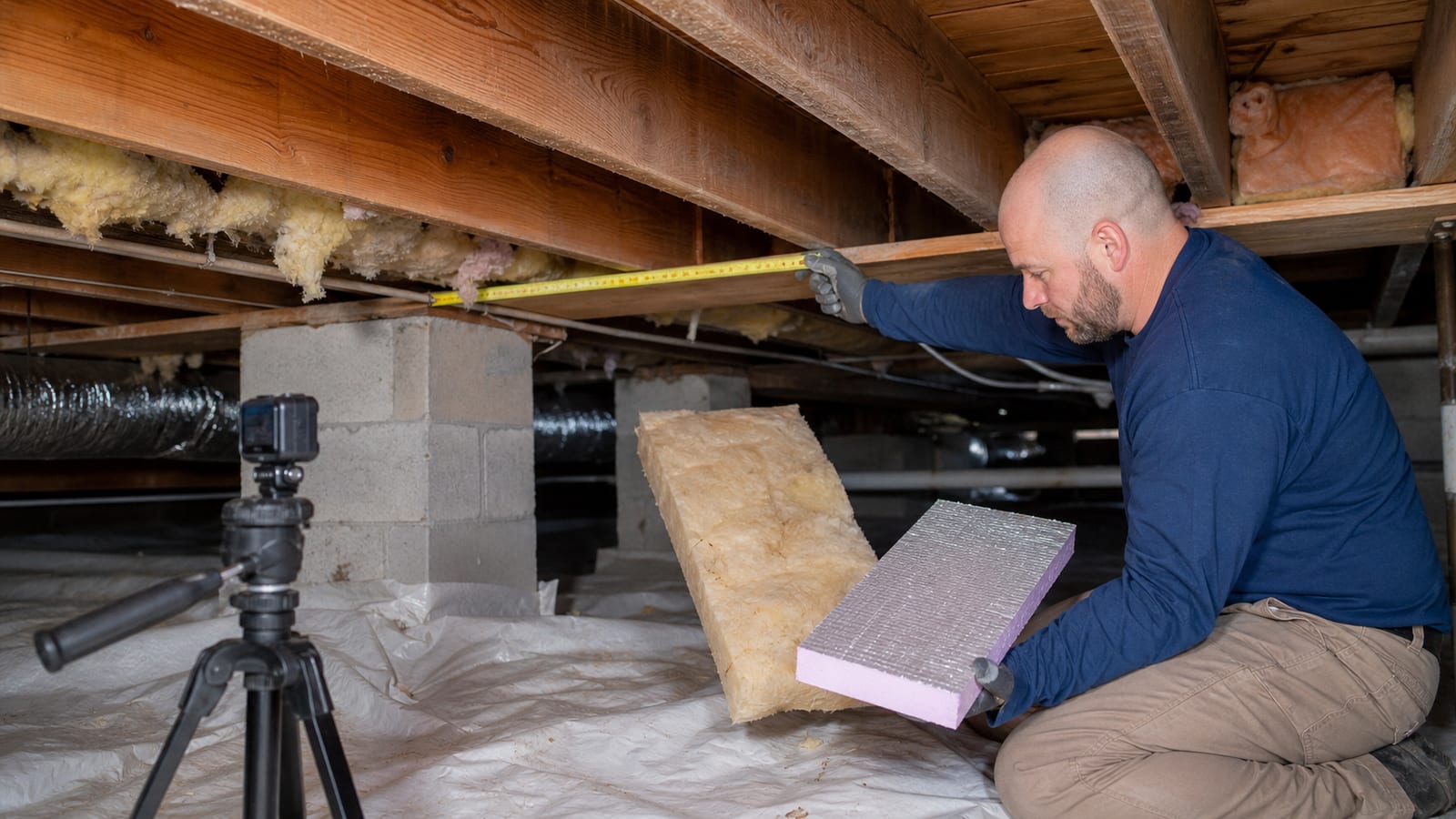
Place insulation at the intended boundary, detail transitions, preserve access, and photograph concealed work. Document areas left open for inspection and the maintenance checks the assembly will need.
Are floor-joist batts a good choice over dirt?
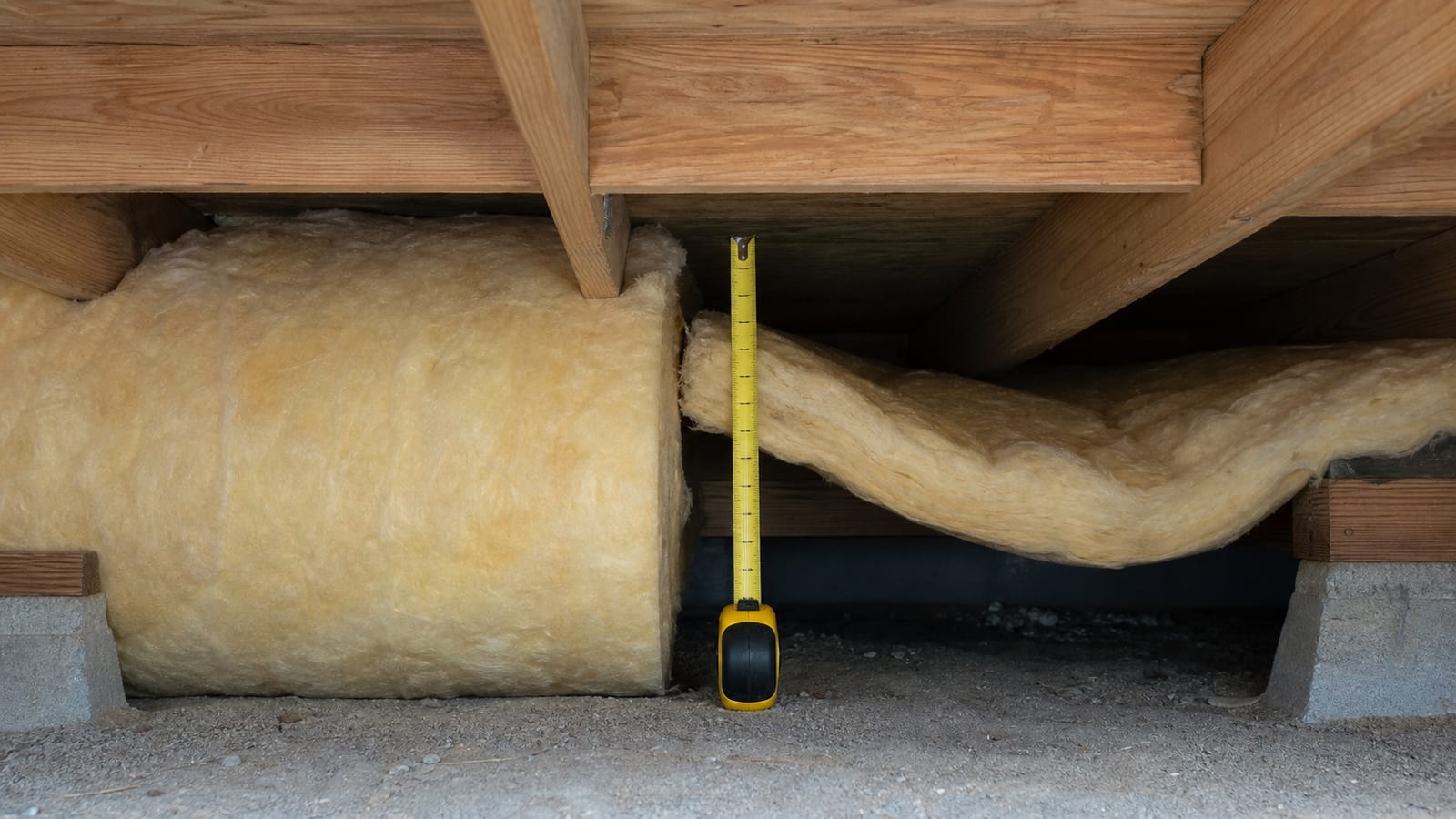
Floor-joist batts can work in a vented crawl space when they remain dry, fully contact the subfloor, fill the intended cavity, and stay supported. They are a poor moisture repair. Exposed soil, humid-air entry, leaks, and condensation can still damage the batts and adjacent wood even when the nominal R-value appears adequate.
Common defects include:
- batts supported several inches below the subfloor;
- compressed sections around wiring or pipes;
- gaps at bridging, ducts, and irregular framing;
- paper facings oriented without regard to the assembly;
- missing material at rim and perimeter transitions;
- sagging from failed supports or past wetting;
- sections disturbed by animals or previous trade work.
Reattaching a fallen batt may be reasonable only after the cause is understood and the material remains suitable. A stained, wet, compressed, or contaminated batt needs evaluation. Covering evidence makes it harder to see whether the subfloor or joist remains damp.
The broader North Carolina crawl space insulation pillar explains how floor insulation compares with perimeter insulation and why R-value alone is incomplete.
When does perimeter insulation make more sense?
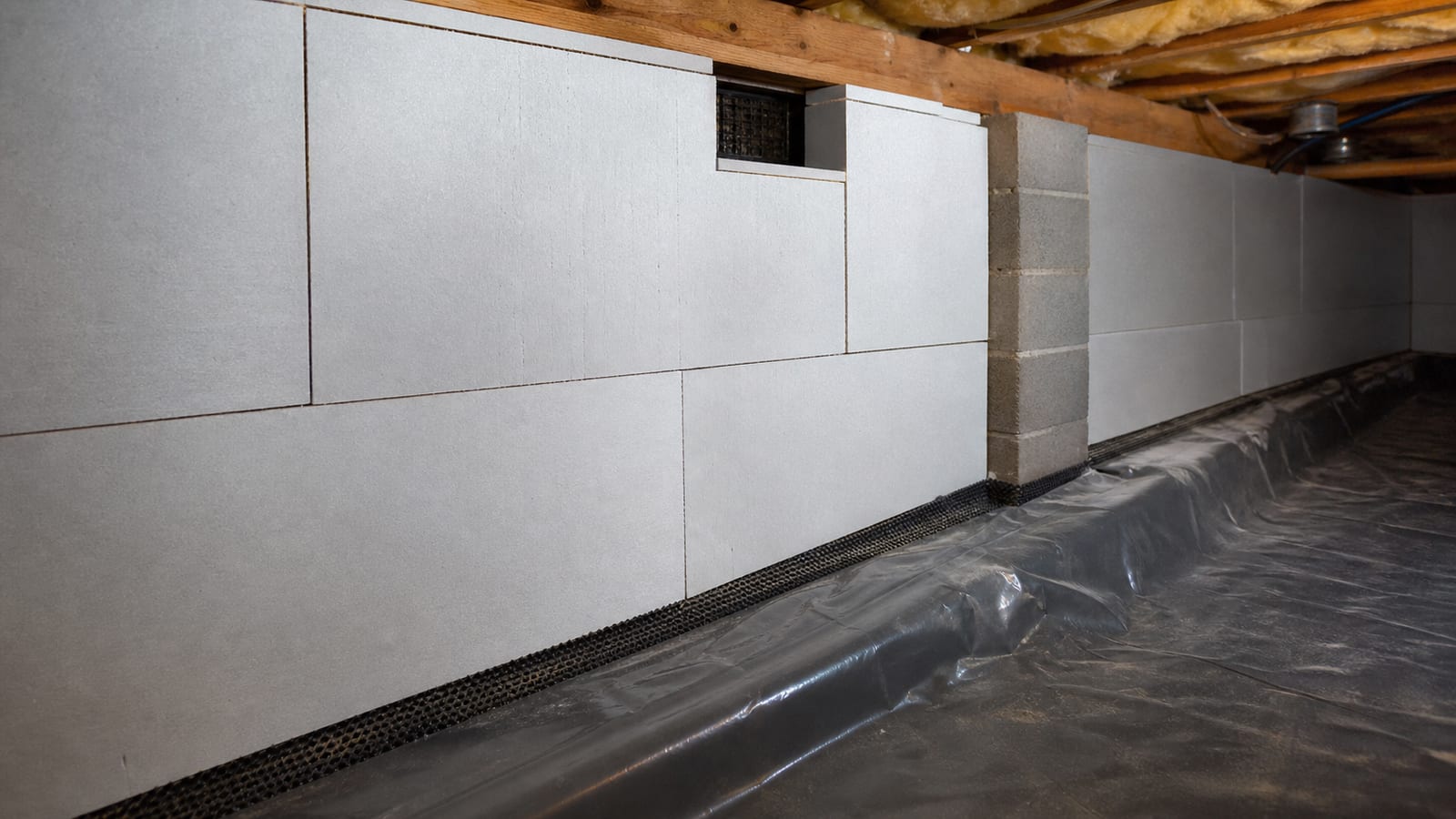
Perimeter insulation can make more sense when the crawl space is intentionally closed and the ground, walls, vents, access, drainage, and humidity controls form a complete enclosure. It can reduce the number of floor cavities that need individual detailing, but wall insulation introduces its own requirements for continuity, protection, inspection, and transitions.
Foundation walls are rarely featureless rectangles. Piers, ledges, columns, vents, access openings, utility penetrations, masonry changes, and irregular rim areas interrupt the surface. A practical perimeter design accounts for all of them.
Termite inspection access and local requirements can influence placement. Foam materials may need protection or separation from specific areas. The authority having jurisdiction should be consulted for the actual scope instead of relying on a generic online detail.
Perimeter insulation is not evidence that a crawl space is dry. Ground-liner failures, wall entry, drain problems, and equipment issues can still occur. The space must remain inspectable and maintained.
Does foam solve the dirt-floor moisture problem?
No. Foam board or spray-applied foam can provide thermal resistance and may help control air at properly detailed surfaces, but neither product stops water from entering through soil, walls, plumbing, or drainage failures. Applying foam before diagnosing moisture can hide wood and masonry conditions while leaving the source active.
Foam board seams, edges, fasteners, and transitions need detailing. Spray-applied foam depends on substrate condition, product specifications, thickness, curing conditions, and required protection. Both can affect inspection access and future repairs.
Do not apply foam directly over damp, dirty, unstable, or unverified surfaces merely to make the space look finished. The assembly should be selected after inspection and coordinated with ground coverage and water management.
How Carolina Encapsulation Company evaluates dirt-floor spaces
Carolina Encapsulation Company begins with the ground and water history, then reviews vents, access, visible framing, ducts, insulation, and drainage. This sequence helps determine whether the home needs ground-vapor work, water control, insulation, removal, or a combination in a specific order.
The company does not identify a universal “best” insulation from the access door. Some dirt-floor crawl spaces can retain serviceable floor insulation after moisture corrections. Others need damaged material removed so the subfloor and framing can be seen. Active flooding, unsafe electrical conditions, structural instability, or unknown contamination can limit the inspection or require another qualified trade before insulation proceeds.
What maintenance does the finished system need?
A finished crawl space still needs inspection after storms, plumbing work, equipment changes, pest activity, and unusual humidity. Check the liner, seams, low points, drains, vents or seals, access, insulation support, ducts, and visible wood. Compare conditions over time instead of relying on a single humidity reading or clean appearance.
Keep stored items out of the crawl space unless the assembly and access are designed for them. Boxes and materials can hide liner damage, obstruct drains, restrict equipment service, and make inspection difficult.
Photographs provide a useful baseline. Take wide views and close details from repeatable positions. If a change appears, record recent weather and equipment status before moving or covering material.
Request a dirt-floor crawl space inspection
If your crawl space has exposed soil, damaged insulation, musty conditions, or water after rain, inspect the moisture sources before selecting a product. Carolina Encapsulation Company offers a free crawl space inspection in Fuquay-Varina and surrounding Triangle communities. Call 704-207-9348 or request an inspection.
Frequently asked questions
Can I install insulation before putting plastic over the dirt?
You can physically place insulation first, but that sequence leaves a major moisture source unresolved. Ground vapor and water can damage the new material or adjacent wood. Evaluate drainage, soil coverage, air movement, and wet materials before treating the insulation work as complete.
Is fiberglass always wrong in a dirt-floor crawl space?
No. Fiberglass can be part of a vented floor assembly when installed correctly and kept dry. It becomes unreliable when gaps, sagging, compression, humid air, leaks, or ground moisture affect it. The crawl space design and moisture controls matter more than the dirt floor label alone.
Does a vapor barrier replace insulation?
No. A vapor barrier limits vapor movement through a surface, while insulation slows heat flow. They perform different jobs. A crawl space may need both, plus bulk-water drainage and air-control details. Neither layer should be expected to perform the other layer’s function.
Should old insulation be removed before the ground is covered?
Removal may be useful when insulation is wet, contaminated, fallen, or blocking inspection of the subfloor and framing. Serviceable material does not always need automatic removal. The decision should account for safe handling, visibility, repair access, and the sequence of moisture corrections.
Can a dehumidifier make exposed soil acceptable?
A dehumidifier can remove moisture from air, but exposed soil can keep adding vapor and increase the moisture load. Equipment should not replace ground coverage, drainage, leak repair, or enclosure details. Its role depends on the completed crawl space design and a reliable drain and service plan.
How do I know whether water is coming from soil or a wall?
Inspect timing and location after rain. Wall staining, a wet perimeter, low-point collection, plumbing routes, and water beneath or above a liner provide clues. Photos taken during dry and wet periods are useful. Avoid guessing from one puddle after conditions have already changed.
Is a closed crawl space always the best option?
No single design is automatically best for every home. A closed crawl space can perform well when ground, walls, vents, access, drainage, humidity, equipment, and inspection needs are coordinated. An incomplete closure can create hidden pathways and maintenance problems, so the whole assembly must be evaluated.
How this applies in Wake Forest, NC
For homeowners in Wake Forest, NC, use this topic as a way to organize observations before selecting work. Carolina Encapsulation Company serves Wake Forest, NC and surrounding Triangle communities, but the appropriate scope still depends on the water, moisture, materials, access, and equipment found at the property. Compare the crawl space insulation installation with the Crawl Space Insulation in North Carolina: Placement, Materials, and Moisture in Willow Spring, NC before choosing a property-specific next step.