Short answer
A crawl space sump pump stops during a power outage unless a tested backup arrangement supplies power or a separate backup pump is installed. A useful plan is made before the storm: identify the circuit, basin, alarm, discharge point, backup type, expected monitoring method, and safe inspection limits. During an outage, keep people away from water and electrical equipment, use flashlights, follow generator safety guidance, and document water from a dry location. After power returns, verify pump and discharge operation before assuming the system recovered.
Why the pump and the outage can fail at the same time
Heavy rain, tropical systems, ice, wind, and falling trees can interrupt utility power while also increasing water around a foundation. That overlap matters because a primary sump pump is usually needed most when the basin is receiving water quickly.
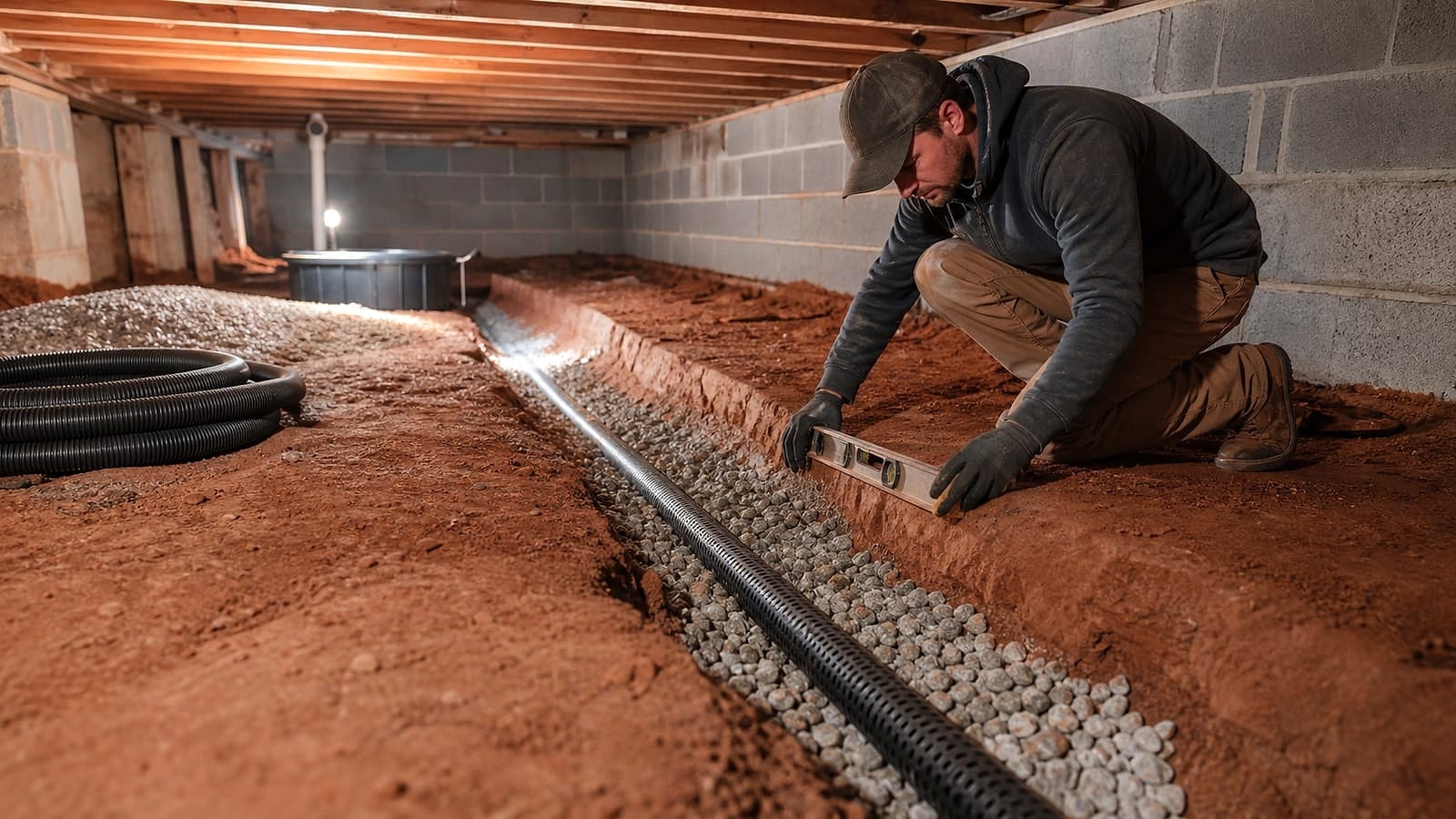
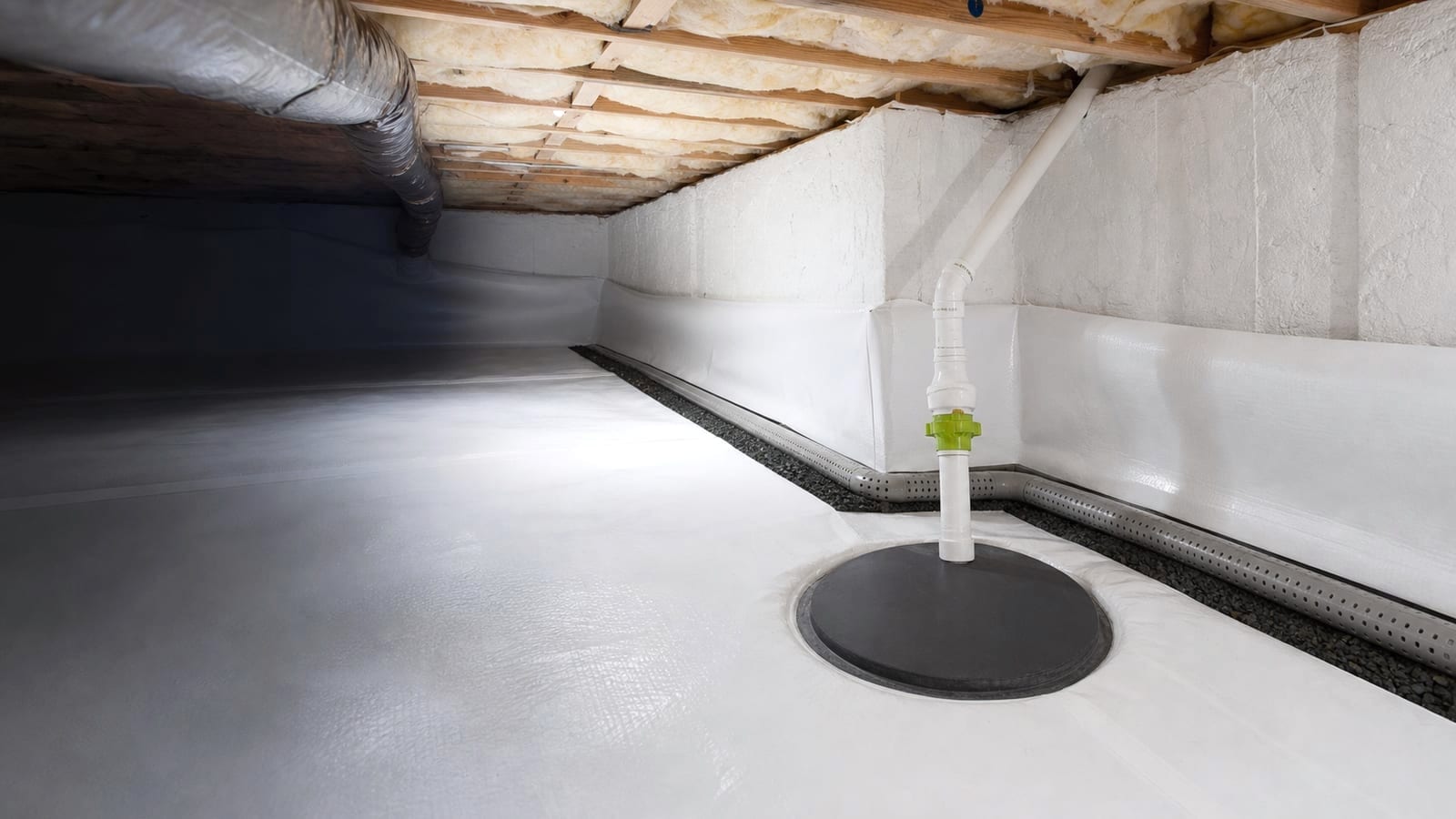
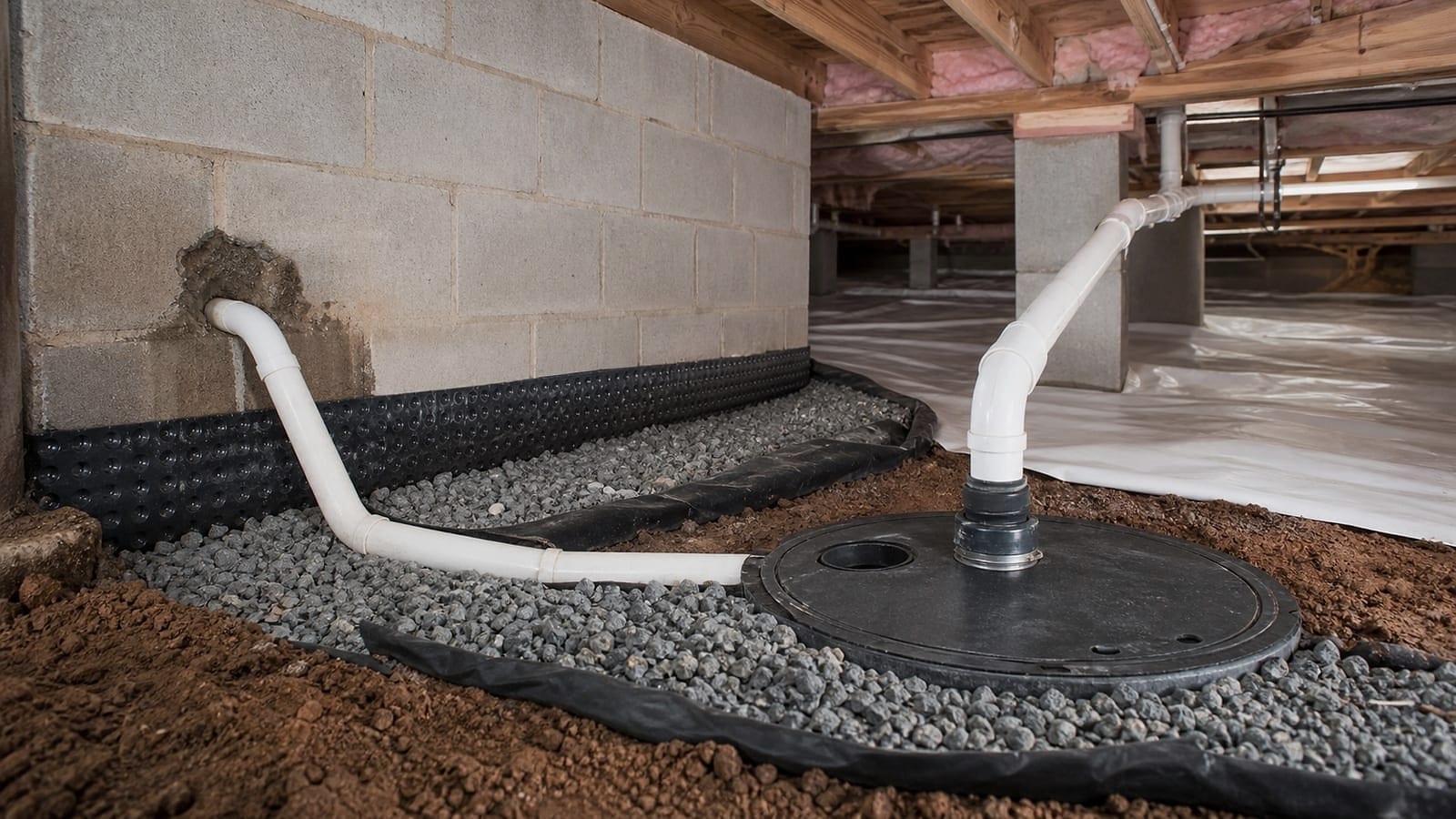
A crawl space sump pump installation is only one part of the water path. Drainage must deliver water to the basin, the float must activate, power must reach the motor, the discharge line must remain open, and the outlet must release water where it will not immediately return. Backup planning should consider that whole sequence.
The plan should not begin with buying an unspecified battery or generator. It should begin with documenting the actual system and deciding what safe information will be available when lights, internet, and access conditions are poor.
Create a system map before storm season
Use the equipment manuals, project scope, and a dry-weather inspection to make a one-page record. Store a paper copy with household emergency documents and a digital copy that can be viewed offline.
Record:
- The sump basin location and safe access route
- The primary pump make and model from its label, kept in private records
- The circuit and breaker label
- Whether the receptacle has a protective device and how its normal status is indicated
- The float or level-sensing arrangement
- The visible discharge route and final outlet
- Any check valve, alarm, backup pump, battery, or controller
- The date and result of the last documented functional check
- Service instructions and contact information
- A photo showing the normal basin water level if visible without opening or reaching into it
Do not rely on memory for whether a backup exists. A high-water alarm, a battery alarm, and a backup pump are different components. An alarm may warn that water is rising without moving any water. A battery may power an alarm without powering the primary pump. Read the actual documentation.
Understand the backup options without assuming compatibility
Separate battery-backup pump
A secondary pump can be installed in or near the basin with its own battery and controls. It is intended to operate when the primary pump cannot keep the water below the backup activation level. Battery condition, charger status, pump capacity, float placement, and discharge routing all affect performance.
A battery system is not maintenance-free. Age alone does not describe its condition, and a status light does not prove that the pump moved water through the complete discharge route. Testing and replacement instructions come from the equipment documentation.
Backup power for the primary pump
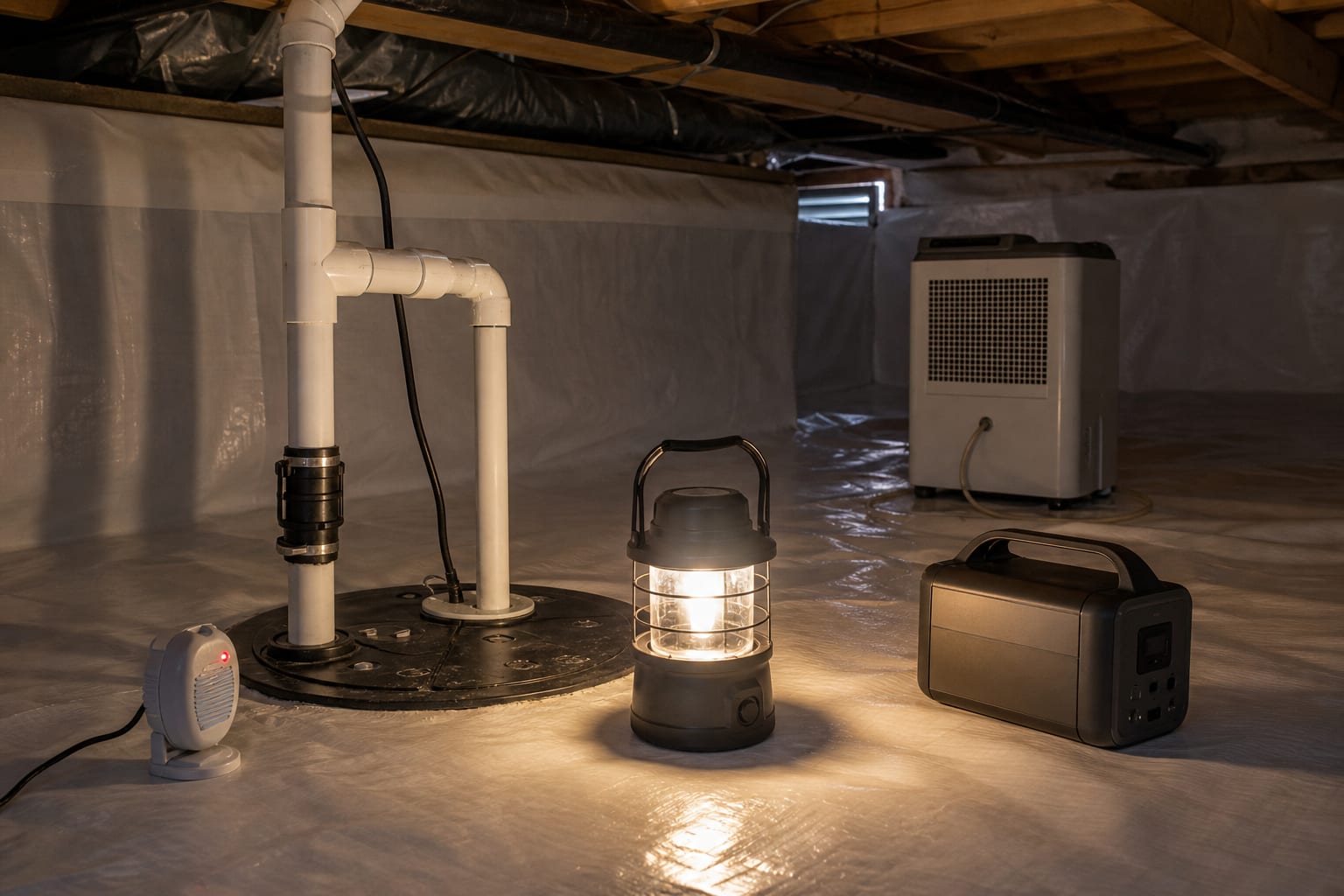
Some systems use a properly designed standby source, inverter, or other backup to power the primary pump. The electrical load, starting demand, runtime, wiring method, and transfer arrangement must be evaluated for the actual equipment. An ordinary consumer power pack should not be assumed capable merely because a plug fits.
Portable generator
A generator introduces serious carbon-monoxide and electrical hazards. Never operate one in a crawl space, basement, garage, carport, or near doors, windows, or vents. CDC guidance says portable generators should be outside and at least 20 feet from doors, windows, and vents. A generator should never be improvised into home wiring. Connection, grounding, transfer equipment, weather protection, fuel storage, and load planning require appropriate professional guidance.
The power outage is not the time to invent a connection method.
Water-powered backup
Some backup pumps use pressurized municipal water to move sump water. Applicability depends on the water supply, local requirements, backflow protection, plumbing arrangement, discharge, and expected use. It is not an option for every home and should not be assumed acceptable without site-specific review.
Make a pre-outage checklist
Complete these steps while the crawl space is dry and utility power is stable.
Confirm the drainage route
Locate where the crawl space drainage system enters the basin. Check visible inlets for debris or liner interference. Follow the discharge line to its outlet. Note whether an underground section prevents direct observation.
The outlet should not be buried, crushed, frozen, or positioned where stormwater can submerge it. A pump can run and still fail to lower the basin if the discharge is blocked or returns toward the foundation.
Review alarm behavior
Know what each light, sound, and notification means. Determine:
- What water level triggers the alarm
- Whether the alarm uses household power, a battery, or both
- How to silence it without disabling the pump
- Whether silence resets automatically
- What status indicates a low backup battery
- Whether remote notification depends on home internet or cellular service
Write the instructions in plain language. Do not remove an alarm because it is inconvenient.
Prepare safe observation tools
Keep battery flashlights, spare batteries, waterproof boots for exterior use, a charged phone, and a printed system map. Do not plan to use candles around an access area or fuel-powered lighting in an enclosed space.
A marked exterior reference near the discharge point can help show whether water is leaving. An interior water-level reference should be installed only as part of a safe system design, not by reaching into the basin during a storm.
Decide who will inspect and when
The household plan should say who can check conditions, what can be seen from a dry location, and which findings end the inspection. A person should not enter because everyone else assumes someone is checking.
Stop and call for appropriate help if:
- Water approaches electrical equipment
- The access route is flooded
- Sewage or another contaminant may be present
- Soil has eroded around piers or supports
- Structural movement is visible
- The person cannot see or move safely
What to do when the power goes out
1. Confirm the outage from a dry area
Determine whether the whole home lost power or only the pump circuit. Check the breaker only if the panel is dry and safely accessible. Do not repeatedly reset a breaker that trips, and do not handle a wet plug, receptacle, cord, controller, or alarm.
2. Check backup status without entering water
Use the documented indicators. If a backup controller shows normal operation, note the time. If it shows a fault, low battery, or high water, follow its instructions from a safe position. Do not bypass a float or connect an unapproved battery.
3. Observe the basin and water level safely
If the basin can be seen from the access without entering, photograph the water level against a fixed reference. Note whether water is rising, stable, or falling and how quickly the change occurs. Do not remove the lid, reach into the basin, or stand in water.
4. Observe the discharge
From a safe exterior location, look for discharge when a backup pump runs. Absence of visible water does not always prove failure because some outlets are buried, but it is evidence to record. Check for a disconnected pipe, erosion, or water flowing back toward the foundation.
5. Protect people before materials
If water continues rising, keep everyone out of the crawl space. Do not use a shop vacuum, extension cord, portable pump, or other electrical device in wet conditions without a safe, professionally evaluated setup. Damage control never outranks electrical and structural safety.
The standing water page explains why the source, collection path, and removal method should be reviewed together after the event.
Generator use requires a separate safety plan
A generator should be planned for household emergency use, not improvised solely around the sump pump after rain begins. The plan needs:
- A safe outdoor operating location at the distance specified by public-safety guidance
- Weather protection that does not create an enclosed exhaust area
- Properly sized cords or transfer equipment for the intended load
- Carbon-monoxide alarms with battery backup
- Fuel storage and refueling procedures consistent with safety instructions
- A way to prevent electrical backfeed
- A load plan that accounts for motor starting demand
Never place a generator under a deck near an access door or foundation vent. Crawl spaces connect to the home through openings, and exhaust near those openings can enter the building.
What to do when power returns
Restored utility power is not proof that the system is normal. Voltage can return while the pump is blocked, the float is caught, the discharge is frozen, or a protective device remains tripped.
From a dry location:
- Note the time power returns.
- Listen for pump operation and alarms.
- Observe whether the basin level falls.
- Check the exterior discharge point.
- Look for leakage at visible fittings.
- Review backup status and charging indicators.
- Record the highest observed water level.
Do not force the float or reach into the basin. If the motor hums without moving water, cycles rapidly, runs continuously, trips the circuit, or does not reduce the level, turn the situation over to sump pump repair and maintenance.
The post-outage inspection
Once electrical and access conditions are safe, inspect more than the pump.
Review the water path
Check the drainage inlet, basin, primary pump, backup, check valve if present, discharge pipe, outlet, and exterior return path. Determine whether the backup carried water, merely alarmed, or never activated.
Inspect wet materials
Look for a new mud line, damp insulation, wet wood, shifted liner, debris, and water beneath the liner. Do not cut sealed material. Photograph exact locations and compare them with pre-storm images.
Review runtime and capacity evidence
Frequent cycling, continuous operation, or rising water while the pump runs may indicate a high incoming rate, restricted discharge, pump condition, or a collection problem. It does not establish one diagnosis without testing.
Reset the plan
Recharge or service backup components according to their manuals. Replace used flashlight batteries, update the system map, and record what happened. If a notification failed because internet service was down, decide whether the warning method needs review.
Limitations and when to schedule an inspection
A homeowner can prepare records, observe indicators, monitor from a dry location, and check the visible outlet. Pump removal, electrical testing, battery load testing, float adjustment, wiring, and discharge modification need qualified evaluation.
Schedule an inspection before storm season if the backup type is unknown, the outlet cannot be located, the alarm has never been tested, the basin lacks safe access, or the last outage produced rising water. Seek service after any event in which the pump failed, the alarm repeated, water reached materials, the breaker tripped, or the discharge did not appear to function.
For a review of the sump, drainage, and surrounding moisture plan, request an inspection while conditions can be tested safely.
Frequently asked questions
Will a sump pump work when the power is out?
The primary pump will not run without electricity. It may continue only through a verified backup-power arrangement, or a separate backup pump may activate. An alarm alone does not move water.
How long will a battery-backup sump pump run?
There is no universal runtime. It depends on battery condition, pump demand, water inflow, cycling frequency, charger condition, and system design. Use the actual equipment documentation and testing record.
Can I plug a sump pump into a portable power station?
Do not assume compatibility. Motor starting demand, output type, grounding, runtime, environment, and connection method all matter. Have the intended arrangement evaluated before an outage.
Should I reset a tripped sump-pump breaker during a storm?
Only approach a dry, safely accessible panel. Do not repeatedly reset a breaker or handle wet equipment. A repeated trip can indicate an electrical or equipment fault that needs qualified service.
What should I inspect after power is restored?
Verify that the basin level falls, discharge reaches its outlet, no fitting leaks, alarms clear correctly, and backup components return to normal status. Also document wet materials and the highest water level.
Sources and further reading
- Centers for Disease Control and Prevention: What to Do to Protect Yourself During a Power Outage
- Centers for Disease Control and Prevention: Generator Safety Fact Sheet
- Ready.gov: Are You Ready? An In-Depth Guide to Citizen Preparedness
- Federal Emergency Management Agency: Basement Flood Mitigation
- NOAA National Hurricane Center: Heavy Rainfall and Inland Flooding Hazards
How this applies in Lillington, NC
In Lillington, NC, document water timing, roof runoff, grade, the entry point, the low point, and the discharge route before naming a drainage solution. A wet area can be where water collects rather than where it entered, so the location of each observation matters. Compare the crawl space sump pump installation with the Crawl Space Drainage Systems: From Water Entry to Discharge in Garner, NC before choosing a property-specific next step.