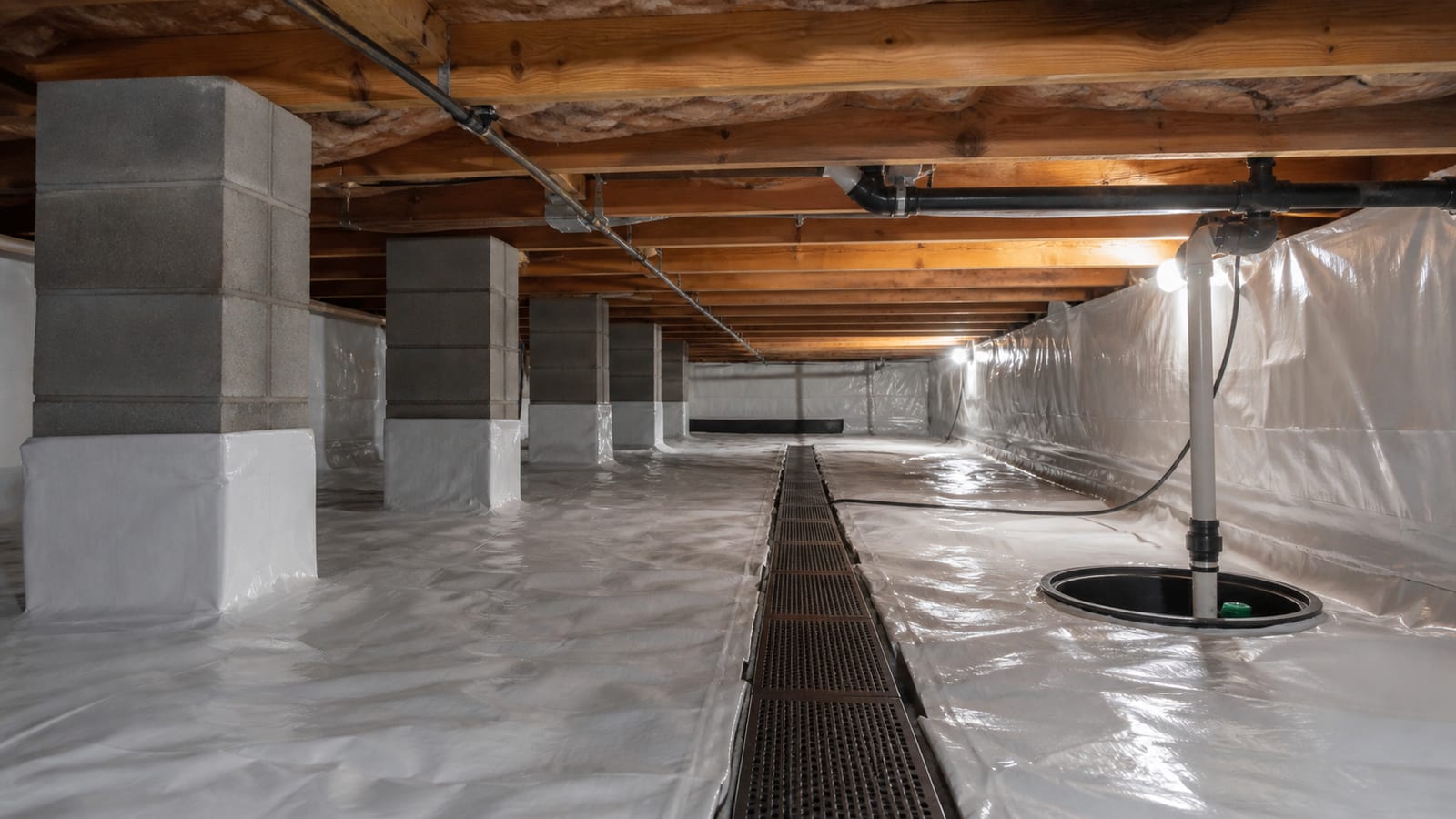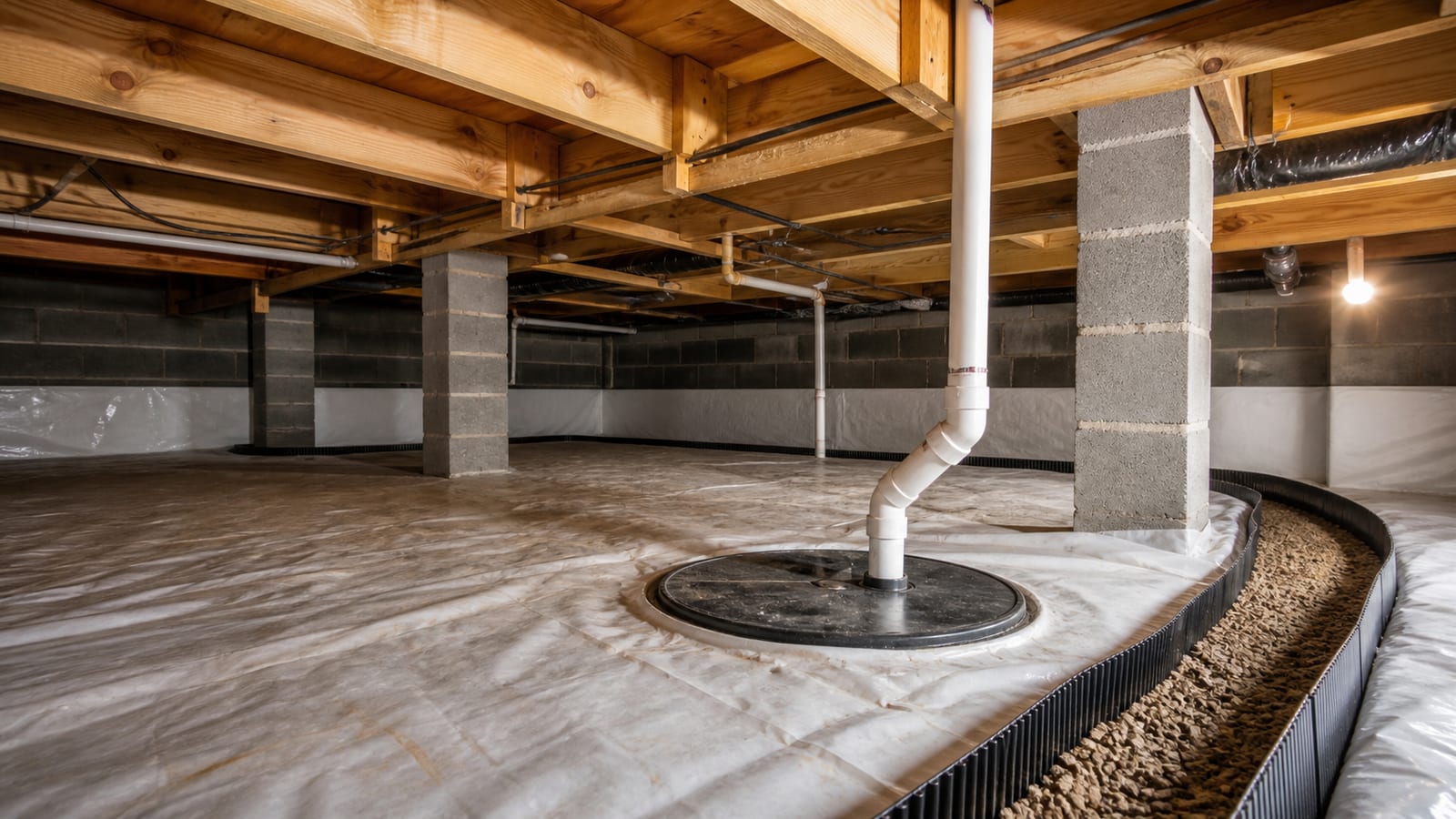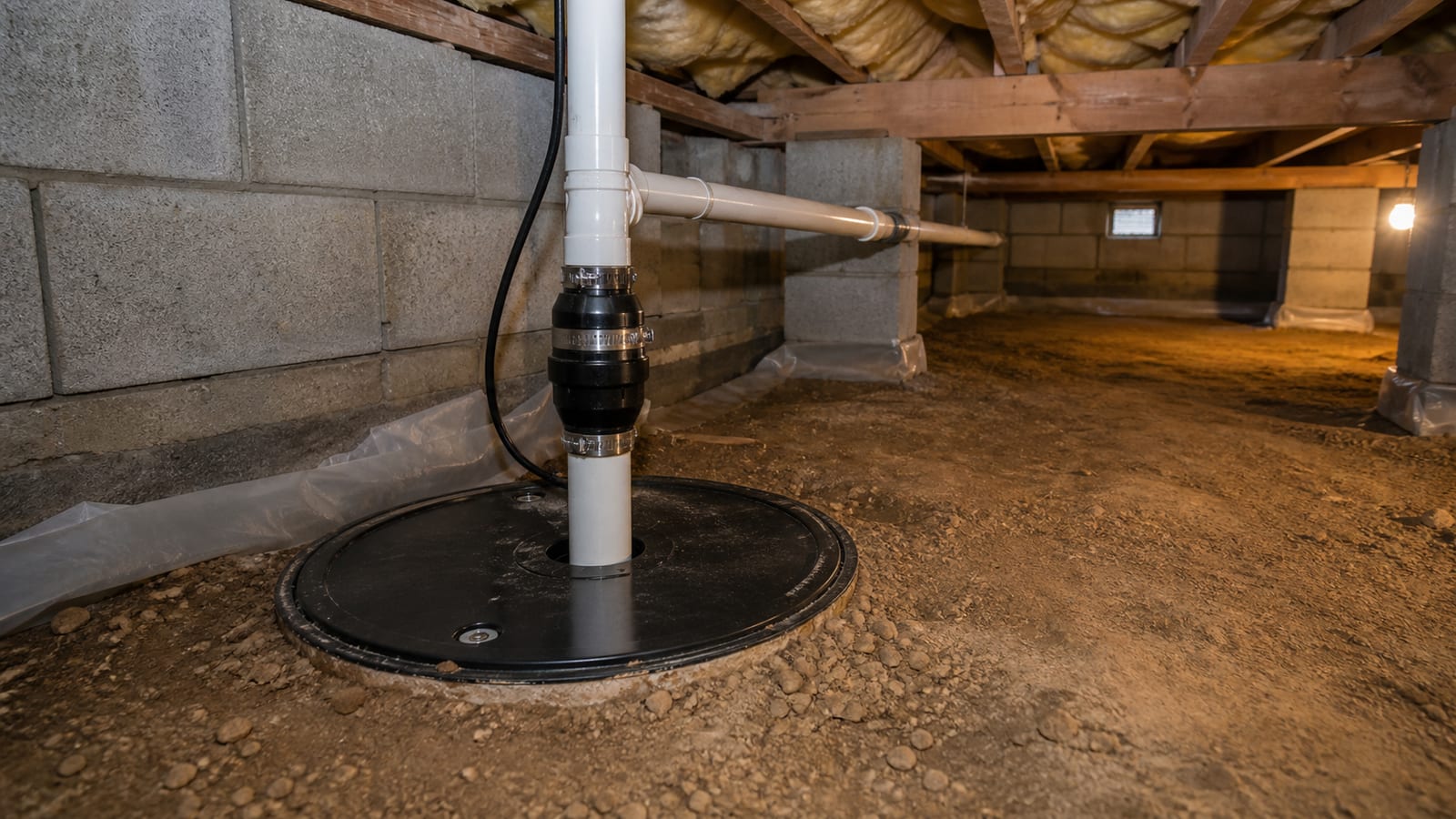
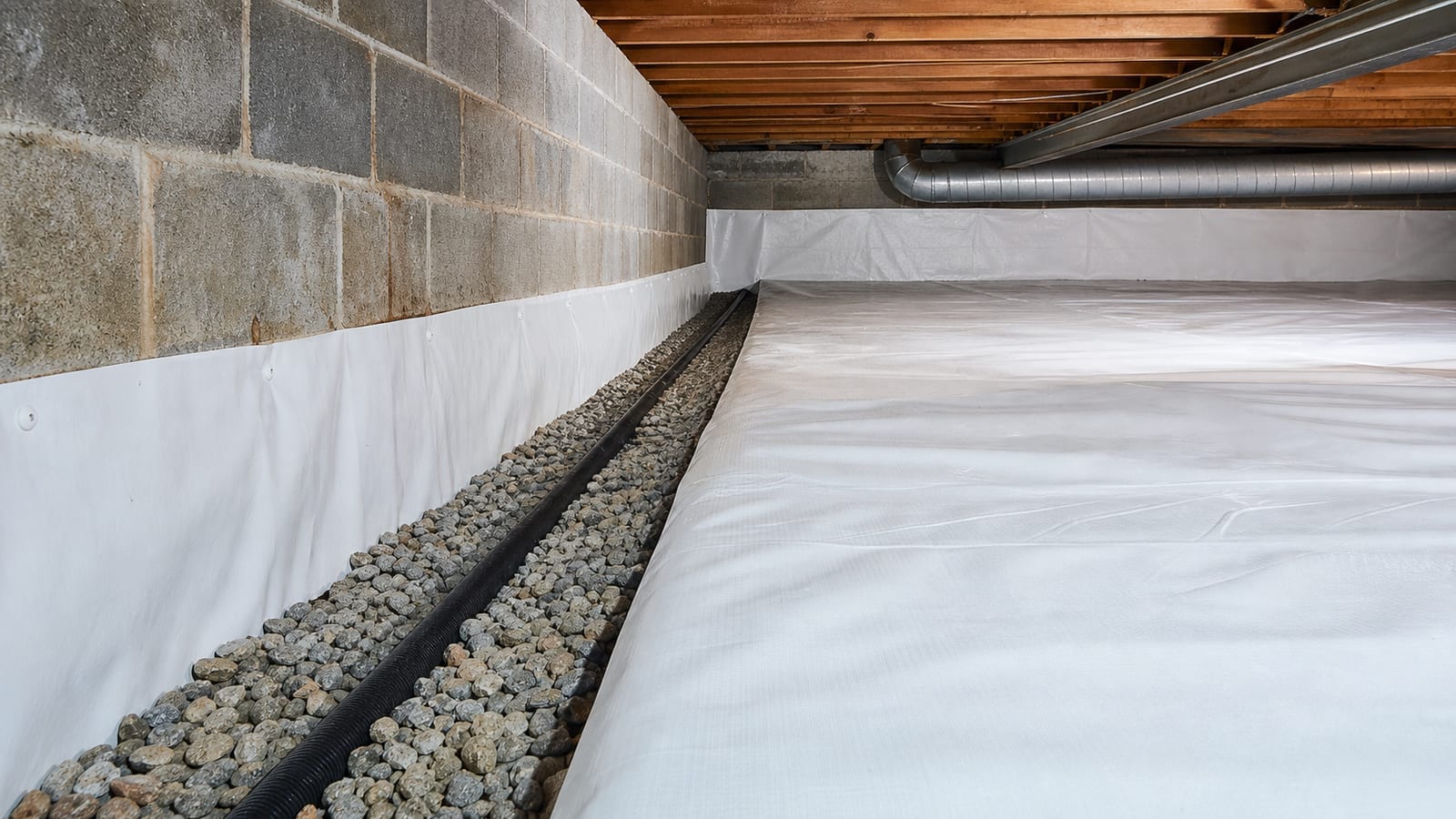
Holly Springs, NC stays warm and humid much of the year. Rain, damp soil, and poor drain paths can worsen crawl space moisture. Yet a wet crawl space rarely has one simple cause.
Crawl space waterproofing should control water through a clear, linked plan. Start by tracing the source. Then check collection, conveyance, discharge, power, access, and upkeep. Each step should support the next one.
A written scope should also show exclusions and work order. For example, standing water may need removal before liner work starts. Drain paths must reach a safe discharge point. Pump service points must remain easy to reach.
Use this framework during an inspection and proposal review. Ask the contractor to show each part inside the crawl space. Photos, measurements, and a simple sketch can help. The goal is a scope you can check before hiring.
What Is the Best Way to Plan Crawl Space Waterproofing?
The best plan controls water as one linked system. It finds the source, collects water, moves it, and sends it outside. It also addresses pump power, service access, and future upkeep. A liner alone cannot replace drainage when bulk water still enters the crawl space.
Start at the source instead of choosing products first. Look for wall seepage, plumbing leaks, low ground, and drain failures. Check gutters and outside grades where access allows. Record wet spots, stains, mineral marks, and damaged liner areas.
A complete scope should trace seven points:
- Source: Where does the water enter?
- Collection: What catches water at that point?
- Conveyance: How does water reach the sump basin?
- Discharge: Where does pumped water leave the property?
- Power: What outlet and backup plan support the pump?
- Access: Can key parts be reached for service?
- Maintenance: Who checks each part, and how often?
The crawl space drainage system should connect collection points to the basin. The sump pump installation should match that drain path. Its discharge must not send water back toward the foundation.
Ask for the work order in writing. Wet debris and active leaks should be addressed before sealing work. The proposal should name owner tasks and contractor tasks. It should also list work that is not included. Review the full crawl space waterproofing service before approving separate parts.
How Much Does It Cost to Waterproof a Crawl Space?
Cost depends on measured size, water sources, access, and system needs. Drain length, pump needs, discharge work, cleanup, and liner details also matter. Request a measured written proposal. It should separate required water control from optional moisture or access upgrades.
Two crawl spaces with equal floor areas may need different work. One may have damp soil and a torn ground cover. Another may have wall seepage, standing water, and no safe drain path. Access height and stored debris can also change labor needs.
Ask the proposal to show each priced scope group. Useful groups include cleanup, drain work, basin work, pump work, discharge, liner, and sealing. The scope should state measured areas and drain lengths. It should also mark any allowances or unknown conditions.
Compare function, not just proposal totals. A low total may omit discharge work or electrical needs. Another proposal may include work that does not address the water source. Ask each contractor to trace water from entry through final discharge.
The written plan should identify owner costs outside the contract. Those might include plumbing repairs or electrical work by another provider. Hidden framing damage may also require a separate review. Avoid approving open-ended work without clear change terms. A free inspection can help define the visible scope before pricing.
Can Mold Grow Under a Crawl Space Vapor Barrier?
Yes, mold can grow beneath a vapor barrier when moisture and organic debris remain. A liner does not clean the soil or stop every leak. The area should be checked before placement. Active water sources, wet debris, and visible growth need a clear response plan.
A barrier limits water vapor from exposed soil. It does not remove wet wood, leaves, or other debris. Moisture can remain beneath loose seams and poorly fitted edges. Plumbing leaks can also wet areas above the liner.
The EPA mold and moisture guide stresses moisture control. The NC State Mold and Moisture Checklist also offers practical checks. Both sources support fixing moisture causes rather than hiding them.
Before liner work, ask what cleanup is included. The scope should address standing water, debris, active leaks, and wet materials. It should state whether visible growth treatment is included. It should also name areas that cannot be reached.
After installation, check the liner during routine service visits. Look for pooled water, open seams, tears, and wet framing. Keep the sump basin and drain access clear. A sealed appearance is not proof of dry conditions. Moisture readings and direct checks provide stronger evidence.
A clear note also helps separate this issue from related work.
Ask how this detail changes access, sequencing, and later checks.
Should You Waterproof Crawl Space Walls in Holly Springs?
Wall treatment may help when water or vapor enters through foundation walls. However, wall liner alone does not manage collected water. The scope must show how wall moisture reaches a drain. It should also protect access to piers, framing, vents, and service points.
First, ask what evidence supports wall work. Damp stains, mineral deposits, and seepage paths can help show entry points. Photos should mark each area. The inspection should separate wall seepage from plumbing leaks and surface runoff.
Next, check the lower edge of the wall system. Water behind a wall liner needs a planned collection path. That path should feed the crawl space drain. The drain must then reach the sump basin or another approved outlet.
Review attachment points and terminations. The liner should not hide wood framing that needs checks. Pier edges, pipe openings, and access doors need clear details. Ask how future pest or repair access will work.
Wall work should follow source checks and drain planning. Otherwise, covered seepage may remain active and unseen. Ask who handles wall cracks or other foundation concerns. An inspection can record visible conditions. It does not provide structural design or engineering decisions. A structural engineer should handle those decisions when needed.
Ask how this detail changes access, sequencing, and later checks.
For a Holly Springs home, record that point before choosing work.
What Are the Downsides of Waterproofing a Crawl Space?
Poorly planned waterproofing can hide leaks, trap water, or block service access. Pumps also need power and upkeep. Liners may tear during later trade work. These risks can be reduced through source repair, planned drainage, clear access, and a written maintenance schedule.
The main risk is treating one part as the whole system. A bright liner may hide wet soil or missed seepage. A pump cannot collect water that never reaches its basin. A discharge line can also return water toward the home.
Waterproofing may create new service duties. Pumps, check valves, basins, drains, and alarms need access. Stored items should not cover service points. Later plumbing or cable work can damage liners and seals.
Ask how the scope limits these risks:
- Mark drain and basin locations.
- Keep pump parts within reach.
- Show the full discharge route.
- Protect liner edges near entry paths.
- List owner checks after storms.
- State who repairs later trade damage.
Active pooling should be handled before sensitive finish work. Standing water removal can be one early step. Removal alone does not fix the source. The next steps must stop or collect new water. A good proposal explains that sequence and its limits.
For a Holly Springs home, record that point before choosing work.
Put the observation in the written scope so it can be compared.
How Long Does Crawl Space Encapsulation Last?
Encapsulation life depends on material condition, installation details, water control, and later use. No service life should be assumed from appearance alone. Regular checks can find open seams, tears, pump issues, or new leaks before they cause wider damage. Ask for a written scope before choosing the next step.
A liner lasts longer when bulk water is controlled first. Flowing water can lift, shift, or stain the material. Sharp debris can puncture it from below. Workers can also damage it during plumbing or cable repairs.
Installation details affect future condition. Seams, wall edges, piers, doors, and pipe openings need close checks. Loose edges may allow soil vapor into the space. Covered service parts can make simple repairs harder.
Create an upkeep plan before the project closes. The plan should name each part and its check schedule. Include the drain, basin, pump, outlet, discharge end, liner, and access door. Also record who handles service calls.
Check the space after major storms and nearby trade work. Note new odors, pump sounds, loose seams, or pooled water. Keep photos from the final walk-through. They provide a useful baseline for later checks. Ask how repairs are priced and approved after the original work ends.
Put the observation in the written scope so it can be compared.
A clear note also helps separate this issue from related work.
Can a General Contractor Do Crawl Space Waterproofing?
A general contractor may offer waterproofing, but capability varies by crew and scope. Focus on the written plan and assigned tasks. The proposal should identify drain, pump, discharge, electrical, cleanup, liner, and repair responsibilities. Ask who performs each task and who returns for service.
Do not rely on one broad job label. Ask who inspects, designs the water path, and installs each part. Trade rules and task needs can vary. Electrical, plumbing, or structural concerns may require separate providers.
Compare proposals using the same seven-point path. Each contractor should explain source, collection, conveyance, discharge, power, access, and upkeep. Ask for photos and measurements. A simple sketch should show drains, basin, pump, and discharge.
Responsibility boundaries also matter. The scope should name excluded leaks, hidden damage, and owner work. It should explain what happens if new water appears. Change terms should be written before added work begins.
Finally, ask who supports the system after installation. Confirm access for drain cleaning and pump service. Request care steps for the liner and discharge outlet. Availability in Holly Springs and nearby Triangle communities should be confirmed by phone. A clear scope makes contractor comparisons fair and useful.
A clear note also helps separate this issue from related work.
Ask how this detail changes access, sequencing, and later checks.
Frequently Asked Questions
What is the difference between waterproofing and encapsulation?
Waterproofing controls bulk water entering or crossing the crawl space. It may include drains, a basin, a pump, and discharge piping. Encapsulation covers soil and other surfaces to limit damp air and soil vapor. Many homes need both functions, but each part should solve a shown problem.
Should standing water be removed before liner installation?
Yes, pooled water should be removed before liner work begins. The crew also needs to find why it collected. Otherwise, water may return beneath the new liner. The scope should list removal, source checks, drainage work, drying needs, and the planned work order.
Where should a crawl space sump pump discharge?
The outlet should send water away from the foundation without causing erosion or return flow. Site grades, nearby drains, and property limits can affect the route. Ask for the full path in writing. The endpoint should remain visible and reachable for routine checks.
What happens during a power outage?
A standard pump stops when its power source fails. Ask what outage plan fits the site’s water risk. Options may involve backup power or added monitoring. The proposal should explain who supplies each part. It should also list testing and maintenance duties.
Does homeowners insurance cover crawl space waterproofing?
Coverage depends on the policy and the cause of damage. Do not assume waterproofing or encapsulation is covered. Contact the insurer before work begins. Ask about covered events, exclusions, claim records, and required photos. Keep the inspection notes and written proposal for that discussion.
How should I prepare for a crawl space inspection?
Clear the access door and remove stored items near it. Note past leaks, pump issues, odors, and storm dates. Share any plumbing or drainage repairs. Ask the inspector to photograph key areas. Do not enter a tight, wet, or unsafe space yourself.
A useful waterproofing proposal should read like a water map. It should show where water starts and where it ends. It should also explain power, access, upkeep, exclusions, and assigned tasks.
Carolina Encapsulation Company serves Fuquay-Varina and surrounding Triangle communities. Holly Springs availability must be confirmed by phone. Request a free inspection to review visible crawl space conditions. You may also call 704-207-9348 to discuss scheduling and service-area availability.
How this applies in Holly Springs, NC
For homeowners in Holly Springs, NC, use this topic as a way to organize observations before selecting work. Carolina Encapsulation Company serves Holly Springs, NC and surrounding Triangle communities, but the appropriate scope still depends on the water, moisture, materials, access, and equipment found at the property. Compare the crawl space waterproofing with the How to Choose a Crawl Space Waterproofing Contractor in Fuquay-Varina, NC before choosing a property-specific next step.