Short answer
Schedule a crawl space inspection early enough to review access, obtain seller records, coordinate any specialty evaluations, and revisit uncertain findings before the transaction deadline. Earlier is usually more useful than waiting until the final walk-through. The purchase contract, inspection period, lender requirements, and advice from the buyer’s real estate and legal professionals control the actual timing. General crawl space guidance should not be treated as contract advice.
A general home inspection may already include the crawl space, but low clearance, standing water, insulation, stored items, ductwork, or an encapsulation liner can limit visibility. A focused inspection is most valuable when it answers a defined question, such as whether moisture is active, what equipment is installed, why a floor feels uneven, or whether a reported repair is accessible for review.
Put the crawl space on the inspection calendar at the start
The crawl space should be discussed when inspections are being scheduled, not after every other appointment is complete. That allows the buyer to identify who needs access, which records to request, and whether the general inspector expects a specialist to review any condition.
Add these items to the early transaction checklist:
- Confirm that a crawl space exists and locate every known access opening.
- Ask whether the space is vented, partially sealed, or encapsulated.
- Request prior inspection reports, repair scopes, permits when applicable, equipment manuals, and maintenance logs.
- Ask whether a dehumidifier, sump pump, drain, alarm, or monitoring device is installed.
- Tell the inspector about floor movement, odors, staining, or drainage concerns noticed during showings.
- Confirm that the access will be unlocked and not blocked by belongings, vegetation, or stored materials.
- Review the contract deadlines with the professionals advising the transaction.
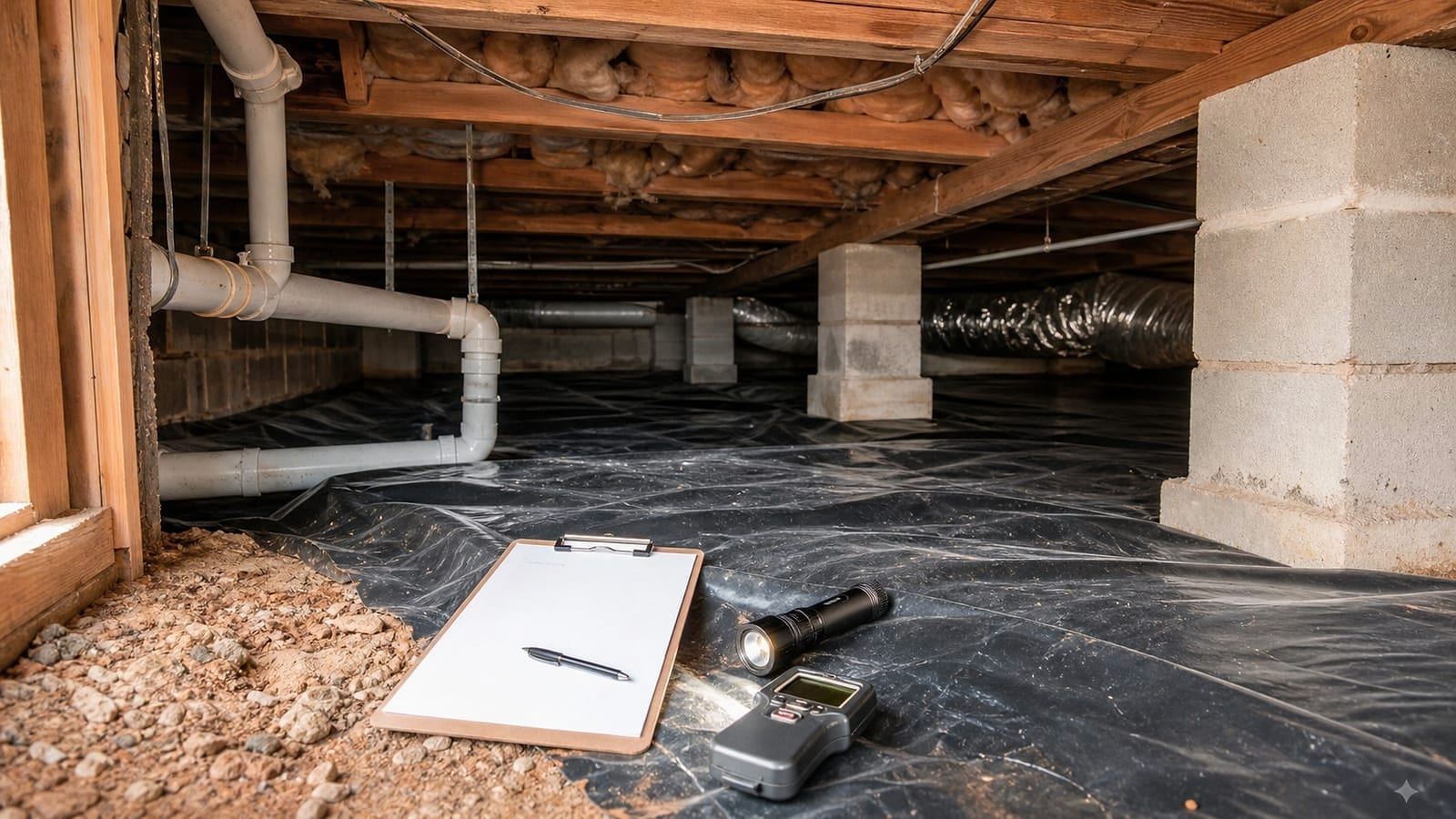
The crawl space inspection checklist provides a condition-based framework for access, water, humidity, materials, equipment, and exterior drainage. It can help a buyer prepare questions without expanding a visual inspection into destructive testing.
Why late scheduling creates avoidable uncertainty
A late crawl space inspection can leave too little time to identify the right specialist, gather records, or see whether a weather-dependent condition returns. It can also encourage quick repair proposals before anyone has separated the symptom from its source.
Consider a report that notes damp soil near one foundation wall. Useful follow-up may include reviewing recent rain, gutters, downspout discharge, exterior grade, plumbing routes, and moisture at nearby framing. If the same report notes floor movement, a structural professional may need to evaluate framing separately. Those steps involve different evidence and may not fit into a rushed final-day review.
Late timing is especially limiting when:
- Important areas are inaccessible.
- The seller has not located prior work records.
- A repair covered the original condition.
- Water appears only after rain.
- Equipment needs to be observed while operating.
- Pest evidence or a wood-destroying-insect report raises separate access questions.
- Contractors disagree about the source or proposed correction.
Early scheduling does not guarantee that every uncertainty will be resolved. It gives the parties more room to decide what additional information matters under their contract.
Coordinate the general inspection and focused crawl space review
The general home inspection and a focused crawl space inspection answer overlapping but different questions. The general inspector evaluates the home within the scope of that inspection and may identify conditions requiring further review. A crawl space moisture contractor can focus on water paths, humidity control, liner continuity, drainage equipment, and related materials. Structural, pest, electrical, plumbing, and HVAC findings may require professionals qualified for those fields.
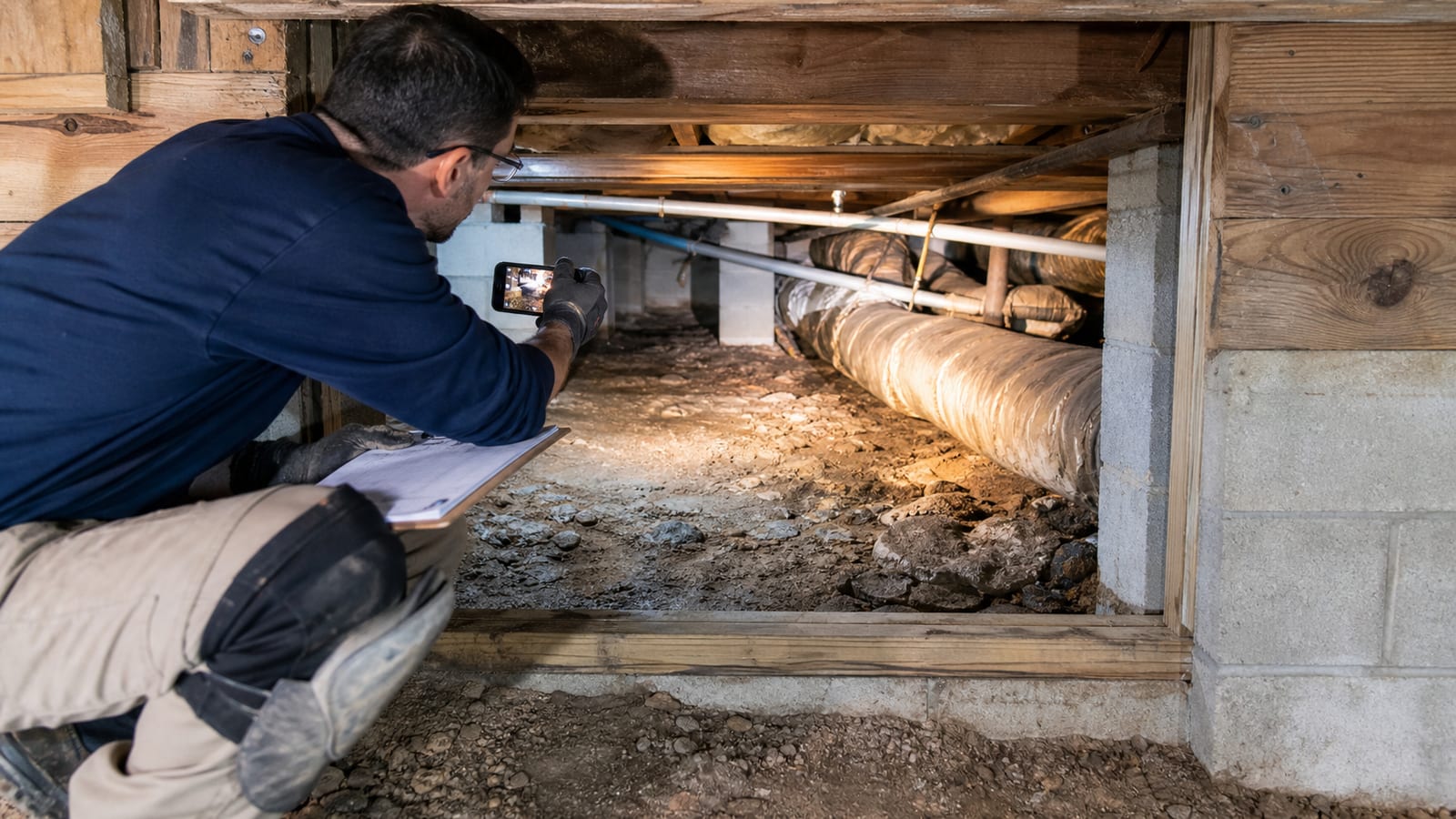
Ask the general inspector to photograph exact locations and list inaccessible areas. Then share the full report, not just summary language, with the next professional. Repeating broad statements without the photographs or context can produce competing guesses.
Decide what the focused inspection must answer
A useful request sounds like one of these:
- Determine whether the damp area beside the rear wall is active and trace observable water paths.
- Review the existing encapsulation system, equipment, drains, access, and visible liner condition.
- Compare subfloor moisture readings at the reported area with suitable reference locations.
- Document framing and supports beneath the room where floor movement was reported.
- Identify whether fallen insulation is wet, unsupported, disturbed by prior trade work, or concealing wood.
Avoid asking one contractor to “clear the crawl space.” A condition review can describe what was visible and what further scope is needed, but it cannot promise that inaccessible areas are free of every problem.
Ask for property records before the inspection
Records can change what the inspector looks for and reduce the need to reverse-engineer the system. Request them early enough for the inspector to review relevant documents before entering.
Useful records include:
- Original scope and completion date for encapsulation, drainage, structural, insulation, or pest work.
- Photographs taken before surfaces were covered.
- Permits and inspection records when the work required them.
- Equipment make, model, manual, drain route, and service history.
- Filter sizes and maintenance intervals stated by the equipment manufacturer.
- Sump basin, pump, alarm, and discharge information.
- Pest inspection and treatment documents.
- Dated humidity or moisture logs.
- Reports describing earlier leaks or storm water entry.
- Diagrams showing concealed drains, discharge lines, or repaired framing.
An invoice title alone may not reveal what was installed. “Crawl space work” could mean debris removal, a partial vapor barrier, structural repair, drainage, or a complete enclosure. Ask for the detailed scope and compare it with visible conditions.
Use weather as evidence without waiting for perfect conditions
Weather affects what can be observed, but a buyer should not postpone every inspection hoping for a storm. Instead, record the conditions on inspection day and use available history.
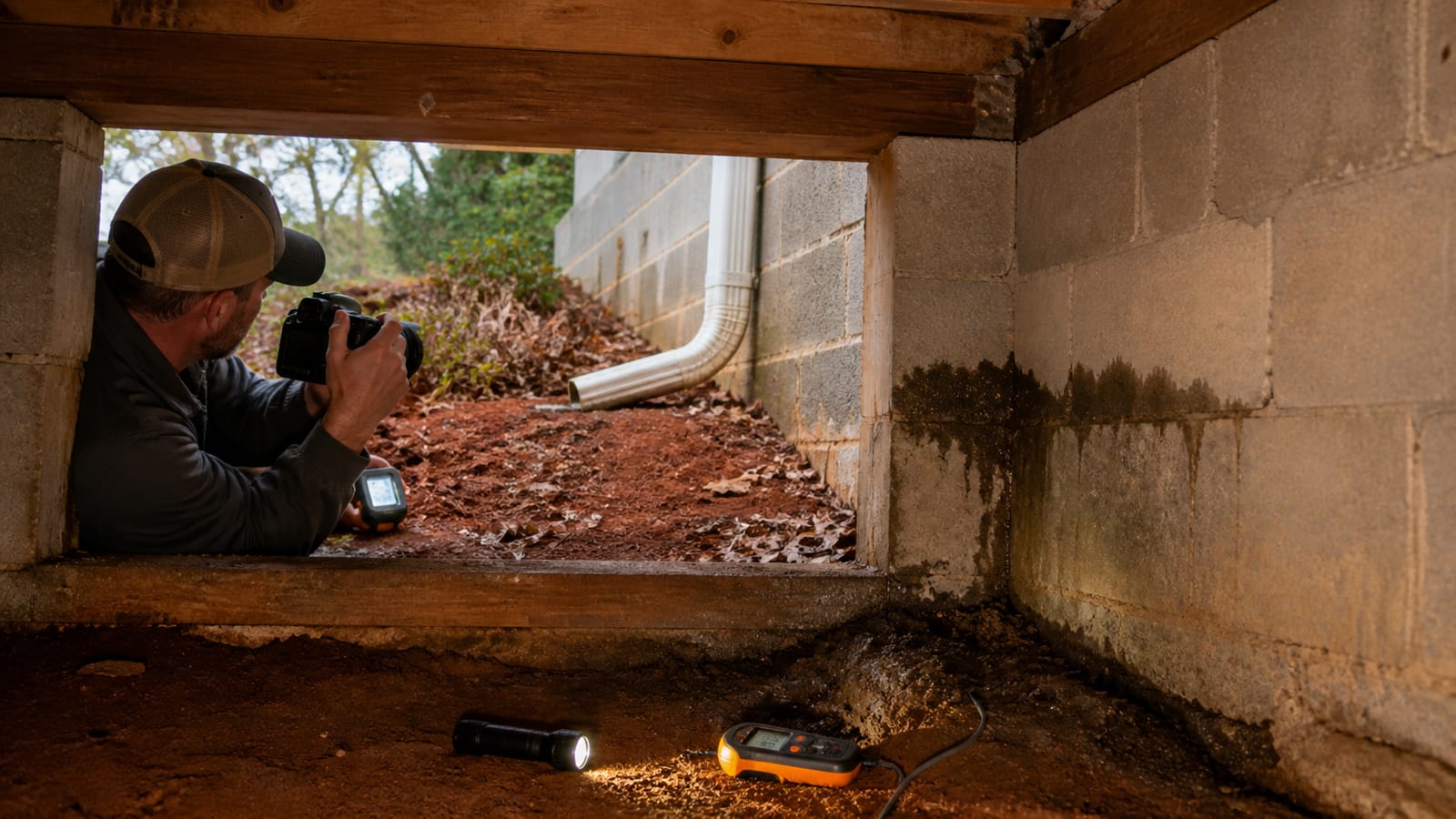
After recent rain, note wet soil, wall staining, drain activity, sump level, downspout discharge, and low points. During a dry period, look for water marks, sediment lines, mineral deposits, rust, displaced liner, damp odor, and prior photographs. A dry crawl space on one visit does not disprove intermittent water entry, just as one wet visit does not identify the source by itself.
If rain-driven water is a known concern, the parties may consider a follow-up observation after meaningful rainfall if the transaction schedule and professional advice allow. The standing water problem page explains why timing is a clue rather than a diagnosis.
Plan for access before anyone arrives
Access is a major source of incomplete crawl space information. Confirm that the door or hatch opens, the route is clear, and the person entering can do so without damaging the liner, ducts, plumbing, wiring, or equipment.
Do not move electrical components, crawl through standing water, disturb suspected pest evidence, or cut finished materials simply to create access. If stored items or insulation block visibility, decide who can move them safely and who will restore them. In an encapsulated space, photograph seams, wall attachments, piers, drains, and the travel route before entry by multiple trades.
The access opening itself is also part of the condition review. A door that is swollen shut, poorly fitted, or exposed to runoff can conceal problems and weaken the enclosure. The vent sealing and air sealing service describes enclosure details that may deserve a focused look.
Keep the WDIR in its proper lane
North Carolina’s wood-destroying-insect information report addresses visible evidence within its defined scope and identifies inaccessible areas. According to the North Carolina Department of Agriculture and Consumer Services, it is not a structural damage report and does not cover every plumbing, electrical, roof, wildlife, decay, or moisture issue.
That makes coordination important. A WDIR can provide essential pest-related information, while a home inspection and crawl space review address different conditions. If a liner, wall insulation, stored material, or low clearance limits visible foundation and wood areas, ask the pest professional how the limitation will be recorded. The detailed explanation in what a North Carolina WDIR tells a home buyer can help buyers read the document without treating it as a complete crawl space assessment.
Review findings before requesting work
Once reports arrive, sort findings by urgency, evidence, and specialty. A simple table can prevent unrelated issues from being bundled together.
| Finding | Exact location | Active or historical | Access limit | Appropriate review |
|---|---|---|---|---|
| Water or damp soil | Foundation side and reference point | Record weather and current condition | Note blocked wall or floor | Moisture, drainage, or plumbing scope |
| Floor movement | Room above and framing below | Note whether changing | Record concealed bays | Structural scope |
| Pest evidence | Specific member or debris location | Follow WDIR language | Record inaccessible areas | Qualified pest scope |
| Equipment concern | Unit, drain, basin, or alarm | Record operating state | Note power or cover limits | Appropriate equipment service |
| Damaged liner or insulation | Seam, wall, pier, or joist bay | Record wet or dry | Note concealed material | Crawl space repair scope |
Do not request cosmetic work before the source question is addressed. New insulation can hide wet framing. A new liner patch can cover the location where water entered. Added support can complicate evaluation if no one documented the original floor system.
What to revisit before closing
A pre-closing review should confirm documentation and visible completion, not repeat the entire inspection without a reason. Revisit conditions that were repaired, inaccessible, weather-dependent, or tied to equipment.
Bring:
- The original report and photographs.
- Written repair scopes and completion documents.
- Before-and-after photographs.
- Permit records when applicable.
- Equipment manuals and maintenance information.
- A list of remaining exclusions or monitoring items.
Verify that access was restored, debris was removed, drains and discharge paths remain connected, liner repairs are complete, and labels or manuals are available. Do not operate equipment contrary to its instructions or enter unsafe conditions.
If the parties need a crawl space condition review, Carolina Encapsulation Company offers a free inspection in its confirmed service area. Use the contact page to schedule. The company’s inspection does not replace legal, real estate, structural, pest, electrical, plumbing, or HVAC advice.
Limitations and when another inspection is appropriate
No timing strategy can make concealed construction fully visible. A report reflects the accessible conditions on the inspection date. Repairs, rainfall, seasonal humidity, equipment operation, and new leaks can change those conditions.
Another focused inspection may be appropriate when:
- A material area was inaccessible during the first visit.
- The seller completes crawl space work after the inspection.
- Water entry is reported but not visible during dry weather.
- Moisture readings conflict or lack method and location.
- Floor movement or visibly altered supports need structural review.
- Pest evidence or access limits are recorded on the WDIR.
- Installed equipment lacks records or does not operate as expected.
- The final walk-through reveals a new odor, water mark, alarm, or access problem.
The transaction professionals should determine whether the contract allows additional access, testing, negotiation, or extensions. A contractor should not interpret those rights.
Frequently asked questions
Should a crawl space inspection happen before or after the general home inspection?
Schedule the general inspection early and discuss crawl space access at the outset. A focused crawl space review can occur at the same time or after the general inspector identifies specific questions. The best order depends on access, available records, contract deadlines, and which professionals need to coordinate.
Is the final walk-through early enough for the first crawl space inspection?
Usually it leaves less room for records, specialty evaluations, or follow-up, but the transaction contract and professional advice control. A final walk-through is better suited to checking agreed work, access, equipment status, and new visible changes than starting a complex source investigation.
Does an encapsulated crawl space still need inspection before closing?
Yes. A clean liner does not show the condition of every concealed surface or explain the system’s maintenance needs. Review liner continuity, wall and pier details, drains, dehumidification equipment, access, available inspection gaps, records, and any areas hidden by insulation or stored materials.
Can a buyer rely on a WDIR instead of a crawl space moisture inspection?
No. A North Carolina WDIR addresses wood-destroying insects, visible evidence, certain conducive conditions, and accessibility within its defined scope. It is not a complete moisture, structural, plumbing, HVAC, electrical, drainage, or encapsulation evaluation. The reports can complement each other.
What should a buyer provide when scheduling a focused crawl space review?
Provide the full home inspection report, photographs, seller disclosures, prior work scopes, equipment records, pest documents, and the specific questions that need answers. Also confirm access and recent weather. Better context allows the inspection to focus on observable conditions instead of repeating broad report language.
Sources and further reading
- North Carolina Department of Agriculture: Homebuyer’s Guide to the Wood-Destroying Insect Report
- EPA: A Brief Guide to Mold, Moisture and Your Home
- North Carolina OSFM: Permit Required for Closed Crawl Space
How this applies in Raleigh, NC
For a home transaction in Raleigh, NC, keep crawl space reports, scope documents, equipment details, and maintenance records together. The city identifies the property context, while inspection, legal, pest, engineering, and code questions still belong to the professionals responsible for those scopes. Compare the crawl space inspection checklist with the How to Choose a Crawl Space Company Near Fuquay-Varina, NC before choosing a property-specific next step.