Short answer
A crawl space sump pump alarm usually means a sensor detected water above its intended level or a controller detected an equipment or power condition. It does not prove that the pump motor failed. The basin may be receiving water faster than expected, the float may be obstructed, power may be interrupted, the discharge may be blocked, or the alarm itself may need service. Keep away from wet electrical equipment, record the alarm indication and storm conditions, observe water level and discharge from a dry location, and arrange service when the cause is not immediately and safely clear.
An alarm reports a condition, not a complete diagnosis
A sump system may have several warnings:
- A high-water sensor that reacts when the basin rises above the primary pump’s normal range
- A backup-pump controller that reports battery, charger, float, or pump status
- A water sensor on the liner or floor
- A power-loss notification
- A remote monitor that depends on internet or cellular service
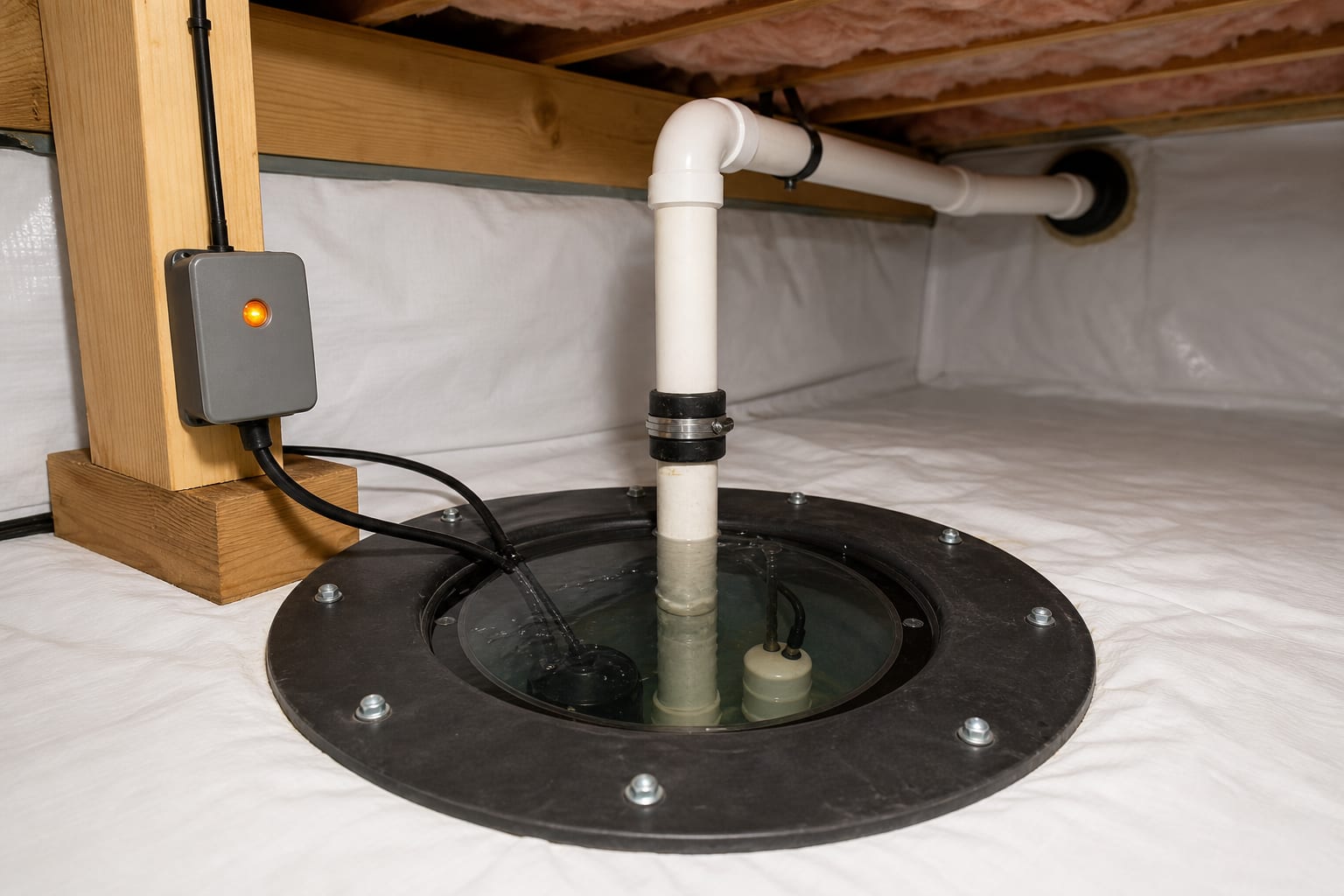
These warnings answer different questions. A high-water alarm says water reached its sensor. A low-battery signal says the backup power source needs attention. A disconnected notification may mean the network failed even while the pump runs normally. The label, light pattern, tone, and manual are essential.
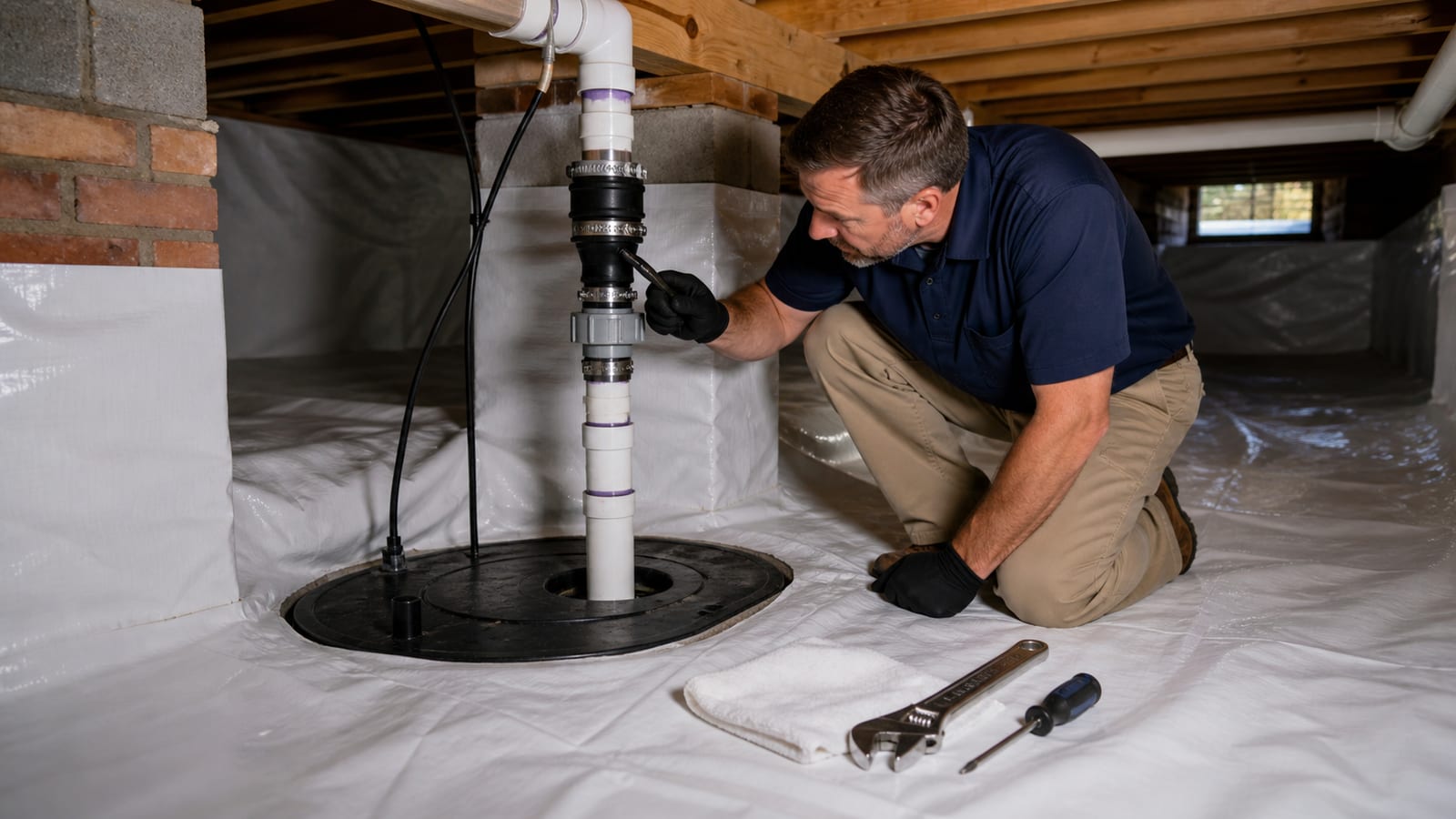
The sump pump repair and maintenance page is the primary service resource. The steps below help a homeowner preserve useful evidence and recognize when not to enter.
First decide whether the area is safe to approach
Do not enter a crawl space if standing water is near a receptacle, plug, cord, pump controller, dehumidifier, HVAC component, exposed wiring, or another electrical source. Do not touch the basin, alarm, plug, or breaker while wet. Stay out if the access is flooded, water may contain sewage, animal activity is present, soil has washed away around supports, or structural movement is visible.
Use a flashlight instead of a candle or fuel-powered lantern. If a power outage is involved, follow public-safety guidance for generators. A generator never belongs in a crawl space, basement, garage, carport, or near a door, window, or vent.
An alarm can feel urgent, but unsafe entry can turn a water problem into an electrical, fall, or exposure hazard.
Record exactly what the alarm shows
Before silencing or resetting anything, photograph the controller or indicator from a dry location. Record:
- Date and time
- Rain or recent weather
- Whether utility power is on
- The exact light color, symbol, code, or tone
- Whether the sound is continuous or intermittent
- Current water level if safely visible
- Whether the primary or backup pump can be heard
- Whether water is visible at the discharge outlet
- Whether the alarm has occurred before
Do not guess at a code from memory. Read the label and manual. If the manual is missing, record the information on the equipment for the service professional without publishing private home details online.
Check the system in a safe order
1. Check household and circuit power
Determine whether the home has an outage or whether the problem is limited to one circuit. A dark controller may indicate no power, but a battery-powered alarm can continue sounding after the primary pump stops.
Approach the electrical panel only if the path and panel are dry. Do not repeatedly reset a breaker. A trip can reflect a pump, wiring, moisture, or circuit problem that requires qualified evaluation.
2. Observe the basin water level
From outside the wet area, compare the level with the normal reference photo or marks documented earlier. Is the water rising, steady, or falling? Is it above the primary float, near the lid, or at the backup activation level?
The trend matters:
- Rising water suggests incoming flow exceeds removal at that moment.
- A steady high level may mean the pump is cycling at its limit or the sensor remains wet.
- Falling water while the alarm continues may mean the system is recovering or requires a manual reset.
- A normal level with a new alarm may point toward a wet remote sensor, controller status, or alarm fault.
Do not lift the lid or reach into the basin to move a float.
3. Listen for operation
A pump that is silent may lack power, may not be commanded on, or may have an equipment problem. A humming sound without falling water can indicate a blocked pump, jam, air or discharge issue, or motor trouble. Rapid short cycles may reflect float position, basin conditions, backflow, or incoming water.
Sound alone is not enough. Pair it with the water-level trend and discharge observation.
4. Check the visible discharge
If conditions outside are safe, locate the discharge outlet and look for flow when the pump runs. Check for a separated fitting, crushed pipe, erosion, obstruction, freezing, or water returning toward the foundation.
An underground outlet may not be visible. Do not dig or disassemble the line during a storm. Record that the termination could not be confirmed.
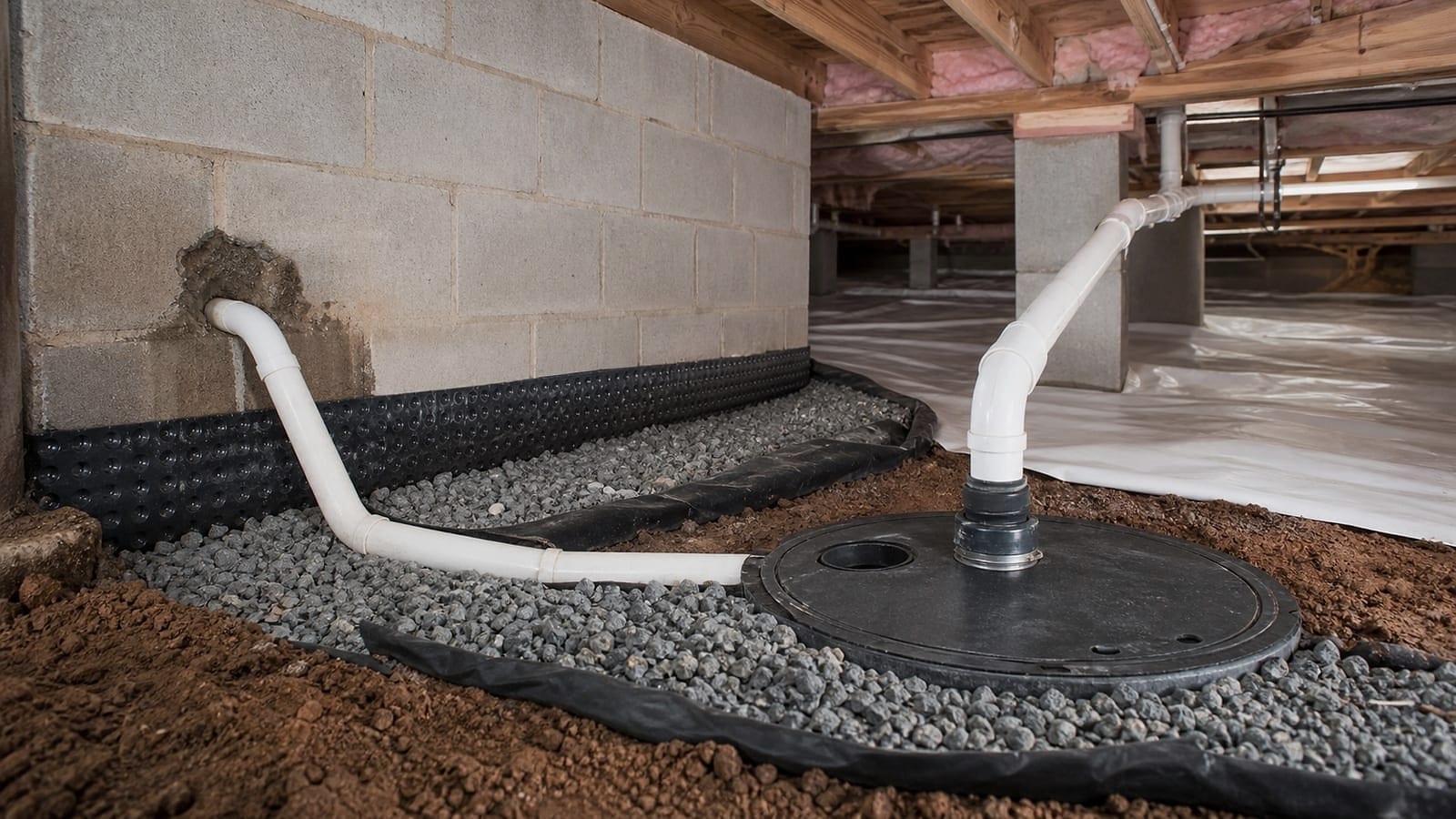
The crawl space drainage systems page explains how collection and discharge connect. A working pump cannot lower water that never reaches the basin, and a clear basin cannot compensate for a blocked outlet.
5. Review the float and sensor area visually
Without touching the system, look for liner folds, wires, piping, debris, or another component crowding the float. A shifted pump or basin lid can also change clearance. If the basin is opaque or covered, leave internal inspection to service.
A high-water sensor should not be moved lower to stop nuisance alarms. Its position is part of the system’s warning design.
6. Check backup status
If a separate backup is installed, read its indicators. Determine whether it is pumping, charging, reporting a battery condition, or showing a fault. A backup alarm may sound because the backup operated as intended, which still means the primary system or water load needs review.
Never attach an unapproved battery, bypass a controller, or assume that a generic replacement has the correct electrical and performance characteristics.
7. Look at the incoming water path
During heavy rain, note whether drainage channels or inlets are sending water into the basin. If water enters rapidly from one side, compare that direction with exterior downspouts, grade, foundation corners, and wall penetrations.
When no storm is present, look upward for plumbing leaks and condensate lines. An alarm indicates basin level, not whether the water came from groundwater, rain, plumbing, or equipment drainage.
Common alarm scenarios
Alarm during intense rain while the pump runs
The pump may be operating but receiving water faster than it can lower the basin, or the discharge may be restricted. Record the water trend, runtime, inlet flow, and outlet. This scenario calls for inspection of capacity, collection, discharge, and exterior water management rather than immediate replacement based only on the alarm.
Alarm with no pump sound
Power, controls, the float, the motor, or a protective device may be involved. Do not handle plugs in damp conditions or repeatedly reset the circuit. If water is rising, leave the space and seek service.
Alarm after the rain stops
Soil and drainage systems can continue releasing water after rainfall ends. An outlet may also remain submerged or blocked. A delayed alarm is still useful evidence about the system’s recession time.
Alarm after power returns
The basin may have risen during the outage. The primary pump may be clearing accumulated water, or the controller may retain an event code. Confirm that the level falls and discharge occurs before resetting the record.
Alarm with a low or normal basin level
A remote water sensor may be wet on the liner, the alarm may be latched from an earlier event, or a controller may be reporting battery or communications status. Identify the exact device and message. Do not assume the warning is false simply because the basin looks low.
Repeated alarm without visible water
Intermittent water, condensation on a floor sensor, a displaced sensor, a wiring issue, or a controller problem may be involved. Repeated warnings deserve service because an ignored alarm may not be available when actual high water occurs.
What not to do when an alarm sounds
- Do not unplug the alarm solely to make the sound stop.
- Do not hold or tie a float in the raised position.
- Do not reach into the basin.
- Do not run an extension cord through a wet crawl space.
- Do not connect the pump to an improvised generator or power source.
- Do not drill, cut, or reroute the discharge during the event.
- Do not assume that a running motor means water is leaving.
- Do not reset the system before photographing the original warning.
Silencing may be appropriate after the condition is documented and the manual’s safe procedure is understood. Silencing is not the same as resolving the cause.
Use the alarm history to improve the water plan
One alarm can be an unusual event. Repeated alarms reveal a pattern. Create a small log with:
- Rain conditions and duration
- Alarm time
- Highest safe water observation
- Primary and backup status
- Discharge observation
- Time until the level returned to normal
- Service performed
- Exterior changes such as clogged gutters or new grading
Compare events. If alarms occur only when one downspout overflows, exterior water may be increasing the system load. If alarms occur in dry weather when plumbing is used, another source may be involved. If the backup activates whenever utility power flickers, electrical and backup behavior should be reviewed.
The focused article on standing water after heavy rain provides a fuller exterior-to-interior diagnosis order. The standing water problem page remains the primary overview.
After the alarm clears
Do not close the access and forget the event. Once conditions are safe:
- Verify the basin returned to its normal range.
- Verify the primary pump stops and starts normally through a qualified test method.
- Inspect visible discharge fittings and the outlet.
- Check for water on or beneath the liner.
- Look for damp insulation, wood, masonry, or stored material.
- Review backup and battery status.
- Save the alarm photo and update the service record.
If the pump ran for an extended period, a service inspection can check components that are not visible from the access. If water escaped the basin or reached materials, the moisture source and drying needs should also be evaluated.
Limitations and when to schedule an inspection
A homeowner can identify the alarm, record conditions, observe water level, listen for operation, and check an accessible discharge point. Pump testing, electrical diagnosis, battery load testing, float adjustment, basin entry, and discharge repair require qualified work.
Schedule service when the alarm repeats, the water level rises, the pump hums without lowering water, a breaker trips, the outlet does not discharge, the backup reports a fault, or the warning cannot be identified. Keep out and seek prompt help when water is near electrical components, the crawl space may be contaminated, or access is unsafe.
If the alarm is part of a broader moisture pattern, schedule a free crawl space inspection so the basin, drains, discharge, and exterior conditions can be reviewed together.
Frequently asked questions
Does a sump pump alarm mean the pump is broken?
No. It means the alarm detected a condition. High inflow, blocked discharge, power loss, a float problem, backup operation, a wet remote sensor, or equipment failure may be responsible. The exact indicator and water trend narrow the review.
Can I silence a high-water alarm?
Follow the specific manual only after documenting the warning and confirming that silencing will not disable pumping or erase needed information. A quiet alarm does not mean the water condition ended.
Why is the alarm sounding if the pump is running?
Water may be entering faster than it leaves, the discharge may be restricted, the pump may have lost capacity, or the alarm may remain latched after a high-water event. Check level trend and outlet flow safely.
Why did the backup alarm sound after a brief outage?
The backup may have activated while utility power was interrupted, or the controller may be reporting power or battery status. Review the exact code and verify both primary and backup operation after power returns.
Should a sump alarm be tested?
Yes, according to its own instructions and as part of system maintenance. Testing should confirm the warning method without unsafe water or electrical contact and should be documented so the household recognizes the signal.
Sources and further reading
- Federal Emergency Management Agency: Basement Flood Mitigation
- Centers for Disease Control and Prevention: What to Do to Protect Yourself During a Power Outage
- U.S. Environmental Protection Agency: Mold Course Chapter 2, including crawl-space moisture
- NOAA National Hurricane Center: Heavy Rainfall and Inland Flooding Hazards
How this applies in Cary, NC
In Cary, NC, document water timing, roof runoff, grade, the entry point, the low point, and the discharge route before naming a drainage solution. A wet area can be where water collects rather than where it entered, so the location of each observation matters. Compare the sump pump repair maintenance with the Crawl Space Drainage Systems: From Water Entry to Discharge in Garner, NC before choosing a property-specific next step.