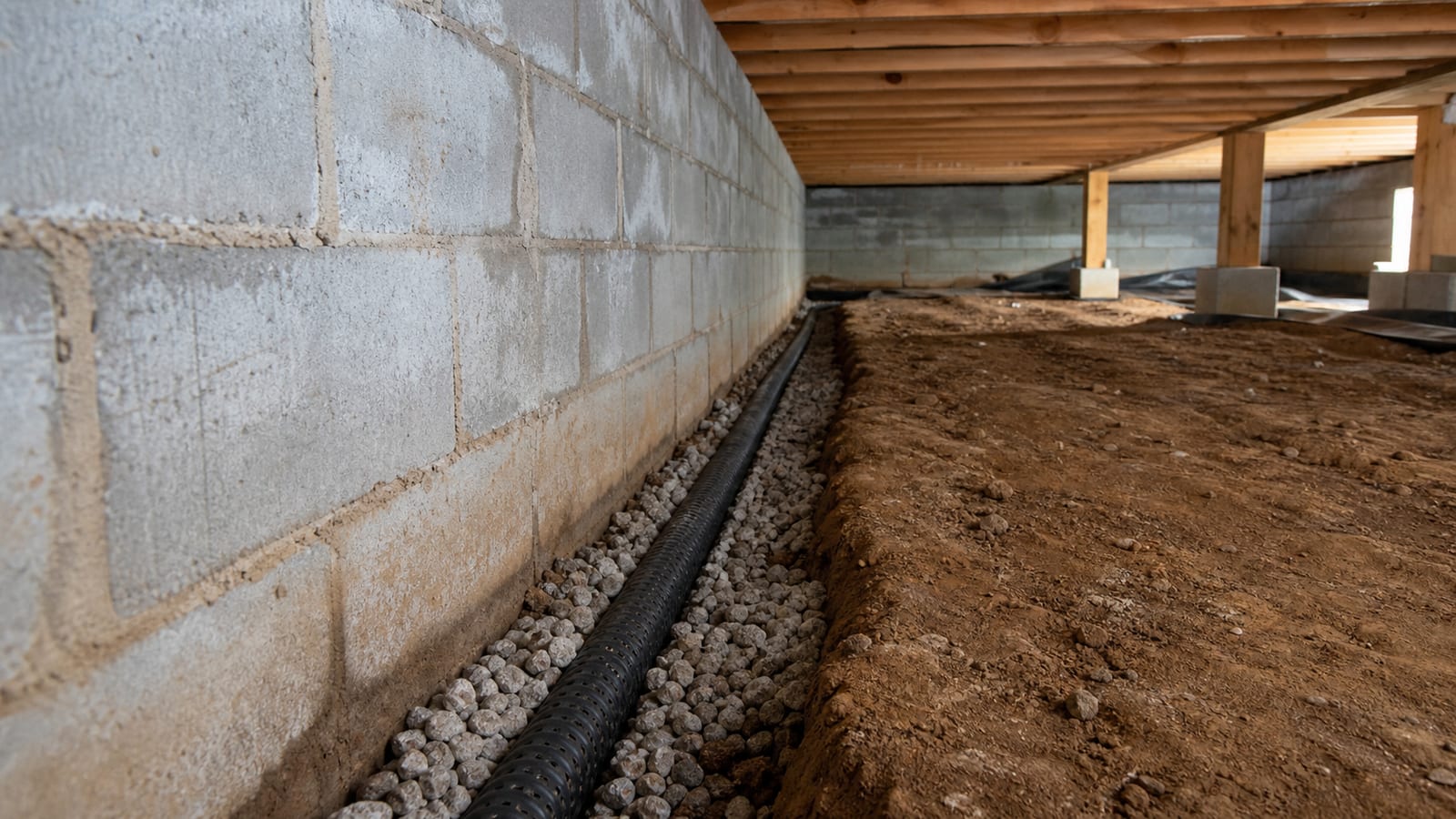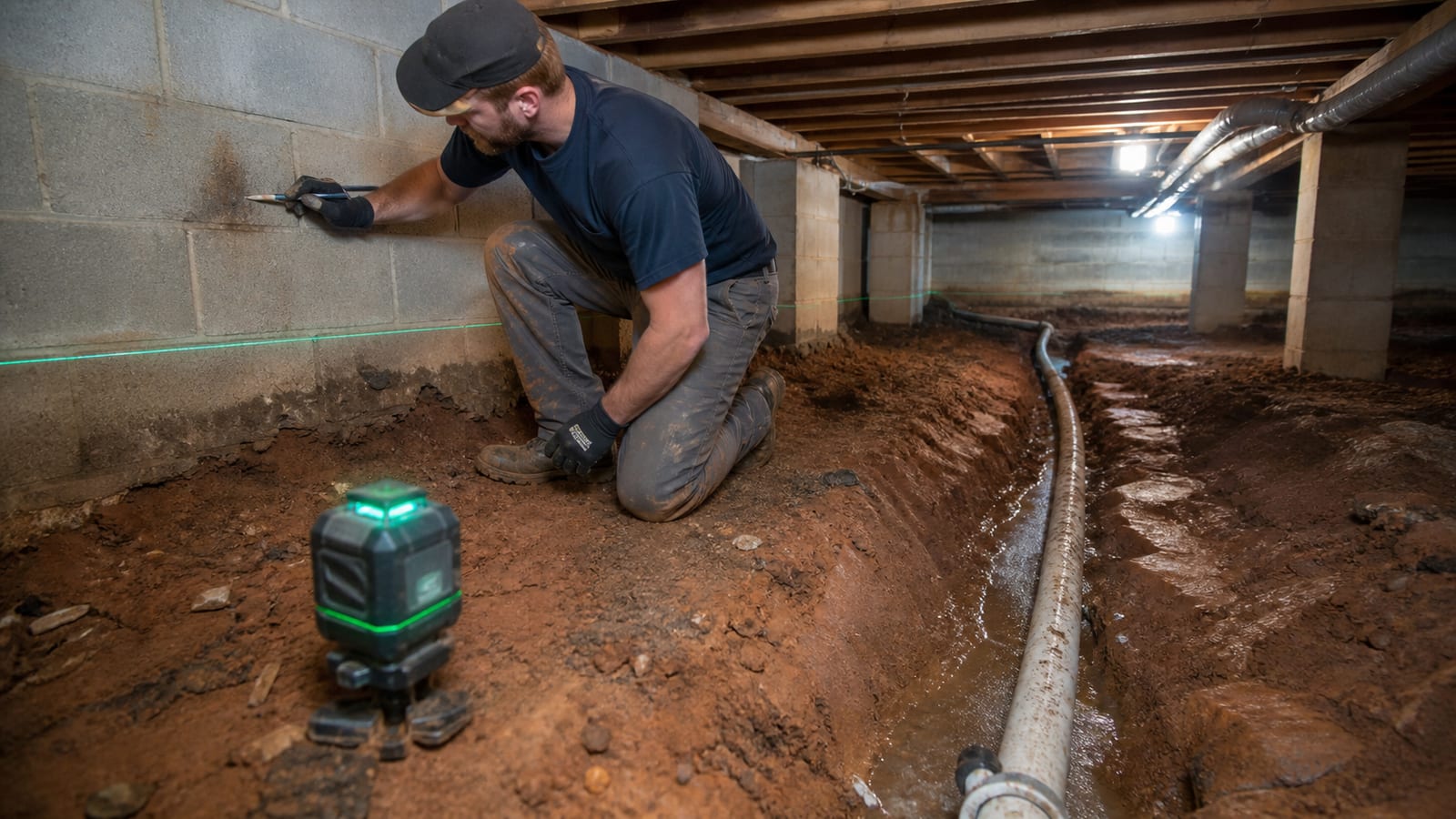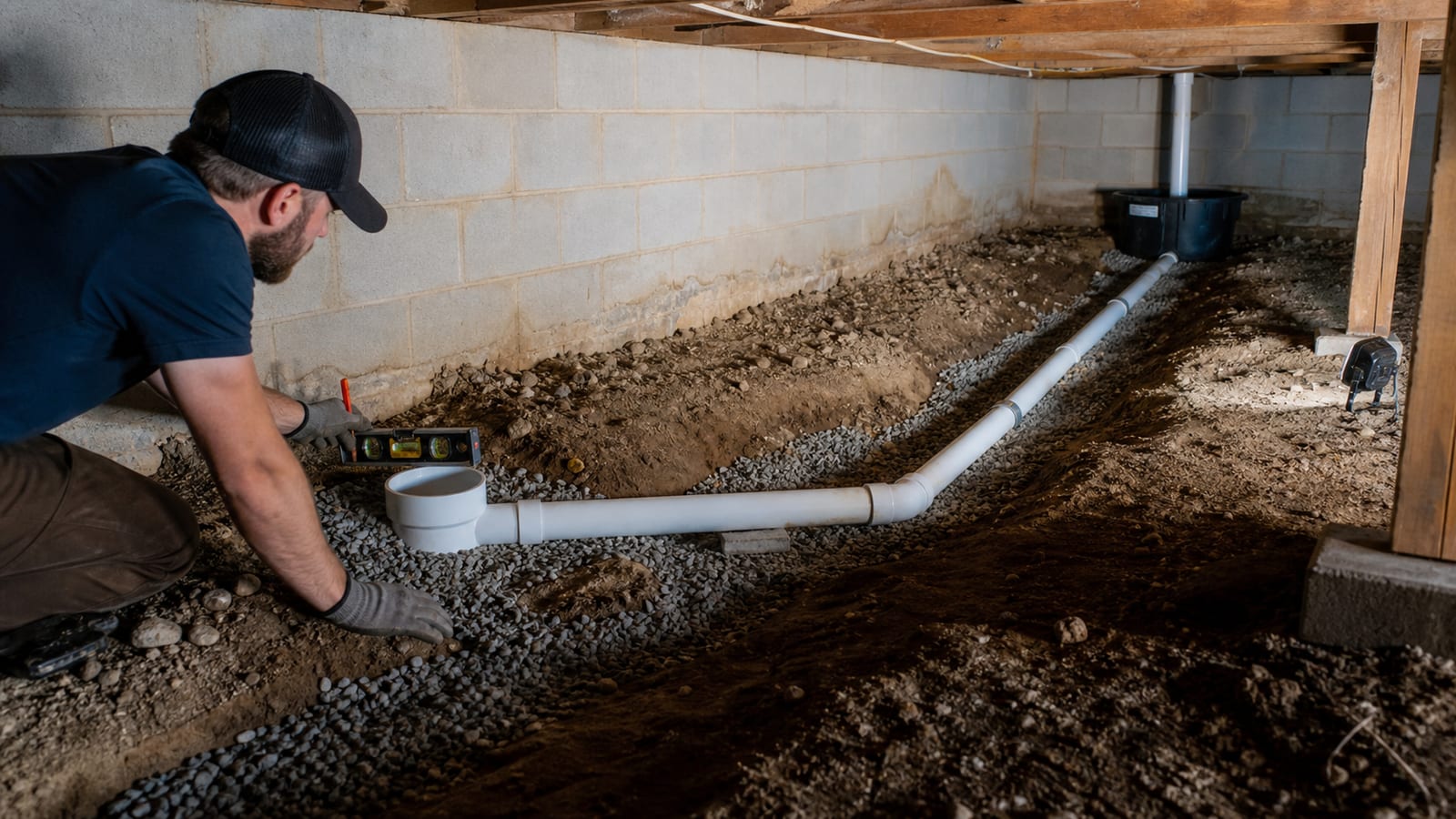
A crawl space drainage system needs a sump pump when collected water cannot reach a safe outlet by gravity. The pump lifts water from a basin into discharge piping. It should be selected and installed as part of a complete route that includes collection, power, controls, alarms, check-valve decisions, and an exterior outlet.
A pump is not a source-control device. It cannot repair a plumbing leak, redirect a downspout, improve grade, or stop soil vapor. It also cannot promise a dry crawl space during every storm or outage. The decision begins with water volume and elevations, then follows the discharge route all the way outside.
When is a sump pump needed in a crawl space?
A sump pump is needed when a drain or low collection area receives recurring liquid water and the site lacks continuous gravity fall to a suitable outlet. The basin must receive that water, and the pump must lift it to a discharge point that will not return it toward the foundation or create another problem.
Evidence that may support a pump includes:
- water repeatedly reaching the same low area;
- an interior drain that ends without a gravity outlet;
- a gravity pipe that cannot maintain fall;
- a site where the safe outlet sits above the collection elevation;
- an existing basin that fills during wet weather;
- water beneath a liner moving toward a defined endpoint.
Evidence alone does not determine pump size or final design. Record the timing, approximate water depth, affected area, storm conditions, and whether water enters continuously or in short bursts. A pump that manages one recurring path may not collect water entering on another side.
Before adding mechanical discharge, reduce avoidable exterior water where practical. Gutter overflow, downspout problems, low grade, and ponding can impose unnecessary load. The crawl space drainage system pillar explains why the source, collection, basin, pump, and outlet should be evaluated together.
How does a crawl space sump pump work?
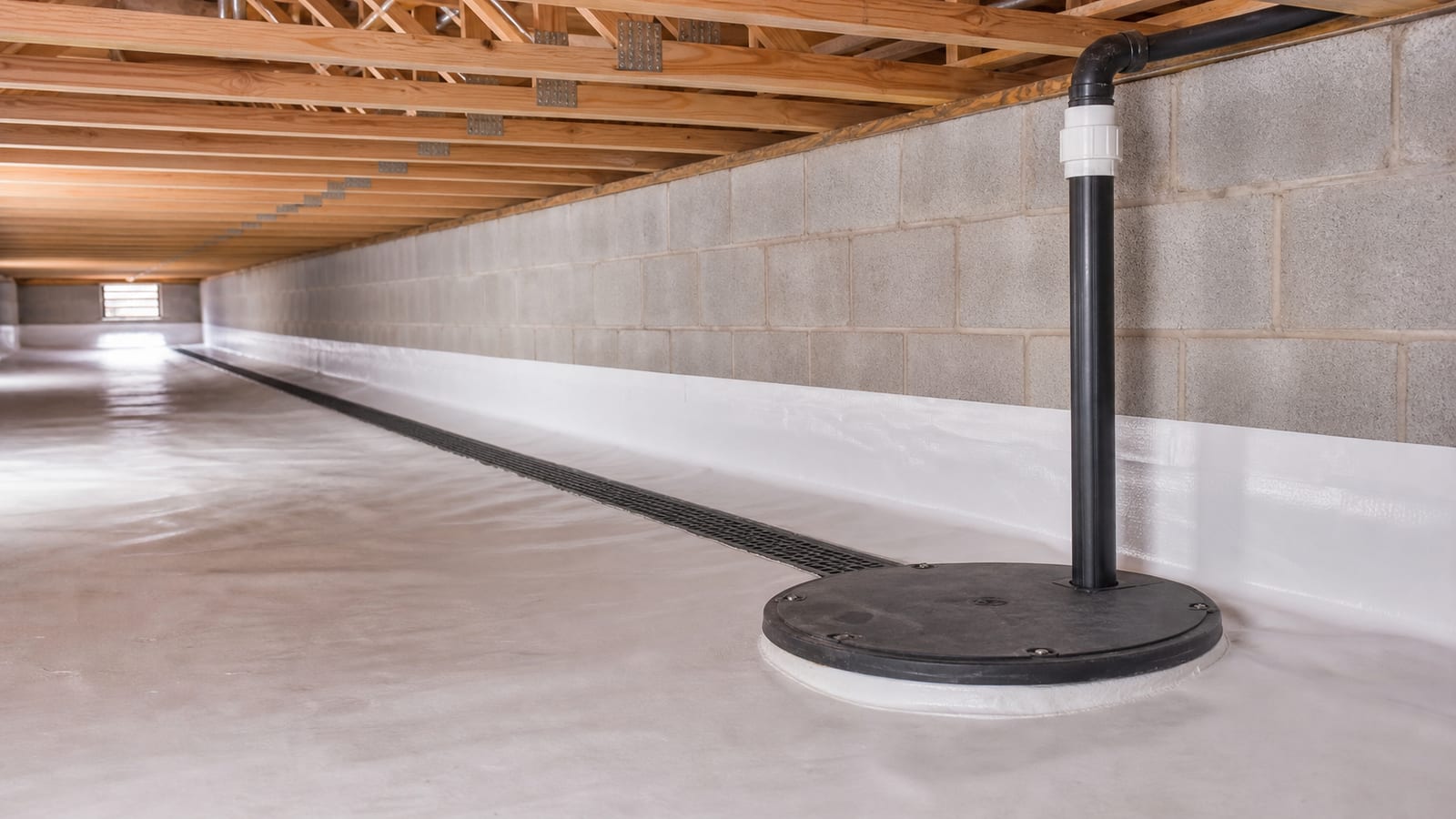
A crawl space sump pump sits in a basin that receives water from drains or nearby soil. As the water level rises, a float or sensor activates the pump. The pump moves water through solid discharge piping to an exterior destination, then stops when the level falls to its designed shutoff point.
The basin provides more than a container. It separates the pump from loose soil, offers space for the control to move, stores water between cycles, and provides connection points for drainage lines. A fitted lid can limit debris and allow inspection according to the design.
The discharge assembly may include:
- pump outlet fitting;
- vertical riser;
- check valve where appropriate;
- union or service connection;
- supported solid pipe;
- wall penetration;
- exterior extension;
- outlet protection.
The check valve can reduce water falling back into the basin after a cycle, but its location and suitability depend on the pump and installation. A valve can also become a service point or restriction. Follow the equipment instructions.
At the exterior, water should move away without eroding soil, freezing in a vulnerable section, entering a septic area, crossing a walkway, or returning toward the foundation. The outlet is part of the pump system, not an afterthought.
What are the top 6 sump pump design decisions?
Six decisions shape a crawl space sump system: basin placement, basin capacity, pump selection, control clearance, power and alarms, and discharge design. These choices should follow measured water paths and equipment instructions. Choosing only by horsepower can overlook the collection and outlet limits that control actual performance.
-
Place the basin on the collection route. The lowest depression is useful only if drain segments can enter it and it remains serviceable. Confirm elevations and obstacles before excavation.
-
Provide adequate basin volume. A small basin can trigger rapid cycling. A basin that is too high can leave drain inlets submerged or force water uphill. Size and depth must match the system.
-
Match the pump to lift and flow. Pump capacity changes with vertical lift, pipe length, fittings, and restrictions. A label’s maximum flow is not the delivered flow at the actual operating point.
-
Protect float or sensor movement. Inlet pipes, cords, debris, and basin walls can interfere with controls. Layout should preserve the operating range specified by the manufacturer.
-
Plan power, alarm, and outage response. The primary pump depends on reliable power. Alarm and backup options have their own limits and maintenance. The response plan should be documented before severe weather.
-
Complete the discharge route. Support piping, seal penetrations appropriately, and verify the outlet. Prevent return flow and erosion. Document buried sections so landscaping does not damage them.
What happens when the power goes out?
When power goes out, a standard electric sump pump stops while water may continue entering the basin. The available response time depends on basin volume and inflow. An alarm may also lose power unless it has a separate supply. Inspect conditions safely after an outage and never handle wet electrical components.
Preparation should happen before a storm:
- know which circuit supplies the pump;
- understand alarm power and signals;
- keep equipment instructions accessible;
- confirm any backup is maintained and ready;
- keep the basin lid and access clear;
- document the discharge outlet;
- know whom to call if water rises.
Do not connect a pump to an improvised power source or extension arrangement that conflicts with electrical and equipment requirements. Fuel-powered generators introduce their own electrical and carbon-monoxide hazards and must be operated according to official safety guidance, never inside a home, garage, or crawl space.
The crawl space sump pump outage plan provides a more detailed checklist. After power returns, observe pump activation and discharge from a safe position. Water may have moved beyond the usual collection area, carried debris into the basin, or affected wiring and equipment.
How should pump capacity be understood?
Pump capacity should be understood at the project’s actual lift and piping resistance, not from a maximum-flow number alone. Vertical rise, horizontal run, pipe diameter, fittings, valves, and outlet conditions affect delivered flow. The expected inflow and basin storage also influence cycling and the margin during heavy water events.
A pump performance curve relates flow to total dynamic head. As the required lift and resistance increase, delivered flow usually decreases. The project should use manufacturer data for the selected equipment and layout.
Capacity questions include:
- What is the vertical distance from low water level to outlet elevation?
- How long is the discharge pipe?
- How many elbows, valves, and transitions are present?
- Can the outlet submerge or freeze?
- How fast does the basin fill during observed events?
- Does water return after shutdown?
- How often does the pump cycle?
Oversizing is not a complete answer. A powerful pump in a small basin can cycle rapidly. It may also move water faster than the outlet area can absorb without erosion. Undersizing can allow levels to rise during peak inflow.
The system should be observed during safe testing and after real weather. Never simulate extreme inflow by flooding a basin or crawl space without a controlled procedure.
How does Carolina Encapsulation Company evaluate a sump pump?
Carolina Encapsulation Company can evaluate a sump pump by mapping the water source, drainage inlets, basin level, pump operation, piping, power indicators, alarm, and exterior outlet. A free inspection can identify whether the concern lies in collection, mechanical discharge, exterior return flow, or another moisture path.
The practitioner-level point is that hearing the motor is only one observation. A pump can run while an inlet is blocked, the discharge is restricted, or water returns after the cycle. The inspection follows water, not sound.
The crawl space sump pump installation service applies when a pump is part of the appropriate drainage scope. The review may document:
- basin depth and inlets;
- debris and sediment;
- float clearance;
- visible pipe joints;
- check-valve behavior;
- outlet flow;
- erosion and return flow;
- power and alarm status;
- backup condition where present.
There are important limits. A crawl-space inspection should not open energized equipment, certify electrical wiring, guarantee future capacity, map concealed pipes, or predict every storm. Electrical work, plumbing, engineering, or manufacturer service may be required.
How should a sump pump be tested and maintained?
Test and maintain a sump pump according to its manufacturer’s procedure, using safe access and observing activation, discharge, shutoff, alarm, and return flow. Inspect the basin and outlet for debris or blockage. Record results after major storms and outages. Never reach into water or manipulate controls near wet electrical components.
A useful inspection routine includes:
- Review equipment instructions.
- Check the basin lid and access.
- Look for visible water near wiring.
- Observe inlet condition and sediment.
- Use the approved test method.
- Listen for unusual cycling or vibration.
- Confirm visible discharge at the outlet.
- Watch for return flow after shutdown.
- Test alarms and backups as directed.
- Record date, weather, and observations.
The EPA moisture-control guidance supports correcting water sources and drying affected materials. Pump maintenance is part of that source-control process, but it does not replace inspection of wet insulation, framing, walls, or plumbing.
If the pump does not start, runs without lowering the basin, cycles repeatedly, trips power protection, or produces unusual heat or odor, stop testing and arrange appropriate service.
Frequently asked questions about crawl space sump pumps
These answers address necessity, basin water, alarms, backup, cycling, and discharge. Equipment selection and electrical work still require project-specific instructions and qualified review.
Does every wet crawl space need a sump pump?
No. Some water should be corrected at the roof, grade, plumbing, or wall before interior pumping is considered. Some sites have a suitable gravity outlet. A sump pump is appropriate when a defined collection system needs mechanical lift. The inspection should identify the source and discharge destination before selecting equipment.
Should there always be water in a sump basin?
Water level varies with design, soil, recent weather, drain inlets, and pump settings. A small residual amount may remain below the shutoff level. A high or rising level deserves inspection. Compare the current level with the baseline and confirm the pump, outlet, and return flow according to equipment instructions.
Is a sump pump alarm enough backup?
No. An alarm can notify you of a high-water or equipment condition, but it does not move water. Its value depends on power, sensor placement, communication, and a timely response. A backup pump or power source also has capacity and maintenance limits. Build a complete outage plan rather than relying on one device.
Why does a sump pump run every few minutes?
Frequent cycling can relate to high inflow, a small basin, control range, return flow, a leaking check valve, or discharge water returning to the foundation. Do not change controls without instructions. Observe basin inflow, shutoff level, outlet flow, and weather, then have the system evaluated if the pattern persists.
Can a sump pump discharge beside the foundation?
Discharging beside the foundation can allow water to return to the collection system and cause erosion or ponding. The outlet should lead to a suitable location that drains away and complies with project requirements. Verify the full route and destination rather than adding a short exterior elbow as the final step.
How often should a sump pump be replaced?
No unsupported replacement interval applies to every pump. Life depends on equipment, cycling, water quality, sediment, installation, power, and maintenance. Regular testing can reveal changes, but it cannot predict failure precisely. Follow manufacturer guidance and replace or service equipment when condition, testing, or professional evaluation supports it.
A sump pump is the lifting component of a drainage route, not a stand-alone guarantee. If your basin fills, pump cycles strangely, outlet returns water, or storms exceed the current system, call 704-207-9348 or request a free inspection from Carolina Encapsulation Company.
How this applies in Chapel Hill, NC
For homeowners in Chapel Hill, NC, use this topic as a way to organize observations before selecting work. Carolina Encapsulation Company serves Chapel Hill, NC and surrounding Triangle communities, but the appropriate scope still depends on the water, moisture, materials, access, and equipment found at the property. Compare the crawl space drainage systems with the Crawl Space Drainage Systems: From Water Entry to Discharge in Garner, NC before choosing a property-specific next step.