Short answer
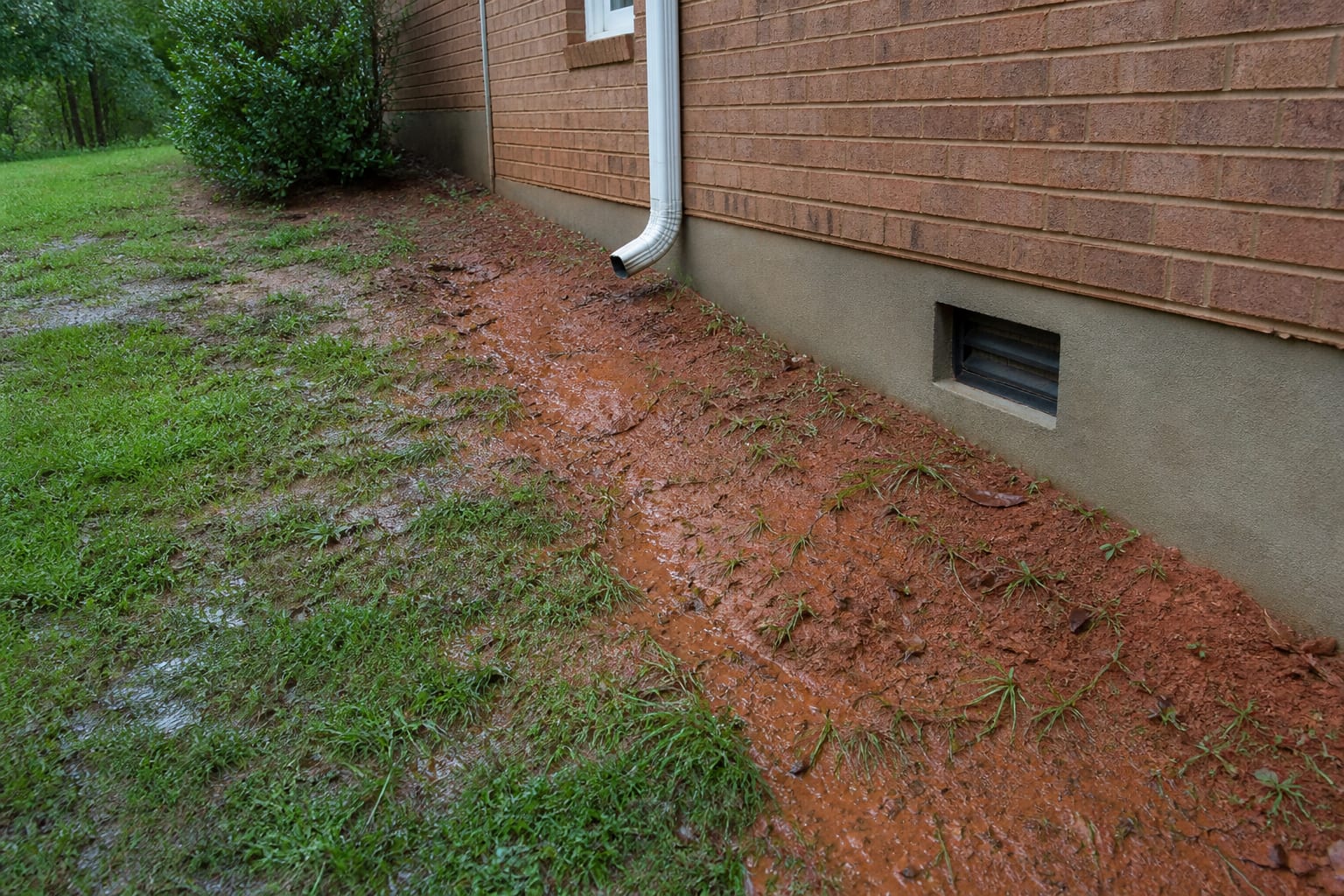
North Carolina red clay can affect crawl space drainage because clay-rich soil generally accepts and releases water more slowly than sandy soil. After heavy rain, compacted clay or fill beside a foundation may stay saturated, shed surface water toward a low point, or hold water in a utility trench. That longer wet period can increase pressure on foundation openings, wall joints, access doors, drains, and exposed crawl space soil.
“Red clay” is not a complete site diagnosis. Soil properties vary across a lot and with depth. Construction can leave mixed fill, compacted equipment paths, gravel trenches, topsoil, and disturbed subsoil beside the same house. Roof area, gutter discharge, slope, foundation depth, drainage outlets, landscaping, and low points may matter more than soil color alone.
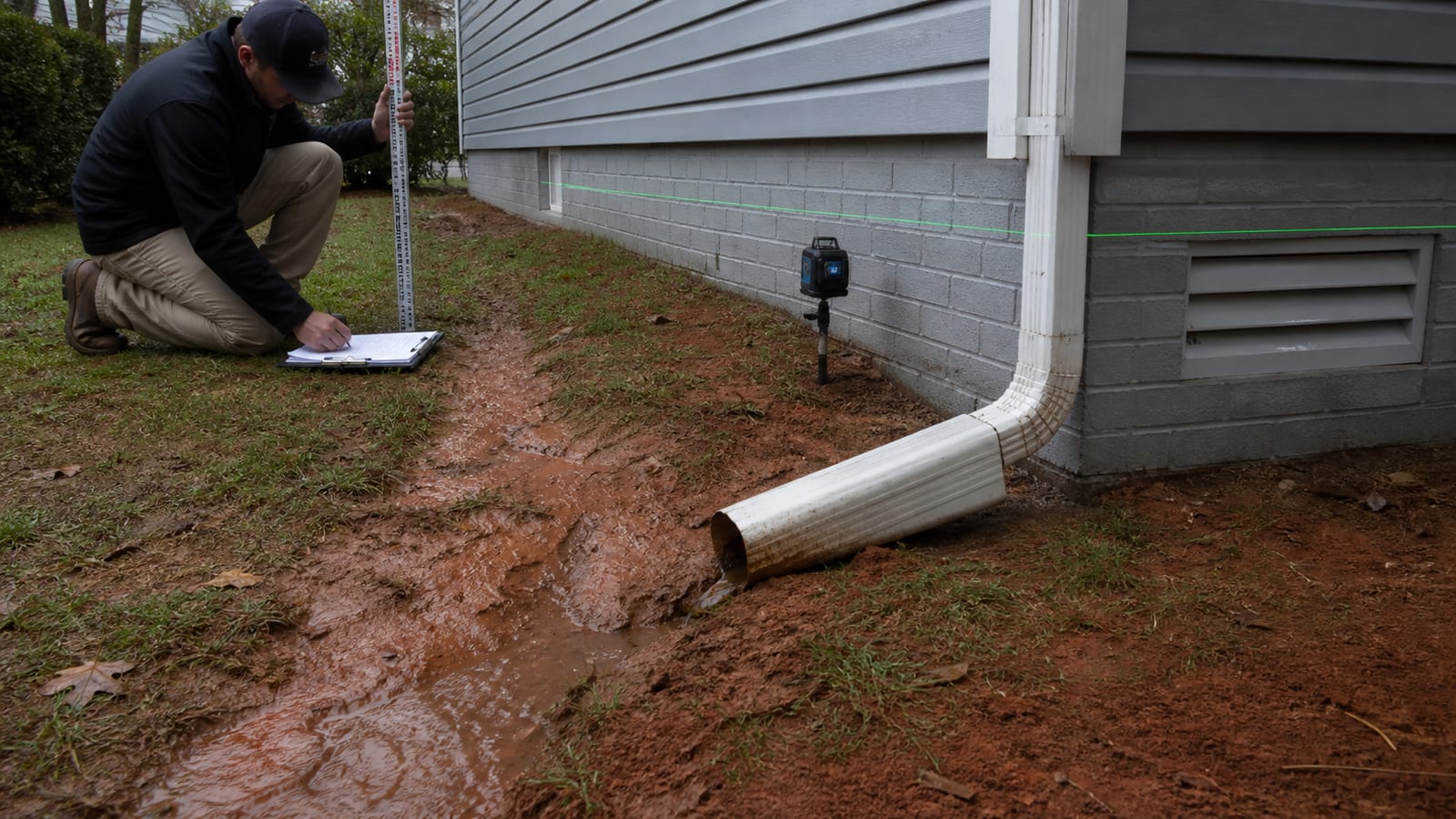
Begin with the water path. Observe where roof water lands, how the ground slopes, where puddles and erosion appear, and where moisture first becomes visible beneath the house. The foundation drainage improvement page covers the main planning category. A useful inspection should connect exterior runoff, soil behavior, wall entry, interior collection, and discharge before a drain or waterproofing method is selected.
What clay changes about water movement
Soil is a mixture of mineral particles, organic matter, water, and air. Texture describes the relative amount of sand, silt, and clay. Clay particles are very small and have a large surface area. Clay-rich soils can store substantial water and may transmit it slowly through small pore spaces, especially when compacted.
That creates several possible site behaviors:
- rainfall may run across the surface before soaking in;
- a shallow depression may stay wet longer;
- disturbed soil beside a foundation may settle and form a trough;
- a gravel-filled utility trench may move water differently from surrounding clay;
- water may perch above a slower-draining layer;
- drying cracks can later provide short pathways when rain begins;
- repeated wetting and drying can change surface shape around a foundation.
These are general soil behaviors, not a claim that every red soil around a Triangle-area home acts the same way. A soil profile, grading history, and real rain observations are stronger evidence than color.
Why a crawl space can stay damp after the yard looks dry
The top inch of soil may dry in sun and wind while deeper clay remains wet. Foundation backfill can also stay shaded and protected from evaporation. Water held below grade may continue moving toward a low opening or release vapor into the crawl space after surface puddles disappear.
Several delays are possible:
- Rain falls and roof water reaches the ground.
- Surface runoff collects along a settled foundation edge.
- Water moves through backfill or a trench.
- Moisture appears at a wall joint or low interior point hours later.
- Exposed soil and wet masonry continue releasing moisture for days.
This delayed pattern explains why an inspection during rain and a follow-up after rain can show different stages of the same event. It also explains why a dry afternoon walkaround does not rule out wet soil beside the foundation.
Soil color does not tell you the source
Red color often reflects iron oxides in weathered soil, but it does not reveal:
- the clay percentage;
- compaction;
- depth to a restrictive layer;
- groundwater conditions;
- location of buried drains or utility trenches;
- whether the soil is native or imported fill;
- how the lot was graded;
- whether a pipe or gutter is leaking;
- where water enters the crawl space.
Mud or sediment inside a crawl space can show that moving water carried soil, but it may not identify the exterior starting point. Compare sediment color and path carefully, and do not assume every reddish stain is current clay wash.
The USDA Natural Resources Conservation Service Web Soil Survey can provide broad mapped soil information. It is a planning reference, not a substitute for inspecting disturbed residential soil at the foundation.
Start with a rain-event exterior map
Observe from a safe location while rain is falling or soon after it ends. Do not work outside during lightning, flash flooding, high wind, or unstable-tree conditions.
Mark roof discharge
Record each downspout and where it releases water. Note:
- overflowing gutters;
- missing or disconnected extensions;
- crushed corrugated pipe;
- buried outlets with no visible discharge;
- water returning toward the wall;
- erosion below a roof valley;
- splash marks on masonry;
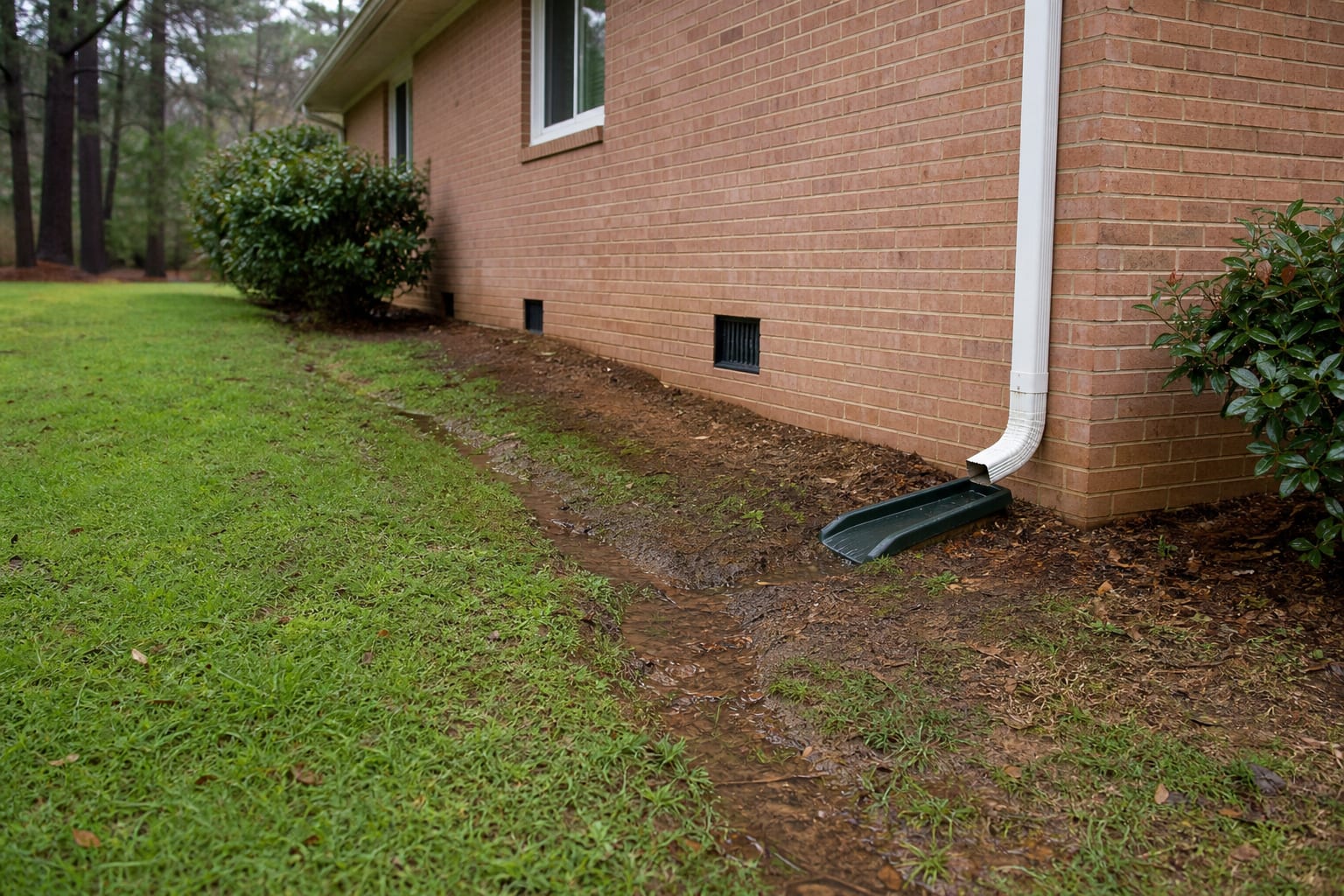
- discharge crossing a walkway or settling area.
Roof runoff is concentrated water. A small soil depression at a downspout can matter more than a large area of undisturbed clay elsewhere.
Read the grade
Stand far enough back to see the relationship among the house, driveway, porch, patios, beds, and yard. Look for:
- soil sloping toward the foundation;
- a narrow trough along the wall;
- low beds held by edging;
- settlement beside steps or additions;
- driveway runoff entering a side yard;
- swales that stop before a reliable outlet;
- soil or mulch covering low vents;
- water crossing the crawl space threshold.
Do not judge slope from a close-up photograph alone. A level or survey may be needed where the grade is subtle.
Watch how water behaves on the soil
Ponding, sheet flow, erosion, and rapid disappearance tell different stories. Water that disappears may have infiltrated, entered a pipe, or moved into a crack. Photograph the area and check where it reappears.
Avoid digging exploratory holes beside a wet foundation. Disturbing saturated clay can create a new water path and damage utilities or existing drainage.
Trace the interior pattern back toward the exterior
If the crawl space is safe to enter, map visible moisture against exterior features. Use foundation corners, piers, plumbing, and wall penetrations as reference points.
Wall streaks and joints
A wet streak below a vent or penetration can suggest direct entry. Moisture along the wall-floor boundary can have several causes, including runoff, saturated backfill, and subsurface conditions. Photograph the highest wet point and the exterior area opposite it.
Low soil pockets
Water collects at the lowest accessible elevation. A low point shows where water stopped, not necessarily where it crossed the foundation. Sediment trails, wet edges, and receding water marks can help identify direction.
Water above or below a liner
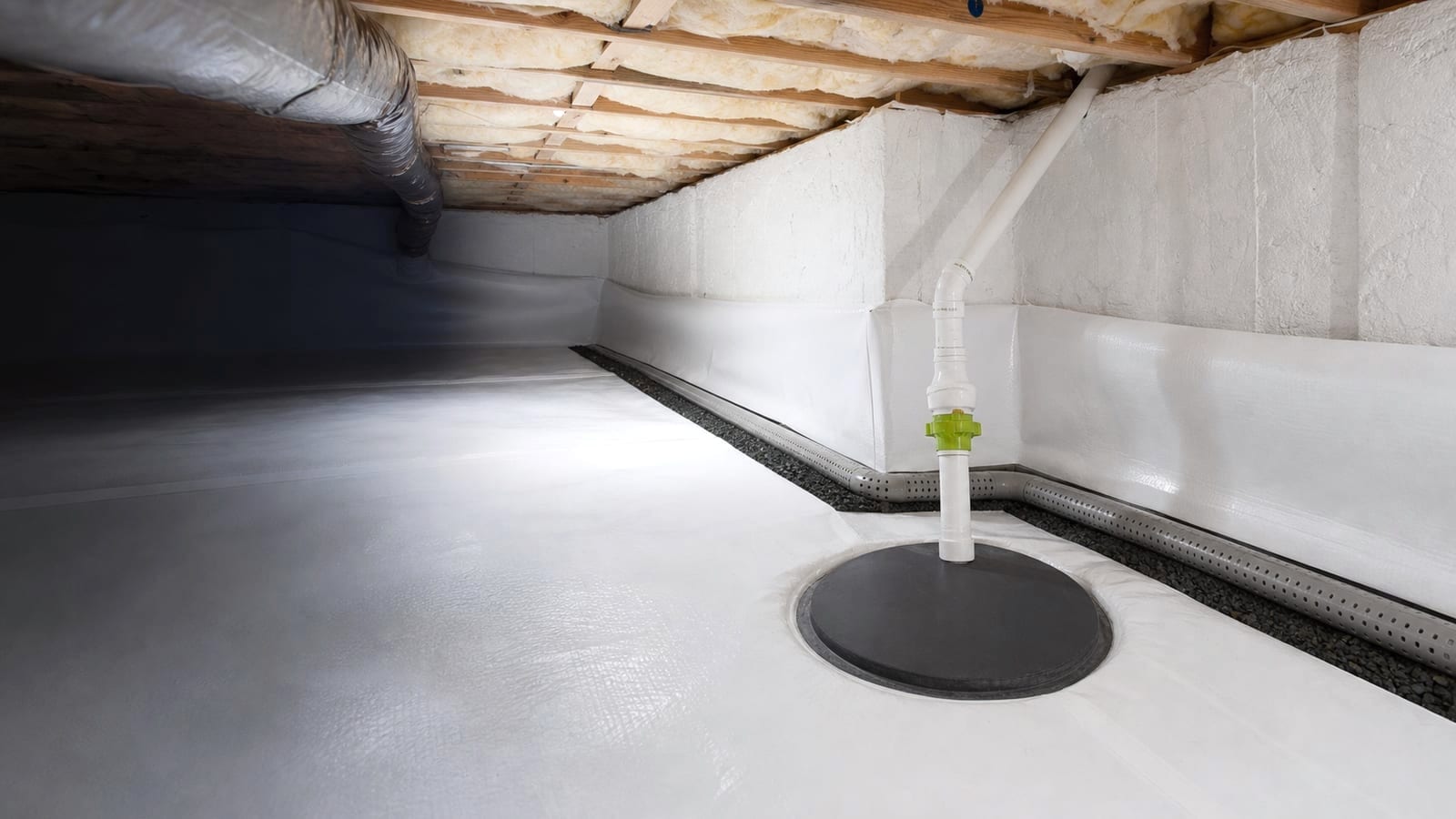
Water on top of a vapor barrier may have dripped from plumbing, ducts, walls, or framing. Water beneath it may have moved through soil or from the perimeter. Do not cut a liner bubble to release water before the source and a controlled repair plan are established.
Drains and sumps
Interior drainage should have a defined collection and discharge route. Record visible inlets, sediment, basin level, pump status, alarms, and exterior discharge without reaching into wet equipment. The crawl space drainage systems page explains how collection is only one part of water management.
Separate four site conditions that can look alike
Surface runoff
Water moves across the yard or hardscape toward the foundation. Clues include sheet flow, erosion, washed mulch, and water crossing an opening during rain.
Saturated foundation backfill
Disturbed soil beside the wall can settle or transmit water differently from undisturbed soil. Moisture may appear after a delay and continue after surface flow stops.
A buried conveyance problem
A disconnected downspout line, crushed drain, blocked outlet, or utility trench can concentrate water underground. Wetness may appear in a line or at an unexpected location. Locating and testing buried systems may require appropriate equipment.
Plumbing or equipment water
A pipe, condensate drain, dehumidifier drain, or sump discharge can create water unrelated to clay or rain. Compare timing with fixture and equipment use. Do not let the local soil reputation replace a plumbing check.
Drainage decisions need a defined outlet
Moving water away from one location is not enough. A drainage plan needs a destination that remains lawful, safe, maintainable, and less likely to return water toward the structure.
Questions to resolve include:
- Where does collected water discharge?
- Is gravity fall available along the full route?
- Can the outlet become submerged or blocked?
- Does discharge erode soil or affect another property?
- Can the route be inspected and maintained?
- Does a sump depend on power?
- Could an exterior drain receive sediment from clay soil?
- Are gutters and grading still directing excess water toward the system?
An interior drain may be appropriate in some conditions, but it should not be used to ignore a disconnected downspout or a grade that repeatedly sends roof water against the wall. The crawl space waterproofing page provides broader system context.
Soil amendments and landscaping are not universal foundation fixes
Garden advice about adding organic matter, gypsum, sand, or plants serves different goals than foundation drainage. Mixing small amounts of sand into clay can produce an unhelpful dense mixture. Plant roots, irrigation, edging, and raised beds can also change moisture beside a house.
Do not apply a landscape amendment against a foundation as a generic crawl space repair. Protect clearances, access, vents, waterproofing, termite-inspection visibility, and drainage. A landscape professional, drainage specialist, or soil professional may need to coordinate where site work is substantial.
A useful clay-soil documentation record
For each significant rain, record:
- Rain start, intensity pattern, and duration.
- Which downspouts were flowing and where they discharged.
- Locations of surface ponding and erosion.
- Time when crawl space water first appeared.
- Highest visible entry point.
- Interior low point and water depth reference.
- Sediment path and color.
- Drain or sump status.
- Water above or below the liner.
- How long exterior soil and interior materials stayed wet.
- Photographs from the same exterior and interior positions.
- Any recent grading, trenching, landscaping, or utility work.
Patterns across events can distinguish a recurring runoff route from a one-time obstruction.
What a source-first inspection should answer
An inspection should move from observations to a water-path model:
- What water sources are active?
- Where does each source travel?
- Which openings or materials are affected?
- Where does water collect?
- What continues after rain stops?
- Which existing control layers work?
- Which controls are missing, damaged, or overwhelmed?
- Where can water discharge and be maintained?
The answer may combine gutter work, grading, exterior collection, interior drainage, sump equipment, ground-vapor control, or material drying. It should not start with a product and force every red-clay site into the same design.
Limitations and when to arrange an inspection
Arrange a drainage inspection when:
- water enters after repeated storms;
- foundation soil stays ponded or visibly saturated;
- downspout discharge cannot be located;
- erosion or settlement is increasing;
- the liner lifts or holds water beneath it;
- sediment repeatedly enters the crawl space;
- a drain clogs, backs up, or lacks a clear outlet;
- a sump runs frequently, alarms, or discharges near the house;
- wet framing or insulation does not dry;
- excavation, utilities, retaining walls, or property boundaries complicate the route.
Soil maps, photographs, and homeowner observations can guide the inspection, but they cannot establish subsurface conditions or drainage capacity on their own.
Frequently asked questions
Does red clay mean every crawl space needs a sump pump?
No. A sump pump is one way to move collected water where gravity drainage is not sufficient or practical. The need depends on the water source, collection point, outlet, power considerations, maintenance, and site conditions, not soil color alone.
Why does water appear a day after the rain?
Water may move slowly through saturated backfill, a trench, or a restrictive soil layer. Wet soil may also continue releasing vapor after surface runoff ends. Document the delay and the first interior wet point so the route can be traced.
Can I solve the problem by adding topsoil beside the foundation?
Adding soil without measuring grade, clearances, compaction, and drainage can bury openings or create another low area. A grading correction should use suitable material, preserve building clearances, and direct water to a reliable outlet.
Will a vapor barrier stop water coming through clay soil?
A vapor barrier limits ground vapor where it is continuous. It is not designed to stop active bulk water or provide drainage. Water beneath or above the barrier still needs a source, collection, and discharge assessment.
Is the USDA soil map enough to design drainage?
No. The map provides useful regional soil information, but residential construction disturbs and mixes soil. Foundation backfill, utility trenches, landscaping, and local grading require on-site observation and, where appropriate, professional evaluation.
Sources and further reading
- NC State Extension: Soils and Plant Nutrients
- NC State Extension: Landscape Design, Including Swales and Rain Gardens
- USDA Natural Resources Conservation Service: Web Soil Survey
- U.S. EPA: Disconnect or Redirect Downspouts
How this applies in Angier, NC
For homeowners in Angier, NC, this question is most useful when the record includes the recent weather, the first place the condition appeared, and whether cooling equipment was operating. The Triangle is warm and humid for much of the year, but that regional context does not identify the moisture source at one property. Compare the foundation drainage improvements with the Crawl Space Drainage Systems: From Water Entry to Discharge in Garner, NC before choosing a property-specific next step.