A crawl space dehumidifier belongs in a Cary, NC scope when the inspection shows that ground sealing and air sealing may not control moisture on their own. The key is evidence. A proposal should explain where moisture enters, how the crawl space will be enclosed, where collected water will drain, and who handles power and future service.
That detail separates a complete moisture-control plan from a liner-only proposal. A floor liner can slow ground vapor, but it does not seal open vents, wall gaps, pipe openings, or an unsealed access door. It also cannot repair plumbing leaks or move outdoor water away from the foundation.
Cary and nearby Triangle communities stay warm and humid for much of the year. That climate can place a heavy load on an open crawl space. Before hiring, ask for a measured scope that connects each component to an observed condition. The scope should also list exclusions, work order, access needs, and maintenance duties.
Is a crawl space dehumidifier worth adding to a Cary scope?
A crawl space dehumidifier is worth adding when recorded moisture, site conditions, and enclosure details show a continuing humidity load. It should support a sealed system, not hide leaks or missing work. The written scope should connect the unit to inspection findings and explain drainage, power, controls, placement, and service access.
Start with what the inspection can show. Useful evidence includes damp wood, condensation, staining, exposed soil, loose liner seams, open vents, wall gaps, and standing water. A moisture reading adds context, but one reading is not the whole story. Recent rain, season, temperature, and open access doors can change conditions.
The NC State Extension mold and moisture checklist advises homeowners to find and fix moisture sources. That order matters. Roof runoff, grading, plumbing leaks, or groundwater may need attention before humidity equipment can work as planned.
A sound decision record should answer four points:
- What moisture sources were seen or reasonably suspected?
- Which sources will the contractor seal or control?
- Why is mechanical drying still part of the plan?
- Who provides the outlet, drain route, and future service?
If the proposal only names a unit, ask for more detail. Compare it with the full crawl space encapsulation scope, including floor coverage, seams, walls, vents, doors, and penetrations. Each item should have a clear purpose. That makes bids easier to compare and reduces gaps between the enclosure crew, electrician, plumber, and property owner.
Can you use a dehumidifier in a crawl space without encapsulation?
You can place a dehumidifier in an open crawl space, but it may spend much of its effort drying humid outdoor air. Results depend on the ground cover, vents, wall openings, drainage, and air leaks. A written scope should explain why enclosure work is included, limited, delayed, or excluded.
An open vent connects the crawl space to changing outdoor air. Torn ground cover also lets soil moisture enter. If both conditions remain, the machine may run often without holding steady conditions across the space. That can raise operating needs and shorten service intervals.
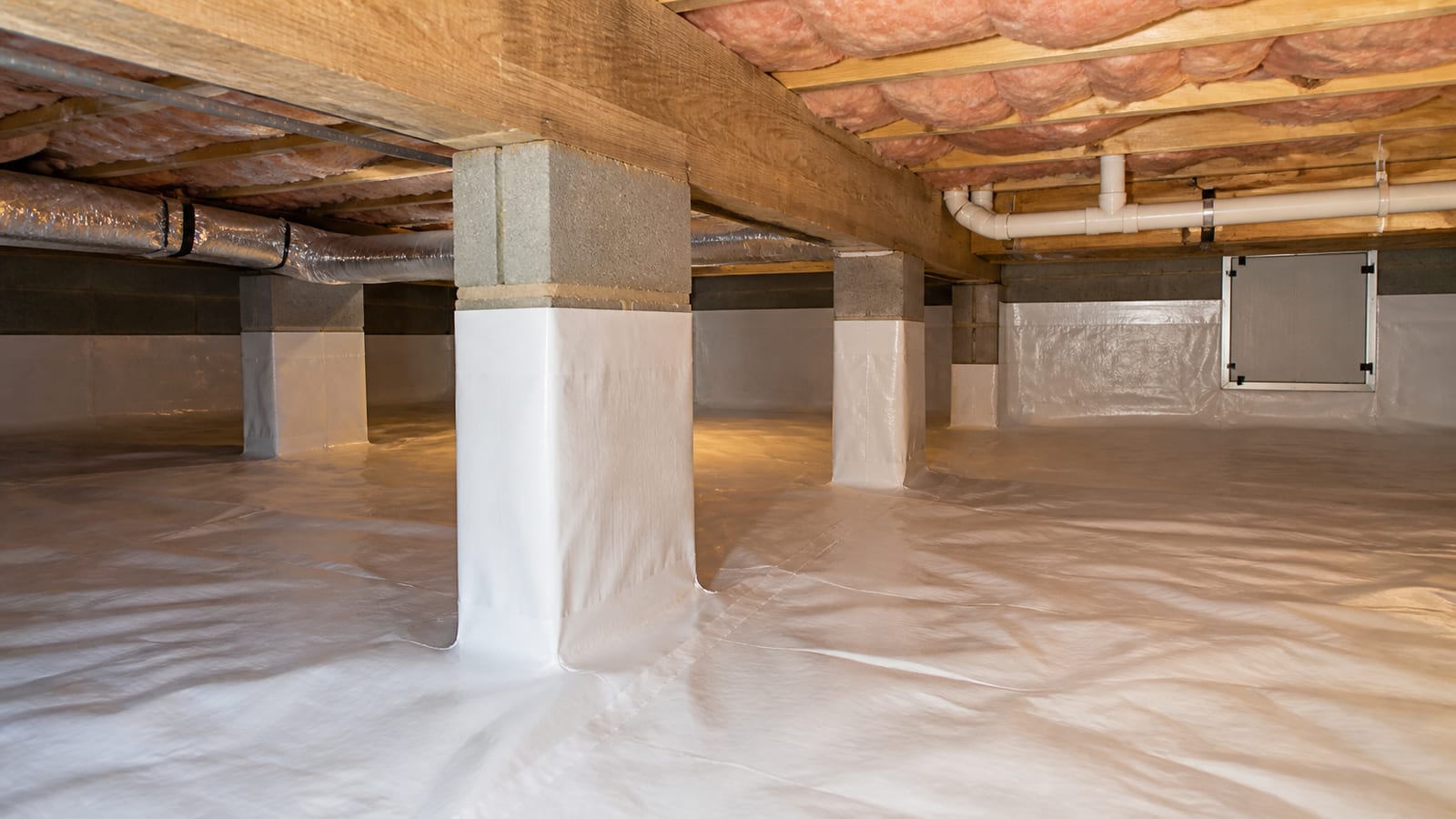
Encapsulation is not simply laying plastic on the soil. A complete enclosure may include a durable ground liner, sealed seams, protected wall attachment, closed vents, air sealing, and a fitted access door. The exact scope depends on the building. Review vapor barrier installation and vent sealing and air sealing as separate line items. A proposal should not treat them as interchangeable.
There are cases where work must happen in stages. An active leak may need plumbing service first. Standing water may call for exterior drainage or a crawl space water-control plan. Damaged framing may need further review before it is covered. Carolina Encapsulation Company can record visible conditions, but observations are not structural design or engineering decisions. If design advice is needed, the owner should arrange review by an appropriate structural engineer.
Ask what temporary use of a dehumidifier can achieve during those steps. Also ask what it cannot fix. The answer should be specific to the crawl space, not a broad promise.
What is the best dehumidifier for a Cary crawl space?
The best unit is one matched to the crawl space’s moisture load, layout, drainage route, temperature range, and service access. Brand claims alone do not settle that choice. The proposal should state the planned capacity, control location, air path, drain method, electrical needs, and maintenance access.
Square footage is only a starting point. Ceiling height changes the air volume. Wet soil, open vents, wall leakage, and frequent water entry add load. A long or divided crawl space may also need a planned air path. Otherwise, dry air can stay near the machine while remote areas remain damp.
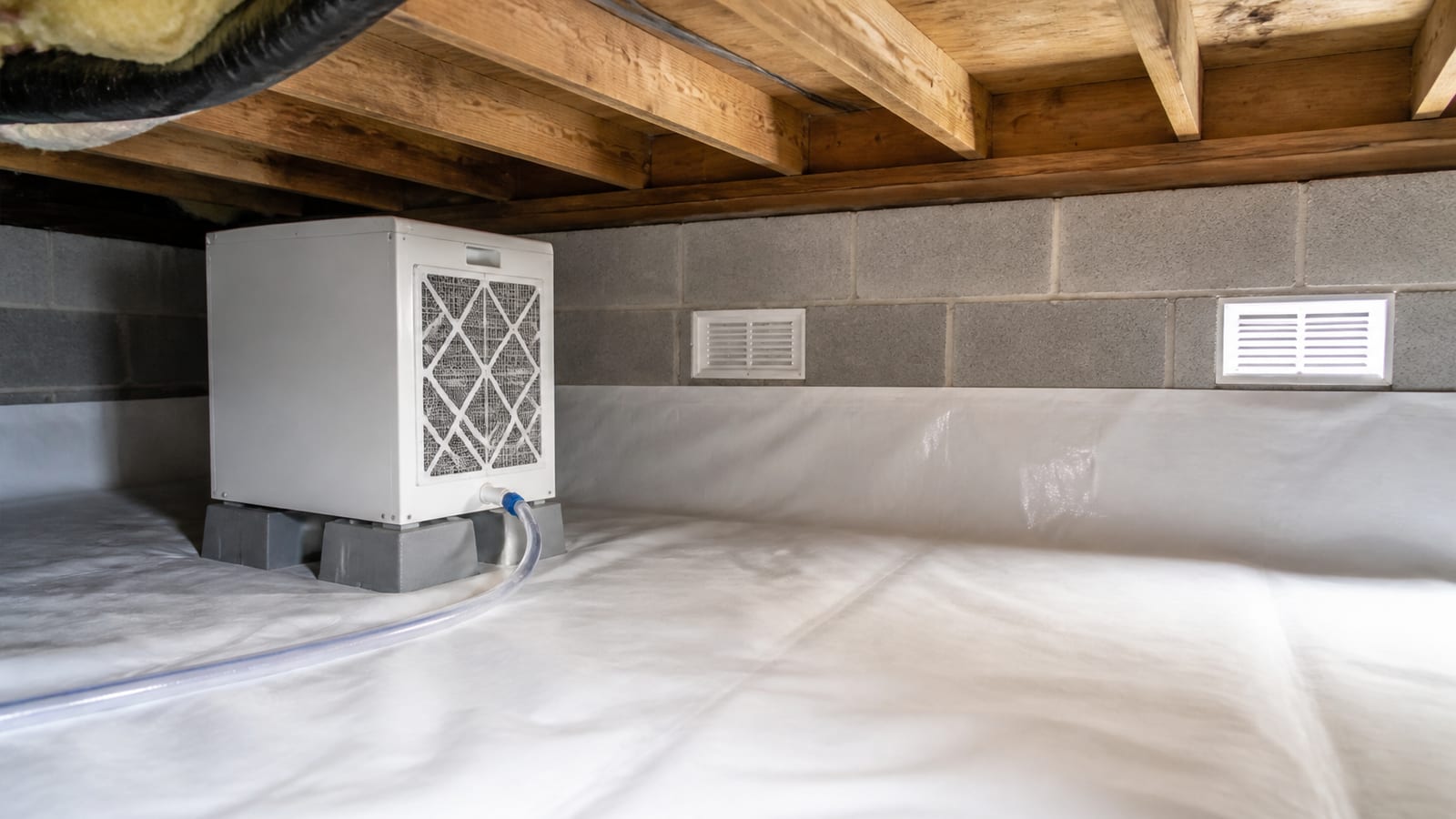
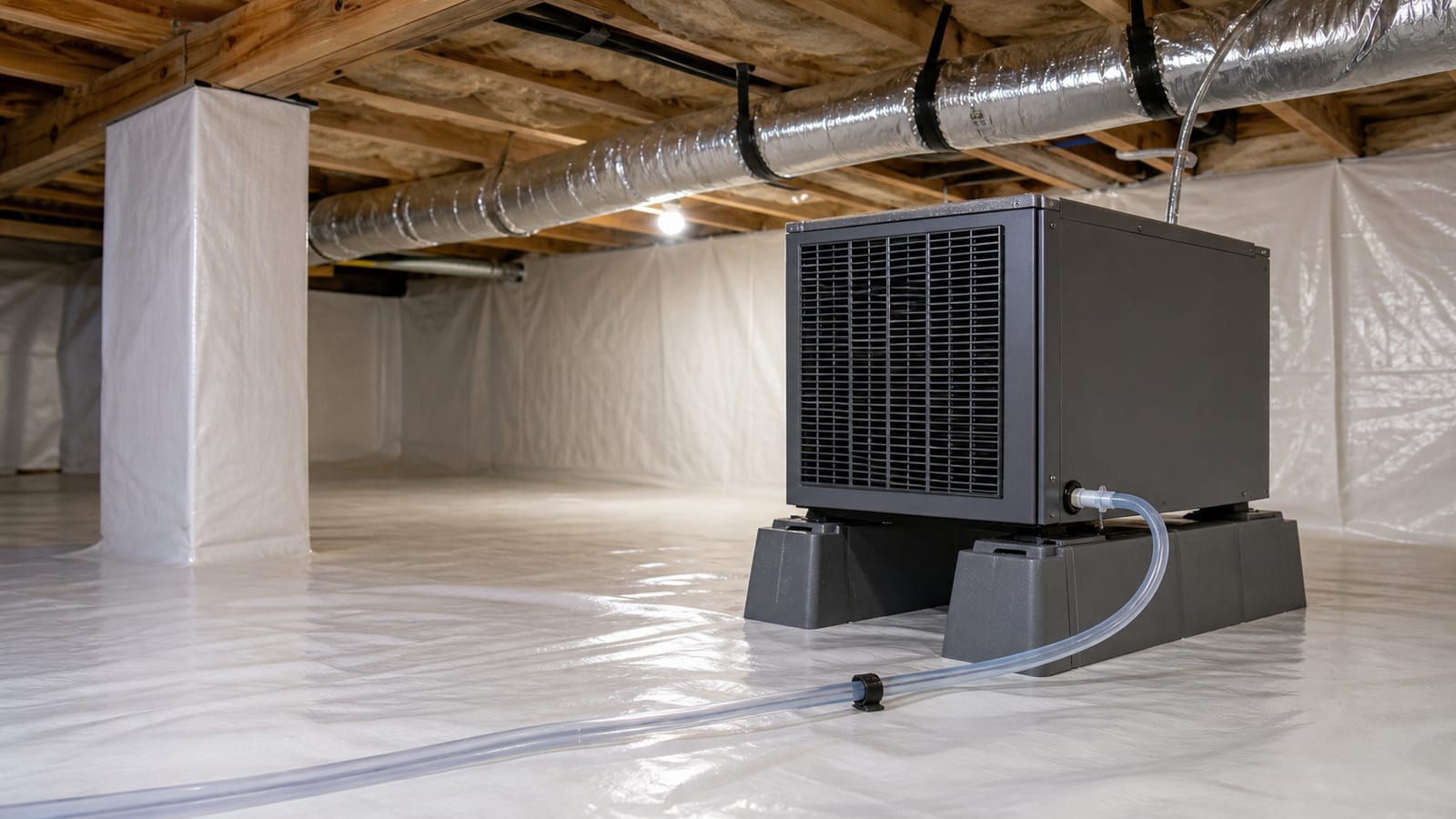
The scope should show where the unit will sit. It needs stable support and enough clearance for filter changes, cleaning, and removal. Ask whether ducts are proposed and why. Ducts can help serve separated areas, but they also add routing and service concerns. The contractor should not use them as a substitute for sealing obvious openings.
Drainage needs equal attention. A gravity drain must have a sound route and a suitable discharge point. A pump adds another component that needs power, cleaning, and testing. The written proposal should identify who supplies each part. It should also say whether electrical work is included or left to another provider.
The crawl space dehumidifier installation service should be compared by function, not by a model name alone. Ask how the selected unit fits the measured space. Also ask how filters, controls, and drains can be reached after the liner and other work are complete.
Will a dehumidifier dry out a damp crawl space?
A dehumidifier can remove water vapor from crawl space air and help damp materials dry. It cannot stop an active plumbing leak, groundwater entry, poor roof drainage, or outdoor air entering through large gaps. Drying works best after liquid water sources are corrected and the space is properly enclosed.
A wet crawl space needs a source check before equipment starts. Look for dripping pipes, pooled water, damp foundation edges, clogged discharge paths, and runoff near the home. Record where water appears and whether recent weather may have affected it. Photos and moisture readings can help track change over time.
Next, separate bulk water from water vapor. Bulk water is visible liquid from leaks, runoff, or groundwater. Water vapor is moisture carried in air or released from soil. A dehumidifier handles vapor. Drainage, plumbing, grading, and water collection handle liquid water. One component should not be sold as a cure for every source.
The work order should be clear:
- Correct active leaks and water entry.
- Remove debris or materials that block the work area.
- Install and seal the planned enclosure.
- Set the unit, drain, controls, and air path.
- Record starting conditions and plan follow-up checks.
Drying time varies with wood moisture, weather, enclosure quality, and the amount of stored water. Avoid proposals that promise an exact result without seeing the crawl space. Ask what conditions will be checked after startup and who should respond if water appears again.
How much does crawl space dehumidifier installation cost?
Installation cost depends on more than the machine. A measured proposal should account for crawl space size, enclosure condition, air sealing, drainage, electrical needs, access, layout, controls, and water problems. Compare written scopes rather than a single total. Confirm what is included, excluded, and assigned to others.
Two Cary homes with similar floor area can need different work. One may already have a sealed liner and a suitable outlet. Another may have exposed soil, open vents, low clearance, standing water, and several foundation sections. Those conditions affect labor, materials, equipment placement, and work order.
Ask each bidder to break out the parts that matter:
- Unit capacity and placement
- Ground liner, seams, and wall attachment
- Vent, door, and penetration sealing
- Drain line or pump provisions
- Electrical work and outlet responsibility
- Debris removal and access limits
- Startup checks and owner maintenance
A low total can reflect a narrow scope. For example, a liner-only quote may leave vents open or stop short of wall sealing. A unit-only quote may assume the owner will arrange drainage and power. Those choices are not always wrong, but they should be clear before work begins.
For broader bid review, the company’s contractor selection resource explains how to choose an encapsulation contractor. Use the same approach in Cary: compare measured areas, materials, exclusions, sequence, and responsibility boundaries. If insurance may apply to a specific loss, confirm coverage and claim duties directly with the insurer. Do not assume a moisture-control upgrade is covered.
What are the negatives of crawl space encapsulation?
Encapsulation can perform poorly when water sources stay active, seams are incomplete, service access is blocked, or the scope ignores combustion and mechanical equipment. It also creates surfaces that need inspection and care. These concerns are reasons for a complete plan, not reasons to accept an open, damp crawl space.
A sealed liner can hide soil, low spots, and parts of the foundation from casual view. The installer should plan access to drains, supports, pipes, wiring, and equipment. Wall attachment should also account for areas that need future inspection. Ask how a technician can reach each service point without cutting the liner.
Water beneath a liner is another concern. The scope should address known entry paths before covering the ground. It should state how water will be collected or directed if drainage work is included. If drainage is excluded, the proposal should say so in plain terms. Owners should know who to call if water later appears.
Mechanical systems require care. If fuel-burning equipment is located in or connected to the crawl space, air needs and safe operation should be reviewed by the proper HVAC or fuel-service provider. The encapsulation scope should identify that boundary rather than assume sealing has no effect.
The U.S. Department of Energy describes unvented and conditioned crawl spaces as a coordinated building approach. That is the useful lesson for bid review. Floor liner, walls, vents, drainage, air control, and drying equipment work as a system. A proposal that lists only plastic leaves important questions unanswered.
What size dehumidifier does a 2,000-square-foot crawl space need?
A 2,000-square-foot area does not provide enough information to size a unit. Capacity should reflect air volume, moisture readings, enclosure quality, water history, layout, temperature, and drainage. The installer should measure the crawl space, record conditions, and explain why the proposed capacity fits the expected load.
Area-based shopping charts can help form an early question, but they cannot replace an inspection. A tall crawl space holds more air than a shallow one. Exposed soil releases more vapor than a sealed floor. Open vents and a loose door allow outdoor humidity to enter. Each factor changes the work expected from the machine.
Layout matters too. Foundation walls, additions, and narrow passages can divide air movement. The scope should state whether one central placement can serve the full area. If ducts or circulation fans are proposed, ask what problem they solve and how they will be maintained. More equipment is not a substitute for a sound enclosure.
Ask the proposal to record:
- Measured floor area and approximate height
- Existing liner and sealing condition
- Signs of liquid water or past staining
- Planned unit location and air route
- Drain path and electrical responsibility
- Filter and service clearance
Oversizing is not a reason to skip those checks. Neither is choosing the smallest unit that appears to match area. The goal is steady moisture control with practical service access. A site visit can also show whether repairs or water-control work must come first. Get that sequence in writing before approving equipment.
Frequently Asked Questions
Should crawl space vents remain open after a dehumidifier is installed?
Open vents can bring humid outdoor air into the crawl space and add to the machine’s workload. In a planned sealed system, vent treatment should be part of the written scope. The contractor should also check the access door and other wall openings. Do not assume that placing a unit near open vents creates the same conditions as a complete enclosure.
Who is responsible for the electrical outlet and drain?
Responsibility should be stated before work starts. Some proposals may include a drain route or pump, while electrical work may be assigned to another provider. Ask who selects the discharge point, supplies each component, tests operation, and handles future repairs. Do not accept a scope that simply says power and drainage are by owner without explaining the needed conditions.
How often should a crawl space dehumidifier be checked?
Check the unit on the schedule stated for the selected equipment and site conditions. Filters, drain lines, pumps, controls, and surrounding areas all need access. Property owners should also look for new leaks, standing water, unusual noise, or blocked airflow. A service plan should distinguish routine owner checks from work that needs a qualified service provider.
Does a dehumidifier replace a crawl space vapor barrier?
No. A vapor barrier slows moisture moving from soil into the crawl space. A dehumidifier removes moisture from the air. They perform different jobs. If exposed ground remains, the equipment may face a larger and more constant load. Ask whether the proposed liner covers the full accessible floor and how seams, edges, and penetrations will be sealed.
Can stored items remain in the crawl space during installation?
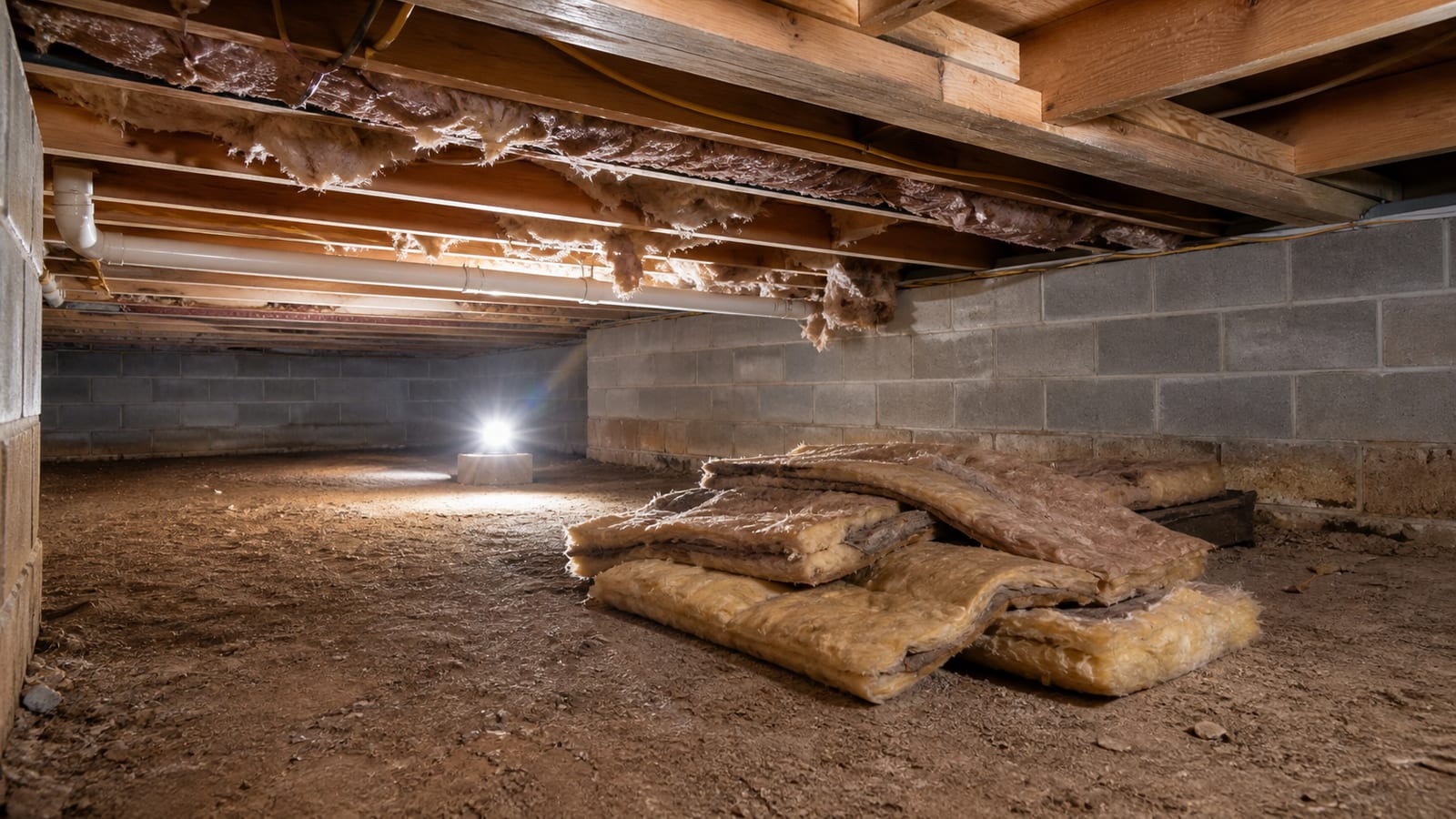
Stored items may block inspection, liner placement, air sealing, drainage work, and future service. Ask what must be removed and who is responsible. The proposal should also address debris, fallen insulation, old liner, and sharp objects. Clear access helps the crew see moisture conditions and reduces the chance that hidden areas are excluded from the scope.
What should happen if framing looks damaged?
The inspection can record visible staining, decay, sagging, or damaged wood. Those observations do not replace structural design or engineering advice. The owner may need a separate structural engineer or other proper specialist to make design decisions. Ask whether moisture work should pause until that review is complete and who will approve any change in sequence.
A useful Cary proposal should show why each component belongs. It should separate ground sealing, vent and gap sealing, liquid-water control, mechanical drying, electrical work, and future service. It should also state what is not included. That clarity helps owners compare full systems instead of comparing liner thickness or equipment labels alone.
Carolina Encapsulation Company serves Fuquay-Varina and surrounding Triangle communities. Request a free crawl space inspection to review conditions and discuss a measured scope. Call 704-207-9348 to confirm current availability for Cary or your community.
How this applies in Cary, NC
For homeowners in Cary, NC, use this topic as a way to organize observations before selecting work. Carolina Encapsulation Company serves Cary, NC and surrounding Triangle communities, but the appropriate scope still depends on the water, moisture, materials, access, and equipment found at the property. Compare the crawl space dehumidifier installation with the How to Choose an Encapsulation Contractor in Fuquay-Varina, NC before choosing a property-specific next step.