Short answer
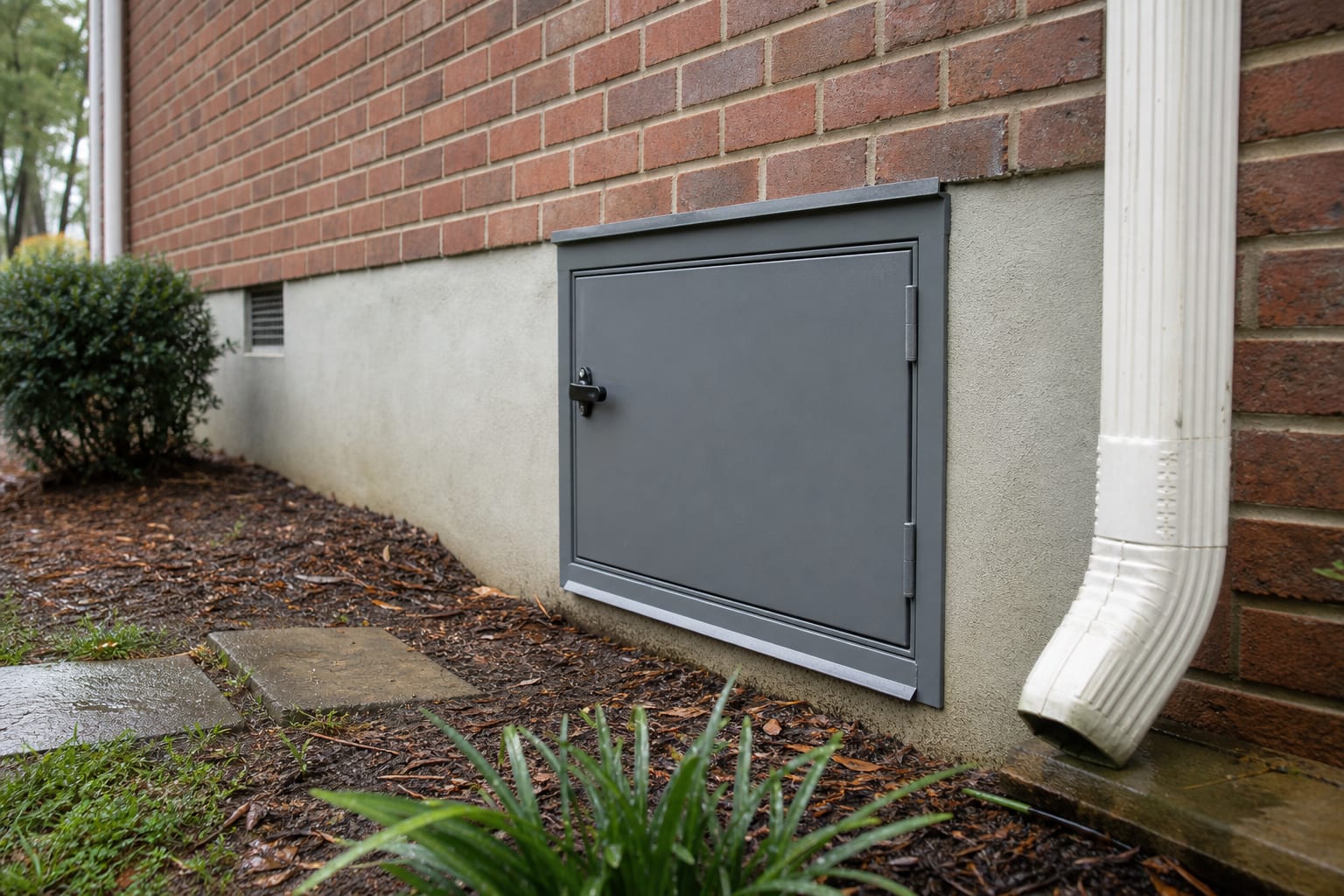
A good sealed crawl space access door does three things at once: it closes the single largest deliberate hole in your sealed foundation, it stands up to North Carolina weather and moisture, and it still lets you open it when you need to. If it seals tight but rusts shut, it fails. If it opens easily but leaks humid air, it also fails. The door has to keep the air and moisture control you paid for with crawl space encapsulation while remaining a practical, usable opening for inspection and maintenance. Everything below explains what that balance looks like in real terms so you can judge whether the door on your home is doing its job.
Why the access door matters more than it looks
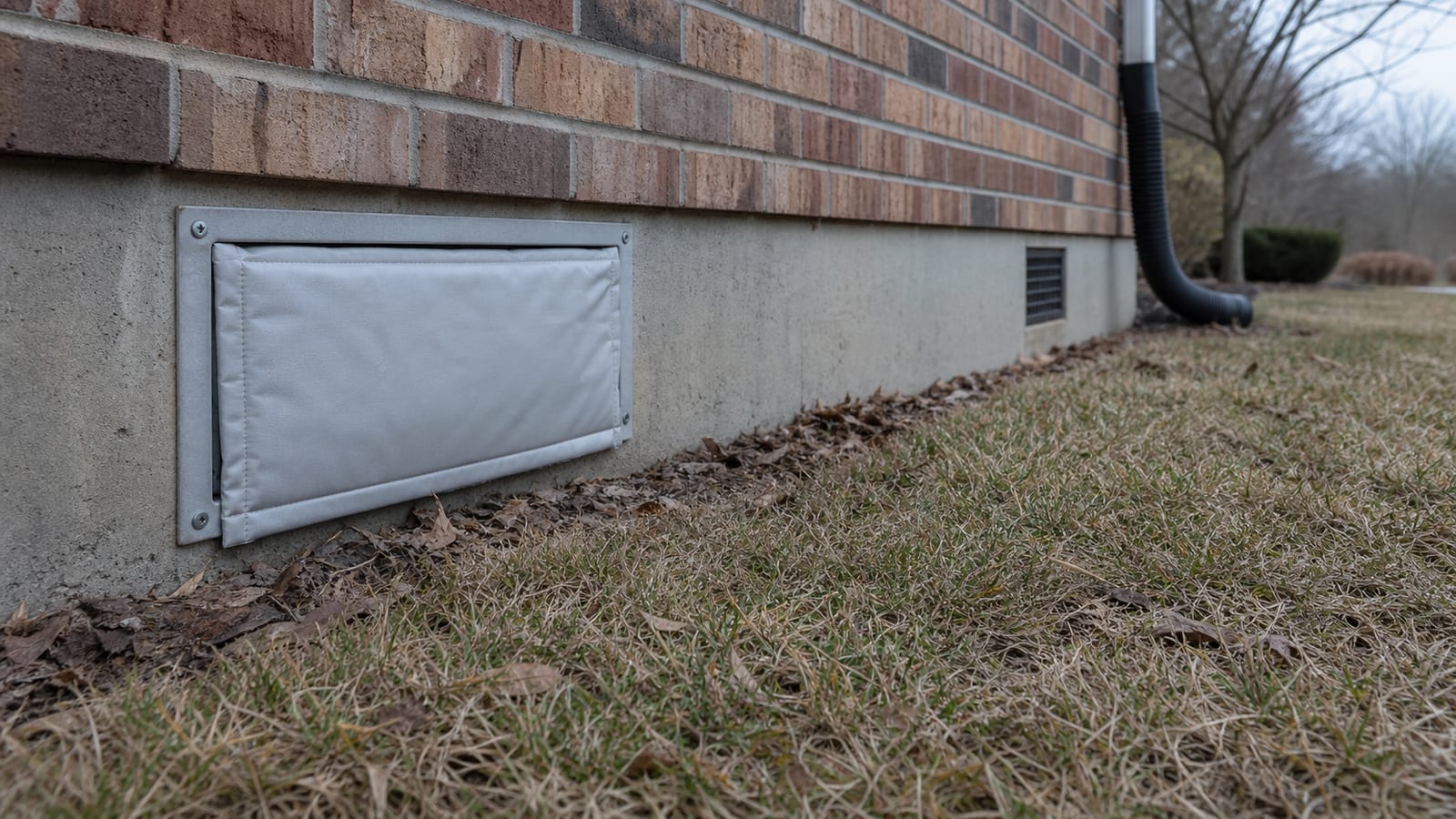
The access door is a deliberate gap in an assembly built to stop uncontrolled air and moisture. When you seal vents and air-seal the perimeter, you are trying to keep the crawl space closer to indoor conditions and away from the swampy summer air common across the Piedmont and coastal plain. That effort is described on the vent sealing and air sealing service page, and the door is the one part of that boundary you open on purpose.
Because it moves, the door needs periodic attention. Hinges loosen, gaskets flatten, and frames shift. Evaluate fit, weather exposure, drainage, the frame, the seal, operation, and long-term access together.
Fit and closure: the door has to sit flush and stay shut
The first test is simple. When closed, the door should sit evenly against its frame with no visible daylight, no rattling, and no obvious gap at any corner. A door that only touches the frame at two points is only sealing at two points.
Good closure depends on a few things working together:
- The panel is flat and rigid enough not to bow between fasteners or latch points.
- The latch or catch pulls the panel firmly against the gasket rather than just holding it in the general area.
- The frame is square, so the panel meets it evenly all the way around.
- Nothing behind the panel, like insulation, liner overlap, or debris, holds it open a fraction of an inch.
A quick way to check closure yourself: close the door on a strip of paper and try to pull it out. If it slides free without resistance at that spot, the seal is weak there. Do this at the top, bottom, and both sides. Inconsistent resistance points to a panel that is not seating evenly or a gasket that has compressed unevenly over time.
Standing up to North Carolina weather
The door faces weather the rest of the sealed boundary does not. It sits at or near grade, often on the shaded, damp side of the house, and it takes sun, wind-driven rain, splashback, and seasonal swings from humid summers to freezing snaps.
A door that handles that exposure well tends to share a few traits:
- Materials that resist rust, rot, and warping in a wet, high-humidity setting rather than corroding or swelling.
- A design that sheds water away from the opening instead of channeling it toward the seal.
- Fasteners and hardware that will not seize or corrode into a solid mass after a couple of wet winters.
- A surface that can take direct rain and repeated wetting without breaking down.
Drainage around the opening
Water management at the door is as important as the door itself. This is where crawl space openings quietly fail in North Carolina, because the door can be perfect while the ground around it funnels water straight to the opening.
The area right outside the access should move water away from the house, not toward it. That means the grade slopes away, gutters and downspouts discharge well clear of the opening, and there is no low spot or planting bed that ponds against the foundation next to the door. If the opening sits below surrounding grade, as many do, there needs to be a way for water to drain rather than collect in a pit that the door then holds back like a small dam.
Signs the drainage side is the real problem:
- A muddy, eroded, or perpetually damp patch directly outside the door.
- Water staining or a silt line on the inside face of the panel or frame.
- Debris and washed-in soil piling up at the threshold.
- Standing water in a below-grade window-well style opening after rain.
If you see these, the fix often lives outside the door, not in it. Grading, downspout extensions, and drainage handled through foundation drainage improvements frequently do more for a leaky opening than a new panel ever will. A door cannot out-seal a puddle sitting against it.
A durable frame you can actually seal to
The panel gets the attention, but the frame determines whether a seal is even possible. A gasket needs a flat, stable, continuous surface to press against. If the frame is warped, cracked, crumbling at the edge, or loose in the masonry, no gasket will close the gaps.
When you look at the frame, check that:
- It is solidly anchored to the foundation and does not move when you push on it.
- The sealing surface is continuous and flat, not chipped or broken at the corners.
- It has not separated from the surrounding block or brick, leaving a gap behind the frame itself.
- It resists the same moisture the panel does, so it is not slowly rotting or spalling where the panel meets it.
A common hidden leak is air moving behind the frame through the gap between the frame and the masonry, rather than between the panel and the frame. The door can be shut tight and still leak because the whole assembly is loose in the wall. Sealing the frame to the foundation matters as much as sealing the panel to the frame.
Gasket and seal continuity
The gasket is the part that turns a fitted panel into an air and moisture barrier, and it only works if it is continuous. A gasket with a gap, a flattened section, or a torn corner leaks air at that spot the way a window with one bad weatherstrip does.
What a healthy seal looks like:
- The gasket runs unbroken around the full perimeter with no missing sections at the corners.
- It is soft enough to compress and spring back, not hardened, cracked, or crushed flat.
- It makes even contact all the way around when the panel is latched, not just where the latch pulls hardest.
- It is bonded or fastened well enough that it will not peel away or slide out of position.
Gaskets wear and can flatten after repeated compression. Replace deteriorated material with a compatible seal rather than assuming the entire door must be replaced.
Secure but practical operation
The door has to keep people and animals out while still opening easily for you. Those two goals pull in opposite directions, and a good door balances them rather than sacrificing one.
On the security side, a latch or lock should hold the panel firmly closed against wind, curious animals, and casual entry. A door that pops open in a storm or that a raccoon can nose aside is not doing its job, and an open crawl space door invites the humid outdoor air, and the pests, you were trying to keep out.
On the practical side, you or a technician will open this door repeatedly over the life of the house. It should:
- Open and close without a fight, without special tools, and without a second person.
- Have hardware that will still function after years of weather rather than seizing.
- Stay open safely while someone works, instead of swinging shut on them.
- Be operable from both sides if anyone could be inside when it closes.
The failure to avoid is a door sealed so aggressively that opening it means prying, or one so locked down that no one ever checks the crawl space because getting in is a chore. High humidity inside a sealed crawl space is easier to catch early when access is easy, and the warning signs are covered in high crawl space humidity.
A usable clear opening and honest inspection access
The opening has to be large enough to actually use, and it has to leave the crawl space genuinely reachable once you are through it. A door that seals beautifully but only a child could fit through is a problem you discover at the worst possible time.
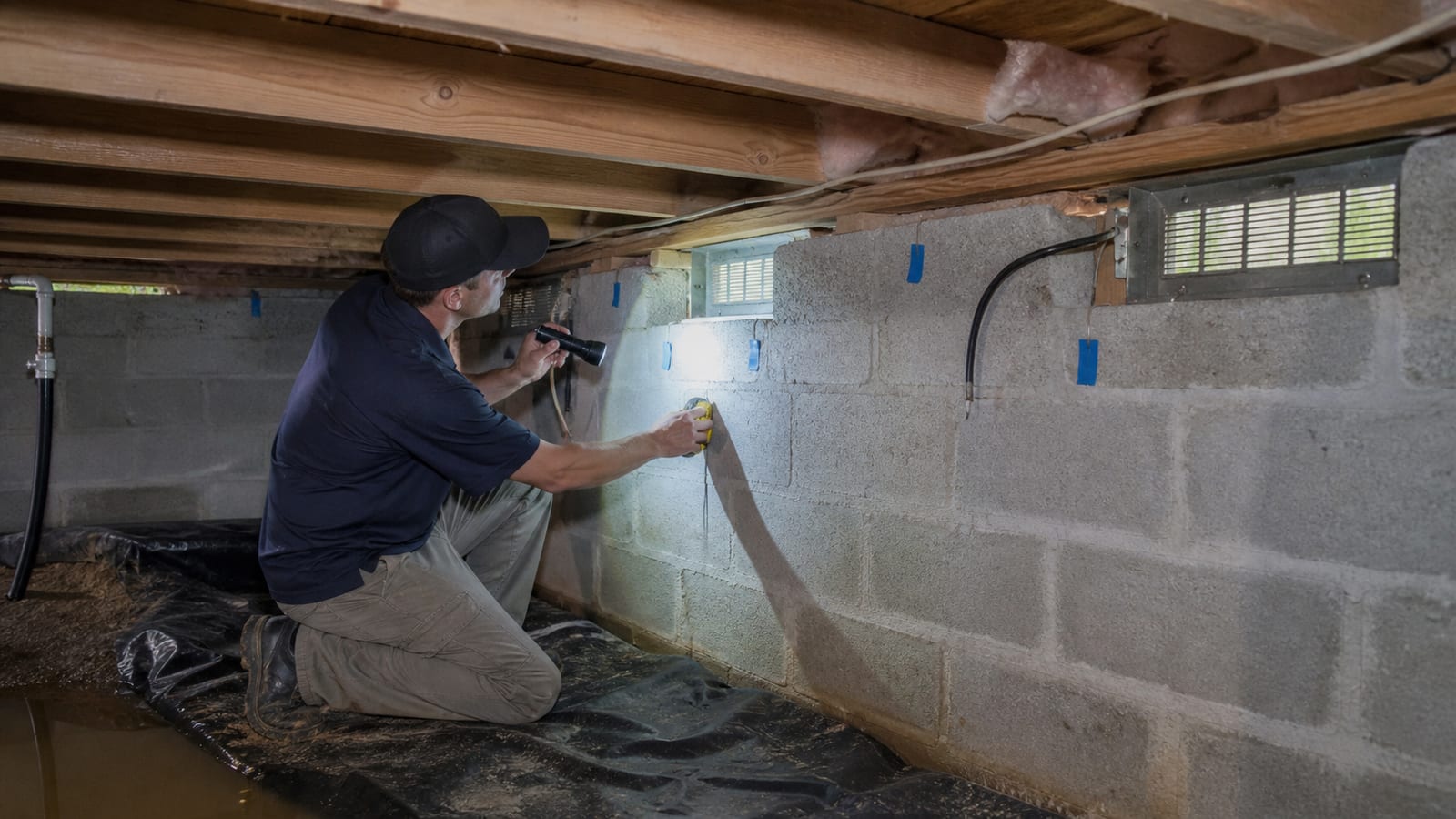
Rather than chase specific measurements, judge the opening by function. Can an adult get through it with the tools they would realistically carry? Once inside, can they reach the areas that need inspection, like the sump or drainage point, the dehumidifier, the vapor barrier seams, and the structural members? An opening that clears the frame but dumps you against a duct, a pipe, or a pier defeats the purpose.
Inspection access is not only about people entering. Pest professionals need to see relevant perimeter and wood areas, and encapsulation changes what is visible. Plan for that need through termite inspection access after encapsulation.
Maintenance: the part most homeowners skip
A sealed door still needs condition-based maintenance:
- Check the seal after major weather changes and when opening the crawl space for routine inspection.
- Wipe and clear the threshold so debris and washed-in soil do not hold the panel open or block drainage.
- Confirm the door still latches firmly and the hardware still moves freely, and treat hinges before they seize.
- Look for water staining inside the panel or frame that signals a drainage problem outside.
- Replace a flattened or cracked gasket promptly rather than waiting for the next full service.
Fold the door into your broader routine using the crawl space inspection checklist so it is checked alongside the liner, the dehumidifier, and the drainage rather than forgotten in a corner.
Limitations and when to inspect in person
A door can only do so much, and some symptoms point past it. If the crawl space stays humid despite a well-sealed door, the cause is usually elsewhere: a drainage issue, a gap in the liner, a struggling dehumidifier, or air leaking through the frame-to-wall joint rather than the panel. Musty odors, condensation on ductwork, buckling flooring above, or standing water are signs to inspect rather than assume the door is at fault.
Some conditions need an on-site review. Opening size, frame condition, air paths, and drainage around a below-grade opening cannot be determined from a photograph alone. If the door is stuck, leaking, deteriorated, or surrounded by recurring moisture, use the crawl space inspection contact page rather than guessing.
Frequently asked questions
How can I tell if my crawl space access door is leaking air?
Close the door on a strip of paper at several points around the perimeter and try to pull it free. Easy pulls mark weak spots. Also look for daylight around the closed panel, a musty draft near the opening, or water and silt staining on the inside face. Uneven resistance around the edge usually means the panel is not seating evenly or the gasket has flattened in places.
Should the door be sealed shut permanently?
No. A sealed crawl space is meant to be reachable. You, a service technician, and a termite inspector all need to get inside over the life of the home. The goal is a door that seals tightly when closed and still opens without a fight when needed, not one glued or screwed permanently in place.
Water pools outside my access after it rains. Is the door the problem?
Often the door is not the real issue. If the ground funnels water toward the opening, no panel will hold it back for long. Look at grading, downspout discharge, and any low spot next to the foundation. Correcting drainage around the opening, sometimes through foundation drainage improvements, usually matters more than the door itself.
How often should I check the door and its gasket?
Check it during routine seasonal crawl space reviews and after water reaches the opening. Confirm the panel seats evenly, the latch holds, hardware moves freely, and the threshold is clear. Replace a gasket when it is cracked, missing, displaced, or no longer compresses evenly.
Does adding an access door affect termite inspections?
It can, because encapsulation changes what an inspector can view. A good opening keeps the crawl space genuinely reachable so the perimeter and wood members can still be examined. Planning access with inspection in mind protects both your structure and your ability to keep it monitored. The details are covered in the termite inspection access note linked in the maintenance section above.
Sources and further reading
- U.S. Department of Energy: Unvented, Conditioned Crawlspaces (Building America Top Innovation)
- Building America Solution Center: Unvented, Insulated Crawlspaces
- North Carolina Office of the State Fire Marshal: Permit Required for Closed Crawl Space
How this applies in Clayton, NC
For a home in Clayton, NC, connect the symptom above the floor with the exact framing, insulation, access, plumbing, duct, or moisture condition below it. A city-specific service area does not replace a property-specific structural or material assessment. Compare the crawl space vent sealing air sealing with the Crawl Space Ventilation in North Carolina: Vents, Fans, and Moisture in Clayton, NC before choosing a property-specific next step.