Crawl space help across Fuquay-Varina and the Triangle Call for a Free Inspection 704-207-9348
Carolina Encapsulation Company logo Carolina Encapsulation
North Carolina Home Transactions

Home Buying and Selling Crawl Space Center

Connect crawl space observations with inspection limits, seller records, WDIR findings, repair questions, closing timing, and the maintenance information that should transfer to the next owner.

Prefer to talk? Call 704-207-9348
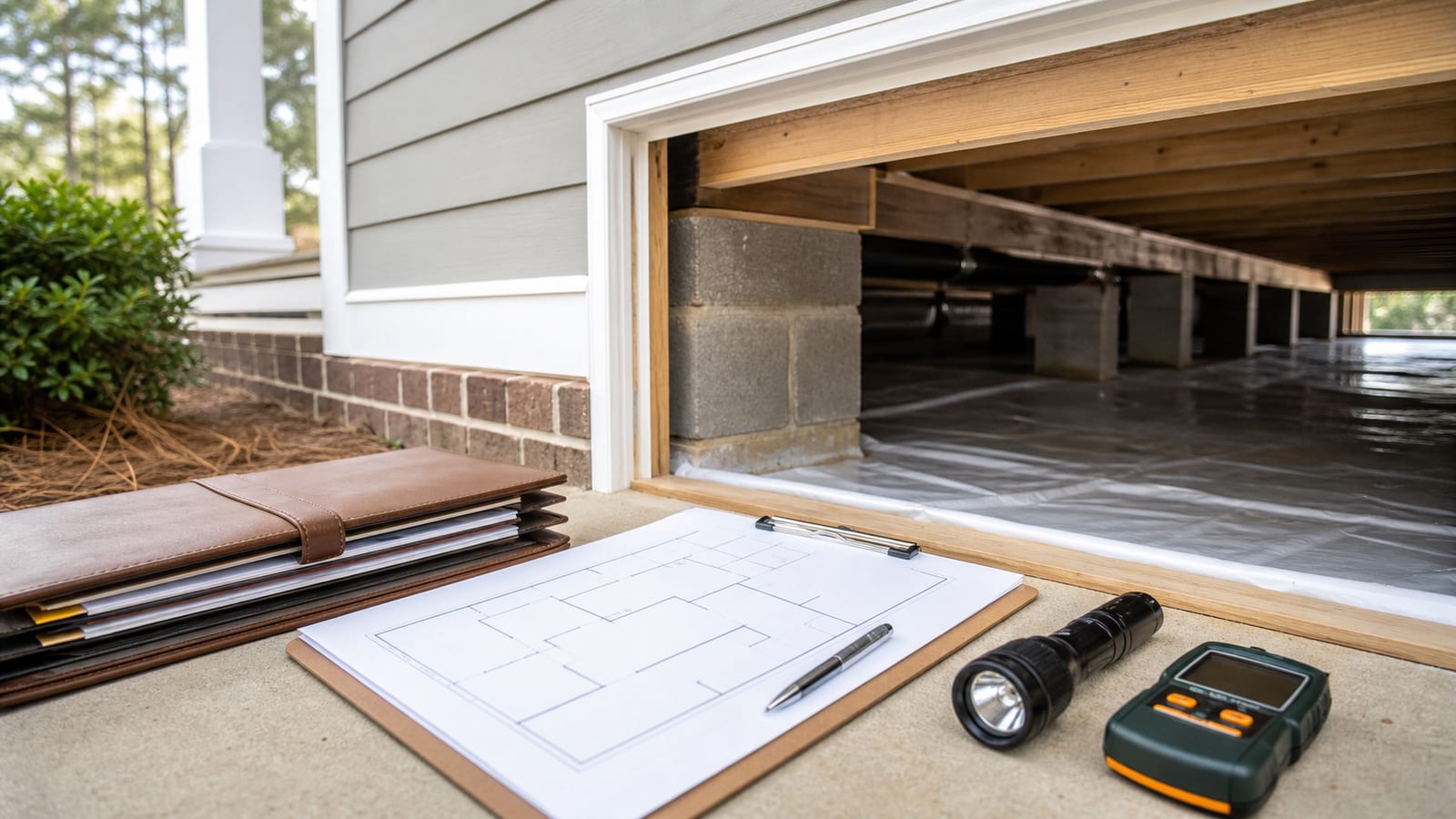
Crawl space access with blank inspection plan, flashlight, records folder, and moisture meter
Build One Property File

How should crawl space information be organized during a home sale?

Organize the crawl space as one evidence file rather than a collection of disconnected report excerpts. Bring together the general home inspection, North Carolina WDIR, seller disclosures, project scopes, invoices, before-and-after photographs, equipment manuals, maintenance records, applicable permits, repair documents, and any focused evaluations. Note which areas were accessible and which were not.

Each document has boundaries. A pest report does not establish structural capacity. A dehumidifier service record does not confirm that every water path is controlled. A clean liner does not explain what is below it, why the system was installed, or how drainage and humidity are managed. A repair invoice may describe work performed without confirming the condition of adjacent materials.

This center helps buyers and sellers compare those sources without stretching them beyond their purpose. It is educational, not legal, engineering, pest-control, home-inspection, or real-estate advice. Transaction deadlines and decisions should be handled with the appropriate professionals.

Home transaction inspection materials beside an accessible sealed crawl space
For Buyers

What should a buyer ask about an encapsulated crawl space?

A buyer should ask what condition led to the work, which components were installed, how active water and humidity are managed, where drains discharge, what equipment remains, what maintenance is required, and which records will transfer. A bright liner can make inspection easier, but appearance alone does not answer those questions.

Ask for the scope, photographs before surfaces were covered, equipment and filter details, drainage diagrams, sump information, service history, repair records, pest inspection access notes, and any applicable permit documents. Compare dates across the file. If equipment or drainage was added later, determine whether the records explain why the system changed.

Use the encapsulated crawl space buyer checklist to structure the conversation. The crawl space inspection checklist can help compare visible conditions with the documents without asking a buyer to enter an unsafe or inaccessible area.

For Sellers

What should a seller prepare before crawl space questions begin?

A seller should prepare a concise, factual property file that explains work performed and ongoing maintenance without making unsupported conclusions. Include the scope, dates, contractor records, photographs, equipment manuals, filter size, drain and discharge information, sump details, service history, repairs, and any applicable permit or inspection records.

Do not hide access limits or rely on a broad statement such as “crawl space repaired” when several systems are involved. If an area is covered, blocked, or not safely accessible, record that plainly. If a monitor or alarm has a maintenance requirement, include it. If another trade altered the space after the original project, add the later record and updated photographs.

The guide to seller documentation after crawl space work provides an organized handoff. Clear records can reduce uncertainty, but they do not replace the buyer's inspections or the transaction terms that apply.

Read Reports by Scope

What can each crawl space document actually establish?

Use each document for the question it was designed to answer, then identify gaps that require another record or qualified professional.

General home inspection

It may record visible conditions and system observations within the inspection scope. Read access limitations carefully and avoid treating a general observation as a complete drainage, pest, structural, or encapsulation design.

North Carolina WDIR

It addresses visible evidence of wood-destroying insects and defined related conditions within its scope. It does not replace a moisture, structural, plumbing, HVAC, insulation, or drainage evaluation.

Project scope and invoice

These show what work was proposed or performed. Compare the written coverage, materials, equipment, dates, exclusions, and photographs rather than relying on one broad service label.

Service and maintenance records

These show attention over time. They are most useful when they identify the component, location, reading, action, date, and follow-up instead of only recording that the crawl space was checked.

Focused professional evaluation

A pest, structural, electrical, plumbing, HVAC, or other focused review answers questions within that professional scope. Keep the conclusions connected to the evidence and limits stated in the report.

Seller statements and photographs

These can provide timing and history, but compare them with dated records and current observations. A photograph shows one view at one time and may not reveal concealed or inaccessible areas.

Closing Timing

When should a crawl space concern be reviewed before closing?

Review the concern early enough to preserve the transaction's inspection, information, and decision deadlines. An initial finding may lead to a request for seller records, clearer access, a focused inspection, measurements, an estimate, or another professional opinion. Waiting until the final walk-through can leave too little time to understand the issue.

The article on scheduling a crawl space inspection before closing explains the practical sequence without giving contract advice. Ask the real-estate and legal professionals involved which deadlines control and how requests should be documented.

If access is blocked, record the limitation. Do not assume an inaccessible area is clear because no condition was observed. A later visit may be useful if access can be improved safely and within the transaction process.

Repair or Monitor

How should a buyer or seller evaluate a recommendation to repair or monitor?

Separate active conditions, safety concerns, structural questions, damaged materials, equipment issues, and uncertain observations. Monitoring is a plan, not a decision to ignore the condition. It should identify the exact location, baseline photograph or reading, review interval, and trigger that leads to action.

The repair-now-or-monitor framework helps organize that distinction. Active water beside electrical equipment, suspected sewage, exposed wiring, significant movement, or unsafe access needs a different response from a stable cosmetic observation.

When work is proposed, compare the scope with the Crawl Space Project Planning Center. Confirm what condition each line item addresses, how the sequence works, what remains excluded, and what records will be available afterward.

The New-Owner Handoff

What should transfer with the crawl space after closing?

The new owner should receive enough information to operate and maintain the system without reverse-engineering it. The handoff can include the original scope, completion photographs, liner and drainage coverage, equipment manuals, filter details, sensor locations, sump and alarm information, discharge points, service history, repair documents, pest records, and applicable permits.

Add a one-page summary that identifies the major components, normal maintenance tasks, and the location of the complete records. Avoid unsupported warranty, performance, or transfer claims. If the owner needs to confirm a warranty or service agreement, direct them to the original written terms and provider.

The guide to transferring crawl space maintenance records provides a practical structure. After closing, the Crawl Space Maintenance Center gives the new owner a repeatable way to preserve the documentation and track future changes.

Keep Every Document in Scope

Crawl Space Questions for Buyers and Sellers

When should a buyer schedule a crawl space inspection?

Schedule early enough to review access, seller records, the general home inspection, the WDIR, and any focused follow-up within the transaction deadlines that apply. The exact timing is a contract and professional-advice question. Earlier access is often more useful because a finding may require documents, another qualified professional, or a second visit.

Does a North Carolina WDIR cover every crawl space problem?

No. A WDIR reports visible evidence of wood-destroying insects and defined related conditions within its inspection scope, along with access limitations. It is not a complete moisture, drainage, HVAC, plumbing, electrical, insulation, encapsulation, or structural assessment. Read it beside the home inspection, seller records, photographs, and any focused evaluations.

What should a buyer request for an encapsulated crawl space?

Request the work scope, installation date, before-and-after photographs, equipment manuals, filter information, drainage and discharge details, sump and alarm information, service history, humidity records, repair documentation, pest records, and permits when applicable. Ask which surfaces remain visible and how future maintenance and pest inspection access are preserved.

What should a seller document before listing a home?

Organize the original scope, dates, contractor information, photographs, manuals, service history, filter sizes, drain routes, discharge points, repairs, applicable permits, and current maintenance notes. Record known limitations plainly. Do not turn a service receipt into a claim that every system or structural condition was inspected or guaranteed.

Should every crawl space finding be repaired before closing?

Not every observation has the same urgency or consequence. Active water, unsafe access, electrical concerns, structural movement, damaged materials, equipment failure, and uncertain findings require different professionals and decisions. A monitoring plan should define the location, baseline, interval, and trigger for action. Transaction terms and repair decisions should be reviewed with the appropriate advisers.

Need a Property-Specific Crawl Space Review?

Schedule a free inspection and bring the records, photos, and observations you already have.

Call Free Inspection