
Collection areas
Look for sediment, debris, changed low points, liner movement, or water that appears outside the intended collection route. Record the exact location and recent weather instead of describing the entire crawl space as wet.
Use a repeatable routine for the liner, humidity, equipment, drains, sump system, access, exterior water paths, and documentation without treating every change as the same problem.
Prefer to talk? Call 704-207-9348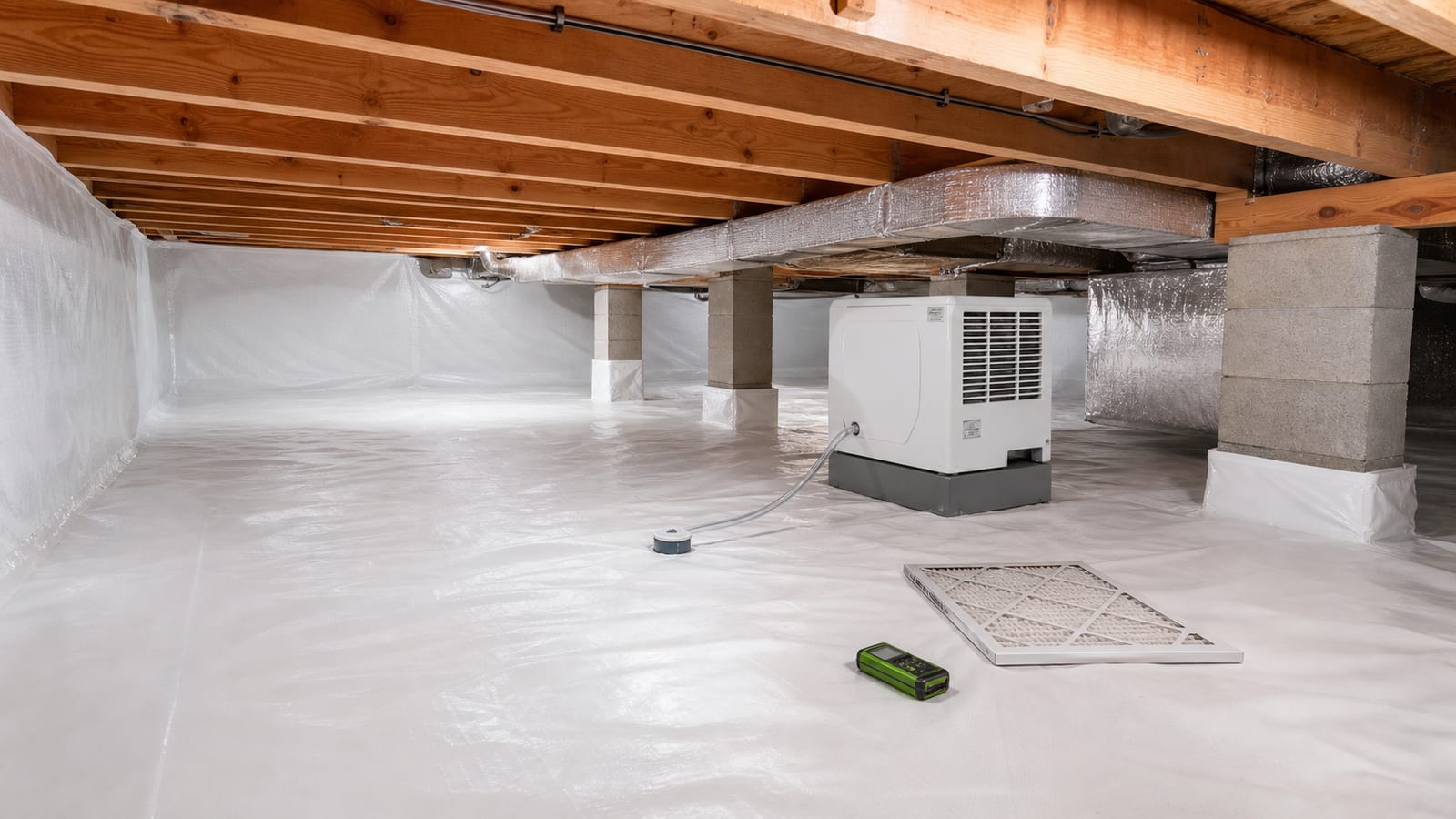
Crawl space maintenance means checking how the moisture-control system is functioning, preserving safe access, keeping serviceable components available, and recording changes over time. The work is broader than replacing a dehumidifier filter. It can include the ground liner, seams, wall transitions, vents, drains, sump equipment, discharge paths, humidity sensors, insulation, visible framing, exterior runoff, and project records.
A maintenance visit should not begin with the assumption that one product has failed. A higher humidity reading could relate to sensor placement, an open access door, liner damage, active water, blocked drainage, equipment performance, or a recent weather change. A sump alarm could relate to water level, power, float movement, discharge, or unusual storm conditions. Use a consistent observation order so a symptom is connected with evidence.
The year-round crawl space maintenance calendar provides a seasonal rhythm. This center explains how the separate maintenance areas fit together and when a change should lead to a more focused inspection or service call.
Choose the article that matches the equipment, reading, weather event, access concern, or recordkeeping task in front of you.
Use the focused checklist, limits, and documentation steps for this part of the crawl space system.
Open the maintenance topic →Use the focused checklist, limits, and documentation steps for this part of the crawl space system.
Open the maintenance topic →Use the focused checklist, limits, and documentation steps for this part of the crawl space system.
Open the maintenance topic →Use the focused checklist, limits, and documentation steps for this part of the crawl space system.
Open the maintenance topic →Use the focused checklist, limits, and documentation steps for this part of the crawl space system.
Open the maintenance topic →Use the focused checklist, limits, and documentation steps for this part of the crawl space system.
Open the maintenance topic →Use the focused checklist, limits, and documentation steps for this part of the crawl space system.
Open the maintenance topic →Use the focused checklist, limits, and documentation steps for this part of the crawl space system.
Open the maintenance topic →Keep the liner observable, the access route clear, and the transitions around walls, piers, penetrations, drains, and equipment available for inspection. Look for new punctures, pulled seams, loose edges, pooled water above the liner, staining, or damage after another trade has entered the space. Do not cover a changed condition with tape or sealant until the cause and repair detail are understood.
Plumbers, HVAC crews, pest professionals, electricians, and other trades may need crawl space access. Before work, photograph the route and point out drains, basin lids, equipment, sensor locations, and protected areas. After work, compare the liner with the baseline. The guide to protecting an encapsulation liner during service work explains how to make that review repeatable.
The access door also belongs in the system. Check that it closes securely, remains usable, and has not developed gaps or damage. An access problem can change outside-air entry and make future service harder even when the liner itself looks unchanged.
Track trends with the sensor location, date, recent weather, equipment status, and visible conditions. One reading is a snapshot, not a diagnosis. Confirm that the sensor has not moved, the access is closed, and the reading is compared with the same location and conditions whenever possible. The guide to reading a crawl space hygrometer shows how to create a more useful record.
For a dehumidifier, follow the equipment instructions for filters, drains, clearances, and service. Note changes in sound, airflow, condensate routing, cycling, or the surrounding area. A dirty filter can restrict airflow, but a new filter does not correct active water, a blocked drain, or an open system boundary. Use the dehumidifier maintenance service page when the equipment needs a property-specific review.
If humidity rises unexpectedly, use the source-first elevated humidity checklist rather than changing settings repeatedly without understanding the cause.
Trace the complete route from the area where water collects to the final discharge point. A normal-looking basin does not confirm that every drain branch, outlet, wall entry, or exterior path is clear.
Look for sediment, debris, changed low points, liner movement, or water that appears outside the intended collection route. Record the exact location and recent weather instead of describing the entire crawl space as wet.
Keep the lid, float area, alarm, power connection, and service path accessible. Do not reach into water or touch powered equipment in wet conditions. Repeated alarms require a source and equipment review.
Confirm that the visible endpoint is not blocked, disconnected, damaged, or directing water back toward the foundation. The route and final location should remain part of the maintenance record.
The sump pump repair and maintenance page explains the service role. Use the power-outage plan and sump alarm checklist for event-specific preparation. These resources do not replace safe electrical practices or the appropriate qualified trade.
Check sooner when the crawl space or the systems around it experience a meaningful change. Heavy rain, tropical weather, a power outage, plumbing work, HVAC service, pest activity, landscaping, gutter changes, unusual odors, new floor movement, or a persistent humidity shift can each justify an additional review.
Begin outside when weather is involved. Observe roof runoff, downspouts, grading, water near the foundation, and visible discharge points. From a safe access position, compare the crawl space with prior photographs. The post-storm crawl space checklist can help organize the review without encouraging unsafe entry.
If a change is active, document it before it disappears. Note the time, weather, exact area, equipment state, and any relevant household event. That record can make a later inspection more useful than a general statement that the crawl space sometimes gets damp.
Records preserve the information that is difficult to reconstruct after surfaces are covered or equipment is replaced. Keep the original scope, photographs, drain routes, discharge information, equipment manuals, filter details, sensor locations, service dates, repair notes, and any applicable permit documents together.
A simple maintenance log should identify what was checked, what changed, what action was taken, and what requires follow-up. Avoid recording a diagnosis that was not established. A note such as “water visible beside the north wall after heavy rain” is more useful than “drain failed” when the source has not been confirmed.
Good records also support a future sale or service visit. The Home Buying and Selling Crawl Space Center explains how the same documentation helps buyers, sellers, inspectors, and new owners understand the system without reverse-engineering it.
Use a consistent routine based on the installed system, equipment instructions, weather events, and any known water history. A brief seasonal visual review can track humidity, liner condition, drains, equipment, access, and exterior water management. Check sooner after major rain, a power outage, plumbing work, pest activity, or an unusual humidity or odor change.
A homeowner can record accessible humidity readings, review the access door, look for visible liner damage, confirm that service areas remain clear, and note water or odor changes without entering an unsafe space. Do not enter around standing water and electrical equipment, suspected sewage, exposed wiring, active animals, structural movement, or access that you cannot navigate safely.
The equipment instructions control the interval because filters, units, and site conditions differ. Dust, construction work, pest activity, restricted airflow, and a dirty crawl space can shorten the interval. Record the filter size and replacement date, and arrange a closer equipment check if airflow, drainage, sound, or humidity performance changes.
Start outside with gutters, downspouts, grading, visible discharge points, and water near the foundation. From a safe accessible position, look for new puddles, wall entry, wet liner areas, sump alarms, or changed humidity. Photograph the location and timing. Do not touch electrical equipment in wet conditions or assume a pump has handled every possible water path.
Keep the original scope, completion photos, equipment manuals, filter details, drain and discharge notes, sump and alarm information, service dates, humidity trends, repair records, permits when applicable, and before-and-after documentation. A concise record helps future inspections, other trades, home buyers, and the next owner understand what is installed and what requires attention.
Schedule a free inspection to connect a maintenance concern with the conditions in your crawl space.